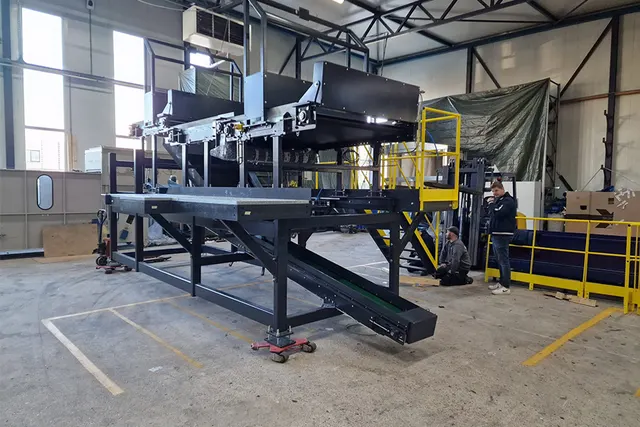
Chemical textile recycling taken to the next level
Text Valérie CouplezImage VITO
It is no secret that this has been a difficult year for many companies involved in recycling. Even so, some excellent initiatives and investments have been launched to take recycling to the next level, and they deserve particular recognition. RecyclePro is therefore ending the year with three outstanding innovation projects. Recyclex is taking chemical textile recycling to the next level with innovative methods for detecting and removing elastane.
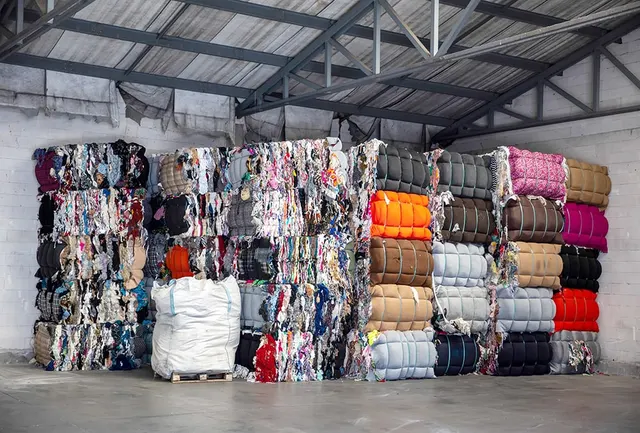
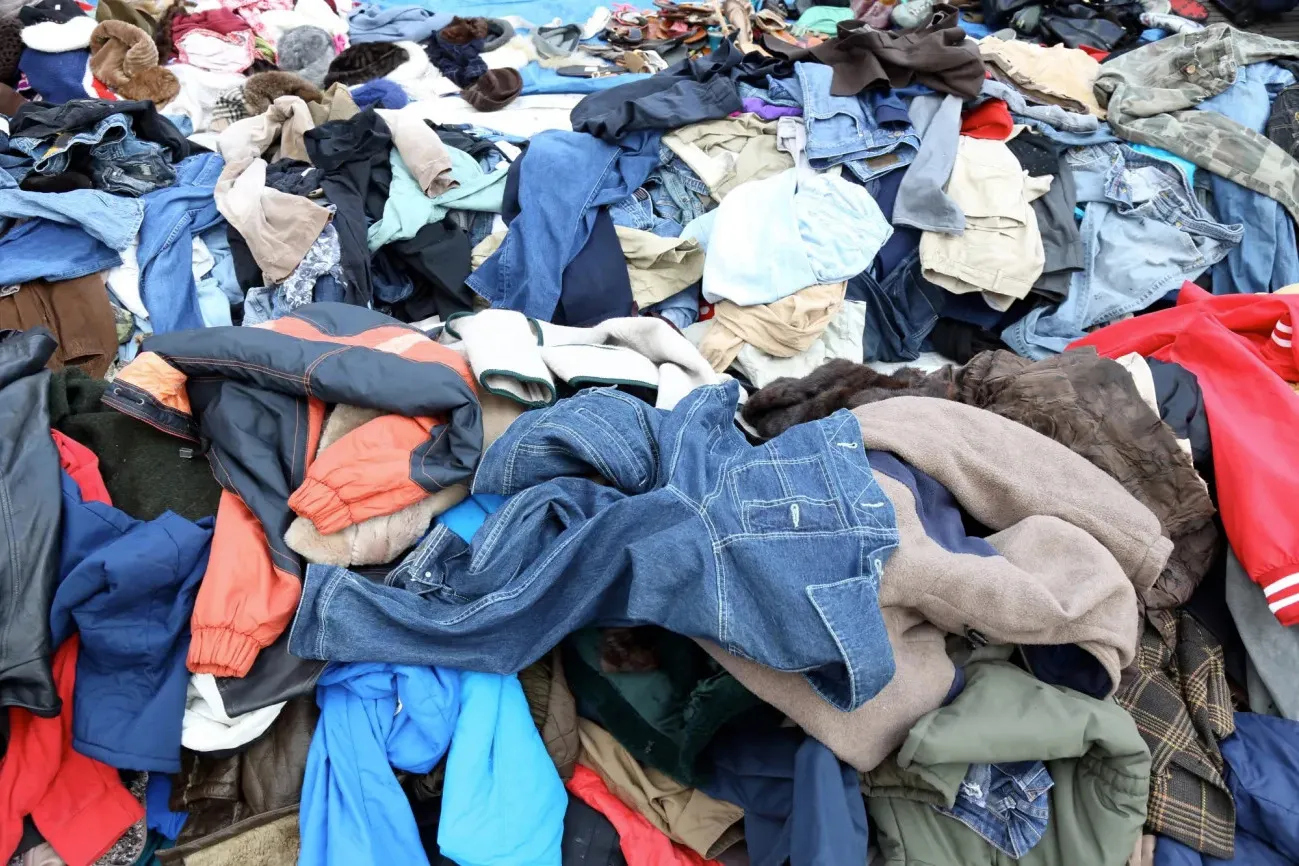
Textile waste is a growing problem in Europe: almost 7.5 million tonnes are generated each year. Only 30 to 35% of this waste is collected, and less than 1% is actually recycled into new products. The main obstacles to effective recycling are the presence of elastane fibres and dyes, which limit the potential applications and economic value of recycled textiles.
New optical detection method
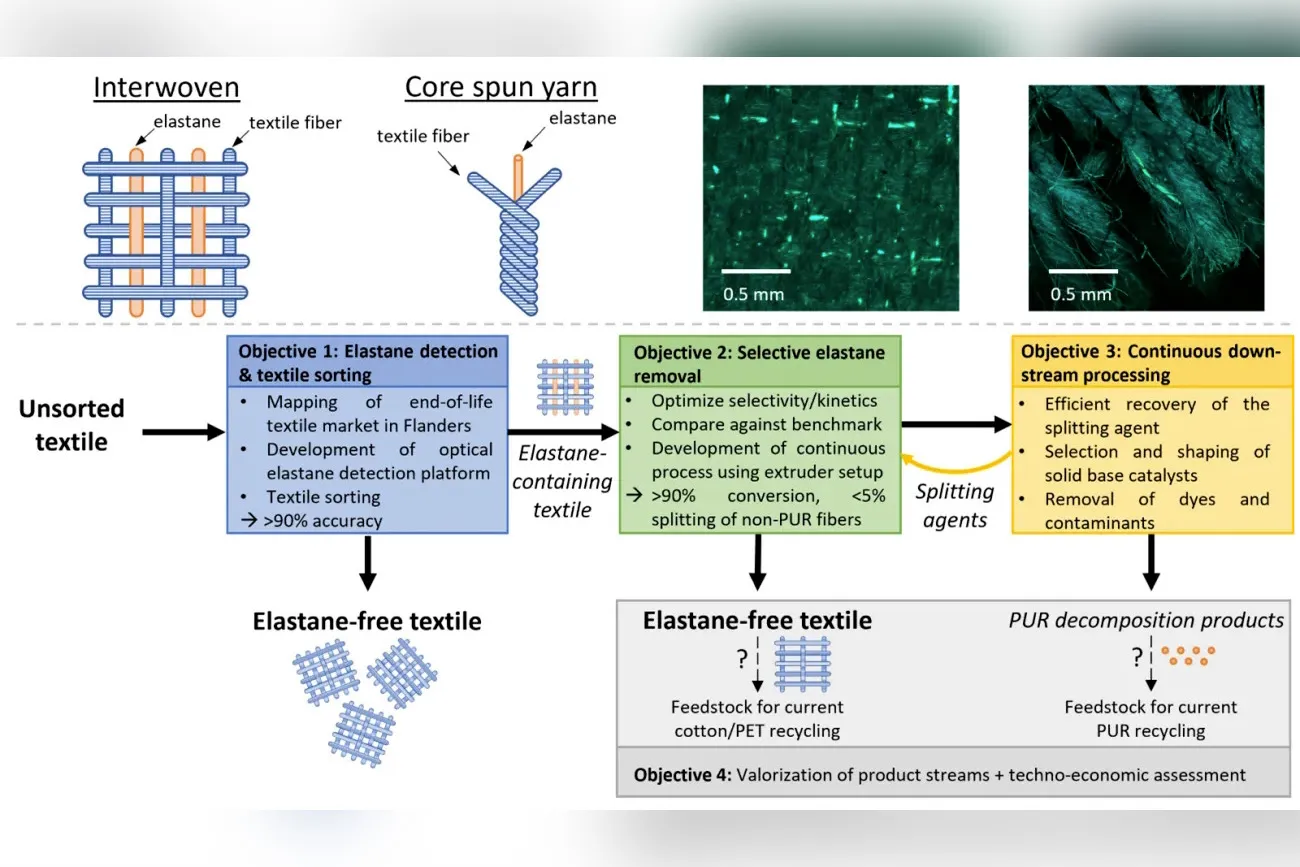
The Recyclex project, a collaboration between VITO, KU Leuven and Centexbel, aims to radically transform textile recycling by tackling the biggest bottleneck in chemical textile recycling: the presence of elastane fibres and dyes. The project is introducing several groundbreaking innovations to address this problem. These include a new approach to optical detection, which can efficiently distinguish textiles according to their elastane content. The approach is based on a recently patented optical detection and sorting system developed by KU Leuven. Compatible with industrial sorting lines, this innovation marks a breakthrough for the recycling sector.
Selective removal of elastane
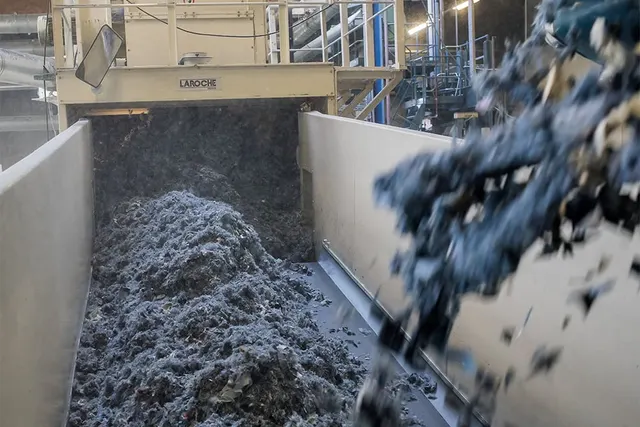
KU Leuven has developed a new class of cleavage agents that can selectively depolymerise elastane from polyester, despite their chemical similarities. This process requires fewer chemicals than current extraction methods and can be combined with decolourisation, making it both efficient and environmentally friendly. The project uses this method to produce elastane-free textile streams suitable for existing recycling technologies. The elastane removal process is being converted into a continuous process, based on an approach already used by VITO in biomass processing. This involves VITO developing bespoke solid catalysts, combined with new selective sorbents for the simultaneous removal of dyes. This makes it possible to reuse the cleavage agent and create new value from elastane-based reaction products.
An integrated approach to textile recycling
The Recyclex project takes a full value-chain approach to textile recycling. This includes a valorisation study of the product streams by CENTEXBEL & VITO. This integrated approach promises to make a significant contribution to Flanders' recycling sector, which has enormous potential. The innovation being developed by Recyclex is much needed, as the European Waste Framework Directive sets out strict requirements to increase textile recycling rates. Separate textile collection will be mandatory from 2025, and the use of recycled fibres will be mandatory from 2030, alongside strict export controls.
Contribution to wider environmental objectives
The Recyclex project is part of Moonshot, an innovation programme supported by the Flemish Government that helps companies reduce their CO2 emissions. The initiative not only tackles the urgent problem of textile waste, but also supports wider environmental objectives.
Question about this story? Ask your question
Keep following this
Get an email when a new story is published. No account needed.
- ThemeMaking use of textiles and other waste streams
- SubjectTextile waste