Contaminants in recycled aggregates: a solution is at hand
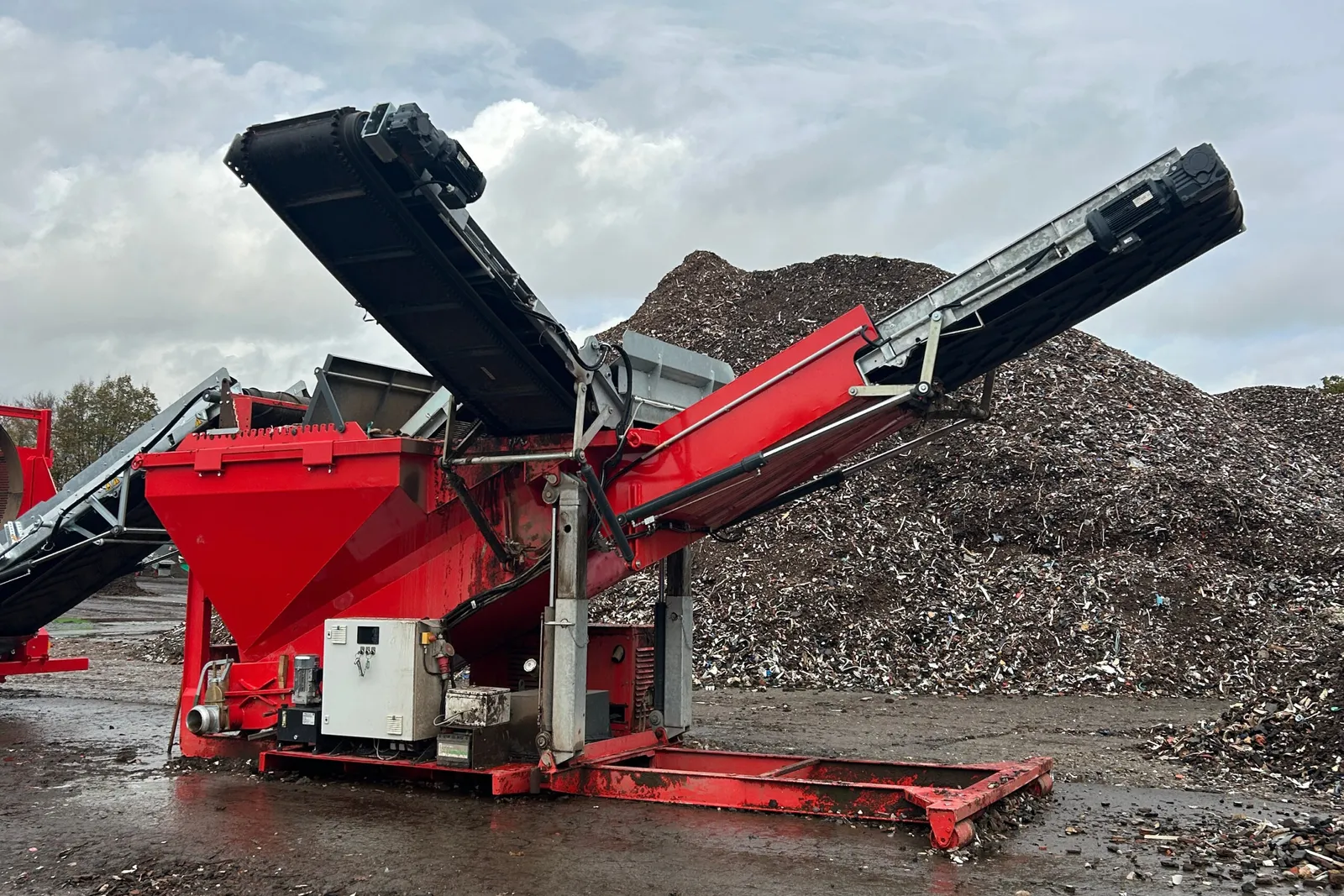
Removing contaminants is crucial to producing high-quality end products from recycled inert concrete and rubble aggregates. Contaminants such as plastic, wood and textiles must be removed during processing. The sooner, the better. At the start of the recycling process, contaminants are generally still large and relatively easy to identify and remove.
The saying goes that recycling starts at the gate. That is easier said than done. At first glance, it may be possible to get a good impression of the level of contamination, but you cannot see inside the rubble. The location where processing takes place also plays a part. At a fixed site, there is more control when rubble is tipped and a clearer picture of the type and level of contamination. On the other hand, mobile processing sites may have several thousand tonnes to process. During site clearance, contaminants are selectively removed. What remains is a large rubble fraction, with only a small amount of residual material and contaminants still to be removed.

Solutions for contaminants: air separators
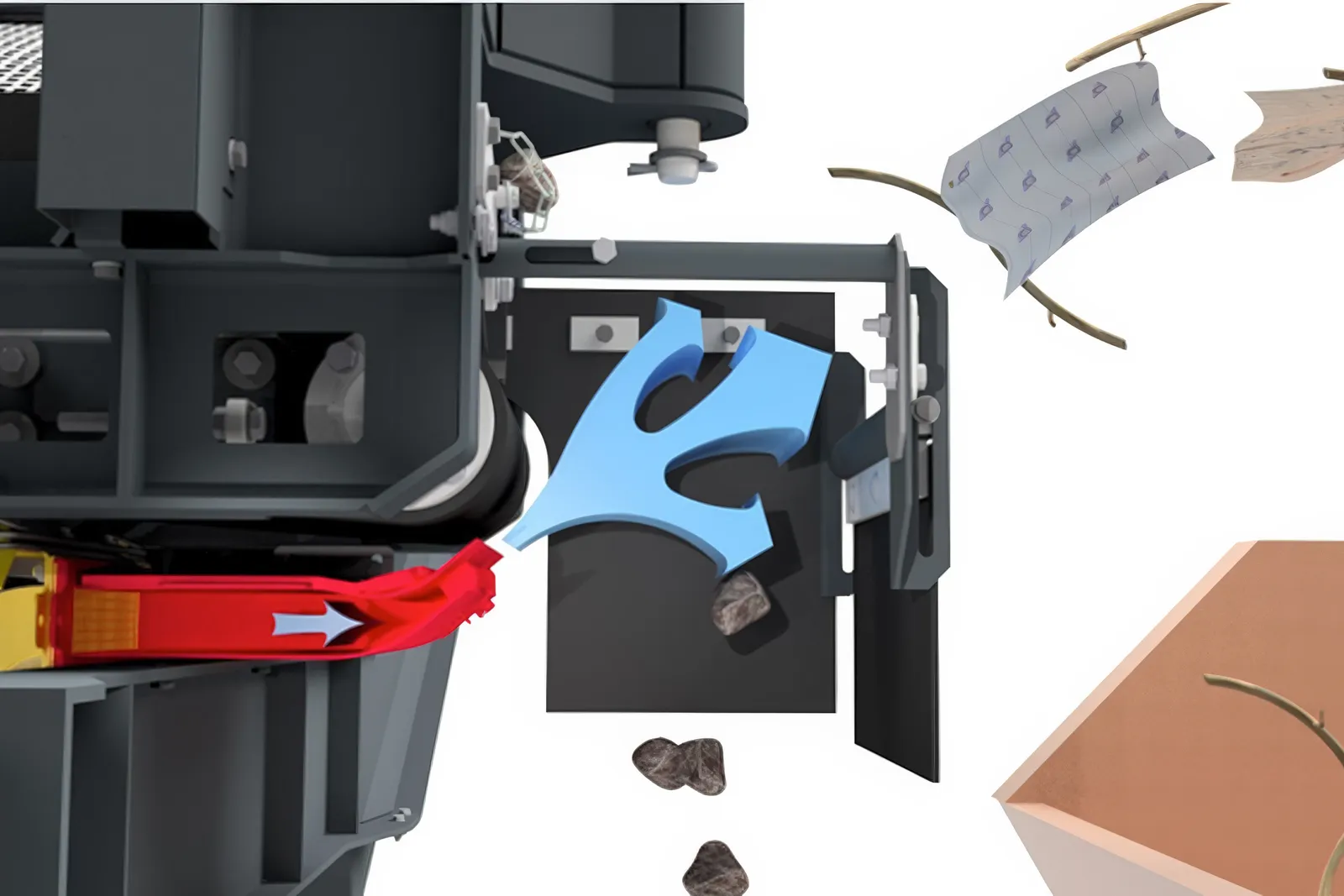
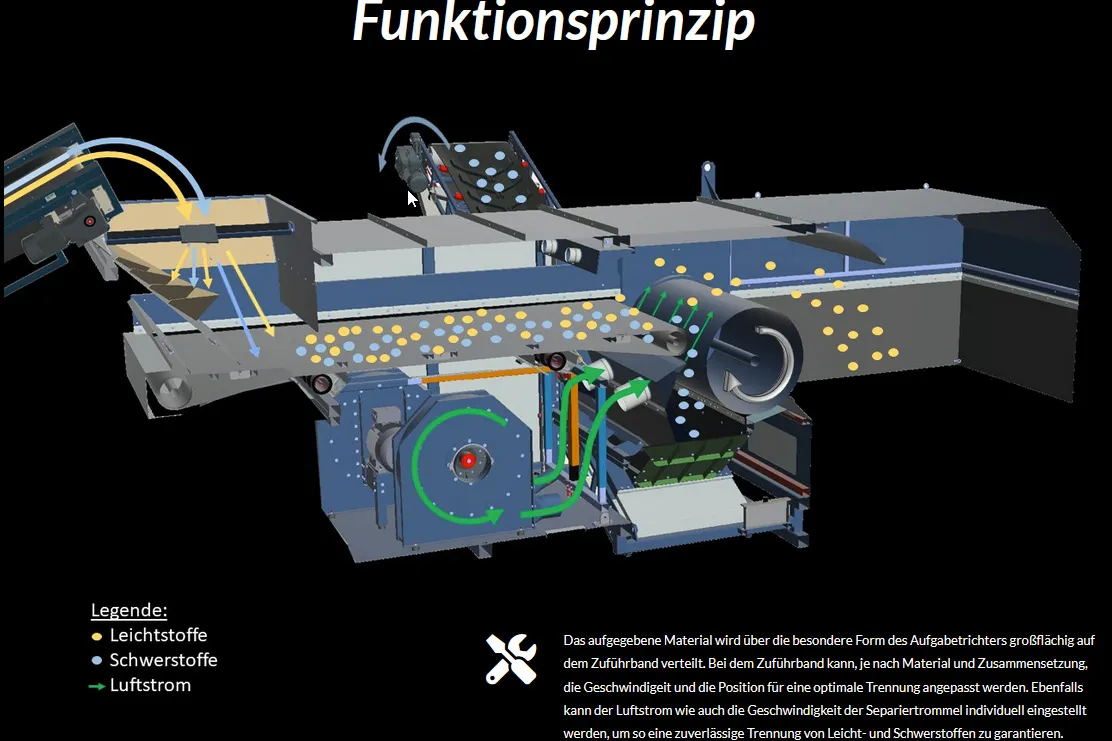
Both fixed and mobile processing plants have solutions for removing various contaminants from aggregates. If pieces are large enough, this can initially be done manually or with an excavator. However, this is labour-intensive and limited to pieces larger than 400 to 500 mm. Once the material gets smaller, this is no longer straightforward or efficient. The most commonly used solution is an air separator, which blows out lightweight materials such as wood, plastic and textiles relative to the rubble. Air separators are available in various widths, depending on the required capacity. Fixed plants often use a rotating drum. The wind presses the lightweight materials against the rotating drum and carries them over it. The fine sand fraction must first be removed, otherwise this creates an additional dust problem. Once the fines have been removed using a screen, this problem is resolved and optimal separation can take place. A ratio of 1 to 3 is ideal for this. Wind speed, wind angle, feed rate and distance can be adjusted for optimum performance. Air separation systems can also be used on mobile plants. Here, air nozzles are usually installed at the transfer points after the finishing screen, blowing the lightweight fractions away at an upward angle. An air knife on a mobile plant offers slightly fewer adjustment options, but the material’s recirculation means contaminants get a second chance to be removed on a second pass.
Alternative: float-sink systems
In some cases, an air separator may not be the best solution, owing to the properties of the contaminants. An alternative is to separate the material using a float-sink system or water bath. In this case, the screened material enters a water-filled tank. Once submerged, the lightweight materials rise to the surface, while the heavy materials sink to the bottom, where they are collected by a screw or conveyor belt. A screw has the advantage of having fewer moving parts. A conveyor belt, in turn, can handle a wider range of piece sizes without becoming blocked. Brushes carry the lightweight, floating fraction over the edge at the surface. This is a simple solution, but it has the disadvantage of losing more water. An alternative is to use an open slat belt to remove the water first, after which the lightweight materials are carried away on a conveyor belt.
Magnets for removing iron
Iron is also a contaminant in rubble. It is generally less of a concern, but can cause significant damage if not removed correctly. Because of its shape, iron can clump together and cause blockages beneath the rotor or on the downstream screens. In addition, the sharp edges of iron pieces can cause holes and tears, or premature wear, on conveyor belts. Iron is removed using magnets. Various types of magnets are available, including ferrite and neodymium, but in recycling they are generally divided into two types: permanent magnets, which attract continuously, and electromagnets, which can be switched on and off. Magnets are available in different strengths, depending on the application. Overband magnets and head pulley magnets are the most commonly used systems in recycling. Depending on the situation, an overband magnet can be positioned across or along the conveyor belt. A cross-belt arrangement is more compact and is often used in mobile plants. An inline arrangement has the advantage of capturing material while it is airborne, but requires more space and a more complex set-up. Head pulley magnets, by contrast, are very compact because they are integrated into the conveyor frame. However, they are generally used mainly for smaller iron particles that were not picked up by the upstream cross-belt magnet because they were positioned beneath the rubble.
Improved quality
As you can see, there are several ways to remove contaminants from aggregates. They lead to better test results, making recycled aggregates a high-quality alternative and contributing to circularity in the construction sector. In addition, the contaminants removed also become a valuable stream in the recycling chain. Ask your supplier about the available solutions.
Een zakelijke vraag aan Van der Spek NV? Get in touch
Companies in this story

Keep following this
Get an email when a new story is published. No account needed.
- ThemeCircular construction and demolition
- SubjectVOORUIT column
- CompanyVan der Spek NV