The future of construction starts with trust: COPRO on certification, sustainability, circularity and AI
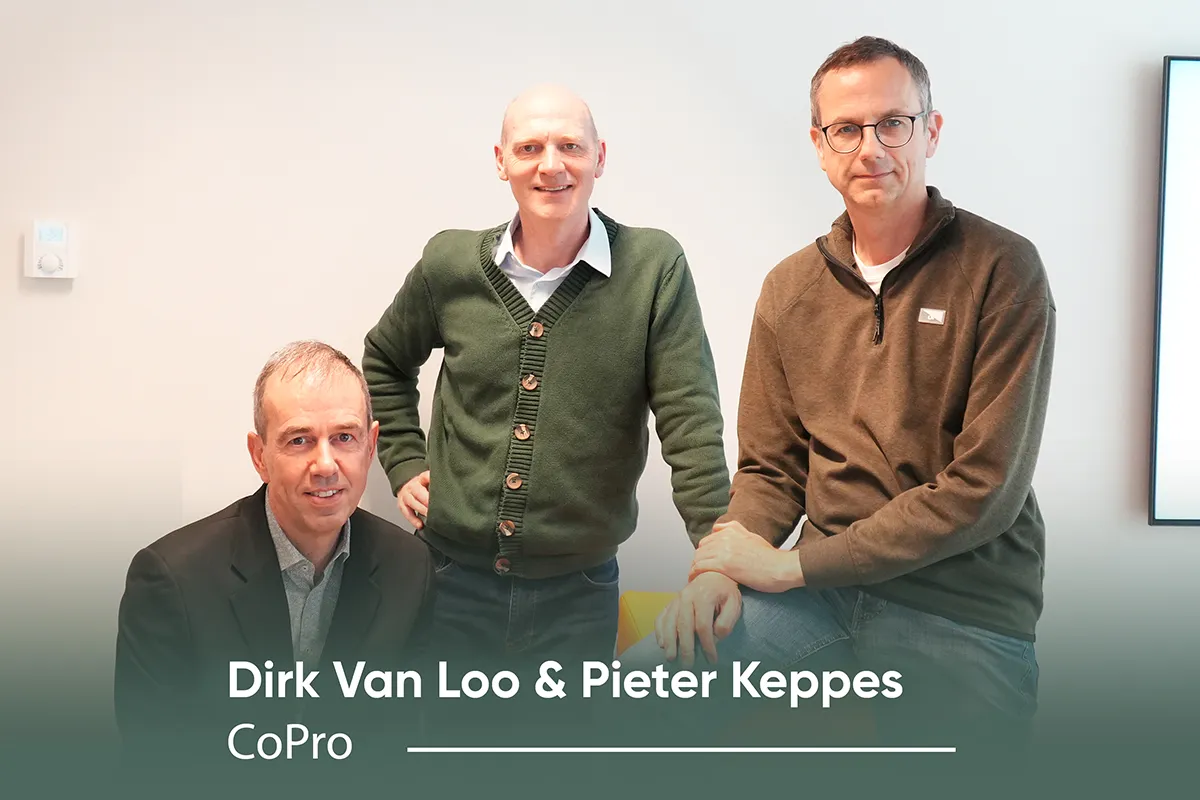
How do you guarantee the quality of construction materials in a sector undergoing a major shift towards sustainability, circularity and digitalisation? In this podcast, Björn Crul talks to Dirk Van Loo, CEO of COPRO, and Pieter Keppens, Sustainability Manager at COPRO. They explain why independent certification remains essential to the construction sector, and how topics such as circular construction, recycled aggregates, the CO₂-Prestatieladder, digital quality control and artificial intelligence are helping to shape the future of quality assurance. An engaging conversation about trust, innovation and COPRO’s role as a connecting link within the construction sector.
Een zakelijke vraag aan Copro? Get in touch
Full transcript
All chapters (22)
- Introducing COPRO
- Why certification is essential
- Certification in practice
- COPRO as a quality label
- From product to personnel certification
- A practical example
- Ten years of change at COPRO
- Sustainability as a new dimension of certification
- The three dimensions of sustainability
- High-quality circular construction
- Living Lab Circulair Beton
- Innovation and certification
- Sustainability beyond materials
- Digitalisation in certification
- MyCOPRO
- Reliable data as the foundation
- Artificial intelligence
- Digital support for asbestos experts
- Partnership as a strategic pillar
- Independence as a core value
- Closing message
- Closing
Introducing COPRO
Björn Crul Hello, listeners, and welcome to this new podcast in collaboration with COPRO.
COPRO was founded more than forty years ago with a clear mission: to guarantee and improve the quality of construction materials and construction processes. Today, sustainability and circularity are also high on the agenda.
My guests today are COPRO CEO Dirk Van Loo and Sustainability Manager Pieter Keppens. Gentlemen, welcome.
Hello, Dirk. Let me start with you. COPRO has been around for more than four decades. Why does your role as a neutral party, as an independent certification body, remain essential today?
Dirk Van Loo Well, COPRO may not be familiar to everyone, but I guarantee that by the end of this podcast, when you empty your letterbox at home over the next few days, you’ll think of COPRO. That’s what we’re aiming for.
COPRO’s role is essential. Why? Because trust is so crucial in construction.
For public contracts, the supervising official has to inspect products before they are used on site. That has been enshrined in law for more than fifty years. It wasn’t straightforward. It caused delays and extra paperwork. Products would, for example, be left waiting on site until they had been approved. And what if a product failed to comply? It would have to go back to the manufacturer, and so on.
That led to a great deal of frustration for both the client and the contractor.
Why certification is essential
Björn Crul What kinds of products are we talking about?
Dirk Van Loo All kinds of construction products. Take manhole covers, for example. When one arrives on site, how do you know whether it has sufficient load-bearing capacity? You need to test it. You can’t measure that on site.
And what about other products, such as concrete? How do you determine its compressive strength? Or the frost resistance of natural stone? None of that is straightforward to check on site when materials are delivered.
That’s why those two parties, clients and contractors, looked for a solution and found one. They thought: instead of checking quality on site, let’s check it at the manufacturer’s premises. That way, you know the product complies and can use it as soon as it arrives on site.
But that kind of inspection is only useful and reliable if it is carried out by an independent party. And that is precisely why COPRO was set up by the sector itself, by those two parties: public-sector clients and contractors working together.
Time has flown by, and today our people travel all over the world to inspect products made across the globe but ultimately used in Belgium.
Read the full transcriptCollapse transcript20 more chapters
Certification in practice
Björn Crul You ensure that quality is guaranteed and that construction projects can proceed more smoothly and safely. On the other hand, certification can also be very complex. Can you give a few examples of where certification really makes a difference?
Dirk Van Loo The difference often lies in things people don’t give much thought to.
Take a crash barrier, for example. When it is delivered to site, you can’t simply look at it and say that the quality is good and it will do what it is supposed to.
But if a lorry leaves the road, knowing for certain that it will do its job is a matter of life and death.
That’s why crash barrier systems are tested extensively. Cars, buses and lorries are deliberately crashed into these structures at a test site under controlled conditions. We attend the tests and check that everything goes as it should.
But that’s not all. We also inspect and test the quality of the crash barriers during production. In addition, we check on site that the structure tested in those crash tests is actually built in the same way.
Only when everything complies does the manufacturer receive a certificate and become eligible to supply road authorities.
That way, we can all have confidence in the quality.
COPRO as a quality label
Björn Crul It’s not just a certificate, Dirk. COPRO is also marked on the product.
Dirk Van Loo Yes, that’s right. Certification is much closer to home than we think.
When you empty your letterbox this evening, as I said earlier, take a look at the manhole cover in the pavement. I’m almost certain you’ll see “COPRO” cast into it.
What does that mean? It means that a COPRO inspector has visited the manufacturer and inspected both the process and the products.
You can’t tell with the naked eye whether a cover is strong enough to withstand heavy traffic. You can’t see that when it arrives on site. You need objective inspections for that.
The COPRO mark on the cover tells the road authority, and you too, that you can have confidence in its quality.
That confidence becomes even more important on critical sites, such as asphalt in the Brussels tunnels or on the runways at Brussels Airport.
We carry out extra inspections there simply because there is no margin for error. The quality has to be absolutely first-rate. You can’t afford to have to rebuild tunnels or runways because poor-quality asphalt needs replacing.
From product to personnel certification
Björn Crul We’ve talked about products, but you go a step further. One of the newer areas you work in is personnel certification, for example for asbestos experts. What is this kind of certification for?
Dirk Van Loo That’s right. COPRO started out inspecting products. That’s where the name comes from: control of products.
But over the years, people came to realise that a good product alone is not enough to deliver a good end result.
The way a product is installed or traded, and the people who process it, are also very important.
You can have the best crash barrier in the world, but if it is installed upside down, you still have a problem.
The same logic applies to professionals such as asbestos experts. I don’t know if you know what they do, but they draw up an asbestos certificate that you receive when you buy a home. It tells you, as the buyer, whether and where there is asbestos in your home. It’s an important certificate and it can have major implications for safety.
Here’s a very practical example. When I recently renovated my parents’ home, I had to get an asbestos certificate drawn up. Fortunately, when I read it, I saw that there was no asbestos in the property.
But a few weeks later, when I arrived at the recycling centre with some removed floor covering, I was told that it contained asbestos.
A practical example
Björn Crul And all the more so, I imagine, when you’re the CEO of COPRO.
Dirk Van Loo Yes, but especially when you know that you removed that floor covering in an enclosed space with your son. You wouldn’t want to think that it might have contained asbestos.
Fortunately, it later turned out that the person who drew up the asbestos certificate had got it right, not the employee at the recycling centre.
Ten years of change at COPRO
Björn Crul Dirk, you’ve now been CEO of the organisation for ten years. How have you seen COPRO change during that time? What do you think are the main trends?
Dirk Van Loo There are two key trends.
The first is digital transformation. For many people, certification brings to mind paper, certificates and forms. We set about changing that, and in recent years we have completely redesigned and digitised our processes.
Investing in digitalisation has transformed COPRO over the past ten years. We have developed a clear strategic vision for it, and it runs like a thread through the organisation.
The second key trend is sustainability.
In the past, the focus was on the technical quality of products. A product had to last a long time, to be durable. Unfortunately, in Dutch we use the same word for durability and sustainability. Today, the question is also whether a product has been made responsibly, whether it can be recycled and whether it fits into a circular strategy.
That has greatly broadened our field of work.
Sustainability as a new dimension of certification
Björn Crul Yes, absolutely. About a quarter of your activities are now linked to sustainability. What does that tell us about the future of certification and the future of COPRO?
Dirk Van Loo It mainly shows that certification is changing very quickly. That is a result of the growing importance of sustainability in society. It is changing our entire way of working.
Technical product properties are very easy to measure and validate. Want to know the strength of a sewer pipe? The elasticity of a rubber ring? That’s easy. You run a test, and it is usually described somewhere in a standard. Then the answer is clear. There is also often plenty of experience, so we know very well what is good and what isn’t.
But sustainability is a much more complex matter. Was the pipe produced sustainably? But what does sustainable mean? What is its environmental impact? Can the pipe be recycled? Can it have a second life?
That is much harder to determine and much harder to inspect.
Standards are emerging in this area too, but there is less experience and less consensus.
Björn Crul Yes, and there are a lot of organisations working on this.
Dirk Van Loo Yes, indeed. You can also see that companies are making more and more sustainability claims. Greenwashing is everywhere. Logos, certificates, attestations, all over the place. Nobody really knows what to make of it any more.
That is precisely why an impartial body has such an important role to play in sustainability. And it is a role COPRO needs to take on.
Recycling has always been a priority for COPRO, by the way. The construction sector is Belgium’s biggest waste producer. Forty-five per cent of all waste comes from construction.
Belgium, and Flanders in particular, has been a world leader in the circular economy in the construction sector for many years.
It may surprise you, but for more than fifteen years, ninety-five per cent of construction and demolition waste in Belgium has been recycled.
What we need to work on now is high-quality recycling.
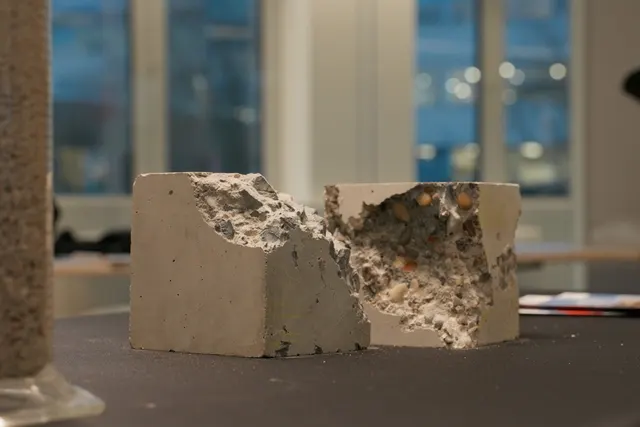
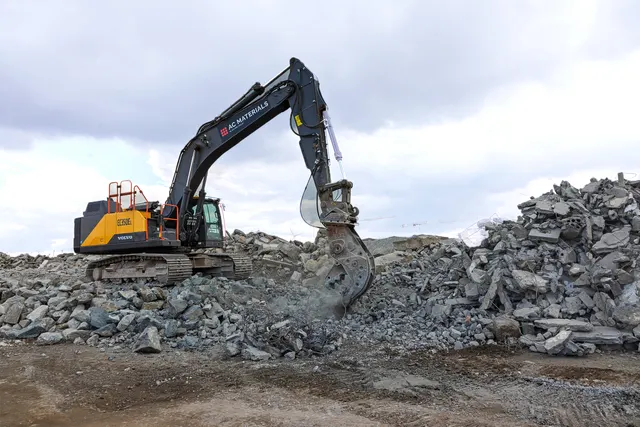
To give a very concrete example: concrete rubble from a road can be used to build a new road. So instead of downcycling it by using the recycled concrete aggregate as a sub-base material, we should put it to high-quality use again.
For COPRO, that means moving on from the traditional question, “Is this product good?” to a very different one: “Is this product suitable for this application?” That is where I believe certification is heading.
The three dimensions of sustainability
Björn Crul When we talk about the future and sustainability, Pieter Keppens, I naturally turn to you. You are Sustainability Manager at COPRO. What does sustainability mean in practice across the different areas in which you operate?
Pieter Keppens As Dirk said, a sustainable product used to mean, first and foremost, a product that lasts a long time. A sustainable road is primarily one that lasts a long time. That is still true. Above all, sustainability means lasting a long time.
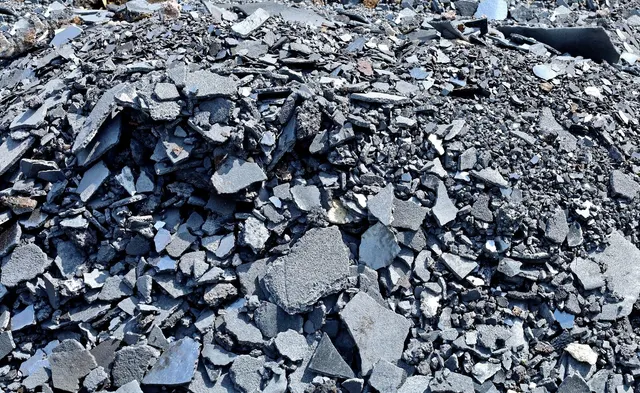
The idea of recycling came later. Construction and demolition waste from building demolition can no longer be sent to landfill. We turn it into new construction materials, such as recycled aggregates for road bases and sub-bases.
That construction and demolition waste may contain potentially hazardous substances, such as asbestos, which Dirk mentioned earlier. We must ensure that these recycled aggregates meet all environmental legislation requirements. That way, we can be sure that using these recycled materials will not create problems for future generations.
The third dimension is sustainability in terms of the environmental impact of construction materials and structures.
How much energy, how many primary materials and how much water are needed to produce and use the material? How much is needed during its service life, over the twenty to forty years of that road? And how much is needed to demolish and recycle the road afterwards?
We are seeing that expectations of a construction product have risen significantly. It must last for twenty to forty years, protect our environment for future generations and have the lowest possible environmental impact.
High-quality circular construction
Björn Crul I understand that recycled aggregates have become very important. There are various initiatives in this area that link it to sustainability. Could you tell us a little more about them?
Pieter Keppens At COPRO, we do indeed have a very strong focus on circularity and the recycling of materials.
As I said, recycled aggregates are widely used in road bases and sub-bases. The real challenge is how to use, for example, recycled concrete aggregate in a truly circular way.
Old concrete must become new concrete again. That is the true definition of circularity.
With betongranulaat A+ and, since the beginning of this year, betonbrekerzand A+ too, it is possible to partially replace both the coarse and fine fractions of concrete with circular materials such as recycled concrete aggregate.
Björn Crul Are there any materials where we have already made significant progress?
Pieter Keppens A slightly less well-known, but very good example is reclaimed asphalt. It comes from milling old asphalt pavements.
More than one million tonnes are put back into circular use every year. So old asphalt is reused in new asphalt.
Another very interesting application is tree soil.
We want more and more trees in cities, but space is limited. We need room for pedestrians, cyclists, cars and buses. At the same time, trees also need space for their roots.
Normally, these two functions are kept separate.
Tree soil allows us to combine the two functions. On the one hand, it provides a growing medium for the tree; on the other, it serves as the road sub-base.
This gives the tree more room to grow while still leaving enough space for cyclists and pedestrians.
Living Lab Circulair Beton
Björn Crul The circular economy is developing rapidly, and you are also actively involved in partnerships such as Living Lab Circulair Beton. What are you learning from it?
Pieter Keppens Living Lab Circulair Beton is a VLAIO-supported project that aims to bridge the gap between supply and demand for circular concrete, with the goal of simply using more circular concrete.
A wide range of stakeholders are working together on it: producers of circular materials, producers of circular concrete, users, clients and COPRO as the certification body.
The aim sounds simple: use more circular concrete.
But behind that lies an entire supply chain that is still held back by various bottlenecks.
The main lesson is that we need to work together to resolve those bottlenecks and, in doing so, make much greater use of circular concrete.
Innovation and certification
Björn Crul When it comes to innovation, we all know that it can sometimes clash with standards based on existing materials. How do you find solutions to that?
Pieter Keppens That is right.
By definition, innovation does not comply with existing standards.
Existing standards are essentially a summary of what everyone has agreed on after many years of experience. This is set down in a document, which is updated roughly every fifteen years based on new experience.
Then an innovation comes along. It is new and innovative, so no standard exists for it yet.
With an innovation certificate, we build confidence in that innovative product step by step, project by project.
To do this, we work with a group of experts who assess the innovation. We monitor every project.
In this way, we systematically build up experience and can develop a new standard more quickly.
Sustainability beyond materials
Björn Crul Pieter, I hear you talking about sustainability in relation to construction materials and aggregates, but it is applied more broadly too. Could you give a few examples?
Pieter Keppens I think the CO2 Performance Ladder is a very good example. It is a system that encourages companies to consider the environmental impact of their activities. First, they identify the main factors contributing to that impact, then develop an action plan to reduce it.
A few examples. On a construction site, when a new road is being built, the transport of materials is very important. This includes both the removal of excavated soil and the delivery of recycled aggregates, other aggregates, concrete and so on. Optimising this can make a big difference.
Another example is a concrete batching plant. For concrete, choosing a cement type with a low CO2 impact and transporting aggregates to the batching plant are both very important factors in reducing its environmental impact.
Both of these actions can make a big difference to concrete’s environmental impact.
Of course, everyone talks about environmental impact. We also need to make it objectively measurable. Standards for this now exist. Our role at COPRO is to ensure that everyone applies those standards correctly and that the figures are indeed comparable.
Digitalisation in certification
Björn Crul Yes, that is precisely the aim of the CO2 Performance Ladder. Dirk, from what you have just said, I gather that sustainability is a very important trend for you, but so is digitalisation.
Like the construction sector itself, COPRO is in the midst of digitalisation. What certification challenges are already being addressed by digital tools?
Dirk Van Loo I see three key challenges.
The first is very simple. Digitalisation must make life easier, not more complicated. The aim is to obtain reliable information, the information we need.
The end user simply wants to know: can I trust this product or not? And, above all, can I use it for the purpose I have in mind? That natural stone tile might be perfect indoors, but entirely unsuitable outdoors.
This digital information must be available quickly, simply and very clearly. And if the end user does not want any extra data, they should not have to receive it.
A green or red light, so to speak. That is what they need.
If I order sand-cement, as a customer I simply want to know: does the product meet the requirements for my application, yes or no? I may not need to know which type of cement or sand was used.
If I want more information, such as technical properties, composition, raw materials, environmental impact and so on, I should of course be able to find it easily. Above all, I need to be able to trust that the information is accurate.
Information overload is often a major pitfall here. The asbestos survey report for the home I mentioned earlier is forty-nine pages long. Surely we have to ask ourselves whether I need forty-nine pages to find out where there is asbestos in my home?
The second challenge of digitalisation is efficiency and speed.
A very simple example: COPRO processes ten thousand test reports a year, containing hundreds of thousands of test results in total.
We now ask for these to be submitted digitally so that they can be imported into our system and evaluated automatically. This speeds up the process and makes it more accurate. Customers get their results sooner, and we can also step in much faster.
Production at the manufacturer and work on site carry on relentlessly every day.
A third challenge is that digitalisation opens the door to proactive quality control.
Artificial intelligence allows us to recognise patterns. We can detect problems before they arise on site.
This is a very important shift: from the reactive approach we used to take towards proactive, risk-based work.
So we are going digital to work more efficiently, but above all to make information more useful and reliable for the customer.
MyCOPRO
Björn Crul For producers, or certificate holders, there is MyCOPRO. What does that change for them in practice?
Dirk Van Loo Customers expect the services we provide to be accurate.
If our inspectors fly to China to check whether natural stone really is frost-resistant, we need to be sure of that. We do not want the stone in the town square to be damaged by frost after the first winter.
Customers also want speed and ease of use.
Our MyCOPRO platform helps with that. We will answer technical questions automatically. Intelligent search functions make it possible to search through hundreds of documents, and so on.
We will expand this further in the future. We want to create a platform that supports users in their day-to-day work and helps them raise their quality to the next level.
Reliable data as the foundation
Björn Crul I have heard you talk about the large volumes of information you have access to. People often say that data is the new gold. Why are accurate data and their validation so crucial to the certification process?
Dirk Van Loo Yes, it is indeed crucial.
Data is everywhere. We are inundated with it every day, and artificial intelligence is making it increasingly easy to generate all that data.
Want to put together a product information sheet? It can be ready in under a minute.
We also need more and more data. The shift towards BIM, Building Information Modeling, requires enormous amounts of information. And we want to preserve all of it for the future.
That is necessary too, because we may need that data in the future. We need to learn from the mistakes of the past.
Let me give you an example. Many of our roads contain tar. It is highly carcinogenic when heated.
The problem is that we do not know exactly which roads were built using tar.
As a result, when we break up a road, we have to test for the presence of tar so that it can be removed from the supply chain.
Digital product passports will solve this in the future.
And what is needed for that? Reliable data.
The move towards sustainability also generates and requires additional data: life cycle assessments, material passports, CO2 footprints, environmental declarations and so on.
So the question is not so much whether there is data. The question is: is that data accurate? Is it reliable? Can I use it in my systems, in my BIM models and so on?
Björn Crul And you ensure that the data is reliable? You validate it?
Dirk Van Loo Yes, exactly. That is our responsibility.
Most of that data is already available. Our database, COPRO Extranet, contains information on more than ten thousand products.
And not just one-sided declarations from manufacturers, but data validated by COPRO.
If you look at the back of a guardrail, and I hope you never have to, because if you can see the back of a guardrail, something has usually gone rather wrong, you will see a code.
Anyone can use that code to look up all the product data for the guardrail, publicly, free of charge and instantly.
Very useful for inspections, reuse and so on.
The aim is to integrate that data digitally into digital project data in the future, for example in a BIM project.
That is why we are now working on linking COPRO’s databases to user databases, digital delivery notes and so on belonging to the client.
Artificial intelligence
Björn Crul You’ve already mentioned it, Dirk. AI is already playing a role at COPRO too. Why did you feel it was important to take that step now?
Dirk Van Loo As I said, COPRO processes huge amounts of data: ten thousand inspections a year, in twenty-five countries, at one thousand manufacturers. That generates a vast amount of data.
Artificial intelligence helps us identify patterns that are difficult for our inspectors to spot.
This enables us to flag quality issues at an early stage, before they show up on site.
That is much more risk-based, and a big change from the past.
Before COPRO existed, quality issues were identified on site.
Once COPRO was established, we began identifying and reporting issues during production and after production, at the point of delivery.
In the future, thanks to artificial intelligence and collaboration with manufacturers, COPRO will prevent quality problems.
That is why I think artificial intelligence will also enable us to move away from the periodic checks we carry out at fixed intervals towards more continuous quality monitoring.
As a result, we will be able to predict risks even more proactively, instead of measuring and detecting them after the fact.
That is why we really need to focus on preventing quality problems.
Of course, artificial intelligence will also help manufacturers and inspectors with administrative work. That makes sense, it is the low-hanging fruit.
But another interesting possibility is that AI could become not just a tool, but also the subject of certification.
There will undoubtedly be demand for certification of AI systems in construction, for example audits of algorithms and verification of data quality, driven by the European AI Act.
We need to prepare for that.
To prepare for this podcast, I asked AI chatbots what COPRO could do for them.
The answer was quite funny: AI itself suggested that COPRO might need to certify AI systems in the future and ensure the quality of their answers.
Digital support for asbestos experts
Björn Crul That could be another new challenge.
Going back to digitalisation for a moment, you also have tools such as Companion and Assistant. How do they help asbestos experts in their day-to-day work?
Dirk Van Loo We want to provide our experts with smarter guidance in their daily work.
An asbestos expert processes a huge amount of information. Inevitably, errors or omissions can creep in.
With our tools, we try to alert them as they enter and process data if something may be incorrect or illogical.
That makes the work more efficient, but, and this is just as important, it improves the reliability of the final result.
We all benefit from that in the end. Not just the expert, but the end client too.
Partnership as a strategic pillar
Björn Crul Dirk, let’s look to the future. Partnership plays a crucial role in your strategy. That is no coincidence, of course, since you work with a great many different partners. How important is collaboration with that network to the impact you want to make?
Dirk Van Loo Yes, collaboration is fundamental to COPRO.
Many of our activities are based on a consensus model. Stakeholders in a particular sector want us to carry out certain checks.
Public authorities, contractors, manufacturers and experts agree on what we need to do. What should we test? How? Where? How often?
That is precisely why collaboration with these parties is crucial to our day-to-day work.
We are at the centre of it all, so we do not just play a supervisory role, but above all a role in bringing those parties together.
And in a sector like ours, which is changing so rapidly, with manufacturers bringing forward innovative products and clients introducing new sustainability requirements, that connecting role is becoming increasingly important.
Independence as a core value
Björn Crul On the one hand, you have that role of bringing together a large network of stakeholders. On the other, you are also expected to be an independent, neutral party. How do you ensure that when you have to consult constantly with so many stakeholders?
Dirk Van Loo Yes, it is not easy.
A set of scales is a very delicate thing. The slightest nudge tips the scales one way or the other. So you really have to work at it every day.
You cannot ensure impartiality simply by putting an article in your statutes or giving inspectors a work instruction.
Impartiality is truly our most important value.
You have to work at it every day.
Impartiality is truly at our core. It is part of everything we do.
If you look at our website, our certificates or our letters, you will see that ‘impartial’ is always the first word you encounter.
That is no coincidence.
Because certification has no value without trust.
And, above all, there is no trust without impartiality.
We guard that very carefully.
Of course, other parties also oversee our work. Checks on checks, that is how it works, and rightly so.
But internally too, we do everything we can to safeguard impartiality as effectively as possible.
That is reflected in our board, which is entirely separate from our certification activities, and very much in the people working in the field too.
Closing message
Björn Crul Gentlemen, we’re almost out of time.
Let me ask you one final question: if you could give the sector one message, what would it be?
Pieter Keppens?
Pieter Keppens I think the construction industry is changing.
It is moving step by step towards greater sustainability and more innovation.
We need that too.
At COPRO, we want to evolve alongside the industry so that we can meet those new expectations.
And in doing so, confirm the quality and trust in that quality.
Björn Crul Dirk, one final message?
Dirk Van Loo Societal change does not happen gradually, but in leaps.
Today, we are in the midst of a double leap.
On the one hand, the transition to circularity, as Pieter has described, and on the other, the impact of artificial intelligence on our daily lives.
It is precisely at moments like these, when change happens in leaps, that trust is not a luxury but an absolute prerequisite for moving forward.
That is exactly the role we at COPRO are keen to play.
We cannot do it alone.
We have to do it together with all our partners.
Closing
Björn Crul That seems like a good message to end on.
Dirk Van Loo and Pieter Keppens, all that remains is for me to thank you for this conversation.
And thank you, listeners, for your attention. I look forward to seeing you next time.
Companies in this story
Keep following this
Get an email when a new story is published. No account needed.
- ThemeCircular business under changing regulations
- SubjectSustainability
- CompanyCopro