“A battery should never go in general waste”
Text Kris VandekerckhoveImage Renewi / Leonie Snauwaert

Lithium-ion batteries have become an integral part of our daily lives. They are found in smartphones, e-bikes, toys, power tools and even greeting cards. But electrification also has a downside: the number of battery fires in the waste and recycling sector is rising sharply. What was once an exceptional incident is now a structural safety problem.
That is clear from a conversation between Wim Pype, International Sales Manager at Renewi E-Waste, and Paul Casier, CEO of Group Casier. Both experts are sounding the alarm: the sector is reaching the limits of safety, insurability and operational viability. “It is no longer a question of whether it will catch fire, but when,” says Casier emphatically.

From isolated incidents to everyday reality
According to Pype, battery fires are now a weekly reality at some facilities. They are often small incidents that are quickly brought under control, but sometimes they get completely out of hand. He points to a major fire at the Renewi site in Wandre, near Liège, in 2023. A damaged power bank is thought to have triggered a so-called ‘thermal runaway’, in which a battery heats up rapidly and catches fire. “Within seconds, an entire area was ablaze. The roof of the storage structure gave way under the heat, and the fire spread further across the site,” says Pype. The financial impact reached around €1 million, but he says the damage goes far beyond material losses. Shutdowns, interrupted customer contracts, stricter permitting procedures and the mental strain on employees are at least as serious.
Why lithium-ion batteries are so dangerous
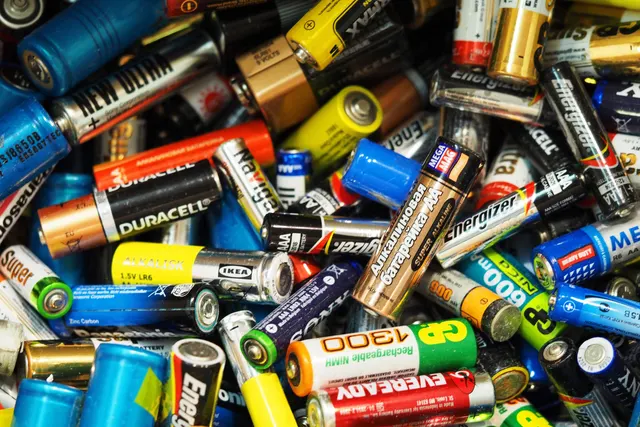
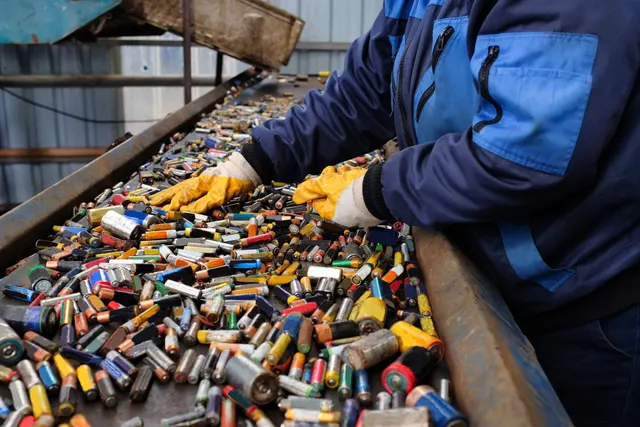
Lithium-ion batteries are highly advanced: compact, powerful and energy-efficient. But their high energy density is precisely what makes them particularly dangerous when damaged. Waste and recycling processes involve materials being compressed, broken, screened and moved. When batteries inadvertently end up in these waste streams, their internal components can be damaged. This causes a short circuit and, ultimately, a fire. “Everything around the battery is essentially fuel,” Pype explains. “One small battery can be enough to set an entire sorting line on fire.” Built-in batteries are a particular problem. Think of smartphones, e-cigarettes, earbuds and toys in which batteries are difficult to remove. According to Pype, around 80% of lithium-ion batteries are now built into devices.
Insurers are withdrawing
The situation is also becoming increasingly problematic for insurers. According to Casier, the traditional principle of insurance is under pressure. “Insurance is based on uncertainty,” he says. “But battery fires have become so frequent that insurers almost consider the risk a certainty.” As a result, premiums are rising sharply and terms are becoming stricter. According to Casier, excesses of €250,000 are now more the rule than the exception. Companies that fail to take clear preventive measures even risk becoming completely uninsurable. “Prevention is no longer optional. Without a robust safety policy, you simply can’t get insurance any more.”
Prevention is becoming critical
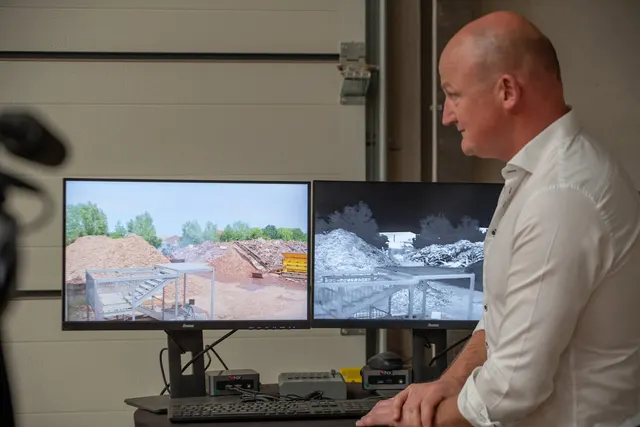
The sector is therefore investing heavily in fire prevention. Thermal cameras, smoke and gas detection, automatic fire suppression systems, compartmentation and extensive training are increasingly part of standard equipment. But technology alone is not enough, Pype stresses: “Prevention starts with the delivery of waste streams. We must keep up our efforts on inspections, awareness-raising and clear acceptance criteria.” The sector is also working with fire services to organise targeted exercises. Fighting waste fires also requires specific expertise.

Producers must share responsibility
Both experts believe that too much responsibility currently lies with the recycling sector. In their view, producers must be more involved in finding a solution. They call for European policies focused on ‘design for recycling’ and ‘design for safety’: batteries must be easier to remove, and products must be designed with the end of their useful life in mind. They are also calling for stricter regulations on disposable products containing batteries, such as disposable vapes or gadgets with built-in batteries. A European fund for fire prevention and a deposit-return scheme for lithium-ion batteries are also among the possible solutions they propose.
“Sorting waste correctly is a shared social responsibility”
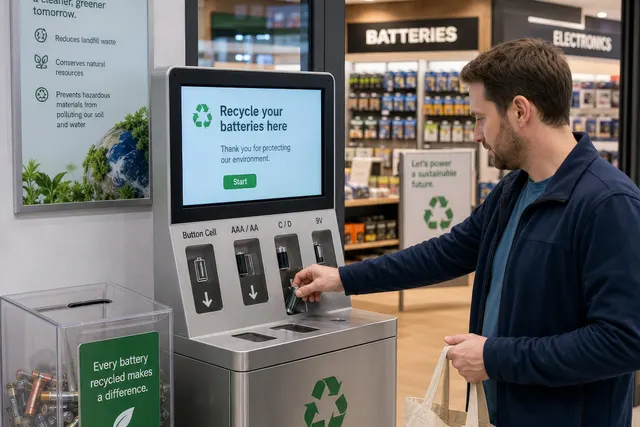
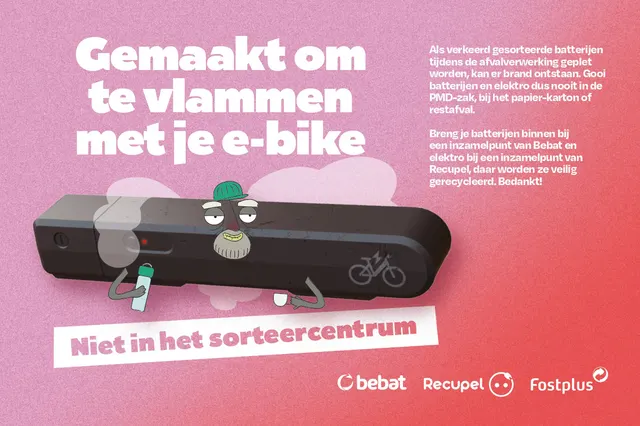
The most important message, however, is directed at consumers. “A battery should never go in general waste,” Pype stresses. “It may seem like a small detail, but it can make the difference between a normal working day and a major fire.” Casier also calls for greater awareness: “Sorting waste correctly is a shared social responsibility. Everyone in this chain has a part to play.” The message from both experts is clear: lithium-ion batteries are essential to a circular, electric future, but without proper collection, better product design and systematic prevention, that same future risks literally going up in flames.
Question about this story? Ask your question
Keep following this
Get an email when a new story is published. No account needed.
- ThemeCircular processing of electronics and batteries
- SubjectFire safety