More sustainable healthcare: from single-use to reuse
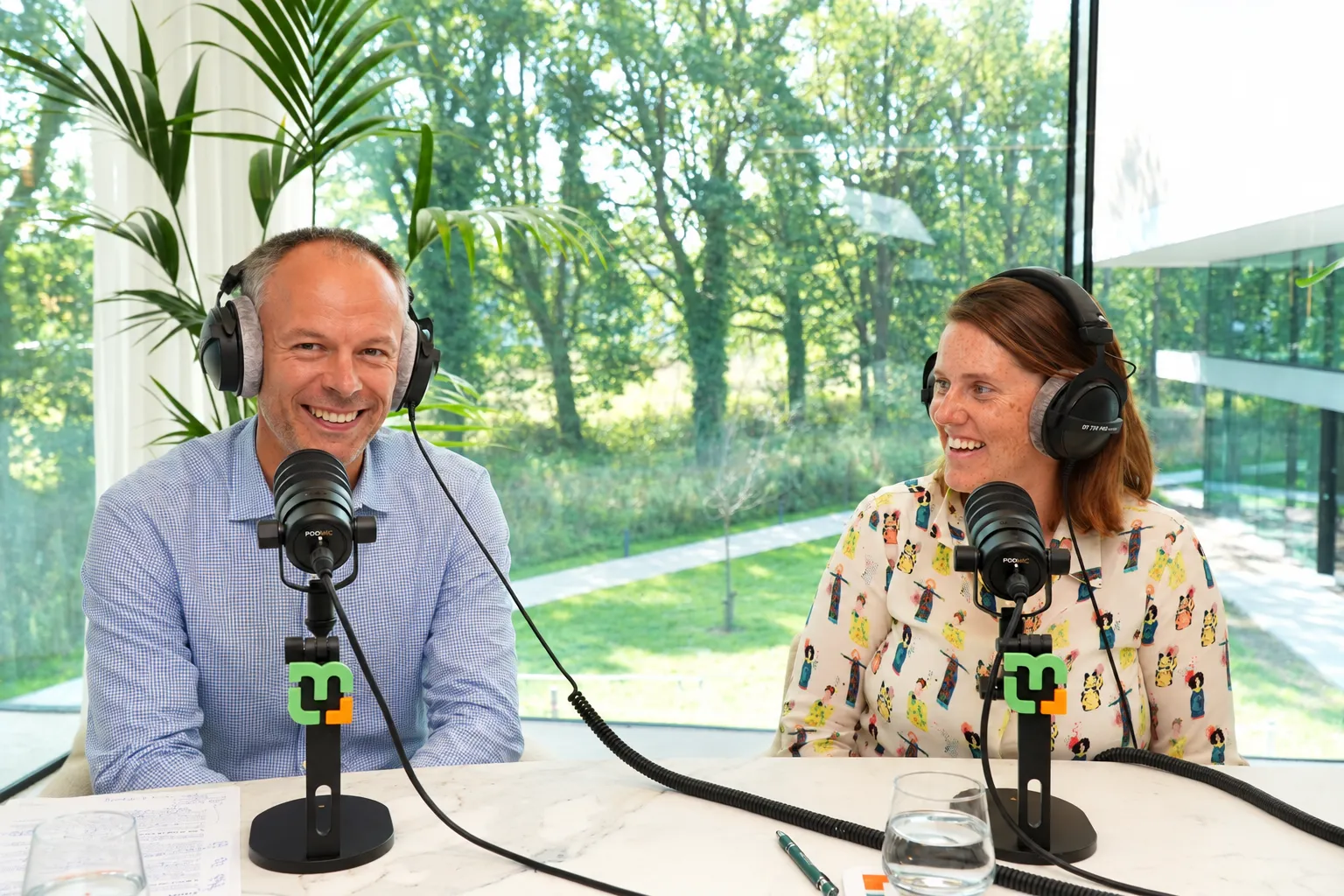
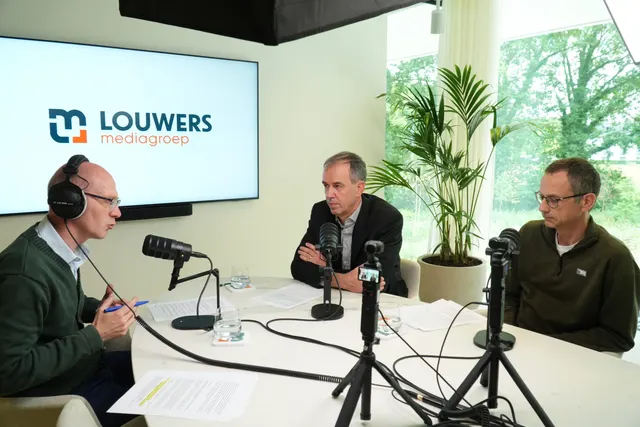
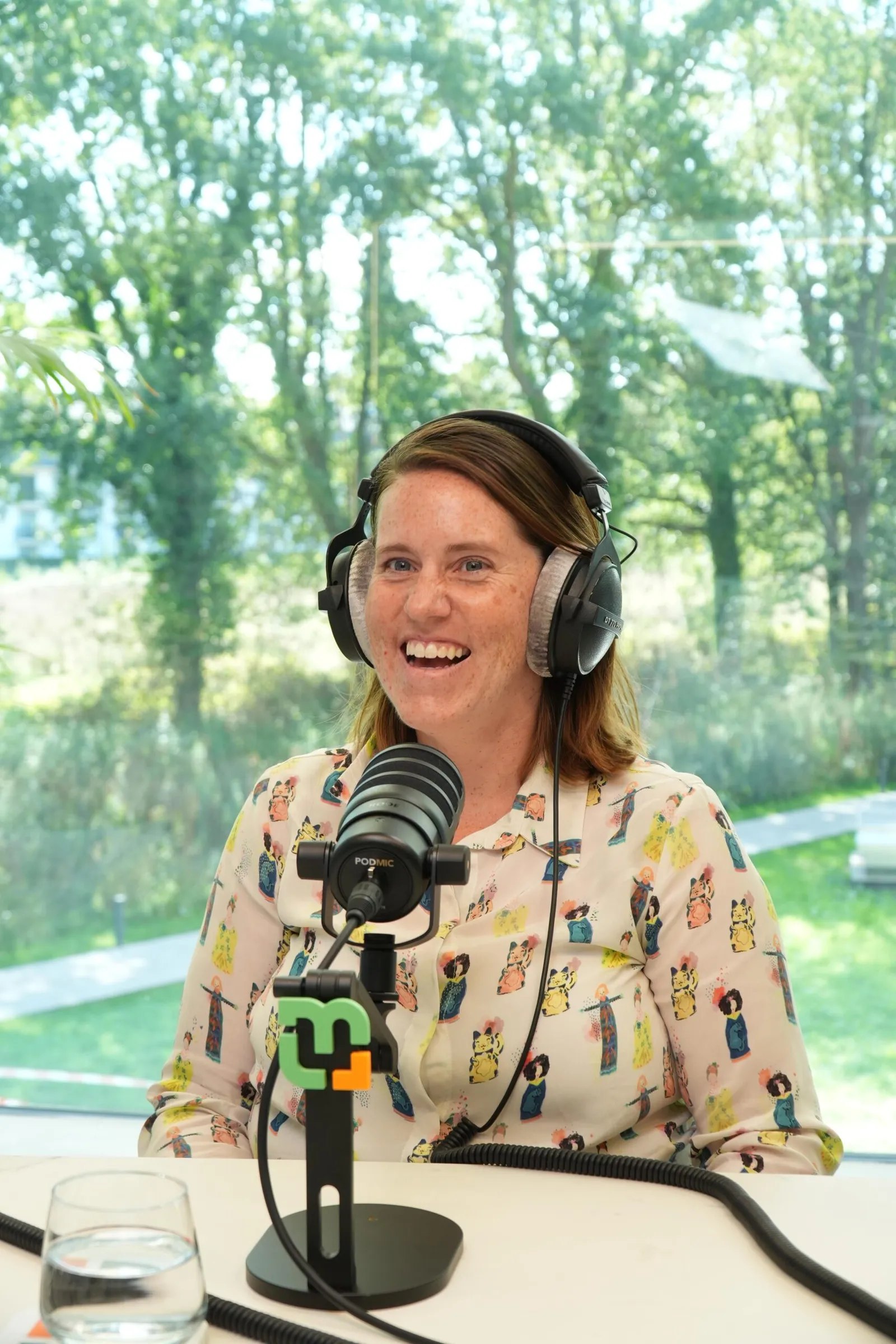
Guests: Steve Sel, Regional Manager at VIL & Evelien Kieckens, sustainability coordinator at UZ Gent | Host: Nele Roobrouck
The healthcare sector protects our health, but at the same time uses large quantities of materials that are often thrown away after a single use. Yet there is growing interest in prevention, reuse and better recycling. In this episode of Trash Talks, Nele Roobrouck talks to Evelien Kieckens of UZ Gent and Steve Sel of VIL about waste streams in hospitals, the Green Deal Duurzame Zorg, Select4Care, reusable alternatives, ecodesign and producer responsibility. The central question is how healthcare institutions can become more sustainable without compromising patient safety.
Full transcript
All chapters (20)
- Introduction and presentation of the guests
- Sustainability and patient safety
- Hazardous and non-hazardous medical waste
- Logistics and sorting at source
- Training and awareness on the frontline
- Regulations and scope for better sorting
- Green Deal Duurzame Zorg
- Commitments and room for innovation
- From single-use to reuse
- Cleaning, disinfection and sterilisation
- Manufacturers and business models
- Electronic devices and valuable materials
- Safety further along the waste chain
- Markets for recycled materials
- Select4Care in practice
- Figures on waste and climate impact
- Policy proposals and ecodesign
- Extended producer responsibility
- Joint collection and logistics
- Conclusion and closing
Introduction and presentation of the guests
Nele Roobrouck Welcome to Trash Talks, the podcast where we take a close look at the challenges and opportunities in our waste and recycling sector. Today we’re talking about a sector that protects our health, but uses very large quantities of materials every day to do so: the healthcare sector. Many products are thrown away after a single use. And often for good reasons. Think of hygiene, safety and preventing infections. Yet there is also growing recognition that waste can be prevented in healthcare, materials reused and, of course, more recycled. For example, through the Green Deal Duurzame Zorg, healthcare institutions, as well as government bodies and suppliers, are making commitments. But how does this translate into practice, and who pays for the transition? Today I’m talking to Evelien Kieckens and Steve Sel. Steve, Evelien, could you briefly introduce yourselves?
Evelien Kieckens Yes, good afternoon, Nele. I’m Evelien Kieckens. I’m the sustainability coordinator at the University Hospital in Ghent. In my role at the hospital, I mainly build bridges between people. People on the frontline, who might be doctors or nurses, but also sometimes procurement or facilities teams, as we look for more sustainable alternatives to our standard practices, for example. And sometimes those bridges extend beyond our hospital too. We’re also in contact with other hospitals or healthcare institutions to work on things together. And yes, sometimes it goes much further than that. Another part of my role is leading the Materials and Waste theme for the Green Deal Duurzame Zorg.
Nele Roobrouck Okay, Steve.
Steve Sel Good afternoon. I’m Steve Sel. I work for VIL as Regional Manager. VIL is the innovation platform for logistics. We work on innovation in our sector. We do a lot of work with companies, but also regularly with hospitals. In the past, we’ve worked on flows from the warehouse, as well as the distribution of medication within hospitals. More recently, we’ve also looked at waste streams. So we’ve built up a lot of knowledge in these areas, which I think we’ll be discussing today.
Read the full transcriptCollapse transcript19 more chapters
Sustainability and patient safety
Nele Roobrouck Absolutely. As you can see and hear, we have two very knowledgeable people at the table. I’d like to do a quick round. Is it possible to make healthcare more sustainable without compromising patient safety in any way? How does that look in practice, Evelien?
Evelien Kieckens I think it’s certainly possible. A well-known example of how sustainability and patient safety can interact is the correct use of non-sterile gloves. A lot of non-sterile gloves are used in healthcare, but they should only be used when necessary. By thinking critically about this and using them when needed, you can significantly reduce the number used, which also means less waste. That’s one thing. It also avoids giving staff a false sense of security. Patients also experience this as more caring. The risk of contamination spreading to other rooms is also much lower, because hand hygiene becomes much more important. So this is certainly an example of how the two can work perfectly well together.
Steve Sel Yes, I wholeheartedly agree, but you shouldn’t do it blindly, as Evelien says. You need to think it through carefully. But I’d like to add one more thing. It’s also important to involve the whole chain, from the producer to the hospital.
Hazardous and non-hazardous medical waste
Nele Roobrouck Yes, indeed. That’s what we’ll be discussing over the next few minutes. Let’s get straight to the point, or into the hospital, if you’ll pardon the expression. We can say that hospitals and other healthcare institutions are like small towns in their own right, with very large waste streams. And you undoubtedly have a very good overview, especially you, Evelien, of the waste streams found in hospitals and other healthcare institutions today. We all know the usual waste streams, for example from the kitchen or canteen at a healthcare institution or hospital. But today we’re focusing on the specific streams. Could you briefly explain the difference between hazardous and non-hazardous medical waste? What are the streams, and how is the waste handled?
Evelien Kieckens Hazardous medical waste is basically any waste that presents a certain risk. It’s dangerous, for example because it’s sharp or infectious, or contains blood. Think of many of the things taken out of the operating theatre, which are often hazardous. So this is a very important stream for a hospital. Then there’s non-hazardous medical waste. You can compare it a little with the residual waste you might have at home, or commercial residual waste. What typically goes into this stream in hospitals, and in large quantities? The gloves we mentioned earlier, for example, but also large quantities of incontinence products. Basically, anything that isn’t sharp and poses less of a risk goes into this stream, which is sent to a conventional incinerator.
Steve Sel Yes, and hazardous waste has to be incinerated under current rules?
Evelien Kieckens Yes.
Steve Sel With non-hazardous waste, you can sort at source, but ultimately most of it ends up in the residual waste stream and is incinerated as such. In the best-case scenario, energy is recovered from it.
Evelien Kieckens It’s interesting that you say that, Steve. We also try to sort at source. We started doing this in our operating theatres in the past. We’ve also started removing PMD from non-hazardous medical waste, as well as packaging, such as paper. There are significant gains to be made there too. We now remove about 1,000 bags of PMD and 900 bags of paper from our operating theatres every month. That’s a huge amount that would otherwise have to be sent for incineration. But it’s important to sort at source. Once it’s in our non-hazardous medical waste bags, that’s it, because no further sorting takes place. I know of hospitals in the Netherlands that do sort it, and they recover up to 20 per cent more recyclable materials. So if we could do that in Flanders too, it could certainly add value.
Logistics and sorting at source
Nele Roobrouck And if I can jump in there for a moment, how could we implement this in Flanders?
Evelien Kieckens I think that could be a logistics question, for you too.
Steve Sel It is a logistics question. We also looked at it in the project I mentioned earlier. I think it’s very important to listen to hospitals and not overload them, and to make sure a hospital doesn’t become a recycling centre. So, as far as possible, we should take the burden off hospitals. For example, you could create one extra waste stream. The sorting could then be done afterwards. In other words, you collect all the items for which there is also market demand. There’s no point collecting things separately if there’s ultimately no recycling market for them because there’s no demand for those materials. So it’s important to think this through. You create one stream and put those items in it. That’s manageable, unlike having five different bins in a department, where care staff have to spend time sorting everything. If you do it afterwards, though, you’ll still need some form of decontamination, or cleaning, before you can handle it manually.
Training and awareness on the frontline
Nele Roobrouck I’m hearing about hazardous waste and healthcare waste. Can we help employees with this, for example by giving them some form of workplace training to help them distinguish between the different types?
Evelien Kieckens Yes, we’ve been focusing very heavily on this for a number of years. We’re seeing our hazardous and non-hazardous medical waste streams start to decrease, precisely because we provide a lot of training. This includes raising awareness among frontline staff during team meetings, as well as running sorting quizzes. We also have an annual Recycling Centre Day. We have our own recycling centre on the UZ campus. Once a year, we open it up, and people who sign up can take a guided tour. We always have a fun game or quiz too, with a prize to be won. This year, for example, we ran a sorting game where one employee walked on a conveyor belt while we threw waste onto it. The employee standing behind them gave feedback and had to sort the waste into the right bin. That makes it fun, and they learn a lot too, because afterwards we give feedback: ‘Look, you put that in the wrong stream. Why do you think it belongs there?’ That helps us eliminate a lot of mistakes in an enjoyable way. At the end, the winners receive an award. We’ve introduced our own Container Cup, which is great fun.
Steve Sel I think it’s clear that I’m sitting next to a best-practice example. But in practice, the rules as they’re currently written leave a lot of room for interpretation. What we do see is that hospitals sometimes interpret them differently. And even within a hospital, interpretations can vary between departments. And yes, I can understand why people often say: safety first. We’ll put it in the hazardous waste stream. But that isn’t always necessary, and a lot of materials are lost as a result. So the government certainly has a role to play in making the rules clearer. The rules as they stand were drawn up with a linear mindset, but times have changed.
Regulations and scope for better sorting
Nele Roobrouck Exactly, and that zeitgeist is very important. So we can say that part of the waste problem in healthcare is not a lack of willingness, quite the opposite. Employees are willing to sort waste, but do not always know exactly how to do it. And the rules in Flanders are also too strict. If we look across the border to the Netherlands, we see that it is practically feasible to sort even more waste.
Green Deal Duurzame Zorg
Nele Roobrouck Let’s move on to the various projects already organised by the government, including the Green Deal Duurzame Zorg, of course, since several Green Deals are under way. But if we take a closer look at this project, what exactly does it involve? What commitments are being made by the government, suppliers, waste companies and healthcare institutions?
Evelien Kieckens I think one very important point about the Green Deal Duurzame Zorg is that it is truly a sector-wide Green Deal. That means anyone with any connection to the sector can join. That includes material manufacturers and our suppliers, in all sorts of ways. Then there are the healthcare institutions themselves, hospitals. It has a very broad reach, from hospitals to nurseries. Very small organisations and very large ones are involved. And, of course, there is collaboration with the waste sector, including our waste collectors and recyclers, and so on. Everyone has a seat at the table. I think that is definitely one of the strengths of the Green Deal Duurzame Zorg as it is organised now. It is very valuable to open up the whole playing field in this way. We have also found, thanks to the Green Deal, that everyone is very approachable when we have questions. If we want to raise specific issues as a hospital, everyone listens and thinks things through together. So that has definitely been an added benefit of the Green Deal.
Nele Roobrouck So various projects can grow out of it?
Evelien Kieckens Yes, certainly, and various collaborations too. The Select4Care project comes to mind as a very good example of how everyone was able to work together.
Steve Sel Yes, and quite recently there was an event where a number of projects and their results were presented. That is also the strength of a Green Deal: you can learn from one another. A Green Deal should also be seen as a catalyst for action. Someone takes action, someone tries something. Ultimately, we are all working towards the same goal: improving sustainability. One person can learn from another. So everyone should get on board and, as Evelien says, producers should be part of the story too. That is very important. There is huge added value in the interaction between all these different parties.
Commitments and room for innovation
Nele Roobrouck A Green Deal is essentially a commitment to make an effort. But are those commitments sufficiently concrete and measurable for you to build on? You just said, Steve, that it can work as a catalyst. Do you think that is enough, or would you say it should go further?
Steve Sel Of course, if you sign up, you are expected to commit fully and actually deliver results. But I do think it is important that it is a commitment to make an effort. Ultimately, you commit to genuinely trying something. There needs to be room for that too. If you cannot try anything and it has to work straight away, that is a problem: things are allowed to fail. That is part of innovation too.
Nele Roobrouck And you learn from that too, of course.
From single-use to reuse
Nele Roobrouck Right, moving on to preventing waste and reusing products in healthcare. It goes without saying that we need to look at reusable products, but single-use products will undoubtedly remain in healthcare too. Are we seeing a trend towards any particular type of product where the alternative is genuinely more sustainable?
Evelien Kieckens I think that, if you look at healthcare, until 15 to 20 years ago, many of our products were reusable. The shift to single-use came about because of a number of issues, including claims that sterility could not be guaranteed, and the growing pressure on the healthcare sector due to staff shortages. But we must not forget that many manufacturers and suppliers have a linear business model. The more single-use products they can sell to hospitals and healthcare institutions, the better for their bottom line, of course. But there are some examples. Take something that is very easy to implement, for instance. In our geriatric ward, we switched from single-use paper bibs, the kind used during meals, to reusable textile alternatives. Everyone is delighted with them. You can use them for longer too. With single-use bibs, you have to tear them off and throw them away every time. People notice that. Patients also feel that it makes for much warmer, more dignified care. So it is a win for everyone. We also have less waste. It is a very easy switch, and it does not create any tension with patients or lead to those kinds of discussions, because a bib stays with the patient until it is washed. So it is very straightforward. We have also carried out several studies in the past to find out when reuse is more sustainable. Manufacturers and suppliers typically tell us: “Yes, but if you want to reuse it, you have to sterilise and wash it, which uses a lot of energy and products, so it is not sustainable.” But we have carried out a number of LCAs, including one on a vaginal speculum. We found that if we could reuse a material or a speculum five times, it was already more sustainable than the single-use alternative. And when you consider that something like that can easily be reused 200 or 300 times, the benefits quickly add up.
Nele Roobrouck Yes, it is not just a quick win, quite the opposite.
Steve Sel It is a shift in costs, from the short term to the somewhat longer term. Reuse brings additional operating costs. But if you reuse something multiple times, then over time, from a total cost of ownership perspective, things look very different.
Cleaning, disinfection and sterilisation
Nele Roobrouck And if I can follow up on that, Evelien. You said that items have to be cleaned. Are hospitals equipped for that, or is it outsourced? How does it work?
Evelien Kieckens It is a mixture of different approaches. The important thing when cleaning healthcare equipment is that it is done according to a specific classification. It is called the Spaulding classification, and the requirements depend on the type of equipment. Equipment that comes directly into contact with the bloodstream or tissue, such as surgical instruments, has to be handled very strictly and go through a sterilisation process. This is usually done in a hospital’s central sterile services department. Then there is equipment that only comes into contact with mucous membranes. Take the vaginal specula I mentioned earlier, for example. High-level disinfection is sufficient for those, so the impact is much lower. Then there is equipment that comes into contact with intact skin, such as a stethoscope. In that case, simply wiping it with a cloth is enough. So the first step is to disinfect the right equipment in the right way. We, and many other hospitals, do have a central sterile services department, but over time these have been adapted as more and more products have shifted to single use. As a result, some of the capacity that used to be available is no longer there. People are therefore more likely to look for other solutions, either continuing with single-use products or outsourcing the work to external companies. That happens too, for example. Many surgical scissors and similar items are sent to external companies for sterilisation and then returned to us sterile. So that is another option.
Nele Roobrouck That does mean bringing a certain logistics chain back into operation.
Steve Sel That is true. Linear use is very simple, so yes, it requires a whole additional organisational set-up. But as I said earlier, the idea is to organise it in a manageable way for frontline staff and to take as much of the burden off them as possible. That is how you can build support and get everyone in the hospital on board.
Manufacturers and business models
Nele Roobrouck Exactly, getting everyone on board. We will probably run into another sector there, the pharmaceutical industry. As you have both said, its business model is currently built around single-use products. Are you seeing a lot of resistance from the sector at the moment, or are they also embracing the change?
Steve Sel They are embracing the change. There is a shift in mindset under way. We recently ran a project that lasted two years, and the manufacturers were very much involved. They too realise that change is needed. That said, it is an industry. They bring products to market and are liable for their use. Sometimes I think we should perhaps also make them responsible for the waste they put on the market. We will come back to that later. Before they can bring anything to market, it has to undergo all kinds of testing. They have been through lengthy procedures. They are now looking at how to give these products a different, more sustainable direction. That brings us to ecodesign. The only thing is, these procedures could be a little faster, so that we can get started in the coming years rather than having to wait five to ten years.
Evelien Kieckens I think hospitals can also play a part by including ideas about the circularity we expect in their tenders, so that manufacturers are fully aware of them. If we, as hospitals, can say that we will award more points to a more sustainable alternative, that will encourage them to focus on it too. I think that is something we can do as hospitals.
Steve Sel And the government can help push things in that direction too. We have discussed this in relation to hospitals, which are also subject to public procurement law. If you revise your criteria and include ecodesign requirements that only one manufacturer can meet, you have to be careful not to breach public procurement law by excluding other parties. It is a difficult issue, and there are no clear answers to what is and is not allowed. Hospitals also find it difficult to take risks in this area. So some kind of push is needed.
Evelien Kieckens The last thing you want as a hospital is for there to be no supplier for a particular product, or only one. They would then be able to charge far too much, and that would be the end of it for us too.
Electronic devices and valuable materials
Nele Roobrouck Exactly. And patients are also victims of the rising cost of materials. We also need to keep thinking about our waste streams. To put it in more concrete terms, and think about packaging and plastics, we have already touched on gloves, among other things. Face masks are of course a very difficult case, but are you also seeing a shift when it comes to other electronic devices?
Evelien Kieckens There are more and more devices that are becoming electronic when they were not before. More and more devices used by surgeons, for example, now suddenly have a little battery and a screen, which was not the case before. It is worth asking whether they really all need to be made that way. They may offer a little extra convenience, but that is not always the case.
Steve Sel Evelien has been in the field for years, but when I first went into an operating theatre and she explained what gets thrown away, I was stunned. Take staplers, the large stapling devices used to close wounds during an operation. They are actually devices with a battery. When you hear that, and there are now pilot projects to collect them, you do wonder: if they are single-use, can we really still justify that today?
Nele Roobrouck I think a lot of listeners will be pinching themselves right now, because I did not know either. So every stapler used in an operating theatre, or at least in the past, perhaps less so today?
Evelien Kieckens They are single-use. And there are many examples like that of devices containing highly valuable materials. These can include metals, all kinds of plastics, screens and batteries. They are put on the market as single-use products. If a hospital were to say, “I will try to reuse this”, it would then become responsible. That is a responsibility hospitals do not want to take on. Some items are also programmed in such a way that they can only be used once.
Nele Roobrouck Yes, it varies, but we are talking several hundred euros.
Safety further along the waste chain
Nele Roobrouck There are also easy savings to be made there, which is worth bearing in mind. I also think that if people further along the sorting lines see something with a little blood on it, they need training and awareness-raising, but also reassurance. How can we extend that from your hospital to the waste operators collecting it, and further along to the conveyor belt where it is sorted? Can you play a role in that too? Or is this not happening at all at the moment?
Evelien Kieckens At the moment, nothing with blood on it can simply be sent to a conveyor belt. When we look at certain items, such as those we collected during the Select4Care project, they were first wiped down to remove any traces of blood and so on. That is the first step. We must not expose people working on a conveyor belt, or anywhere else in the chain, to risks. We do not always know what those risks are either. So I think that is important to establish first.
Steve Sel That needs to be clearly defined. What are the risks, so that we can assess them properly during collection? There is also enormous potential to involve the social economy in decontaminating and sorting these materials, but we need to ensure this can be done safely.
Evelien Kieckens Sterilisation wrap is a good example. We and many other Flemish hospitals now collect it, and it goes to social economy organisations. We absolutely want to avoid exposing the people there to anything that could pose a real risk. The wrap is unpacked and collected in the operating theatre, so you need to be absolutely sure that nothing unsuitable ends up in it. We also collect it only until the patient enters the room. After that, the bag is removed and sealed, so there is no risk of exposure to any blood, other substances or sharps that you do not want in it. Hospitals can certainly play an enabling role in this.
Steve Sel You mentioned sharps. We have mainly talked about infection risks, but injury is also a risk. Take single-use scissors and tweezers that have been in contact with a patient and end up in the risk-bearing waste stream, where they are incinerated. Metal instruments are perfectly recyclable, as you know. With the necessary precautions throughout the process, much more could be done with them, but those precautions must be taken. At present, you cannot put them in the non-risk-bearing waste, or NRMA, bag, because that waste is collected in a bag. Scissors could pierce it and injure someone. They have to go into a plastic container with the risk-bearing waste, or RMA. If you introduce the additional fraction we discussed earlier and collect it in a container, that removes the risk during collection. Of course, you also need to think about the people who will sort and handle it in some way.
Nele Roobrouck Yes, but if those people know that this particular container is coming, they will know to take the necessary precautions when sorting it. Yes, OK.
Markets for recycled materials
Nele Roobrouck We have already talked about markets. We may want to do this, but is there enough demand and supply to create a market for recycled materials?
Evelien Kieckens I think that is very difficult within the healthcare sector. People always insist that we need virgin material and must be certain it is absolutely safe. I think there is still a lot of progress to be made there. But perhaps you...
Steve Sel There is always demand for metal. That is a fact. When it comes to plastics, the Packaging and Packaging Waste Regulation requires packaging producers to use a certain amount of recycled content in the new materials they make. So demand is increasing, or will increase, because unfortunately that only comes into effect in 2030. Yes, it has been pushed back again, of course. But it gives us a perspective, because we are looking to the future and can take that into account. As I said earlier, there is no point collecting materials for which there is no market demand today, because that means spending money on things that will ultimately yield nothing.
Select4Care in practice
Nele Roobrouck Steve, I think I can turn to you about the Select4Care project. It was a study, among other things, involving Denuo, if I understand correctly. It showed in operating theatres that a large proportion of medical materials could be reused after decontamination, as you have already said. Can you tell us a bit more about the project, your role in it, and its outcomes and conclusions?
Steve Sel I have already mentioned a few aspects of it. It also looked at the additional fraction of valuable materials we take out of non-risk-bearing waste, as well as items such as scissors from the risk-bearing waste stream. The staplers we discussed, which currently end up in the risk-bearing waste stream, are another example. So it could actually be a mix of both. The main thing I can say is that, after a year-long process in which we spoke to all the parties in the chain, including manufacturers, waste collectors and processors, social economy organisations and, of course, hospitals, we discussed NRMA and RMA. What should we do with them? What are the options? What is feasible in a hospital? Space is expensive in a hospital, and departments do not always have much of it. Time is another important factor. Healthcare staff need to focus on their care duties, not on sorting these items. That is how we arrived at pilot projects, including one at ZAS-ziekenhuis, Ziekenhuis aan de Stroom in Antwerp, at the Cadix-campus. The question is also how to get staff on board. I have to say we were very pleasantly surprised. We went to look at the operating theatre. 25 to 30 per cent of a hospital’s waste is generated in an operating theatre, so that is where the biggest gains can be made. The people there were really receptive and wanted to be part of it. They sort waste at home, and they see it all happening in the hospital too. Nowadays, people are simply starting to find this difficult. So we worked together on a solution. They kept the materials from one day in an operating theatre. They were laid out on the floor, and we went through them with experts from Renewi and someone from Denuo to identify valuable materials worth collecting, as an initial screening. There is no point collecting something if there is no market for it. We then drew up collection instructions for staff. They followed and tested them for two weeks, and the feedback was extremely positive. The approach was also workable. We were eventually contacted by Maasstad Ziekenhuis in Rotterdam. They had heard about our project and copied the pilot, running it for two weeks in their own operating theatre complex. They were also able to draw on the conclusions. There is still some room to refine the approach. Every hospital has its own specific characteristics, and we still need to work on that as we want to extend the concept to other hospitals and bring other departments on board. That is something we are looking at for the future.
Evelien Kieckens Yes, I think you are right, Steve. The people on the ground are absolutely willing to sort more and do better than they have for years. The biggest challenge is putting this into practice. If you can provide one type of container that can take lots of different materials, that is ideal for them too, because we do not have space to add another six or seven containers. Nor do we have the time or the energy to sort everything correctly. That is how something like this can really work, I think.
Steve Sel I was talking yesterday to someone I know who had an operation last week and knew I was working on this. They had chatted with healthcare staff about it, and the staff were very enthusiastic about the approach they had been told about. They spontaneously started showing them all the things that were being thrown away. That really says it all.
Evelien Kieckens Yes, it really matters to people.
Figures on waste and climate impact
Nele Roobrouck Let us now turn to policy, of course. This also needs to matter to policymakers, ministers and government departments. But first I would like to return to a figure. When you look at sustainable healthcare, Evelien, I expect there is a figure you would say we need to know.
Evelien Kieckens It may be useful for people who are not involved in healthcare at all to know that clinical risk waste accounts for 10 to 15 per cent of a hospital’s total waste stream. And it accounts for about 50 per cent of our waste costs. So it would make a huge difference if we could handle it differently.
Nele Roobrouck Steve, do you have a figure?
Steve Sel Yes, I’ve been thinking about that too. I also noted this in the final report for the Select4Care project: when we look at the share of different sectors in greenhouse gas emissions, healthcare in Europe accounts for 5 per cent. Looking at Flanders, we have an intensive healthcare sector that is well above the European average in this respect. Here, the figure is as high as 5.5 to 7 per cent. Those are huge figures too.
Policy proposals and ecodesign
Nele Roobrouck Yes, absolutely. We’ve talked about policy a lot already. There’s the Select4Care project and the Green Deal. I’d like to hear several policy proposals from you, not just one. What could we say when we approach, say, Minister Vandenbroucke or a regional minister responsible for health: “Look, take this on board and you’ll achieve a great deal”? Or a minister responsible for climate, with recycling in their portfolio.
Evelien Kieckens I think one very important area where there are major gains to be made is prevention. Because the most sustainable care is care that you don’t have to provide. People should be actively educated in all kinds of ways about certain things. For example, the correct use of particular materials. Using less material is simply more sustainable than using it and then having to recycle it. I think that’s one thing.
Steve Sel That’s ecodesign. There are a number of other things you could list. For example, using materials that are also used frequently, so there’s more standardisation instead of making every product from something different. That also makes sorting easier. Manufacturers should provide data on what products are made of. And products should be designed so they can be dismantled, rather than having their components fused together.
Nele Roobrouck The battery you’re going to take out.
Steve Sel Yes, and there are a few other things we could think of. Ecodesign in general.
Evelien Kieckens Yes, so we really need to place that responsibility with the manufacturer too. It starts with good design, and that needs to be carried through the whole chain, so products can be used properly and then, after use, dismantled properly, for example. Instead of going straight to recycling, we could perhaps take things a step further and remanufacture them so they can be used again. That would also be an option. We should really try to waste as little of that material as possible, because we still waste a lot of it now.
Extended producer responsibility
Nele Roobrouck Let me turn to you, Steve. I’ve heard the term producer responsibility come up a lot.
Steve Sel I thought I’d mention it again.
Nele Roobrouck Please do. I think it’s worth saying, because I think there’s definitely something that can be done about it.
Steve Sel It would also provide clarity. We’re talking about producer responsibility in relation to ecodesign too, meaning that manufacturers become responsible for their products at end of life, including the waste they generate. We know this approach from other sectors. Think of Recupel, for example. It can also be organised collectively. But the whole chain needs to be brought into the system. If we get manufacturers on board and they share information about the materials their products are made of, everyone can work more effectively. And the end result will be better.
Nele Roobrouck When I think of other waste streams, such as textiles, I see extended producer responsibility, or EPR, already emerging. Are there no draft texts on medical products circulating at European level yet? Or is this a sector that is always lagging behind?
Evelien Kieckens It’s not that the sector is lagging behind, but it does always get exemptions from European regulations. There are always special provisions, so to speak, for the medical sector. For example, under the Packaging and Packaging Waste Regulation, the primary packaging of these products is excluded. What I mean is that there are always a lot of adjustments that exempt the medical or pharmaceutical sector, which means we keep falling behind when it comes to sustainability measures.
Steve Sel A good example is plasticisers in plastics, which are no longer allowed, but healthcare and pharmaceuticals are exempt. That may be partly justified, because people’s lives are at stake. But I also hear that there are now alternatives, which may sometimes be a little more expensive. Shouldn’t we at least consider those options?
Evelien Kieckens The thing is, pharmaceutical companies are often large multinationals. And if their headquarters are in the USA, the situation there is currently somewhat different, and the current president has shifted the focus away from sustainability to some extent. That certainly plays a role too, making it harder for them to implement certain changes at the moment.
Steve Sel And there’s also the liability, you know, if something goes wrong. So people are very cautious about that, which is understandable. But we need to move forward.
Joint collection and logistics
Nele Roobrouck Absolutely, we need to move forward. Let’s come back to extended producer responsibility for a moment. How could collection be organised?
Evelien Kieckens I think we should look at an option such as having one white box, a white-label box, where materials from lots of different manufacturers can be placed. That would prevent lots of individual waste streams from forming. Because in terms of logistics, time and space, that’s certainly not ideal. But if we can collect lots of things together, it could be much more efficient, I think.
Nele Roobrouck I can see Steve nodding.
Steve Sel That’s exactly what the Select4Care project is about.
Nele Roobrouck Exactly, so we’ve already got the…
Steve Sel We’re working on it.
Conclusion and closing
Nele Roobrouck Exactly. And with that positive note, I think we can say we’ve covered this topic. We’ve also reached the end of this episode of Trash Talks. What’s become clear to me today is that sustainability, circularity and patient safety can go hand in hand. There’s certainly still some fine-tuning to do here and there. But the foundations have been laid, the seeds have been sown, and I can see Steve nodding: let’s keep going. Above all, hospitals are open to it. And the most important thing is that the people on the ground, the healthcare workers and nurses in the operating theatre, can see that there’s a lot of support for it. I’d like to thank Steve and Evelien for this enjoyable conversation, and thank you for listening to Trash Talks. Until the next episode.
Companies in this story
Keep following this
Get an email when a new story is published. No account needed.
- ThemeCircular business under changing regulations
- SubjectSustainability
- CompanyRecupel