‘The fairest jeans in the world’
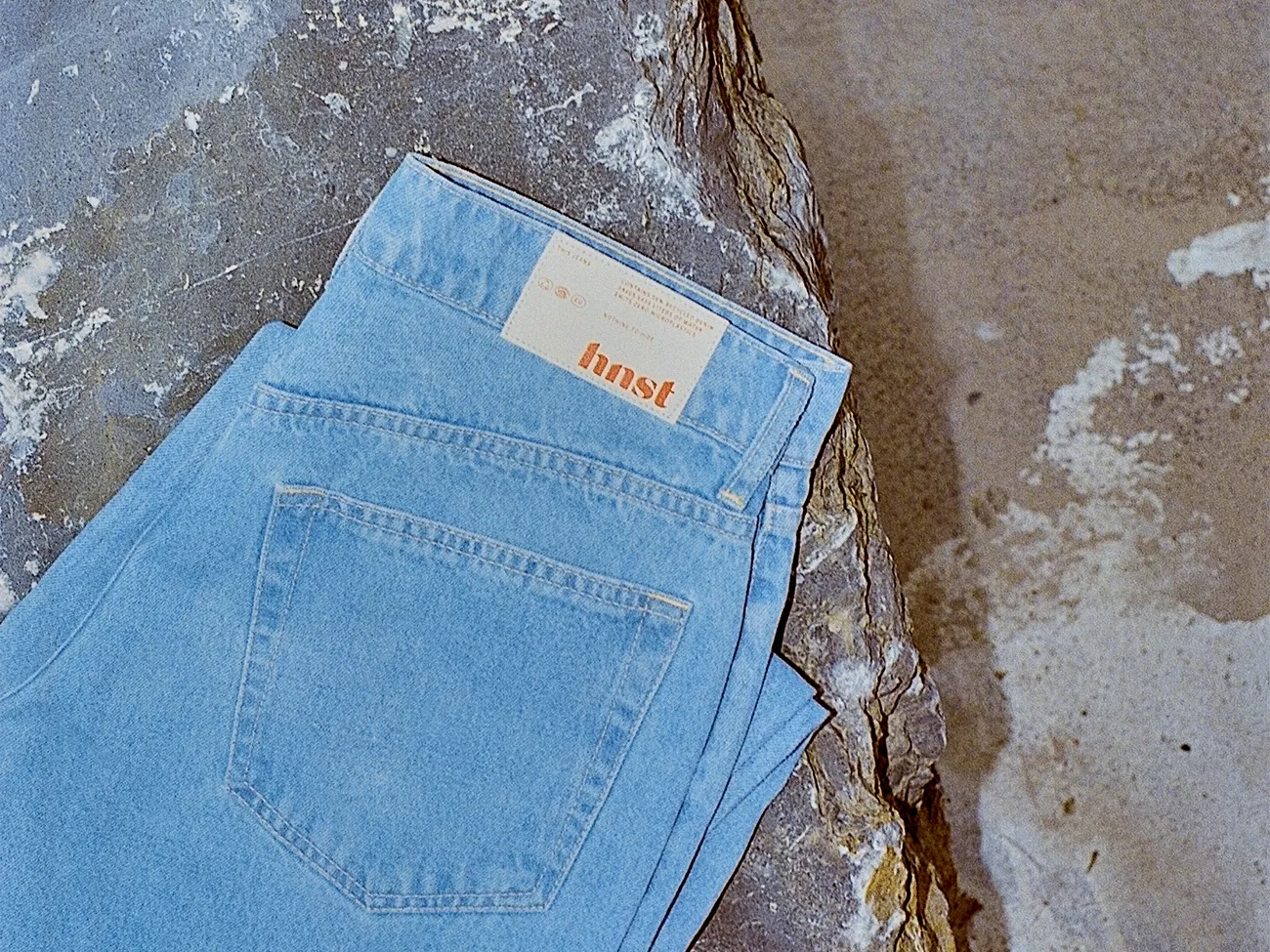
More and more initiatives are emerging to make textiles circular. One fine example can be found close to home. HNST was founded in response to the shock at the absurd impact of the fashion and textile industries on people and the environment. The jeans brand wants to do better and already uses 56% recycled denim cotton in its jeans. It plans to raise this to 62% soon. In this way, the Antwerp-based company aims to prevent discarded jeans from being landfilled or incinerated.
Figures can sometimes say more than a thousand words. Over the past fifteen years, the amount of clothing produced has more than doubled. Yet the population has not. As a result, the textile industry is responsible for 4 to 8% of greenhouse gas emissions worldwide. More than 70% of all clothing is simply landfilled or incinerated after use. Less than 1% is recycled into new textiles. For HNST, circularity had to be the starting point for its new jeans. “We will not develop anything that prevents us from recycling our product in the future. By recycling jeans from our competitors, we can see for ourselves which elements make the process difficult or even impossible. Buttons and zips that cannot be removed, rivets around the pockets, polyester labels with size and washing instructions, synthetic stretch fibres woven into the fabric … This was our starting point for innovation. For example, we have developed screw-on buttons,” says Eva Engelen, Sustainability & Product Manager at HNST.
Recyclability at the heart
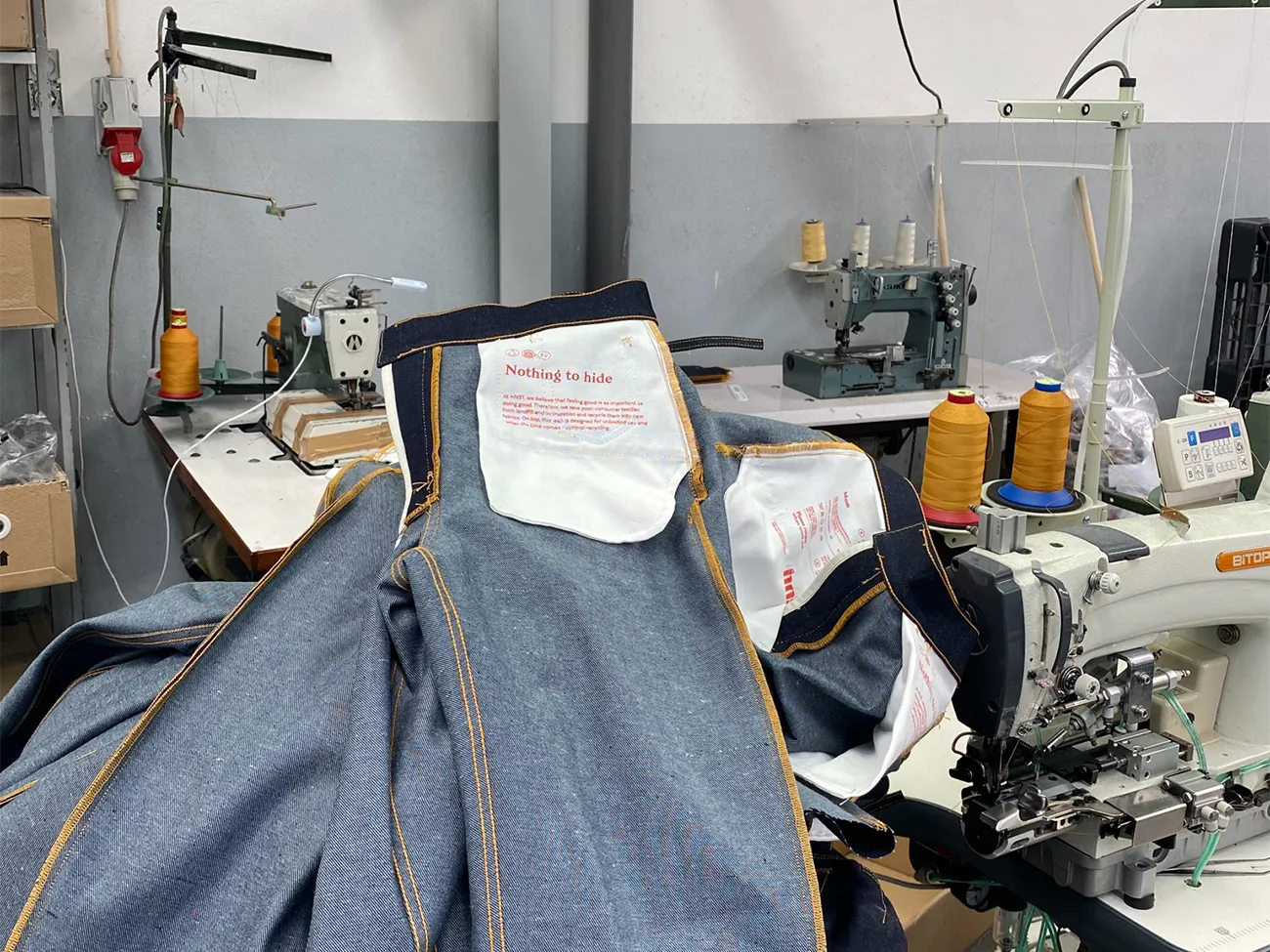
Material recyclability is central. “We deliberately choose natural materials with the same origin, as these can be processed in the same recycling process. Combining cotton with recycled PET is, in effect, greenwashing. A T-shirt made from this blend cannot currently be recycled, so it only adds to the waste mountain. Recycled PET belongs in the drinks industry, where it can be made into a bottle again.” But circular textiles also require a new way of thinking and working. At HNST, a collection must last for at least two seasons. Each pair of jeans also comes with a €15 deposit. Engelen says: “When their jeans are worn out, consumers can send them back in exchange for €15 off their next purchase. This is how we take responsibility and ensure that our circular products come back to us to be recycled again.” The fact that HNST’s first two years were devoted entirely to R&D was all about creating a close-knit value chain. “It was a major challenge, as we approached industrial suppliers with small volumes and a long list of requirements. Fortunately, we found the perfect partners, who are just as passionate about sustainability and circularity as we are,” says Engelen.
From 56% to 62% recycled content
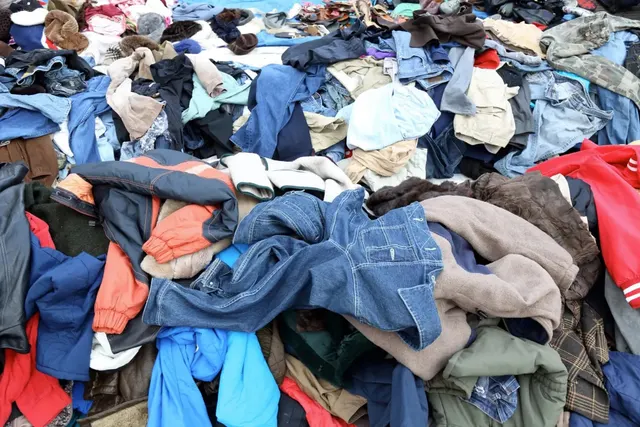
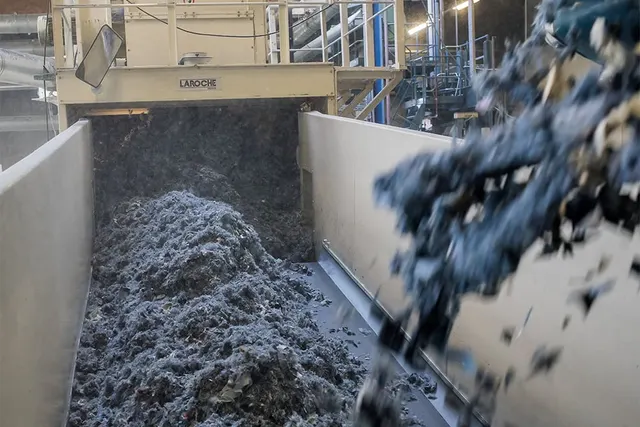
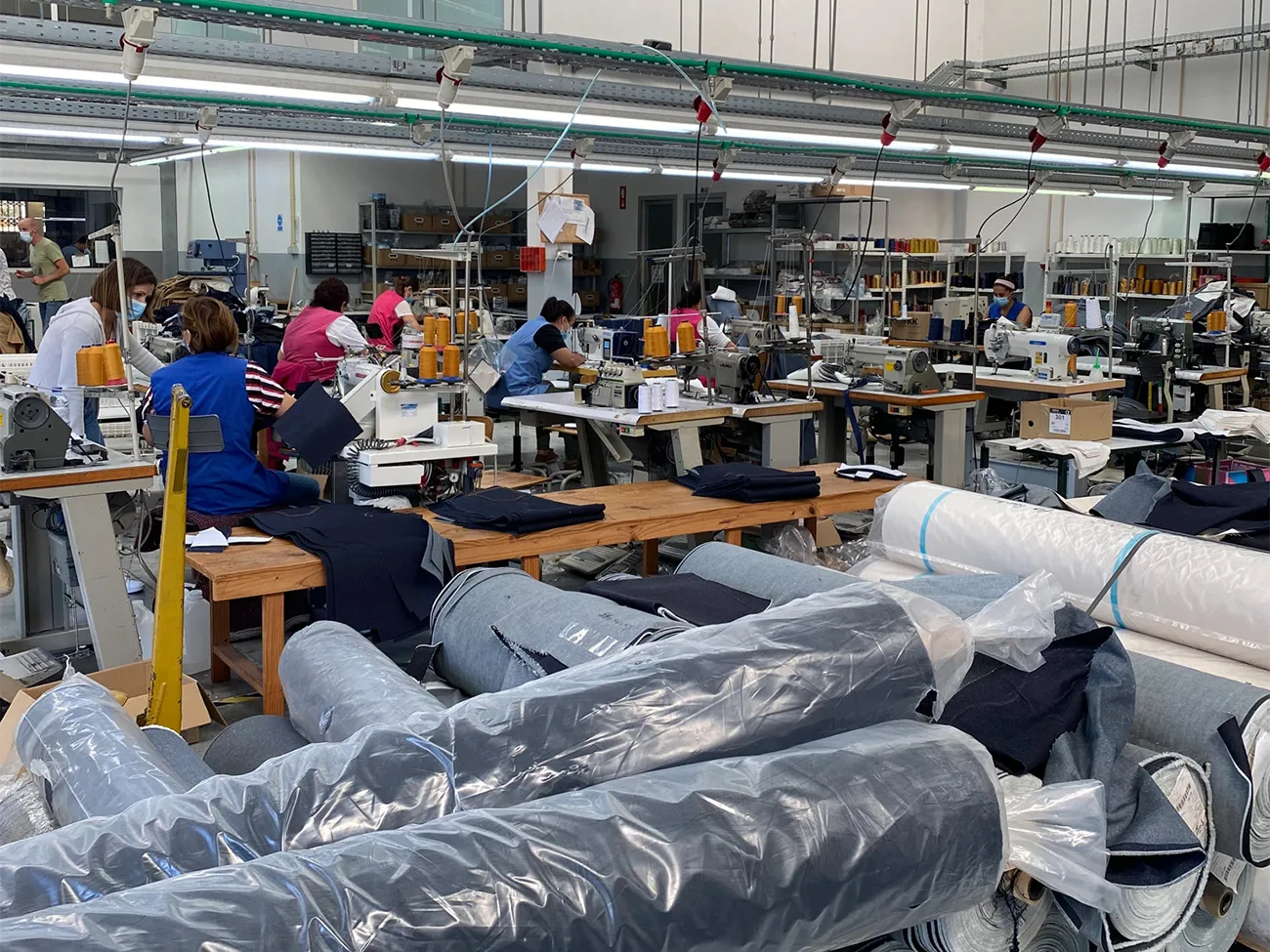
A pair of HNST jeans currently contains 56% recycled cotton from old jeans, 23% virgin cotton and 21% Tencel™, a natural man-made fibre made from wood pulp sourced from sustainably managed eucalyptus trees. Engelen says: “It provides comfort without adding synthetic stretch fibres.” HNST collects the cotton from old jeans itself, together with partners such as Kringwinkel. The jeans are then sorted. “To date, we have saved 27 tonnes of jeans from incinerators. Jeans that are still wearable are donated to Kringwinkel. Contaminated fractions, such as those with paint or oil, are sorted out and downcycled. We then shred the rest into fibres and process them into yarn for denim fabric.” The yarn is also made in Belgium, by European Spinning Group. HNST will soon launch a new fabric made from 62% recycled cotton. The innovation has been made possible by using a new warp yarn with a higher percentage of recycled cotton, sourced from Italian industrial textile waste. “We always try to increase the percentage. Why? When you consider that the 23% virgin cotton requires 300 litres of water, out of the 361 litres HNST uses for its jeans, you realise that every percentage point counts,” Engelen concludes.
Question about this story? Ask your question
Keep following this
Get an email when a new story is published. No account needed.
- ThemeMaking use of textiles and other waste streams
- SubjectTextile waste