Do we need a deposit return system for batteries?
Text Valérie CouplezImage iStock
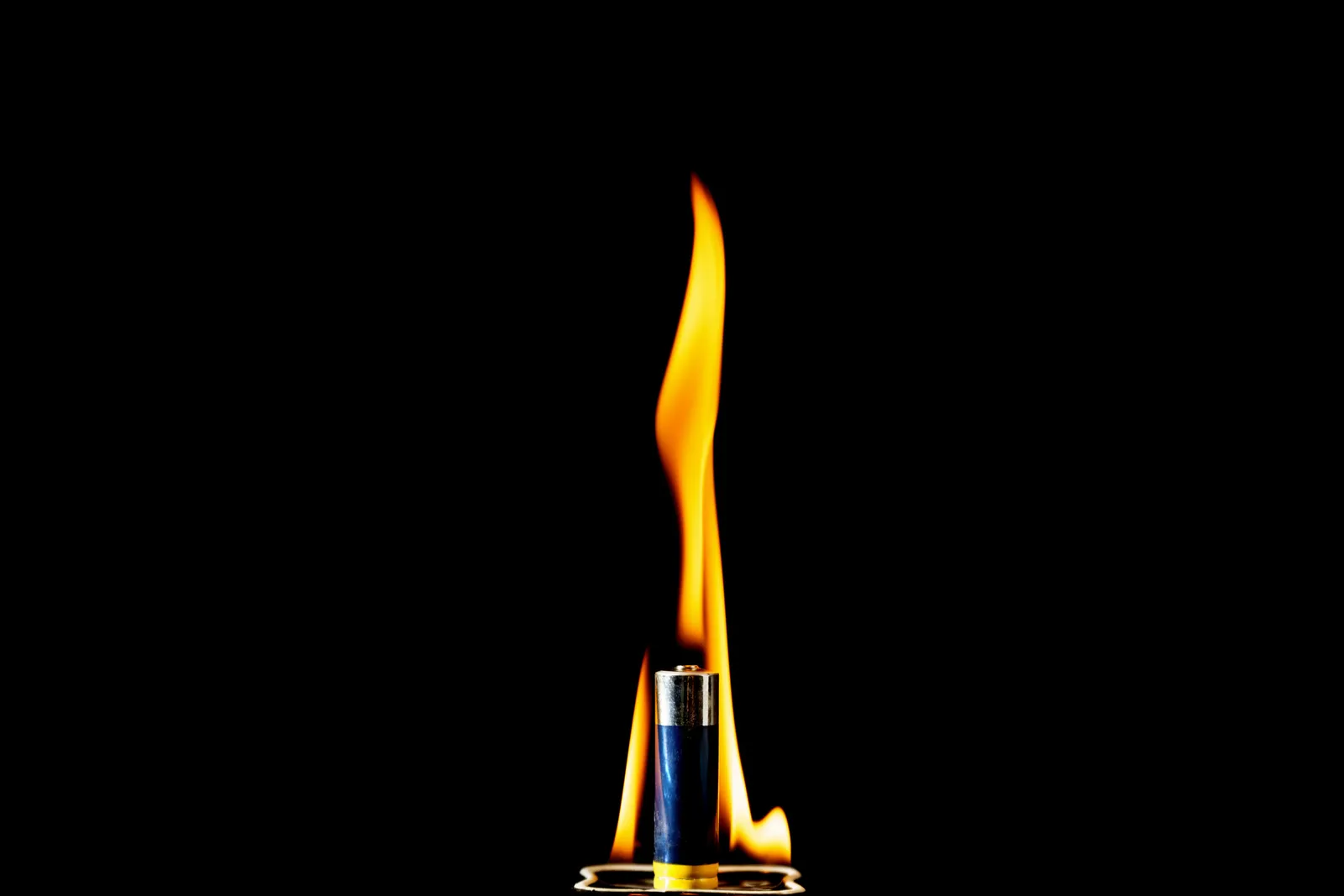
When fires break out in the sector, a lithium-ion battery is likely to be the culprit. Or at least, it is often blamed. Lithium-ion batteries are increasingly being found in residual waste, among paper and cardboard streams, or in packaging waste. These are streams where they have no place. When these batteries are crushed, compacted, shredded or subjected to other forms of mechanical stress, they can ignite and cause thermal runaway. In this special report, we explore whether a deposit return system could offer a solution. First, however, we set out the context for this problem, which is growing in scale.
Battery fires are not confined to the Low Countries. Although no statistics are kept here on the causes of fires in the recycling sector, the rise of lithium-ion batteries has been accompanied by a growing number of fires. And not just here. Data collected by the waste management sector show that this is already a European problem:
- In France, the number of fires at waste treatment plants linked to lithium-ion batteries doubled between 2019 and 2023;
- In Austria, batteries are estimated to cause between 180 and 240 fires a year at waste treatment plants;
- In Germany, up to 30 fire incidents occur every day in waste collection vehicles and waste treatment plants, around 80% of which are attributed to lithium-ion batteries;
- In the United Kingdom, more than 1,200 battery-related fires were reported in waste collection vehicles and at landfill sites in 2023, an increase of 71% compared with 2022.
Across the entire value chain
These fires occur throughout the waste value chain, not just at battery or WEEE treatment plants. They affect waste collection vehicles, transfer stations, sorting centres, recycling companies and residual waste treatment operations. The challenge is that finding a battery is like looking for a needle in a haystack. They are difficult to detect in a waste stream that is inherently heterogeneous. Even well-equipped plants struggle when high-energy-density batteries become mixed with dry, highly flammable materials such as paper, plastics or textiles. Recent data on residual waste sorting further illustrate this trend. An Austrian sorting campaign found that the share of batteries in residual waste rose from 0.05% by weight in 2016 to 0.09% in 2025/2026, while the share of lithium-ion batteries rose from 0.002% to 0.013%. In terms of individual items, the number of batteries found increased from 20 per tonne to more than 48 per tonne, while the number of lithium-based batteries rose from 2 per tonne to more than 8 per tonne. A single 8.5-tonne truckload of residual waste contained 252 batteries, including 28 lithium-based batteries.
Risk per item, not per tonne
Similarly, during a live AI/X-ray trial at a light packaging sorting plant processing around 20 tonnes per hour, 70 potentially dangerous items were detected in 45 minutes. That equates to around 4.7 dangerous items per tonne, or one item every 38 seconds. The items included loose battery cells and consumer products containing batteries, such as earbuds, electronic toys, toothbrushes, game controllers, shavers and other small devices. In other words, the risk of battery fires is measured per item, not per tonne. Even very small quantities of batteries in mixed waste streams can pose disproportionately large operational and safety risks.
Serious consequences
The economic consequences are severe. The cost of fire incidents at WEEE treatment plants is estimated at €190,000 to €1.3 million per incident, and the Irish Waste Management Association estimates that fires caused by batteries in refuse collection vehicles or at recycling centres cost its members €50 million last year. In addition, fire prevention equipment can account for up to 20% of the total cost of new-build projects. Waste operators also face higher insurance premiums, denial of coverage or loss of insurability.
Question about this story? Ask your question
Keep following this
Get an email when a new story is published. No account needed.
- ThemeMaking plastics and packaging circular
- SubjectFire safety