More efficient and sustainable wind turbine blades
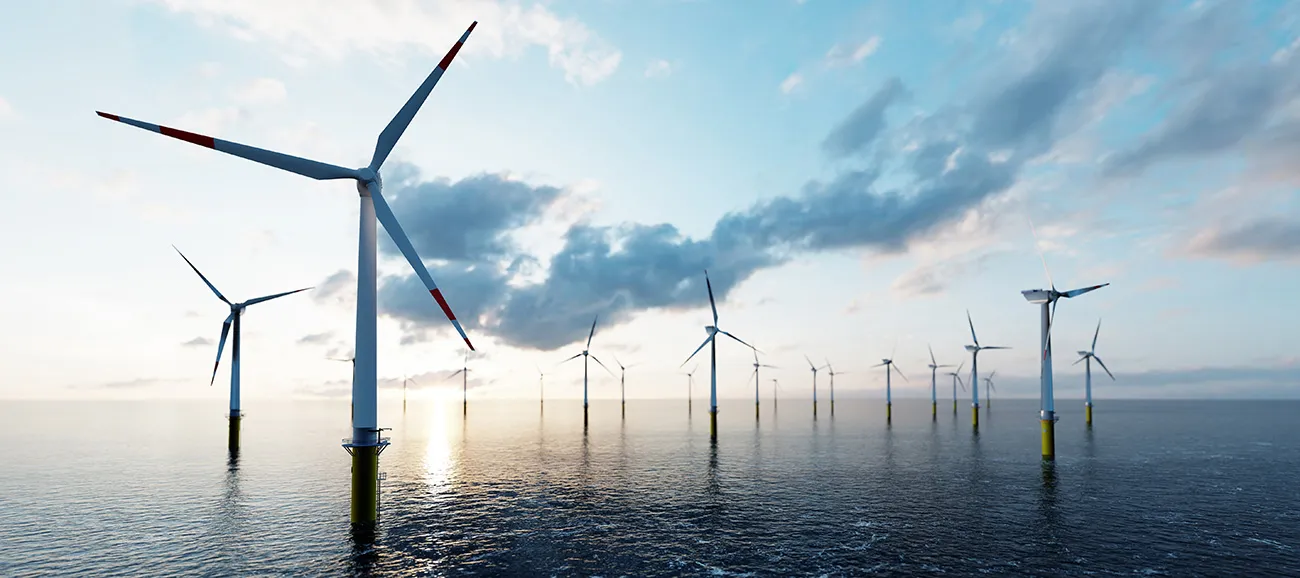
Wind turbines may generate green electricity, but the turbines themselves are anything but green. Most wind turbines have blades made from glass fibre-reinforced plastics. They are strong, but not recyclable and, above all, heavy. So they are not the most efficient solution. Sirris is currently investigating the concept of turbine blades made from pre-tensioned, recyclable textiles. Technology used in sailing boats has been applied to optimise turbine blades and their performance. The result is lighter, cheaper turbine blades.
Developing viable alternatives for sustainable energy is more important than ever. Although wind turbines generate renewable energy, the turbines themselves, and the blades in particular, still have several drawbacks. These include the recycling and processing of decommissioned blades, which are currently made from glass fibre-reinforced plastics. In addition, larger turbines with longer blades are now a popular way to reduce the levelised cost of electricity (LCOE, or total lifetime cost). However, larger composite turbine blades are significantly heavier and therefore more expensive, increase fatigue in other turbine components and cost more to install. Production costs and complexity could also be reduced. Wind farms are still (too) expensive. If wind power is to continue growing, the sector must keep innovating with the aim of becoming the cheapest energy source.
A new type of wind turbine blade
Despite improvements to materials and production processes over the past decade, the current design is gradually reaching its limits, and the time is approaching for a fundamental change in design. Recently developed wind turbine blades push the boundaries of current blade technology by addressing the wind industry's core challenges with a new design and production method. Enel Green Power, a multinational renewable energy company, set up the start-up ACT Blade with a yacht-sail designer to produce and test a new type of wind turbine blade under the same name, in collaboration with several partners. According to the developers, the energy generated by a wind turbine depends on the aerodynamic shape of its blades. The optimum shape depends on wind conditions and the loads placed on the blades during operation.
24 to 32% lighter
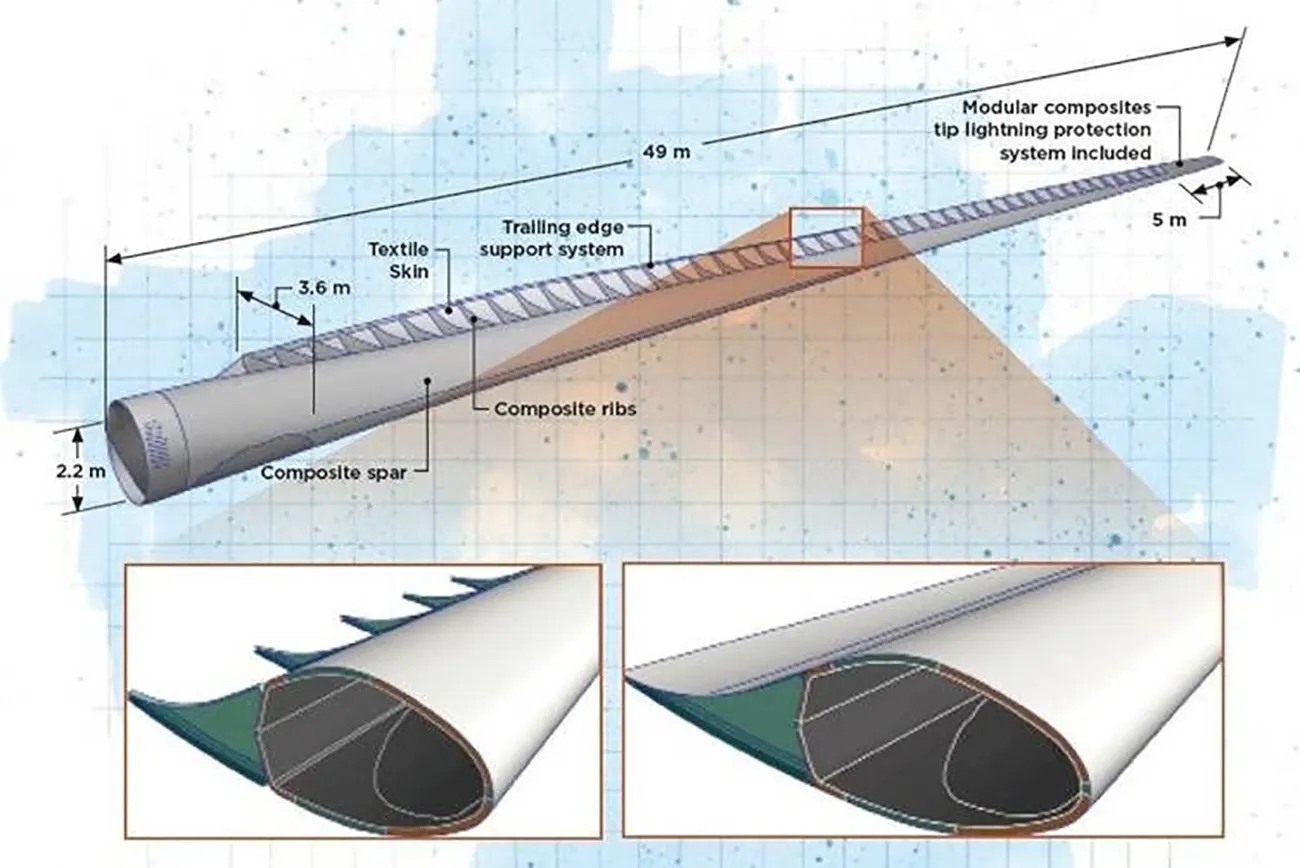
As blades continue to get longer, new ways are needed to reduce material use, weight and costs, and to improve production efficiency. Building on this knowledge, a feasibility study assessed a new blade design that differs substantially from the current norm. ACT Blade is based on technology for modelling yacht sails and makes turbine blades 24 to 32% lighter than conventional blades. This is achieved with a slimmer composite support structure, fully covered in technical fabric. The newly developed blades weigh the same as their conventional solid glass fibre-reinforced counterparts, but are 10% longer than the standard length of 55 m, giving them around 9% higher electricity output. The shape of the pre-tensioned, fabric-covered blades can also be adjusted to control system loads.
Designed for recycling
Unlike conventional glass fibre blades, the new blades are designed to be partly recycled and to incorporate recycled material, reducing waste. The fabric is reusable and can be easily recovered when the blades reach the end of their service life. The concept is therefore fully in keeping with responsible energy production and a circular management strategy for wind farms: maximising the reuse and recycling of materials and components, and applying a circular approach from the design stage. In general, metal recycling is very straightforward, as metal makes up the largest part of a wind turbine, while recycling the composite materials used to make rotor blades is more complex.
Question about this story? Ask your question
Keep following this
Get an email when a new story is published. No account needed.
- ThemeMaking use of textiles and other waste streams
- SubjectTextile waste