












PODCAST: The textile crisis explained: collection, recycling, overproduction and EPR
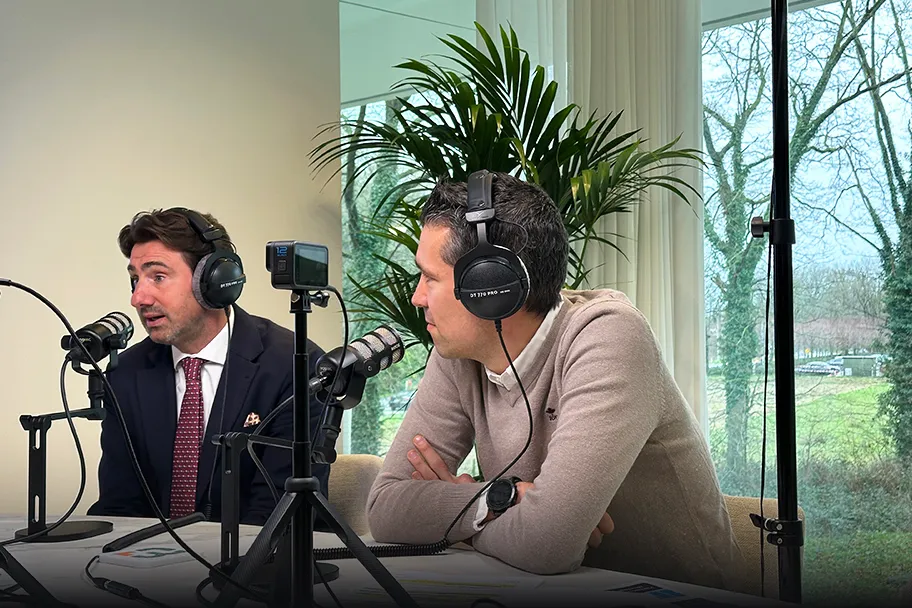
In this third episode of Trash Talks, we take a closer look at the growing textile crisis. Why do volumes of discarded textiles rise year after year? How much of it can still be reused or recycled? And where does the biggest challenge lie today: in waste processing, overconsumption, product quality or overproduction? Moderator Nele Roobrouck talks to Frederik Bal of Vlaams Inzamelcentrum Textiel and Koen Tengrootenhuysen of Decathlon and Retexbel about textile collection, reuse, fibre-to-fibre recycling, the social economy and the impact of extended producer responsibility (EPR). A timely, incisive debate about the future of circular textiles in Belgium and Europe.
Question about this story? Ask your question
Full transcript
All chapters (20)
- Introduction to the episode on textiles
- Introducing the guests
- Frederik Bal on his role in the value chain
- How serious is the situation in the textile sector?
- A sector at a turning point
- Overproduction or a waste problem?
- How collection has changed over the years
- How much textile is reusable?
- The role of retailers in quality and circularity
- Free collection and consumer behaviour
- What happens after collection?
- Perceptions of exports and reuse
- Scaling up fibre-to-fibre recycling
- Working with the social economy
- Regional differences and division of roles
- The key message for policymakers
- Practical policy recommendations from the sector
- The key figures
- Innovations and opportunities for the future
- Wrapping up the conversation
Introduction to the episode on textiles
Nele Roobrouck Today we’re bringing you the third episode of Trash Talks, and it’s about textiles. The world produces more clothing every year than ever before. But what happens when we throw it away? Only a limited amount is worn again or recycled, while collectors and processors are receiving ever more textiles that are difficult to sell. Clothing is getting cheaper, collections are changing rapidly and volumes keep rising. At the same time, pressure on collectors and recyclers is growing. And extended producer responsibility is on its way. Today, we’re bringing together all the links in the chain. Where are the bottlenecks, and what needs to change? Or what’s working well? Is the textile crisis a waste problem? Or is the challenge one of overproduction and product quality? And can the sector become circular without changing its business model? In this episode of Trash Talks, we’ll debate these questions with two industry players. Joining us are Koen Tengrootenhuysen, Director Public Affairs Europe at Decathlon and chair of Retexbel, and Frederik Bal of Vlaams Inzamelcentrum Textiel, a Flemish textile collection and processing company.
Introducing the guests
Nele Roobrouck Welcome, Koen and Frederik. Could you briefly explain where you each fit into the textile value chain?
Koen Tengrootenhuysen I work for Decathlon. Last Sunday, the company turned 20, and I’ve been working in Public Affairs for a few years. Textiles are an important part of the group’s strategy. Global warming makes sport all the more important to us. If you want to go skiing, there needs to be snow on the mountains. If you want to swim in the water, it needs to be clear. If it’s too hot, you can’t do sport. Those are the basics, which are still linked to the DNA of our family business. And textiles: we’re one of the larger sports textile producers, so we certainly have a role to play, and we want to take on that role in society. What’s more, our DNA includes a kind of pioneering spirit, and we certainly want to bring that to the changes needed across the textile process as we know it today. I think that’s really what my job is about today: strategy and Public Affairs for the group in Europe. On the other hand, I’m very pleased, though perhaps this is an even bigger part of it, that I was able to set up Retexbel with a lot of stakeholders, and that I’m now its very proud chair.
Read the full transcriptCollapse transcript18 more chapters
Frederik Bal on his role in the value chain
Nele Roobrouck Great. Frederik?
Frederik Bal Thank you for the invitation. I’m Frederik, and I’ve been working for the Recutex group for 17 years now. Recutex is also a family business, with the third generation at the helm. We have several companies. One is known for its green textile containers on the streets: Vlaams Inzamelcentrum Textiel. We also have our own transport company, Victrans. But above all, we have our sorting company, Recutex NV, which was founded in 1948 and has 78 years of expertise in the field. We handle the entire chain for Flemish household textile waste, from collection and transport to processing. We collect it, make sure it’s collected properly, transport it and do our best to recover as much value as possible. That’s it.
How serious is the situation in the textile sector?
Nele Roobrouck You’ll know this already: things aren’t always straightforward in the textile sector. But how serious is the situation today? How do you see volumes and the quality of collected textiles changing?
Frederik Bal Shall I take that one? We’re seeing the amount of textiles collected in our containers increase year after year, which is not surprising. Consumers are consuming more every year, and at some point the wardrobe has to be cleared out. When space is made for new textiles, we’re ready to collect and recover value from the old ones. As for textile quality, at the moment we’re still often collecting goods that were bought several years ago. So the real drop in quality caused by ultrafast fashion hasn’t yet really made its way into our processing. We should say, though, that the extra volumes we collect are generally lower quality. The proportion of top-quality goods, those most suitable for reuse, remains roughly the same. But the surplus we collect is often of a quality that means it should go for recycling.
A sector at a turning point
Nele Roobrouck And where do you think the sector is today, Koen, if I can put that question to you?
Koen Tengrootenhuysen Absolutely. I think it’s at a turning point. I always like to look at the positive side of things. If you do a SWOT analysis, the opportunities are phenomenal. In recent years, we’ve been going through a global, geopolitical transformation centred on digitalisation. Add AI to that and everything is moving very quickly. There are three of us sitting around this table, and we each have three shops in our pocket. You can place an order in China in under five minutes. Within three to five days, a product from China or somewhere else in Asia will arrive. That’s the reality. And the fact is, our whole sector still isn’t fully prepared for it. That applies to every link in the textile chain. So today we’re faced with oversupply. Frederik mentioned textile quality, but that’s also because products made in Asia are produced under economic conditions that we don’t have here. So there’s no level playing field at all. The fact is, we need to adapt our structures. And I think we have no choice but to work together to find a solution. You know, this year, and I occasionally look beyond our borders, I find Chinese astrology quite interesting. This is the Year of the Fire Horse. Fire and horse are two elements that come together and bring energy. This is a special year. And just look at everything that’s happened geopolitically already this year. So, once again, let’s seize the opportunity. Frederik and I are doing that today, together with the others around the table at Retexbel. We simply want to use that energy to bring about real change. So, for me, it’s a turning point. Seen positively.
Overproduction or a waste problem?
Nele Roobrouck Thank you. So, could I say that the textile crisis isn’t a waste problem, but rather a problem of overproduction?
Frederik Bal The pressure felt by the sector affects everyone, of course. But let’s say it also starts with the consumer. We shouldn’t focus only on the producer. Overproduction often also happens in response to consumer demand. Koen is right. I can pick up my phone here and have a parcel from China the day after tomorrow. Is that a problem of overproduction? Is it a consumer problem? We’ll leave that open for now. What we can say is that the problem of overproduction and overconsumption affects the entire chain. It starts with collection, where people are faced with a mass of goods that need to be collected and sorted. And that’s where the problem lies.
Nele Roobrouck But does that make it a waste problem or a problem of overproduction?
Koen Tengrootenhuysen I think you can regulate that. I think you can tackle both things at the same time. On the one hand, you’ve just made money from that wardrobe that’s bursting at the seams. The question today is: what do you do with it? That’s the same for something you order and have delivered. Let’s not always use that example, because there are perfectly good retailers and producers, and products made here, in Europe and close to home too. So that’s not the point. It’s simply easy to order, buy or rent. Renting is another alternative. You have a product, but what do you do with the rest? And that’s a problem, because everything is becoming a little easier. We need to keep that in mind together.
How collection has changed over the years
Nele Roobrouck Let’s move carefully on to collection and quality. Frederik, I think you’re the right person to ask: what’s actually coming in today? Are you seeing a trend, or does it vary from year to year? Or perhaps from season to season? We’re in the middle of spring cleaning now, but later in autumn people might be getting rid of their summer clothes.
Frederik Bal I’ve been in the industry for 17 years now. Over the past two years, there have been times when I haven’t known what to expect. A few years ago, we collected around 5 to 6 kilograms per resident. Of course, geopolitical issues, starting with the Covid crisis, have changed a lot. They created a peak, which was then followed by a trough, but since 2020 we have seen an exponential increase in the volumes we collect. Previously, there was more or less a seasonal peak. June is a good example: it’s always a quiet month because it’s exam time and parents don’t want to disturb their children by clearing out their wardrobes. December, January and February are often quiet months because of the poor weather, but we no longer see that pattern. Last week we had an enormous peak in volume, and we don’t know what caused it. At present, we can collect around 8 to 10 kilograms per resident, provided, of course, that we are free to set up an appropriate collection system. That is also where the problem lies: policymakers need to support us. Unfortunately, the local materials plan is already outdated. The sector has been lobbying for years to have it amended. In the meantime, however, local authorities can still choose to introduce door-to-door collections. Compare those with textile collection through textile banks and you will see that door-to-door collection yields only 2 to 3 kilograms per resident. That is not because the textiles aren’t there. A municipality’s decision to collect door to door does not mean that consumers have no textiles to discard at that time. The problem is that they end up being sent for incineration, which is baffling, because they are valuable raw materials that can be reused and recycled. The conclusion, though, is that we are collecting more and more, and the capture rate is gradually moving above 50%.
How much textile is reusable?
Nele Roobrouck Can you give us an idea of how much of it is reusable? Or is that difficult to say?
Frederik Bal Absolutely. There is a lot in the press about how much textile cannot be reused and goes straight to the incinerator. That is simply wrong. An important factor is having a professional collection system and taking the collected goods to an accredited sorting company. Ideally, that company should also carry out fine sorting. What do we mean by that? It means examining and valorising each individual item. Such companies can sort textiles into at least 100 to 200 categories, for both reuse and recycling. We manage the entire chain, so we can provide some good figures. Of what we collect in Flanders, we can reuse around 70%. That means a garment for a garment, a towel for a towel. Most of the remaining 20 to 30% goes towards recycling applications. We only recover energy from goods, by sending them to an incinerator or for pelletisation of the textile fibre, if they should not have been put in a textile bank in the first place. In other words, they fail to meet the acceptance criteria. This often means trousers completely covered in paint, or a safety shoe with adhesive smeared all over it by a plasterer. Yes, those items are very difficult to recycle, and very difficult to reuse. So they ultimately go for incineration. But nowhere near 90%, as is sometimes reported in the press.
The role of retailers in quality and circularity
Nele Roobrouck Yes, indeed. Thank you for clarifying that. Koen, may I put this question to you? I imagine that retailers such as Decathlon can also play a part in improving quality.
Koen Tengrootenhuysen That’s what I was just saying. Respect for the environment is part of our company’s DNA. And we’re certainly not alone. Many fellow retailers are actively looking to make a difference today, working across the entire chain to reuse materials and offer circular business models. That is the main challenge we face today: moving from a linear production model to a circular one. It also means offering repair services. You can see that in our stores, where we sell and hire out more second-hand bikes than new ones. That’s because we offer repair services. Materials are reused, and we form partnerships. We are certainly not the only ones doing this. But the issue today, and what we were just discussing, is the change that will come with EPR, or Extended Producer Responsibility. This means that we, as producers, will become fully responsible for the entire chain. And waste suddenly becomes part of that whole picture. So I firmly believe that there are only so many things we can set in motion through awareness-raising alone. On the other hand, some regulation is also needed. That’s just the way it is. Today, we are seen as polluters. We produce something, try to bring products to market, and then suddenly we have to take responsibility for them too. But I do think there are a few caveats to consider. If we are genuinely expected to change the chain, everyone involved needs to raise their hand and say: let’s make this efficient. Running a business means being efficient. You have a business model and you want to get the best out of it. I think there are enough grown-ups around the table to hold everyone in the chain to account. Governments also have a very important role to play. I saw it with my own eyes when we visited Frederik’s company with colleagues: the whole debate about municipalities choosing not to provide textile banks because they have to pay for them. In doing so, they are taking on a huge responsibility. It effectively means consumers can no longer dispose of their products there. Of course, they can go to a recycling centre, but that’s another issue, and I have my own views on it. It is massively over-subsidised, costs a huge amount of money and, on top of that, varies from region to region. But if the textile banks are not there, or are removed, what do you do with your textiles? They end up in a waste container or bin. Nothing more is done with them. They are incinerated, and the bill is passed back to the consumer. So everyone has a role to play. One thing I also said in our meeting with the Belgian government a few weeks ago was: stick to what you know. Everyone has their own area of expertise. Social partners and the social economy also have a role to play, with their own needs and requirements. But does that mean everything has to be over-subsidised? I don’t think so. And we can also see regional differences. The way social partners are treated in Flanders and Wallonia is completely different. Policymakers have very different views on waste. So at Decathlon, and alongside our fellow producers, we are willing to take on that responsibility, but everyone has to play their part. We have seen that private operators also need to invest, and continue investing, in recycling to increase the 1% of the textile mountain that is recycled fibre to fibre and fully recovered. Unfortunately, that will take a few years. But it is an exciting challenge and another opportunity.
Free collection and consumer behaviour
Nele Roobrouck So we can clearly say that free collection does not lead to overconsumption. On the contrary, we need to make sure that our free collection network, especially through banks or ‘bulles’, as you call them, remains comprehensive and effective.
Koen Tengrootenhuysen Yes, and there’s another point: raising awareness is one thing. We need to make sure consumers are engaged, but I think this is really important: when you look at consumers today, I have two daughters, aged 19 and 21, and they think differently from us. We’re a bit older, as you can see from my colleague here on the left. They think differently. But we should be looking not just at them, but at their children: how will they deal with these things? And that brings us back to digitalisation. They are inspired in completely different ways on all sorts of topics. They are also more concerned about the environment than we might think. But they need to see practical examples. We’re still looking to them to help us change certain things now. And that’s what I find so interesting about this whole challenge.
Frederik Bal Yes, as Koen says, free collection. If there is no collection, consumers won’t consume less, unfortunately. They will simply dispose of their products by sending them to the incinerator. The government should no longer allow that.
Koen Tengrootenhuysen And there’s an important point that ties in with that: regulation through taxation can help steer things in a particular direction. Ecomodulation, a difficult word, is a bonus-malus system. Those who do the right thing are rewarded. Those who do less well are penalised. It’s very simple, everyone understands it. The point is that producers who, for example, make less effort in this area can be rewarded for contributing to a particular system. That is the whole purpose of Retexbel: to exclude or penalise those who don’t participate. And again, we shouldn’t always be looking at Asian producers, but at those who do less well, so that we can move towards a level playing field.
What happens after collection?
Nele Roobrouck Let me go back to the chain for a moment. We’ve talked about collection, but what happens after that? I imagine not everyone listening is familiar with the whole chain. So, we’ve collected the textiles and we have our containers. Frederik, your team comes to collect them.
Frederik Bal Yes, we deliver it to our own sorting centre, but often it does indeed go from a collector to a sorting company, which then examines each item and finds a value for each one. In itself, checking items for reuse is not that difficult if you have sufficient expertise and enough connections in the global market. You can often easily reuse garments that are still usable and in good condition. The problem lies with the goods that are no longer reusable. That is 20 to 30% in our case, which we have to direct towards recycling applications. These are also the fractions that are hardest to process. When it comes to the difficulties of recycling, we need to look primarily at how products are designed today. Products are often not designed to be easily recyclable. There are multi-materials. A shirt might be made from a polyester-cotton blend. A little elastane is often added for consumer comfort. The mixture of fibres then makes it difficult to recycle. A shirt also contains various disruptors, as they are called, which have to be removed before it can be recycled. Then there are the most difficult fractions: multilayers. These include, in particular, PPE, or personal protective equipment, such as safety clothing and ski jackets. They consist of several layers of textiles, which themselves contain different layers of fibres and disruptors. At present, recycling multilayers of mixed fibres with disruptors properly is virtually impossible.
Nele Roobrouck So these are effectively sent for incineration?
Frederik Bal If they cannot be reused, they are often sent for incineration, but I would like to add a positive note. Technologies are currently being developed for recycling, to work out how to recycle these mixtures, and technologies are also being developed to make multilayers containing a disruptor easy to recycle. The problem is that these are often not yet used in consumer textiles or at scale. But of course, we are hopeful that this will be possible in the future.
Perceptions of exports and reuse
Koen Tengrootenhuysen It is important to stress those proportions again, because I think a perception problem is often created. This is partly due to our overmediatised approach today, which is perhaps often driven by a thirst for sensationalism, where all producers supposedly send everything to Africa, where it is dumped in a pile and then burned. The cost of shipping a container to Africa has risen enormously in recent years, and especially over the last ten days. So that is simply a false picture being painted, often by parties who know perfectly well that they are deliberately trying to present it that way. Some parties actually say: to solve the problem, perhaps you as producers should simply stop producing. Then the problem would be solved. Of course, that would not work, because you would remove one of the most important economic factors or actors, and then it would not work. So once again, everyone has a responsibility. And the problems mentioned earlier are real. But 60%, or largely 60%, and we should emphasise this, is reused. Not necessarily in our own village, but it could perfectly well be in Europe or outside Europe. India is one of the larger markets for these products, where they are used and then reused. There are people who want them. That is one of the things I want to point out. The 1% is fibre-to-fibre recycling, where we can actually use the fibres ourselves. And I think it is important to look at this from the perspective of those Asian countries too. Try to see the problem globally, because these are not local problems. Just because we have 27 Member States does not mean there are 27 separate problems. I spoke in Brussels to the ambassador of Bangladesh, one of those people, and he was essentially saying: please do not take that production away, because it also creates prosperity and gives people jobs. So the picture often painted, that production in China or Asia, in Bangladesh or Vietnam, is inherently bad, that child labour and forced labour are used there, and that all sorts of other bad things happen there, and that we do not invest in it, is just a narrative, a framing. It is simply not true. And I can say that on behalf of many, many retailers. So look at it from the other side too. The solution is that the textiles we have here today can be useful to someone else as well. The book bag I have with me came from the recycling centre. I paid seven euros for it. I thought it was a nice book bag. There you go. So it is possible. You really can do it.
Scaling up fibre-to-fibre recycling
Nele Roobrouck Could I come back to a small point you raised earlier, fibre-to-fibre recycling? Could you give us some more figures on that? Is it realistic on a large scale? Perhaps not today, but in the future. And what does the future mean? Within five years? Within two years?
Frederik Bal It is realistic. The 1% Koen mentioned is indeed correct. There may already be a lot happening. At present, the products simply are not ready to be easily recycled fibre to fibre. I am not saying that no recycling is happening at all. Policymakers are often very utopian and want all recycling to take place within Europe, preferably fibre-to-fibre recycling only. If we make that change too abruptly, all goods suitable for recycling will simply end up being incinerated. That is a fact. We do have to make the transition gradually. I recently spoke about this. Years ago, all textile waste recycling companies were in Europe. Today, 99% of those recycling companies have disappeared. An industry has naturally developed in the global market to find solutions for these products. This often involves downcycling, as the term suggests. Does that make it less sustainable? Does that mean it is not high-quality recycling like fibre-to-fibre recycling? We are happy to discuss that with policymakers. For example, what happens to a lot of consumer textiles, such as multilayers with disruptors? Take a look in your car boot and you will see some insulation material that most likely also comes from textile waste. Does that make it lower-quality recycling than fibre-to-fibre recycling? No, because that car will often last much longer than a new garment made from those fibre-to-fibre recycled fibres. What we do need to do, and I think every player in the chain needs to work together on this, is make the transition gradually, so that we try to keep as many of the raw materials that come onto our market here as possible, recycle them here and, preferably, look towards fibre-to-fibre recycling. But we need to retain existing systems, such as downcycling to make new blankets. We need to give the industry time to develop, step by step. Fibre-to-fibre recycling is possible today. It will be difficult with the products coming onto the market, but it is possible. However, as long as there is no demand for fibres to use in products, the recycling industry will never develop either. So we need to take a gradual approach. We must not dismiss it out of hand and say it will never be possible, but we need to approach it intelligently.
Koen Tengrootenhuysen And it will take some time, but we are working on it. I have a T-shirt in my wardrobe that is made entirely from fibre-to-fibre recycled material. It is very comfortable to wear. There is a whole range available at Decathlon. So as a company, we are investing in these processes too. We want to see how we can help provide solutions. And materials are used. The better the materials, the better the yarns, because I am not the expert on that, the person next to me is. The better the yarns, the more important they are and the more you can do with them. And you can see that today, for example, in what is happening with my two daughters, who each have their own little shop on Vinted where they sell items. These are generally materials in the best condition, or still in good condition, being used and reused. So if we can move in that direction, it will certainly be a step in the right direction. But we also have to be realistic. It will not happen overnight. That is why, together with Retexbel, we are all trying to take such a huge step.
Working with the social economy
Nele Roobrouck If I may briefly pick out another player in the chain, how do you see cooperation with the social economy? We see charity shops on our streets and from time to time on TV, but if we look at their share compared with that of the private sector, including you, Frederik, how do the two compare?
Frederik Bal Yes, unfortunately, there has long been a major tension between the social and mainstream economies. We regret that, really. We want to focus fully on greater cooperation, but of course we cannot hide the tension. The mainstream sector also feels it is being treated a little unfairly compared with the social economy. When we say that everything in the mainstream economy will be checked, we get the feeling that social partners often have no obligations, but can do as they please. This applies to reporting and data analysis, but equally to the legal framework, including a ban on burning reusable and recyclable fractions. If the mainstream economy went to the press and said that we have to burn 90% of the goods we collect, I think we would be allowed to close our sorting centre the next day. So we are looking mainly to policymakers. Why is this happening? Because the word ‘social’ comes before it, so people think anything goes. We do feel that this needs to be addressed, and that there needs to be more cooperation across the chain. Social partners are absolutely essential to the whole picture. They can point to some very impressive figures for reuse in their shops. They have built a wonderful local network for making textiles available to people in their area. That should be recognised and strengthened, but it must not lead to more goods that are genuinely reusable or recyclable being sent for incineration. We are looking particularly at the many local authorities that, because it is called social, because it is the social economy, turn a blind eye to reuse centres setting up all-in waste collection through textile containers. But the figures have been clear in recent years. There has been an exponential, absurd shift in market share from the mainstream economy to the social economy, but it has had no positive effect on the reuse rate. And we regret that. If the reverse were true, if exponentially more goods were being reused because more was being collected, that would be great, because it would mean more was being reused. But the opposite is happening. More is going for incineration, while the amount being reused is the same as before. So we need to address this and find solutions. We need to work on it together with policymakers and the producer responsibility organisation. As Koen used to say, ‘Shoemaker, stick to your last.’ Everyone has their strengths. We are very good at collection and at adding value. Kringwinkel is very good at local reuse. Let’s each stick to what we do best.
Regional differences and division of roles
Nele Roobrouck Koen, as chair, you must still have a lot of work to do on that front?
Koen Tengrootenhuysen Within the organisation, I try to reconcile those interests, those conflicting interests, as well as possible. Though in fact, they are not conflicting interests, we all have the same interest. But I think we also need to look at the figures in this whole discussion. There are regional differences today, so that is simply how things have turned out. The figures we have for Belgium today show that the country has 100 to 110 kilotonnes of sorting capacity for unsorted textiles. 60 to 70 per cent, let’s round it to 100, is in Flanders, and 30% is in Wallonia. Of that 70% in Flanders, 70% is in private hands and 30% in the social economy, so 70 and 30. It is different in Wallonia. There, almost 100% of the capacity is in the hands of social partners. We see a great deal of support there. I am someone who believes that social aims and objectives must always be honoured, and that is linked to the values of the company I represent, as well as to my own personal values. Helping people who are struggling is beyond question, of course. A few weeks ago, I visited our colleagues at Le Relais in Walloon Brabant to see how they do things. Their actual aim is to provide clothing and food to people with fewer resources, so they can play a particular role in society. No one could object to that. But if you take it further, every organisation, whether it is an association or not, has a particular purpose, a reason and a drive to survive and do better. And one of the things, I don’t want to put the social economy on trial, because this is simply the reality, is that they say: look, we are going to sell the textiles we can recover, for example, through the municipality or through those collection bins. Because they have an advantage: they pick out the best items, what they call ‘the crumbs’ in textile jargon, the very best vintage pieces. These are sold in shops today. Reuse shops have a magnificent retail estate. They sell goods there, and rent premises at the same market rates as other retailers and producers. At that point, they are competing with their products, whatever they may be, against other retailers, the H&Ms, Inditex, Zaras, the Bergkastens, you name it, around the world that have shops on the high street. That is also a reality. They do this to fund their social aims too. There is nothing much to object to there either. But on the other hand, we need to make sure that everything stays in balance. If you then see that there is oversubsidisation in Wallonia, it creates a shift. Again, shoemaker, stick to your last. Make sure that in collection, sorting and recycling, everyone, every specialist, focuses on what they do best. I don’t see Frederik developing social activities, so let’s leave that to the social partners. That is the balance we need to find. I am someone who likes to name the elephant in the room, and if there are two, to name the second one as well. That is how we will all make the most progress, in the right direction, towards a textile process that can be organised differently.
The key message for policymakers
Nele Roobrouck I think you’ve mentioned policy quite a lot. Let’s say, I’ve heard that you’ve often spoken to policymakers, probably a minister or their cabinet. If you had to tell the listener what your key message to a cabinet or minister would be, whether that is the Walloon minister, the Flemish minister or a federal minister, whoever you meet, what is the main message you would give them?
Koen Tengrootenhuysen I would broaden that out. It applies even at our level, the regional level. This is a problem we need to tackle in Europe. In my job today, I have the privilege of doing that, of being able to debate directly with the European Commission and the various administrations. The Commission is taking initiatives to address this, for example in the context of ecodesign. There is a new regulation on ecodesign. It concerns how products are designed and what quality a product must have to be rewarded, as it were, throughout the process. These debates need to happen at the source. The Waste Framework Directive, which deals with waste and provides for EPR to be rolled out by 2028, has to be transposed in 27 Member States. That means 27 processes that have to be completed. They may well have the same objective, but they create a huge number of problems. Decathlon does not make products just for the Belgian market, let alone for Flanders, and certainly not separately for Brussels or Wallonia. So this is something we need to consider at European level. That is one of the messages we are putting across: harmonise and simplify at every opportunity, and make sure things do not become too complicated. Then, ultimately, bring together the people around the table.
Practical policy recommendations from the sector
Nele Roobrouck Frederik, do you have a specific message?
Frederik Bal I have several measures policymakers could take. I wrote down two. First, policymakers need to recognise that Belgium has a very good system and is actually a European leader, both in collection capacity and sorting capacity, as well as in social partners and reuse centres. Policymakers should support this and, together with extended producer responsibility, ensure that what already exists continues to exist. I think it has become clear in Europe that the sector is in deep crisis. You can see it in the figures, but also in the many bankruptcies in our sector. The second measure is to stop burying our heads in the sand. We need to wake up and see where things can be improved, and remember that shoemaker, stick to your last. Let everyone work professionally to their strengths. Let policymakers facilitate this, for example by enabling the social economy to work with sorting centres to achieve higher reuse rates. Let professional collectors collect, and let specialist sorters sort into their 200 fractions, so that the same goods do not have to pass through the hands of 3, 4 or 5 sorting centres. But give the social economy the opportunity to buy grades from sorting centres at reduced VAT rates, second-hand, for sale through their local networks. That would put right the imbalance caused by all-in waste collection by the social economy, and allow us to work together to achieve better figures. A reduced VAT rate could also, for example, make it possible for sorting centres to make a small change to their processes. We find a lot of top-quality goods with minor defects, which often end up in recycling applications because we are unable to repair them. But why don’t sorting centres adapt their processes and create a separate grade of top-quality goods with minor defects, which the social economy could then repair? That would be two birds with one stone: a higher repair rate and a higher reuse rate. That is what I would like to tell policymakers.
Koen Tengrootenhuysen May I add one more thing? This is something we may certainly overlook too often: the cooperation that exists today between the three regions. We are drawing up an agreement to ensure that the extended producer responsibility scheme in our organisation, Retexbel, is recognised, and that we can continue our work. Let’s please make sure they stay on the same page. We must not end up back in a situation where, in Belgium, in our little country, we, when it comes to textiles, I have just made the case for Europe and the vision for it, have to make sure that we stay aligned, have the same objectives and move in the same direction. That would already be a major step forward.
The key figures
Nele Roobrouck But I also think that the new Retexbel can fully support this. And we will certainly promote your measures, Frederik, to the various governments. But looking at the sector itself, I’ve heard a lot of figures, both from you, Koen, and from Frederik. What figure best sums things up for you? When you look at your business, is it the number of transport movements, or the volume you collect? Can you put a figure on it, Frederik?
Frederik Bal The most striking figure is one that really puts the recent newspaper articles into perspective. We are an established sector collecting goods, with a capture rate above 50%. So we are approaching 10 kilograms per inhabitant. And we incinerate 0%. The newspaper articles bandy about figures of 80 to 90% going to incineration. An established sector incinerates 0%. I think that is an important figure to bear in mind. We reuse 70% around the world. So if we start imposing extensive restrictions on textile exports, bans on textile waste exports, we will see very different figures. And that cannot be the intention.
Koen Tengrootenhuysen 60 to 70% is what we said earlier: the textiles that exist today are in fact reused. We all want the same thing, better yarns and better textiles, and everyone needs to do their bit. There’s no debate about that. But the material we collect today is indeed reused. That is something we all need to increase further, but for me, the opportunity lies elsewhere. You always need to have a vision. That 1% of fibre-to-fibre recycling, where the material is fully recycled and reused: let’s add a zero to that. It may sound a little strange, but let’s add a zero. Yes, that’s an ambition. I’d be pretty pleased and proud, proud is the word I was looking for, if we could achieve that with Retexbel within a few years.
Innovations and opportunities for the future
Nele Roobrouck That’s good to hear, because, Koen, you opened the conversation by saying we’re at a turning point. Fibre-to-fibre recycling is one of the innovations giving us hope. But do you see any other major opportunities? Any innovations that you would point to?
Koen Tengrootenhuysen Yes, definitely. I’ve said it a few times: every link in the chain faces challenges. I think that if we can all take a good look at ourselves and at our own efficiency processes, and harness the energy of the fire horse to drive this change of course together, we can move forward. Every day we wake up to news that turns our whole world upside down. It’s hard to say how crazy things will get from one day to the next, but we know what we’re talking about. Let’s use all this energy to explore new opportunities and build new partnerships all over the world. We’ve already had discussions about ‘made in Europe’ and ‘made with Europe’. Let’s take a broader view. Let’s build on the partnerships that exist today in India, Africa and all over the world, honour them, and together we can create a better world.
Frederik Bal Yes, absolutely. There are various innovations. We’ve been in the sector for 78 years. The innovations coming our way in recent years have been enormous. But we’re not quite ready for them yet. This does need to happen step by step, while preserving current outlets and recycling markets. But we are also convinced that recycling can be relocated geographically. The industry is ready for that. If there is sufficient demand for recycled fibre from European textile fibres, the market will develop. As for further innovations, Koen has already mentioned digitalisation, but there is also AI. AI is outpacing us all. AI can also offer major benefits in recycling. It is very difficult for a person doing manual work to distinguish a fibre blend. AI can do that. Cameras and technologies for this already exist. AI can also be applied further in sorting processes. We continue to believe it is important to safeguard human capital. Indeed, we provide social employment, and these people carry out the actual assessment. They keep up with fashion, feel the garment and spot defects. In time, some of this work could be taken over, but it is important that we safeguard our human capital in this process.
Koen Tengrootenhuysen Perhaps just one more thing. Repairing a textile item costs more today than ordering something new. It’s crazy when you think about it. It’s easier to have a product shipped from China for two or three euros than to get something repaired here today. So if we can look at how to help solve that problem, I think we’ll be moving in the right direction.
Wrapping up the conversation
Nele Roobrouck Thank you, gentlemen, for this conversation. My main takeaway is that the textile chain faces major challenges. Volumes are increasing, while the quality of collected textiles is not necessarily under pressure. I hear from both of you, Frederik, that things are going quite well at the moment. The economic reality remains difficult, but that is not unique to this sector; it’s difficult across all sectors. Plastic recycling, scrap metal dealers, it’s difficult everywhere, especially in these geopolitical times. Above all, the key to a solution is collaboration across the entire chain. And there, Koen, as chair of Retexbel, you will have a major responsibility, but I can see that you will take on that challenge with great positivity. With the introduction of extended producer responsibility, we are at the start of a very important transition, a turning point. If we tackle it together with the right incentives, it will offer many opportunities for the entire chain to become more sustainable and, above all, future-proof, here in Flanders, in Belgium, but also in Europe and beyond. Thank you, Koen and Frederik, for your insights, and thank you to our listeners for tuning in to Trash Talks. Would you like to find out more about the challenges and solutions in the circular economy? Until next time!
Keep following this
Get an email when a new story is published. No account needed.
- ThemeMaking use of textiles and other waste streams
- SubjectDenuo







