












Pilot project gives PU aerosol cans on site a second life
Text Valérie CouplezImage Valipac en Wienerberger
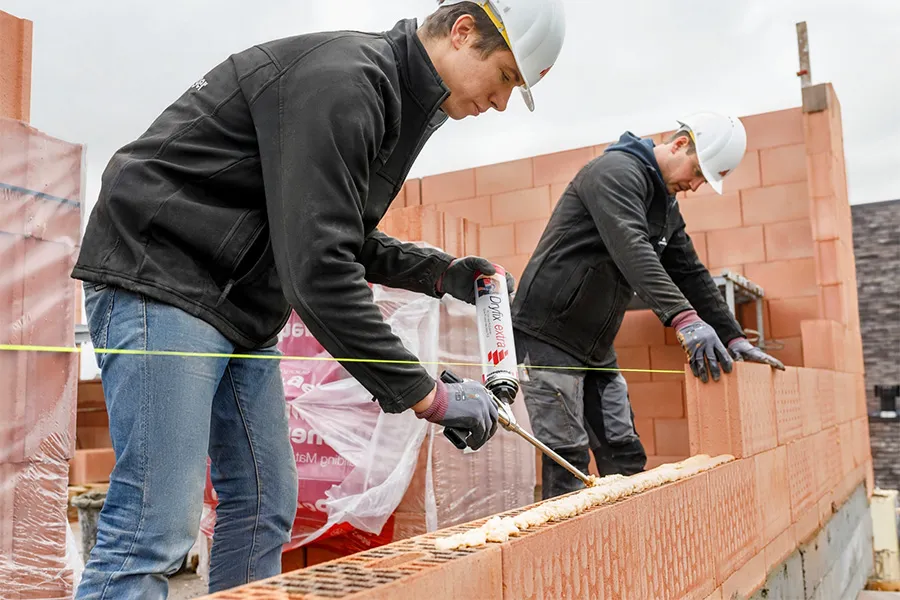
There is no shortage of waste on a construction site, but there is also no shortage of goodwill when it comes to doing something about it. Wienerberger is one company working to make the construction sector more circular. In the recent PUre project, it joined forces with other market players to explore how PU aerosol cans can be collected separately and processed into new raw materials.
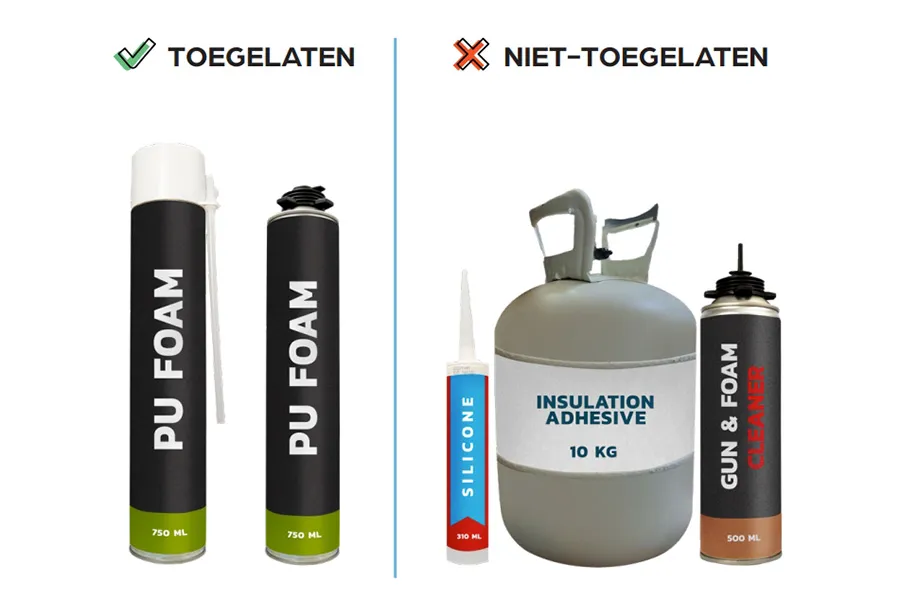
Capturing the needs of the construction market and translating them into building solutions and services for customers: that is the role of product manager Rebecca Meuleman at Wienerberger. Sustainability is naturally an important topic in these developments. The international specialist in ceramic building materials has already brought a groundbreaking system to market with DryFix, replacing traditional mortar or adhesive mortar with PU adhesive to enable faster and more efficient construction. “It has been a huge success in the market. But we saw that the aerosol cans containing this PU adhesive too often ended up in the site skip, even though they should actually be treated as small hazardous waste. That is not in line with our sustainability principles.”
Cross-sector collaboration
A problem that goes beyond a single manufacturer. “PU is used on site today for a wide range of applications. A cross-sector approach was therefore needed.” Soudal, among others, was keen to address the issue. Together, they approached Valipac to explore the possibilities. The PUre project was born. Meuleman: “First of all, we tried to map the potential volume of waste. Around 4 million such aerosol cans are generated each year in Belgium. In theory, it is also possible to recover 100% of them.”
Pilot project launched
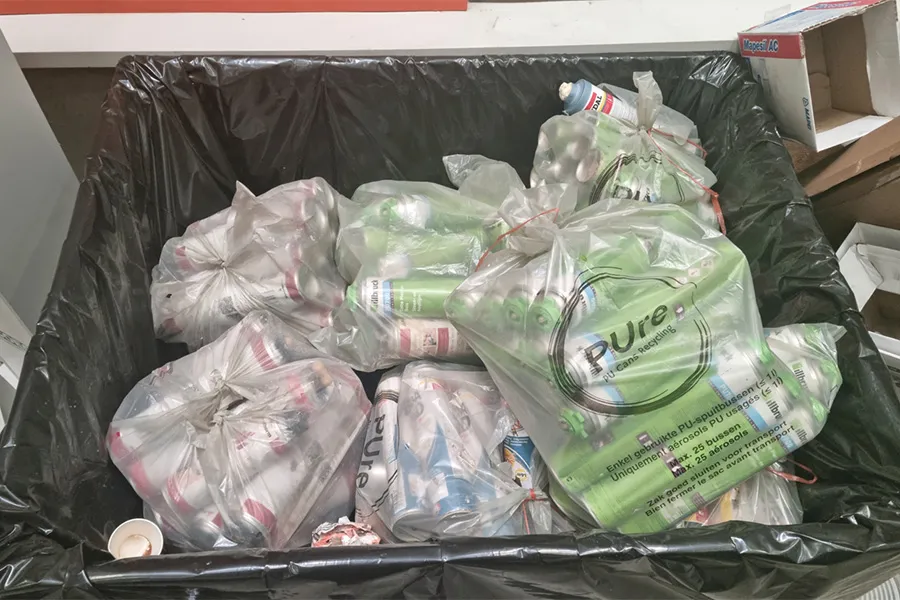
This provided a good starting point, but many questions remained: what is the best way to collect these aerosol cans? What are the main logistical requirements? How do all the parties in the value chain feel about it? And what costs are involved? A pilot project in the Antwerp area was designed to provide answers. “It was a small-scale project involving a number of building materials merchants. They told contractors collecting PU aerosol cans about our mission and gave them bags for easy collection on site. The contractors could then return the bags to the wholesaler, where they were stored in a container until a specialist waste collector came by.”
Scaling up is needed
After ten months, the total stands at 4,450 aerosol cans, equivalent to around 880 kg of waste. Participants’ feedback has also been positive. Merchants are enthusiastic. “They can contribute to greater sustainability without much extra work. However, we found that customers do not always shop at the same building materials merchants. Scaling up the project will therefore result in an even greater volume of returned aerosol cans.” Clear communication is another key focus. “In practice, many subcontractors also work on site. It will therefore take some time to get this message across to all parties.” Thirdly, the recovery rate for the collected material still needs to increase. “The quality of the bags and the purity of the fraction were not the issue. We will need to find a more specialised processor. We want to increase the recovery rate from the current 30% to at least 95%. The necessary technologies already exist, and scaling up this project may help them gain a foothold here more quickly.”
Legislative framework
The parties are determined to continue developing PUre. “We are still missing part of the market, as PU aerosol cans are also popular with DIY enthusiasts and steel merchants. This is certainly an avenue we want to explore further, for example by involving Fost Plus and a number of steel merchants. We also want to share all the information and insights we have gathered so far with competitors and federations. The aim is to draw up a charter in which participants commit to working towards the separate collection of PU aerosol cans and to starting discussions on establishing a legislative framework for this. All these measures should help make the costs add up, because that remains an important factor, of course,” Meuleman concludes.
Question about this story? Ask your question
Keep following this
Get an email when a new story is published. No account needed.
- SubjectPlastic waste







