












A different business model is needed for recycled fibres
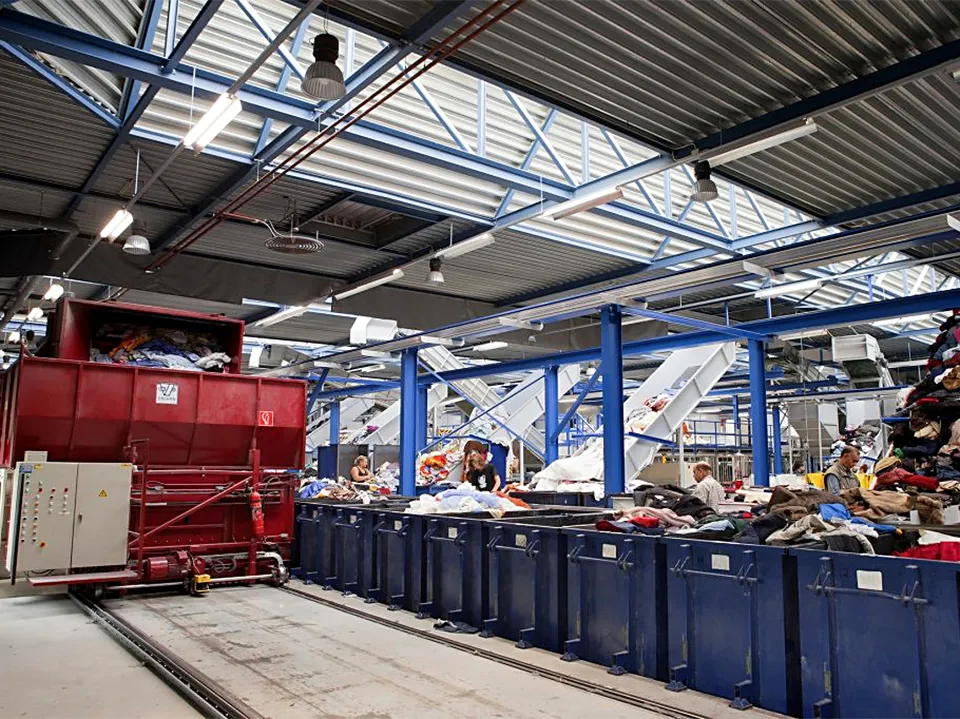
The pandemic has shown just how fragile the recycling industry still is today, despite all the good intentions.
This is particularly clear in textile recycling, where incoming volumes surged while, at the same time, markets closed their doors. But there is more to it than that. Mariska Zandvliet, corporate communication executive at Boer Group and chair of Euric Textiles, explains what is happening.
Clothing consumption has doubled over the past few decades. So-called fast fashion sets the tone: appealing and cheap, and therefore easy to replace. But this also affects the quality of garments. Boer Group, which collects, sorts and recycles 110 million kg of textiles every year, knows all about it. Corporate communication executive Mariska Zandvliet says: “Consumers can clearly notice it after washing an item a few times. But for textile processors, the poorer quality of the fibres is detrimental to the business model. The margins that make it possible to underpin the entire recycling model financially come from garments that can be recovered for reuse. This is also where the added environmental value lies, because the garments can simply be used again for their intended purpose. And demand is high: 70% of the world’s population is looking for second-hand clothing. But the quality is declining.”
Still stuck in a linear model
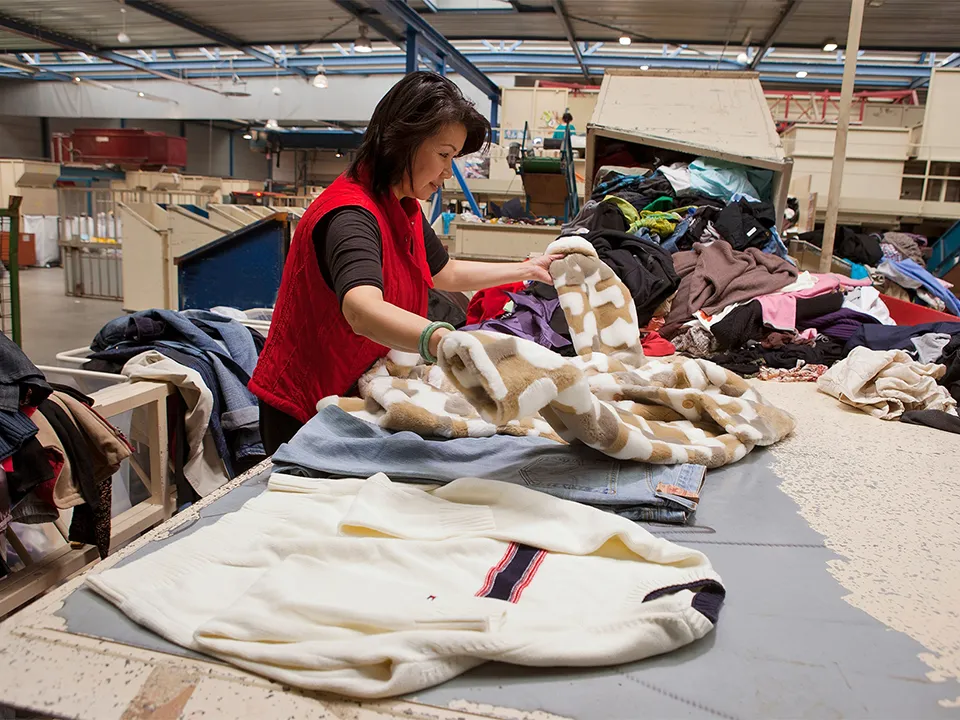
Only about 50% of discarded clothing that reaches processors is suitable for reuse. The rest is too dirty, too wet or too worn. “Some of it (+/- 15%) can still be recovered as cleaning cloths, provided it meets certain quality requirements. But if it does not meet that threshold, the only option is to try to recover the fibres through mechanical or chemical recycling, with the first initiatives now under way. But from that point on, we are essentially downcycling. Only 1% of recovered textile fibres ends up in new textiles. One reason is that most textile fabrics are made from different fibres, whereas recycling requires pure streams. Other, lower-value applications include car components and insulation materials. These can extend the material’s useful life by an average of fifteen years, but ultimately we remain stuck in a linear model. The fibre gets shorter and shorter until nothing more can be done with it.”
The pandemic caused an unprecedented imbalance between supply and demand
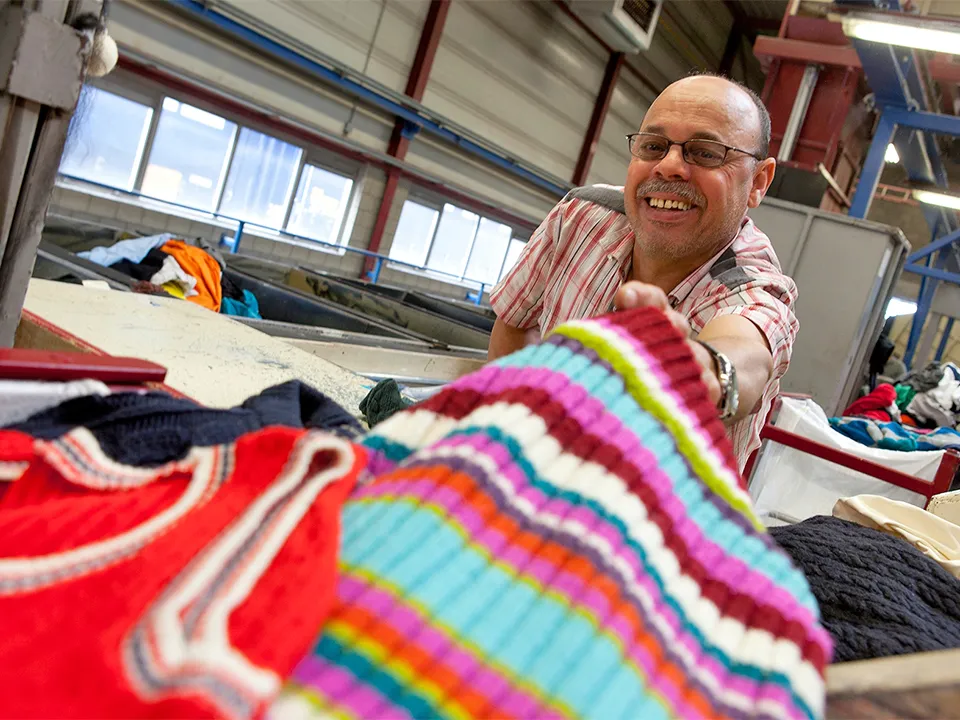
So what is needed to set a circular model for textiles in motion? “On the one hand, we need the technology to preserve fibre quality and therefore fibre length. On the other, the cost of such a production process needs to come down. Recycled fibres currently cost three to four times as much as virgin materials.” All these factors meant that companies active in textile recycling were already seeing their margins shrink as quality declined. “What the pandemic added to this was that staying at home prompted many people to clear out their wardrobes. The result was an unprecedented influx of material. Some collectors in Belgium, for example, were forced to close their containers temporarily. At the same time, much of the second-hand market shut down, leaving textile processors unable to sell their products and resulting in huge stockpiles.”
Structural solutions are needed
The market is now gradually picking up again, but that does not mean the problems have gone away. “Above all, the pandemic has shown how vulnerable our sector is. One positive development is that many cities and municipalities are willing to waive the fee they receive for this waste stream, or even to pay for it instead. At least in the Netherlands. This system was already under pressure because of declining quality. But to resolve the problems structurally, we need to find a different business model for recycled fibres. We hope this can accelerate a number of developments, so that clothing manufacturers also start taking responsibility. After all, they are responsible for the decline in quality. By using more recycled content, they can also be part of the solution. I am convinced that as soon as demand for recycled textile fibres grows, the technology will quickly follow. Europe has already shown that ambition with plastics, so why not textiles? Consumers also need to become more aware of the environmental impact of textile production. We will need each other to make the textile chain circular,” says Zandvliet.
Question about this story? Ask your question
Keep following this
Get an email when a new story is published. No account needed.
- SubjectPlastic waste







