












Towards a 100% circular tyre?
In a perfectly circular economy, products become the raw materials for those same products again at the end of their life.
This is a critical issue for tyres, as more and more outlets for recycled rubber from waste tyres are closing. But how far have we come in developing a circular tyre? We put the question to Michelin, which is playing a leading role in this field.
Worldwide, 1.6 billion new tyres are produced every year, amounting to 26 million tonnes. That represents enormous potential for recovering raw materials, something Michelin is keen to pursue. “We are aware of the impact our tyres can have on Europe’s journey towards a low-carbon society. After all, tyres account for 20% of the resistance a car encounters. Tyres therefore affect fuel consumption, emissions and waste streams. That is why sustainability is a top priority for us. Through our ‘All Sustainable’ strategy, we aim to use 40% sustainable materials in tyre production by 2030. By 2050, that figure should reach 100%.”

Balancing sustainability and recyclability
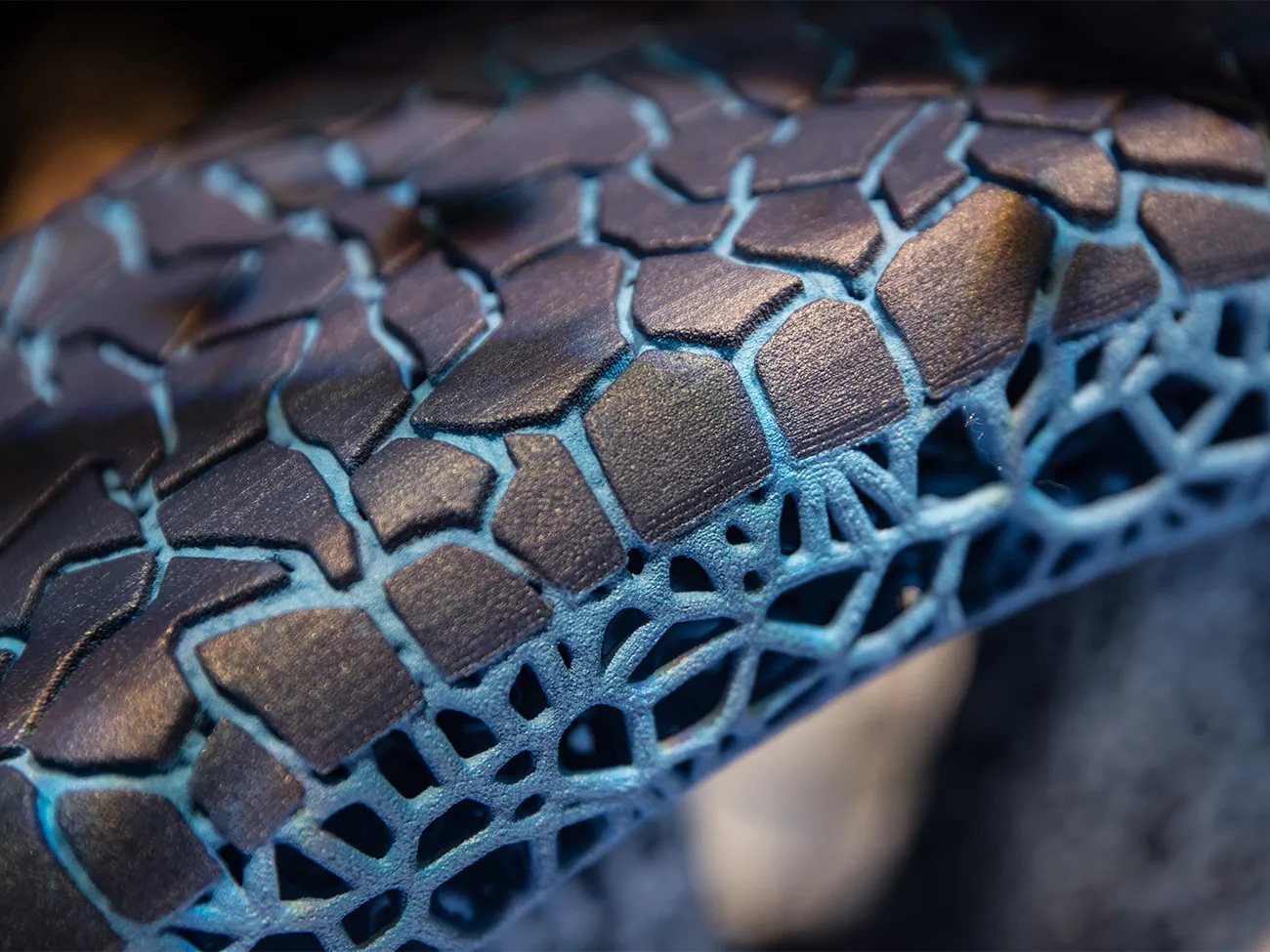
To achieve this, Michelin is looking at materials from non-fossil sources. It recently introduced a racing tyre that has already proved itself on the track and contains, among other things, orange and lemon peel, sunflower oil, pine resin and recycled aluminium. The tyre specialist is also, of course, investing in the recycling of waste tyres. The racing tyre contained recycled carbon from end-of-life tyres. “We believe in the circular tyre,” says Swint, summing up the ambition. “But to make it a reality, we will first have to go back to the drawing board. Our tyres are currently designed to last as long as possible and still deliver excellent performance at the end of their life. That, too, is sustainability. The mix of materials needed to achieve this can sometimes conflict with recyclability requirements. It is up to us to reconcile the two: to take end-of-life processing into account when designing a tyre and choosing its materials, and to produce a tyre that offers motorists safety and a long service life while also yielding raw materials at the end of its life.”
Pyrolysis key to recycled content in tyres
Michelin is a leading partner in the BlackCycle project, which aims to make tyres circular. The consortium of thirteen partners will develop specific solutions for producing sustainable raw materials for tyres: collecting end-of-life tyres and selecting raw materials, optimising pyrolysis, refining and assessing oil, optimising furnace processes, and assessing the performance of sustainable tyres. By 2026, BlackCycle aims to process almost one in two end-of-life tyres through this cycle. “Today, recycling focuses mainly on processing rubber into granules. In the next stage, applying pyrolysis could allow us to recover from the tyre the oil used to produce the rubber, for reuse as a fuel or lubricant, or as a feedstock for new tyres. Research is currently at laboratory scale. Through BlackCycle, we want to share knowledge and move more quickly towards industrial-scale production. With all the ingredients currently used in a tyre, 100% circularity is not possible. That is why we are also investing heavily in materials research to realise our ambition of producing 100% sustainable tyres,” Swint concludes.
Question about this story? Ask your question
Keep following this
Get an email when a new story is published. No account needed.
- SubjectPlastic waste







