












The huge plastic mountain in low-income countries
83 football pitches of waste, 10 centimetres deep, every day
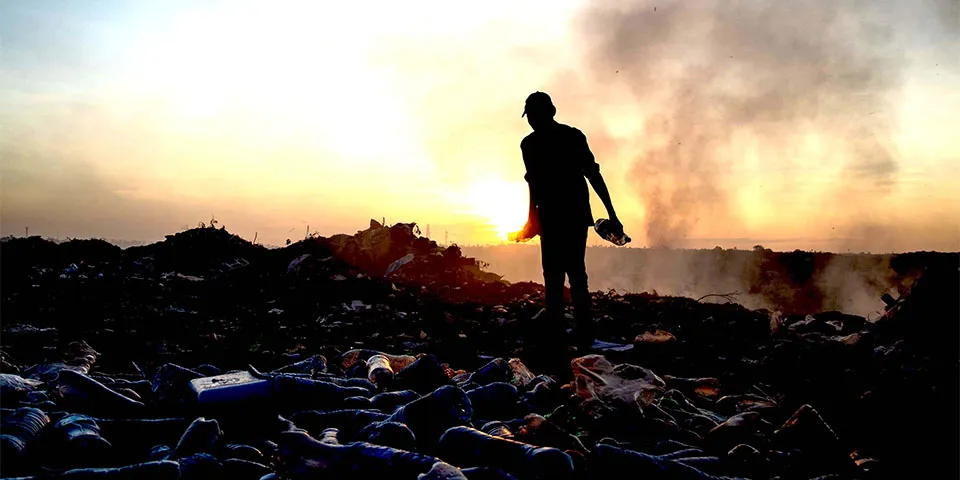
In China, India, the Philippines, Brazil, Mexico and Nigeria alone, a mountain of plastic waste the size of a football pitch and almost 8.5 metres high is generated every 24 hours. And this mountain is caused by just four multinationals, which together produce so much plastic that it grows by 10 centimetres every 20 minutes.
The disheartening figures come from a study conducted by Tearfund, a UK charity. It recently published a report entitled ‘The Burning Question: will companies reduce their plastic use?’, examining the pollution caused by four multinationals in six low-income countries. The report calculates how many tonnes of plastic pollution Coca-Cola, Pepsi-cola, Nestlé and Unilever generate in China, India, the Philippines, Brazil, Mexico and Nigeria alone. The figure is half a million tonnes a year. Coca-Cola is the biggest polluter by far, responsible for 200,000 tonnes annually on its own. In practice, the four companies of course sell their plastic products in more than six countries, making the figures even more stark. In the six countries studied, the plastic is not recycled but dumped or burned in the open air.
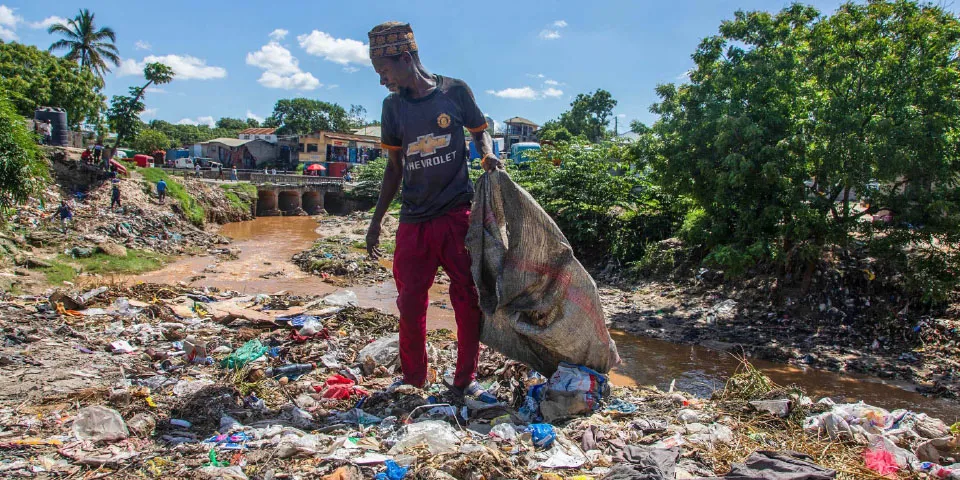
A plastic picker in Tanzania.
Not enough
The report not only presents the stark figures, but also shows what it means in practice when people are forced to burn their plastic waste. Interviews with residents of Dar es Salaam in Tanzania reveal the consequences, not only for their health but also financially, as people have to buy medicines and often suffer from respiratory problems.
Tearfund hopes the study will show the four companies that they are doing too little to tackle the global waste problem. “All four multinationals sell products in plastic packaging in low- and middle-income countries with very inadequate waste management systems. Together, this amounts to billions of bottles, sachets and containers every year.”
According to the report’s authors, the companies do this despite being able to know that “their plastic packaging is not collected and recycled properly, that their packaging therefore contributes to increasing plastic pollution because it is dumped or burned in the open air, and that this pollution causes serious harm to the environment and the health of people and animals.”
Coca-Cola, Pepsi-cola, Nestlé and Unilever all say they want to reduce their plastic production and recycle more, but both Tearfund and the Plastic Soup Foundation say these ambitions fall far short of what is needed.
Question about this story? Ask your question
Keep following this
Get an email when a new story is published. No account needed.
- ThemeMaking plastics and packaging circular
- SubjectPlastic waste







