












Recycling high-quality PMMA plastics
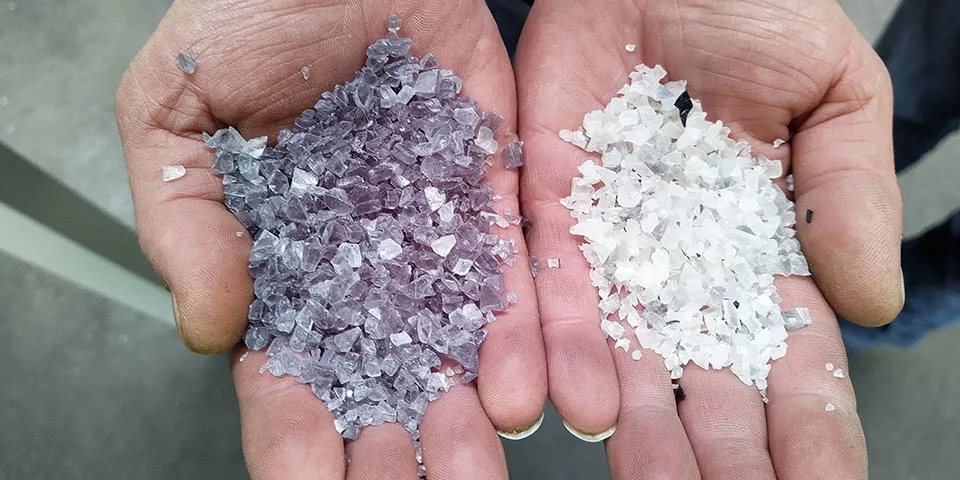
To establish a new, comprehensive PMMA recycling value chain in Europe, Heathland aims to develop a process that turns PMMA waste into a high-quality end product. Heathland selected Lybover RECYCLING to analyse and implement the first phase. Its many years of experience with a wide range of recycling processes across diverse industries make the difference.
The Dutch company Heathland collects and processes post-production plastic waste, focusing primarily on PMMA (polymethyl methacrylate). Heathland collects the waste, then sorts and mechanically or chemically recycles it into raw materials for various acrylic products. Its processing centres are located in the Netherlands and Poland, and are increasingly focused on the post-consumer PMMA waste stream. A total of 300,000 tonnes of PMMA waste are generated in Europe each year. Until recently, all of this waste was sent to incineration, as current recycling technologies and processes are not suitable for recycling end-of-life PMMA. Yet PMMA is highly recyclable. The properties of the recycled material are just as good as those of the raw material used to make a new product.
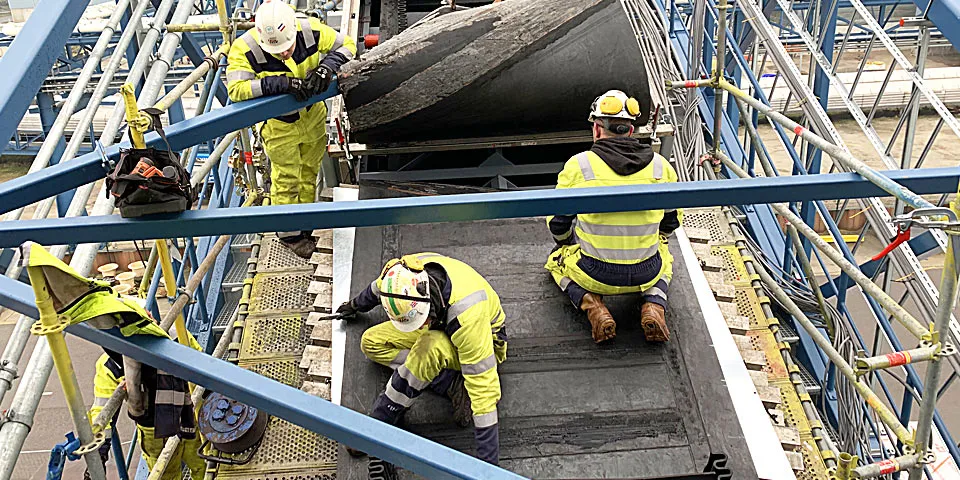
Lybover’s innovative project at Heathland pushes the boundaries of PMMA recycling.
MMAtwo: international, innovative research project
Since October 2018, Heathland has been the initiator and coordinator of the MMAtwo project, which is part of the European Union’s Horizon 2020 programme. The aim is to develop a new process for recycling post-industrial, end-of-life and discarded PMMA waste. Thirteen partners from six countries are taking part. PMMA is a transparent thermoplastic, better known under the trade names Perspex, Plexiglas, Altuglas and Oroglas, or simply as acrylic. At the height of the coronavirus crisis, it was widely used for all kinds of screens. But PMMA has many other applications, including car lamps, acoustic barriers, roof domes, shop fittings and bus windows. An estimated 30,000 tonnes of PMMA waste are collected in Europe each year, just around 10% of annual production. The MMAtwo process comprises two phases. In the first, post-consumer PMMA waste is pre-treated before being further processed using a chemical process (depolymerisation). Pre-treatment is a necessary and important step. If the waste is not sufficiently clean and stable, the chemical process will not work either.
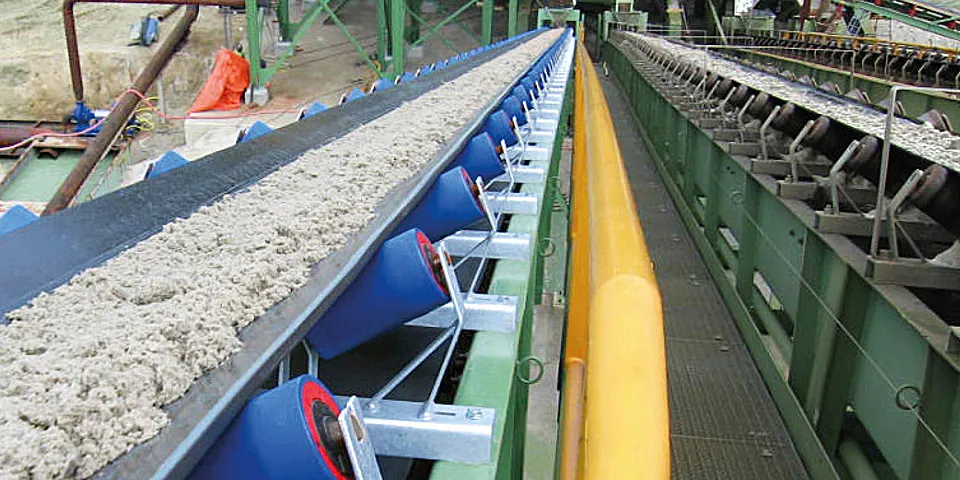
The TrennSo Technik Windshifter (ZigZag) uses a constant, regulated and controlled airflow to separate materials into light and heavy fractions based on their specific weight, shape and size.
Various techniques in the pre-treatment phase
The waste pre-treatment system comprises two lines: a clean (post-production) line and a dirty (post-consumer) line. The dirty line contains more foreign materials, such as dust, films and paper, while the clean line contains mainly different types of plastic. For pre-treatment on the clean line, Lybover RECYCLING recommended installing a Windshifter from its partner TrennSo Technik. An electrostatic separator from its partner Hamos was selected for the dirty line. Lybover RECYCLING designed and built both systems to meet the project’s requirements. “We arranged a test with the Hamos EKS through Lybover RECYCLING. We were very pleased with the good results,” says Nikolaj Garnitsch, director at Heathland.
Separating the plastic mix
The Hamos EKS is an electrostatic separator that uses the different triboelectric behaviour of individual plastics. Through friction and impact, two different plastics acquire a negative or positive charge, respectively. They are then separated by attraction or repulsion in a high-voltage field (an electrode with a specific polarity). In this case, the PMMA particles are positively charged and the PVC particles negatively charged.
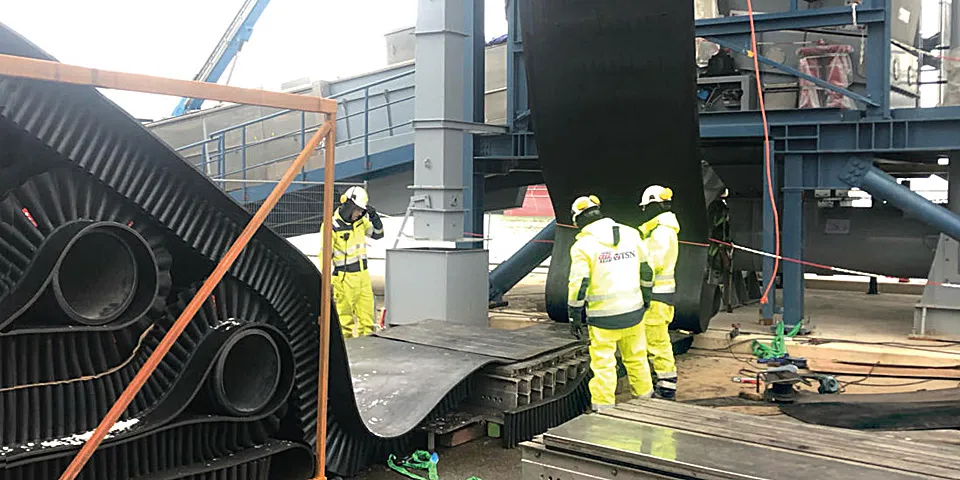
A fan blows the light material (PE film) upwards and away from the heavier material (PMMA waste) as it falls.
Air-based separation
The TrennSo Technik Windshifter (ZigZag) uses a constant, regulated and controlled airflow to separate materials into light and heavy fractions based on their specific weight, shape and size. A fan blows the light material (PE film) upwards and away from the heavier material (PMMA waste) as it falls. The light material is then separated from the recirculated air by a cyclone. Lybover RECYCLING’s service engineers make various adjustments to the system to achieve effective separation. “We are very pleased with the collaboration. We chose Lybover RECYCLING because of its good service and high-quality equipment,” says Simon van der Heijden, director at Heathland. “In consultation with them, we chose a TrennSo Technik Windshifter because it is a system that does not use outside air, has a high capacity and performed very well in tests at the test centre. Quality is extremely important for this project.”
Looking ahead
The pre-treatment process is currently being tested and the quality of the output analysed. If the results are not sufficient, the process will need further optimisation. The aim is to process 22,000 tonnes per year through this project. Once this target has been reached and the research project has succeeded, a large-scale production line will be built.
Question about this story? Ask your question
Keep following this
Get an email when a new story is published. No account needed.
- ThemeMaking plastics and packaging circular
- SubjectPlastic waste







