












Recycling high-quality PMMA plastics
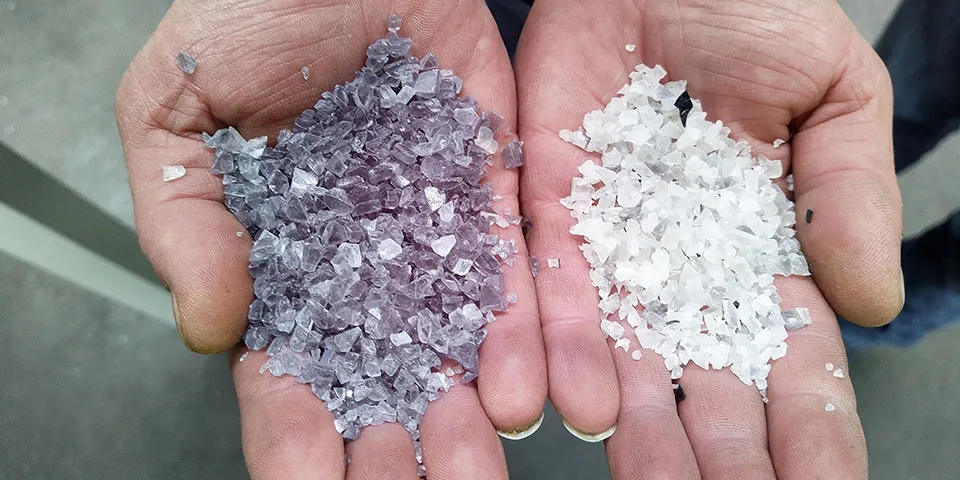
To establish a new, comprehensive PMMA recycling value chain in Europe, Heathland wants to develop a process for turning PMMA waste into a high-quality end product. Heathland selected Lybover RECYCLING to analyse and implement the first phase. Its many years of experience with a wide range of recycling processes across diverse sectors make all the difference.
The Dutch company Heathland collects and processes post-production plastic waste, with a primary focus on PMMA (polymethyl methacrylate). Heathland collects the waste, then sorts and mechanically or chemically recycles it into raw materials for various acrylic products. Its processing centres are located in the Netherlands and Poland, and are increasingly focusing on the post-consumer PMMA waste stream. A total of 300,000 tonnes of PMMA waste are produced in Europe each year. Until recently, all this waste was sent to incinerators, as current recycling technologies and processes are not suitable for recycling end-of-life PMMA. PMMA is, however, highly recyclable. The properties of the recycled material are just as good as those of the raw material used to make a new product.
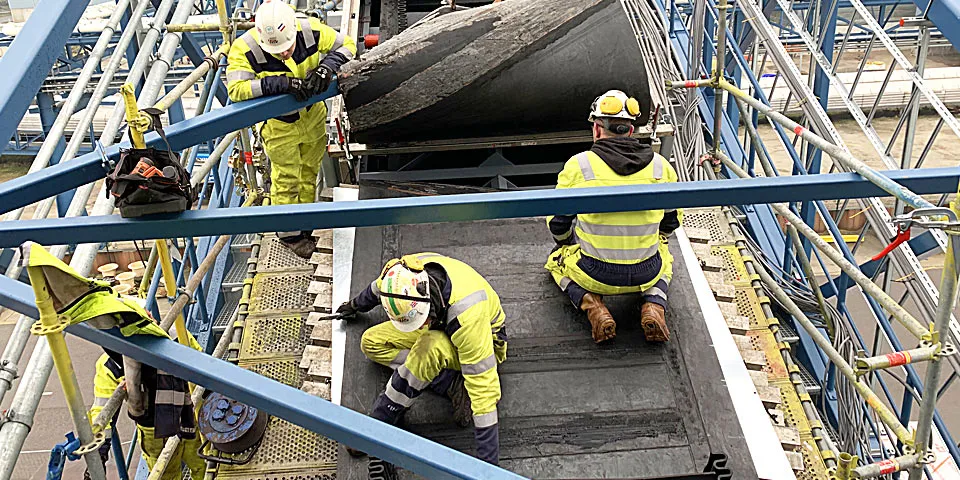
Lybover's innovative project at Heathland pushes the boundaries of PMMA recycling.
MMAtwo: an international, innovative research project
Since October 2018, Heathland has been the initiator and coordinator of the MMAtwo project. The project is part of the European Union's Horizon 2020 programme. Its aim is to develop a new process for recycling post-industrial, end-of-life and discarded PMMA waste. A total of 13 partners from 6 countries are taking part. PMMA is a transparent thermoplastic, better known by the trade names Perspex, Plexiglas, Altuglas and Oroglas, or as acrylic. At the height of the coronavirus crisis, it is widely used for all kinds of screens. But PMMA has many applications, including car lights, noise barriers, roof domes, shopfitting and bus windows. An estimated 30,000 tonnes of PMMA waste are collected in Europe each year, just around 10% of annual production. The MMAtwo process consists of two phases. In the first, post-consumer PMMA waste is pre-treated before being further processed using a chemical process (depolymerisation). Pre-treatment is a necessary and important step. If the waste is not sufficiently clean and stable, the chemical process will not work either.
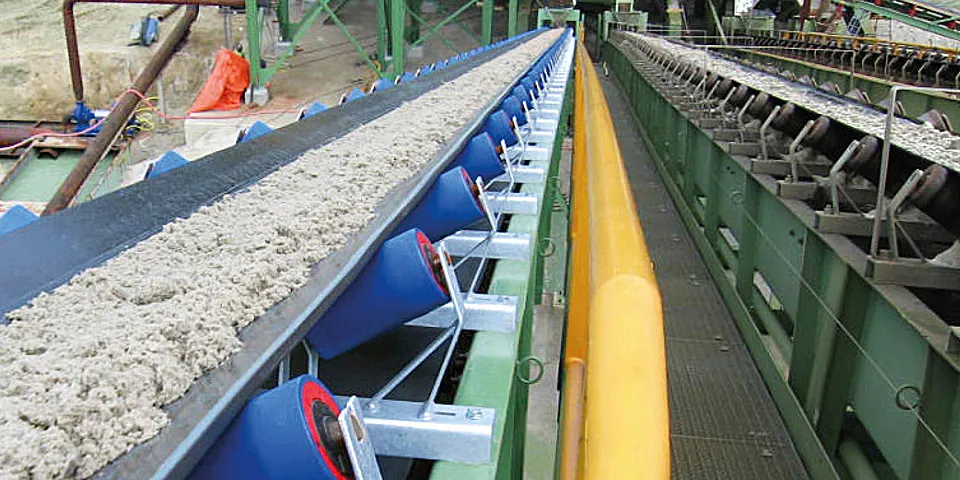
The TrennSo Technik Windshifter (ZigZag) uses a constant, regulated and controlled airflow to separate materials into light and heavy fractions based on specific weight, shape and size.
Various techniques in the pre-treatment phase
The waste pre-treatment consists of two lines: a clean (post-production) line and a dirty (post-consumer) line. The dirty line contains more other materials, such as dust, films and paper, while the clean line mainly contains different types of plastic. For pre-treating the clean line, Lybover RECYCLING recommended installing a Windshifter from its partner TrennSo Technik. For the dirty line, an electrostatic separator from partner Hamos was chosen. Lybover RECYCLING designed and built both systems to meet the project's requirements. “We had a test carried out with the Hamos EKS through Lybover RECYCLING. We were very pleased with the good results,” says Nikolaj Garnitsch, director at Heathland.
Separating the plastic mix
The Hamos EKS is an electrostatic separator that uses the different triboelectric properties of individual plastics. Friction and impact give two different plastics either a negative or a positive charge. They are then separated by attraction or repulsion in a high-voltage field (an electrode with a specific polarity). In this case, the PMMA particles are positively charged and the PVC particles negatively charged.
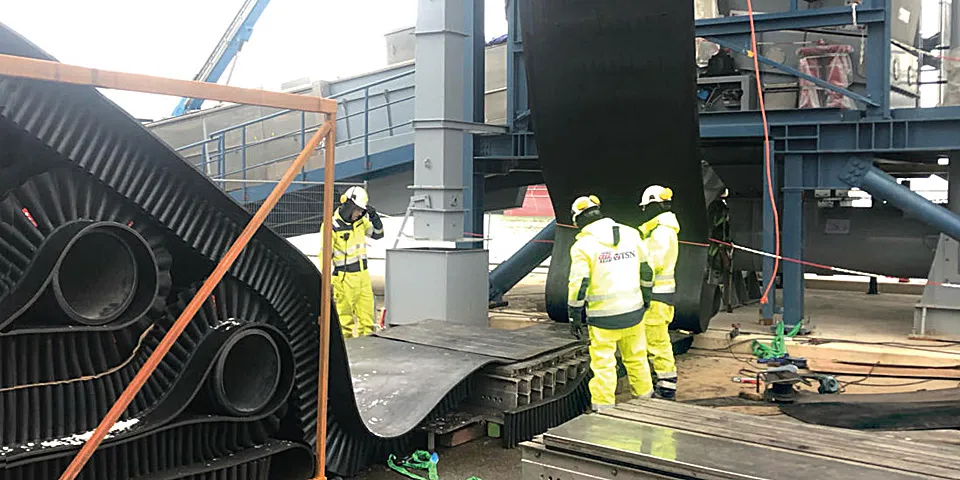
A fan blows the light material (PE film) upwards, separating it from the heavier material falling downwards (PMMA waste).
Air-based separation
The TrennSo Technik Windshifter (ZigZag) uses a constant, regulated and controlled airflow to separate materials into light and heavy fractions based on specific weight, shape and size. A fan blows the light material (PE film) upwards, separating it from the heavier material falling downwards (PMMA waste). The light material is then separated from the recirculated air using a cyclone. Lybover RECYCLING's service engineers make various adjustments to the system to achieve effective separation. “We are very pleased with the cooperation. We chose Lybover RECYCLING because of its good service and high-quality systems,” says Simon van der Heijden, director at Heathland. “After consulting with them, we chose a TrennSo Technik Windshifter because it does not use false air from outside, has a high capacity and performed very well in tests at the test centre. Quality is very important in this project.”
The future
The pre-treatment process is currently being tested and the resulting material qualities analysed. If they are not sufficient, the process will need further optimisation. The aim is to process 22,000 tonnes per year through this project. Once this target has been reached and the research project has been successful, a large-scale production line will be built.
Question about this story? Ask your question
Keep following this
Get an email when a new story is published. No account needed.
- ThemeMaking plastics and packaging circular
- SubjectPlastic waste







