












‘Crisp packets could soon be easier to recycle’
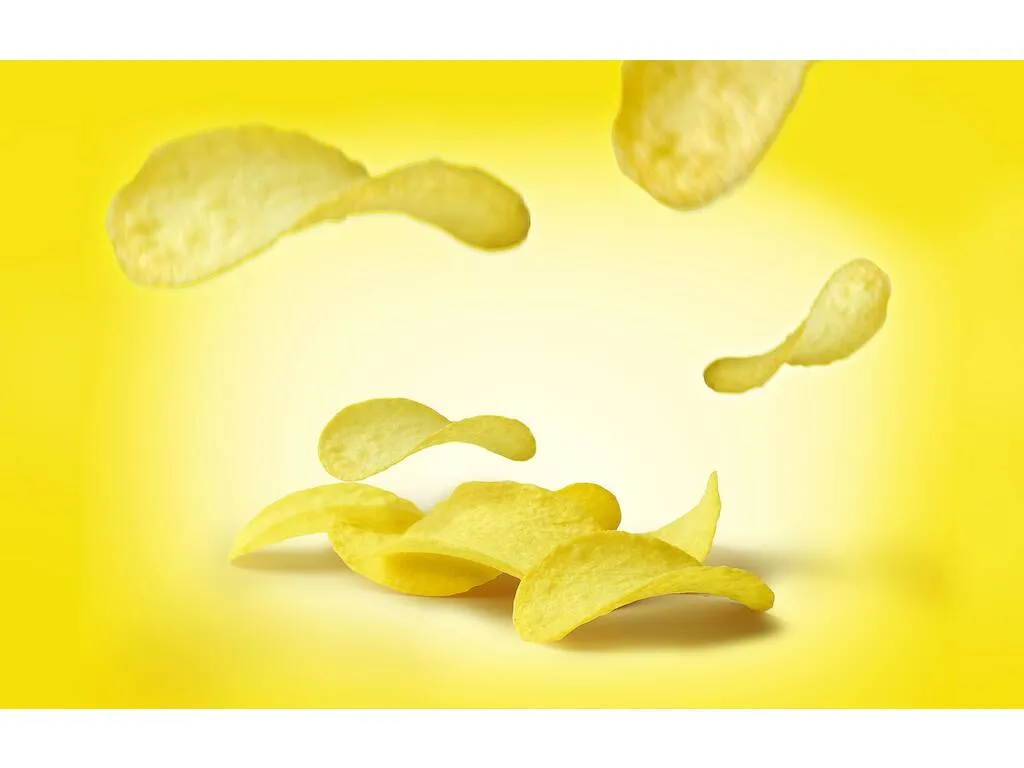
A vacuum-deposited layer of aluminium on the inside of packaging keeps crisps crisp and coffee aromatic. But it is precisely this oxygen barrier that makes many lightweight food packages difficult to recycle. Producing the packaging layer by layer also uses a lot of energy. Researchers in Wageningen are working with a consortium on an alternative that uses less energy and is likely to be easier to recycle.
The solution may lie in a blend of positively and negatively charged polymers that together form a dense protective barrier against oxygen. This potential alternative to aluminium in lightweight food packaging was discovered within the Advanced Research Center Chemical Building Blocks Consortium (ARC CBBC), a partnership in which various chemical companies and research institutions have been working on innovative chemical processes and materials since 2016.
For this specific study, Wageningen University & Research, Universiteit Twente, BASF and AkzoNobel worked together. Jiaying Li, a doctoral student at Universiteit Twente, focused on polyelectrolytes, a type of water-soluble polymer. Polyelectrolytes are already used in the coatings industry, but the ‘layer-by-layer method’ needed to make polyelectrolyte coatings is time-consuming and unsustainable. The solution now being developed within the consortium uses a blend of positively and negatively charged polymers, which stick together because of their opposite charges. A base is added to this blend to keep the polymer mixture liquid and homogeneous during production. As it dries, the base evaporates and the polymers stick together, forming a robust oxygen barrier.
Environmental benefits
Jasper van der Gucht, Professor of Physical Chemistry and Soft Matter at Wageningen University & Research, believes the discovery is an important step towards more sustainable food packaging, he says in the WUR Circulaire & Biobased Economy newsletter: “The gas barrier properties of these polymer-based coatings are at least equivalent to those of food packaging with vacuum-deposited aluminium. In addition, the potential environmental benefits are considerable, because polymer packaging could be much easier to recycle.”
The industry is therefore showing great interest in this new type of food packaging. Further research is needed to improve other properties, such as water resistance and mechanical stability. The new coating also needs to be tested in real-world packaging applications, and the recyclability of packaging with this coating must be investigated.
Question about this story? Ask your question
Keep following this
Get an email when a new story is published. No account needed.
- ThemeMaking plastics and packaging circular
- SubjectPlastic waste







