












‘Compostable plastic breaks down quickly enough’
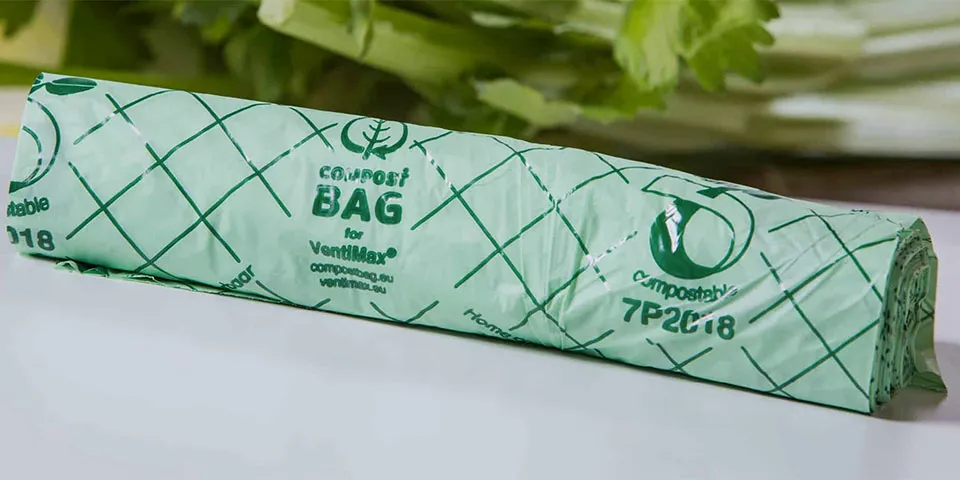
Polylactic acid (PLA) products break down faster than paper and orange peel
Wageningen Food & Biobased Research studied how compostable plastics behave in the current Dutch processing system for household food and garden waste (GFT) and concluded that they can be processed alongside GFT without any problems. No traces of compostable plastics were found in the compost, the end product of GFT processing. Traces of fossil-based (non-compostable) plastics were found, however. This remains a problem.
In a representative field trial conducted at one of the companies that processes GFT in the Netherlands, compostable versions of a range of plastic products were tracked through the standard GFT processing process. The study included nine products from different manufacturers: GFT collection bags, plant pots, tea bags, coffee pads, coffee capsules and fruit labels. To produce usable compost, at the end of the standard composting process, which in this case took approximately 11 days, any GFT that had not yet decomposed is screened out, along with contaminants such as metals, glass, stones and plastics. In addition to the compost, the screened fractions (the residue) were also examined in this field trial for the presence of plastics, both conventional and compostable.
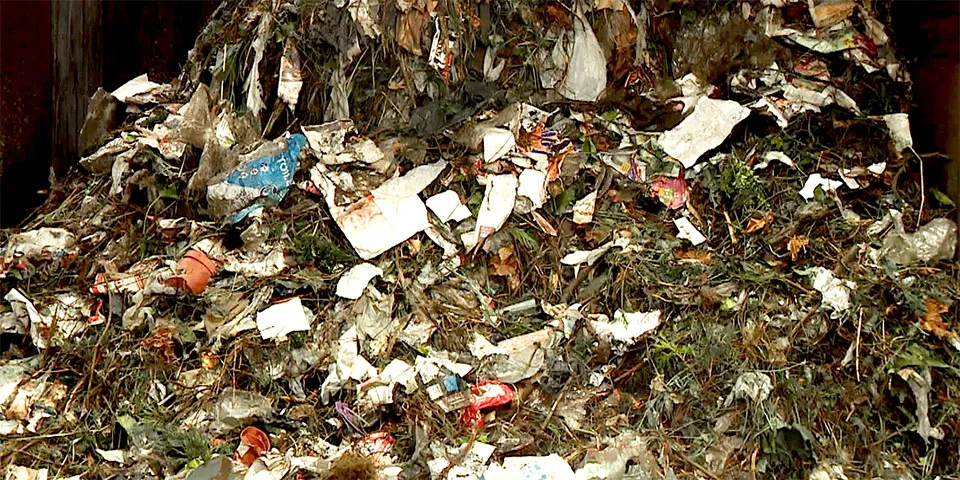
The presence of fossil-based plastics in GFT is a real problem.
Small enough
Approximately 20 per cent of the material discharged from the composting reactor after 11 days was small enough to be classed as compost. The largest screened fraction (10-40 millimetres), accounting for approximately 70 per cent of the material discharged from the reactor, consisted of slowly decomposing GFT such as twigs, leaves, peel, paper and similar materials, which are usually returned to the composting process. Around 1 per cent plastic was found in this fraction, almost all of it conventional fossil-based plastic. The coarser screened fraction (larger than 40 millimetres), which accounted for approximately 10 per cent of the material discharged from the reactor, also consisted mainly of slowly decomposing GFT. The plastics found in it were likewise mainly conventional fossil-based plastics, although traces of compostable GFT collection bags were also found. It is likely that fossil-based plastics will continue to accumulate in the residue, while the compostable plastics will break down completely if, as usual, these screened fractions are put through another composting cycle.
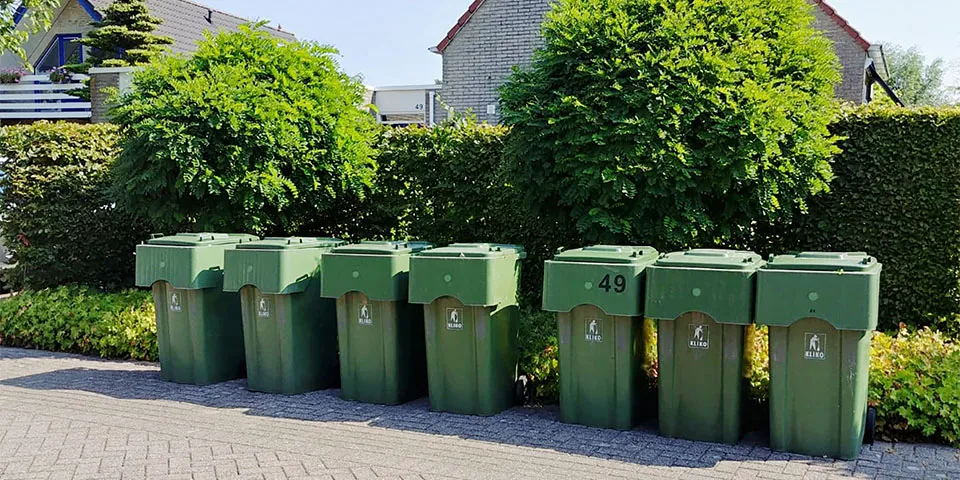
Consumers are confused about what can and cannot go in GFT bins.
Polylactic acid
Notably, compostable products made from polylactic acid (PLA) broke down faster than paper and orange peel, for example, and could no longer be found even after a single 11-day composting cycle. This applied not only to thin tea bags, but also to thicker plant pots.
Based on all the findings, the researchers at Wageningen University and Research (WUR) conclude that compostable plastics complying with European standard EN13432 break down quickly enough in Dutch GFT processing. However, the presence of conventional, fossil-based plastics in GFT is a real problem for GFT processing and must be addressed.
Criticism
The recycling industry has been highly critical of so-called bioplastics. Not all types of bio-based plastic are compostable, and the average consumer does not know the difference. They put all bioplastics in the GFT bin. In addition, according to waste processors, compostable plastics do not contribute to circularity because they add no useful substances to the compost. Most bioplastics also do nothing to reduce plastic pollution, even when made from bio-based feedstocks. Nor can they be recycled in the same waste stream as conventional plastics.
Question about this story? Ask your question
Keep following this
Get an email when a new story is published. No account needed.
- ThemeMaking plastics and packaging circular
- SubjectPlastic waste







