












Chemical recycling of yoghurt pots and foam trays
Text and images Fost Plus
Towards circular food packaging
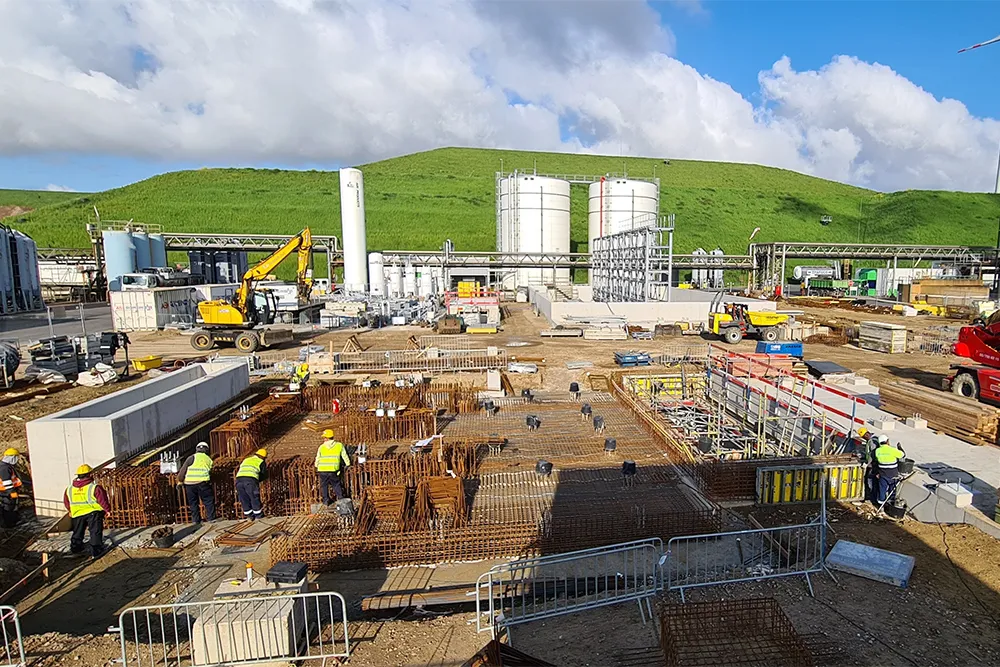
Yoghurt pots and foam trays for meat or fish will be chemically recycled in the Port of Antwerp from mid-2024. This is a European first, as it means polystyrene (PS) and expanded polystyrene (XPS) from the blue bag can be processed into secondary raw material for making new packaging, including food packaging. The project is being made possible by the construction of a new chemical recycling plant in the Port of Antwerp by Indaver, supported by cooperation with Fost Plus to supply PS and XPS from PMD waste. Colruyt Laagste Prijzen has already made its XPS trays for fresh meat recyclable and also aims to move towards fully circular meat trays in the longer term.
Fost Plus has announced a long-term partnership with Indaver’s Plastics2Chemicals demonstration plant to chemically recycle (X)PS from household packaging waste. From 2024, the new plant will process up to 26,000 tonnes of material into secondary raw material using depolymerisation technology. The recycled styrene, the end product, will have the same characteristics as virgin material, making it suitable for producing new yoghurt pots and meat and fish trays, as well as other (X)PS packaging. Erik Moerman, Director Sales and Development at Indaver, said: “Like certain other plastics, PS has the potential to be used as a circular polymer. The new chemical recycling plant in the Port of Antwerp, together with the pre-treatment plant we are building at our site in Willebroek, will enable us to convert PS and XPS back into monomers. This is unique in Europe.”
Potential for circular foam trays
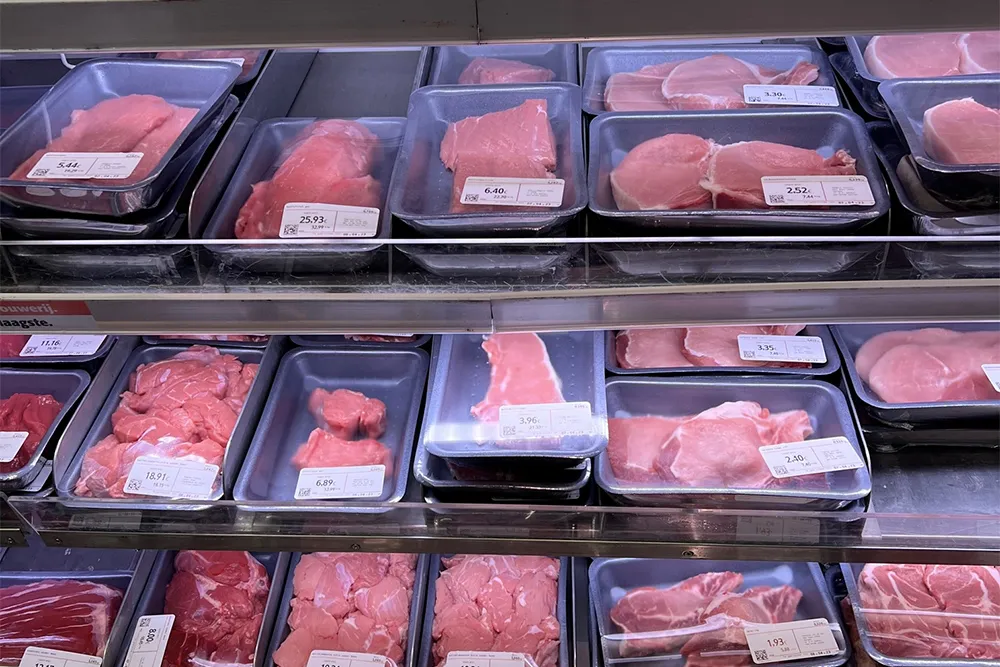
Polystyrene is one of the sixteen material types sorted at facilities processing material from the blue bag. Both PS and XPS packaging end up in this fraction and are mechanically recycled. However, recycling XPS packaging in particular presents a complex challenge. Trays for fresh meat or fish are among the packaging types consumers are most often unsure how to sort. They should, in fact, go in the blue bag. But even when they did, some escaped the recycling chain because of their colour. Packaging containing so-called carbon black cannot be detected by the infrared cameras at sorting plants. These black trays therefore ended up in the residual waste fraction. Colruyt Group places around 880 tonnes of XPS packaging on the market each year. All of it is now dark grey instead of black, making it detectable by sorting equipment and therefore recyclable. Pascal Dekelver, meat division manager at Colruyt Group, said: “XPS is an interesting packaging material. It has good mechanical properties, being strong and stackable, excellent absorbency and high insulating capacity, which means fresh meat products are less affected by temperature fluctuations. To increase its recycling rate, we have switched all our black trays to grey. The next step is to add recycled material. We will continue to make our packaging more sustainable, step by step.”
Food-grade applications too
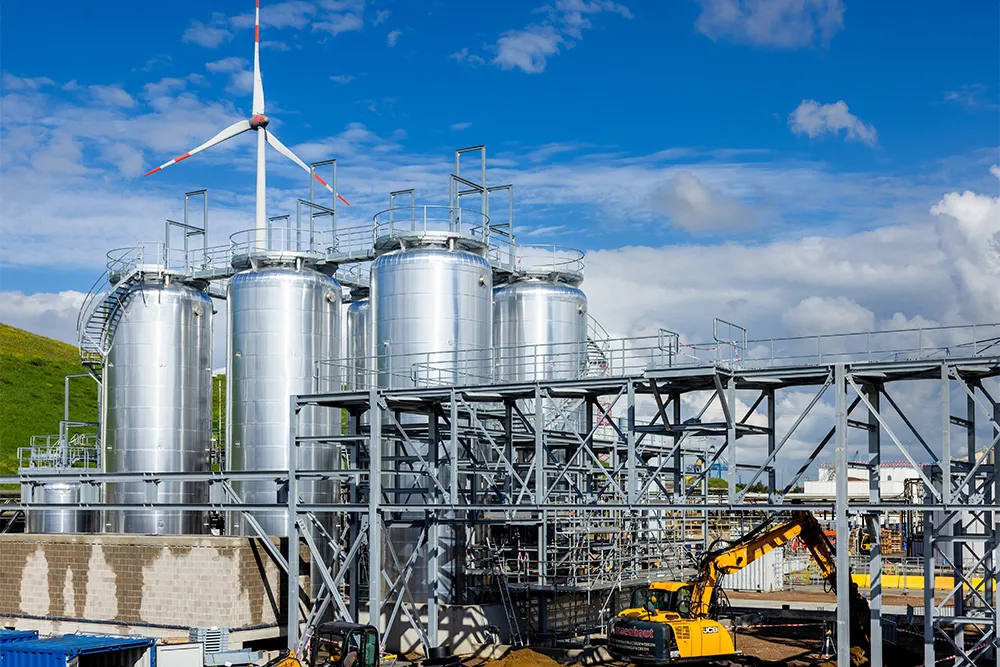
In addition to polystyrene, Plastics2Chemicals will also recycle polyolefin, including around 1,000 tonnes of film from the blue bag. This includes, for example, outer packaging for multipacks and bags such as crisp packets. The current proposal for the European Packaging & Packaging Waste Regulation states that by 2030 all plastic packaging must contain 10% recycled material. This is an ambitious target, but one that is necessary to protect the environment and our natural resources. Although recycled PS from mechanical recycling can be used perfectly well to make new products or non-food packaging, it is not permitted for food-contact applications. The new partnership opens the door to circular trays and pots. Wim Geens, managing director of Fost Plus, said: “Our goal has always been to bring as much plastic recycling as possible to Belgium. This had not yet been achieved for polystyrene because it makes up a relatively small share of the blue bag. Around 3,000 tonnes of PS a year from the five PMD sorting centres will be chemically recycled from 2024. This is a Belgian circular story we can rightly be proud of.”
Question about this story? Ask your question
Keep following this
Get an email when a new story is published. No account needed.
- ThemeMaking plastics and packaging circular
- SubjectPlastic waste







