












Boosting tyre recycling is essential to the European Green Deal
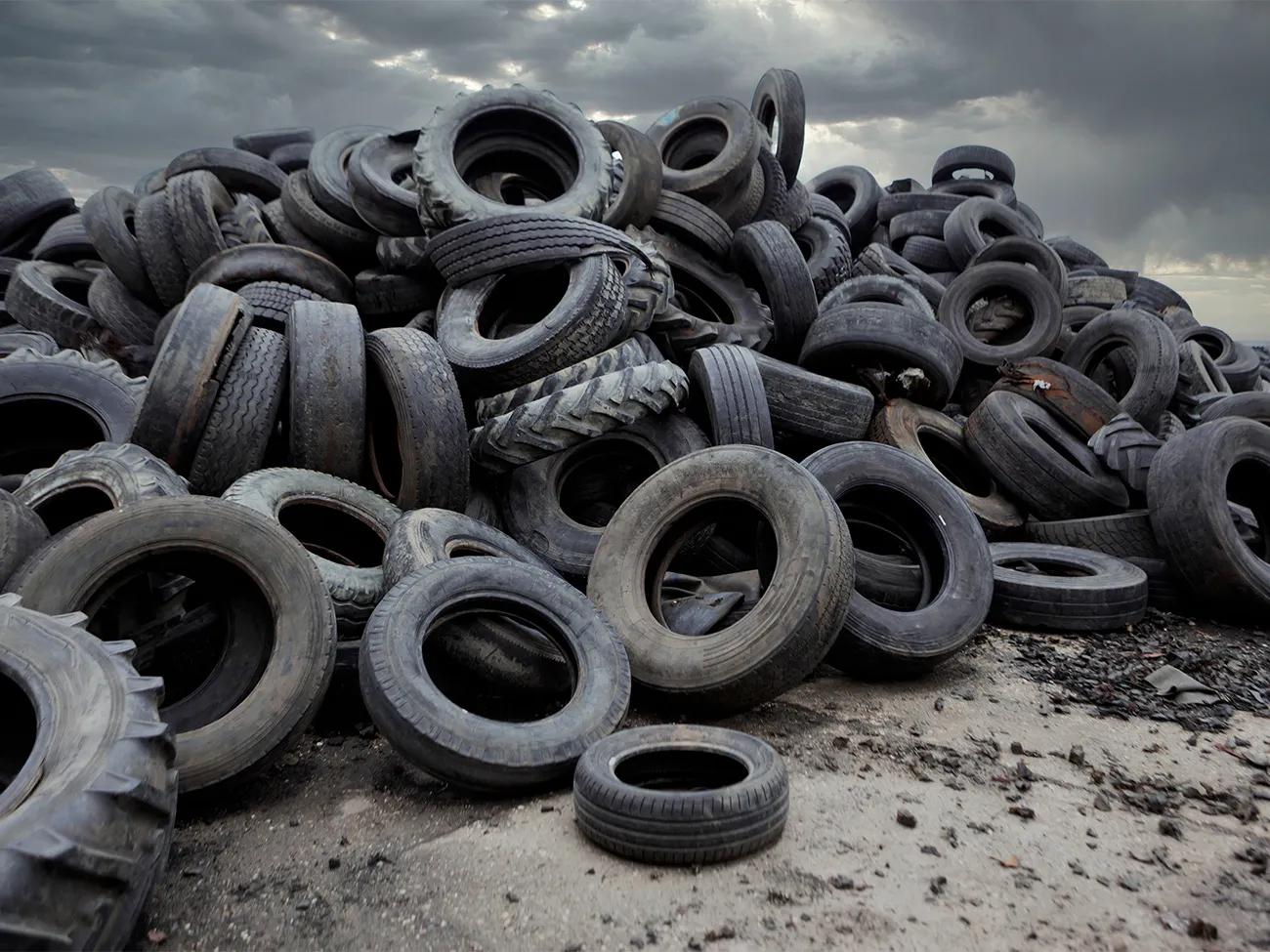
If you lined up the more than 300 million waste tyres collected in Europe each year, they would stretch all the way around the world.
Tyre recyclers therefore face a serious challenge: turning this waste stream into sustainable, valuable raw materials and paving the way for a fully circular economy. The aim must be to prevent the release of microplastics while establishing a well-functioning circular value chain. An opinion piece by Alejandro Navazas, scientific officer at EuRIC.
Despite all the efforts made by tyre recyclers in recent years, there is still considerable scope for the European Union to significantly boost tyre recycling. Recycling tyres into high-quality end products remains limited by technological obstacles, as well as regulation and bottlenecks in end markets. Efforts are therefore needed across the entire value chain to expand the circularity of waste tyres. This calls for changes to the way tyres are designed and manufactured so that more material can be recovered. But greater awareness is also needed downstream, along with systems and infrastructure to keep materials in circulation.
Despite all the efforts made by tyre recyclers in recent years, there is still considerable scope for the European Union to significantly boost tyre recycling. Recycling tyres into high-quality end products remains limited by technological obstacles, as well as regulation and bottlenecks in end markets. Efforts are therefore needed across the entire value chain to expand the circularity of waste tyres. This calls for changes to the way tyres are designed and manufactured so that more material can be recovered. But greater awareness is also needed downstream, along with systems and infrastructure to keep materials in circulation.
A second life for 300 million tyres
Around 300 million tyres reach end of life in Europe each year. But they are far from having outlived their usefulness. The steel wire embedded in tyres can be melted down to make new steel, while the rubber can get a second life in playgrounds and sports arenas, moulded products, construction applications, roadworks, paints … The largest market today, accounting for 37% of demand for rubber from waste tyres, is crumb rubber used as infill in synthetic turf. Life cycle studies have shown that granulating waste tyres to produce high-quality raw materials is currently the most sustainable solution. Yet only 12% of the raw materials used in Europe today come from recycled products and recovered materials. The benefits are nevertheless significant. Every tonne of waste tyres sent for recycling rather than incineration saves the environment 700 kg of CO2 emissions.
Limiting the risk of plastic pollution
Sustainability is part of the DNA of every recycler, large or small, family-owned or multinational. The recycling industry as a whole therefore supports Europe’s objective of preventing the release of microplastics into the environment. One such source of microplastics is infill used in artificial turf pitches. Tyre recyclers have already taken practical steps to address this issue, before it came under scrutiny in Europe. ECHA is therefore proposing two options: either a ban on the use of infill or a derogation combined with measures to limit the risks, such as installing a fence around a pitch to prevent rubber granules from spreading further. This second option is the only one that does not throw the baby out with the bathwater, preserving the environmental benefits of tyre recycling while avoiding negative impacts.
A disaster for the environment and society
As we step up our efforts to tackle climate change and its effects, an integrated approach that aligns different policy measures will enable tyre recycling to be applied on a larger scale. This will open up opportunities for greater environmental benefits. A complete ban would probably mean that 500,000 waste tyres were incinerated or illegally dumped each year, a disaster for the environment and the least circular option. And that is before considering the socio-economic consequences, both for tyre recyclers and for communities whose residents are only too happy to play sports on pitches made from recycled materials. There is currently no alternative to these infill materials that offers the same performance and meets the same safety requirements for intensive year-round use, even in the most challenging weather conditions. Norway has already set a good example by introducing measures to reduce the risk of potential plastic pollution from artificial turf pitches. Let us follow that example.
Question about this story? Ask your question
Keep following this
Get an email when a new story is published. No account needed.
- ThemeCircular business under changing regulations
- SubjectPlastic waste







