












Austrian innovation takes textile recycling a step further
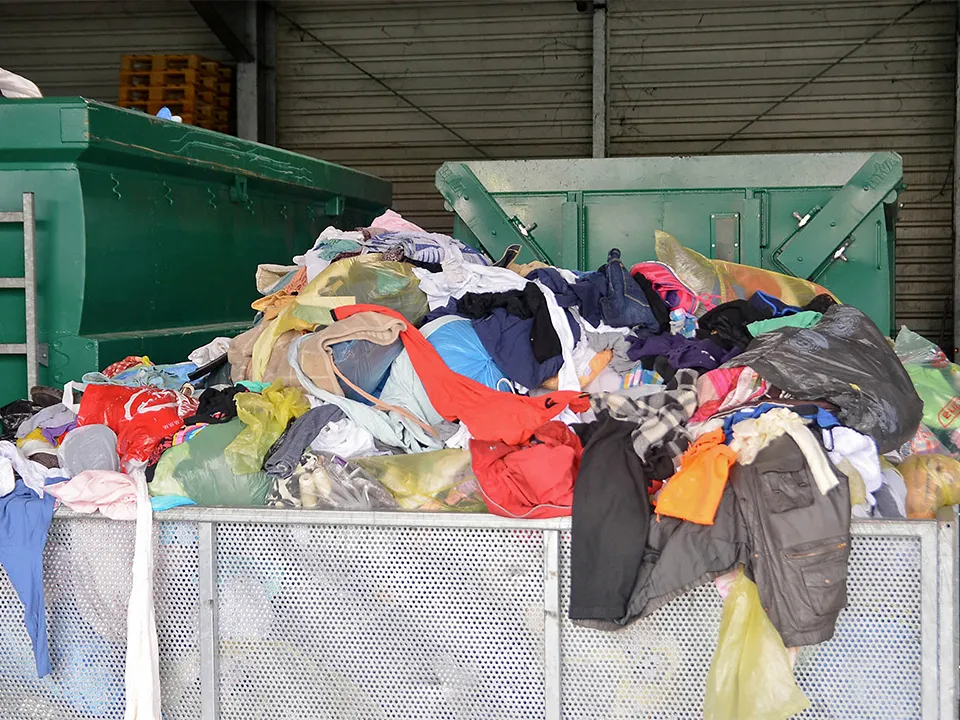
Recycled polyamide can be spun into new textile fibres, as discovered by Dr Tung Pham, head of the Forschungsinstituts für Textilchemie und Textilphysik in Innsbruck, Austria. The method dissolves the polyamide and allows wool to be separated into wool fibres. The reduction in fibre length is minimal.
The textile industry cannot do without polyamide. The molecule makes textiles more abrasion-resistant and elastic. Until now, recycling clothing made from these blended fibres has proved unsuccessful.
The problem with recycling textiles containing polyamide is that the fibres become damaged or shorter with each ‘wash’. This means that a little less textile remains each time.
Textile fibres containing polyamide are usually spun into yarn. This blended yarn is difficult to separate mechanically. The fibres were badly damaged during the recycling process and are often too short to be spun again. Solvents can also destroy the fibres during recycling.
According to Austrian professor Tung Pham, it is theoretically possible to use an organic solvent such as formic acid or cresol to dissolve polyamide. “However, this process is unattractive because it requires very large quantities. This is not defensible from a technical or environmental point of view, which is why it is not used.”
In the method Tung Pham and his team use in their laboratory test, only the polyamide is dissolved, after which the wool or cotton can be separated back into fibres. This results in a minimal reduction in fibre length. The approach involves ‘opening up’ the surrounding structure of the wool or cotton by dissolving the polyamide. This increases the chances of removing the loose wool or cotton from the blended yarn without damaging it.
Tung Pham and his team at the University of Innsbruck added a solution made up of water, ethanol and calcium chloride. This produces two fractions: the solid fraction is the wool, which is rinsed out of the solution with water and separated from the rest. “We can also separate the liquid fraction, which contains the dissolved polyamide fibres, by adding water. The polyamide sinks to the bottom. We can filter it and reuse it as a powder rather than a fibre. This powder can be spun into new polyamide fibres using a fibre spinner.”
Question about this story? Ask your question
Keep following this
Get an email when a new story is published. No account needed.
- ThemeMaking use of textiles and other waste streams
- SubjectPlastic waste







