












A gypsum recycling centre, unique in Europe
Gypsum can be recycled indefinitely without any loss of value. Truly circular.
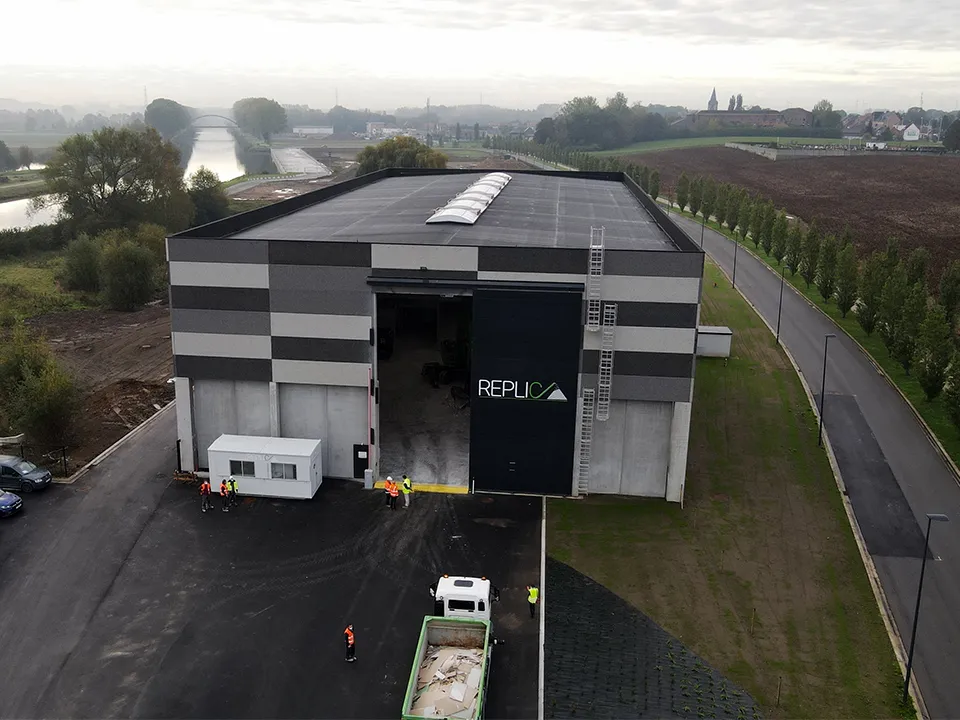
Belgium has recently gained a centre for processing this material. Replic recycles gypsum for the cement industry. This European first is located in the autonomous port of Pecq.
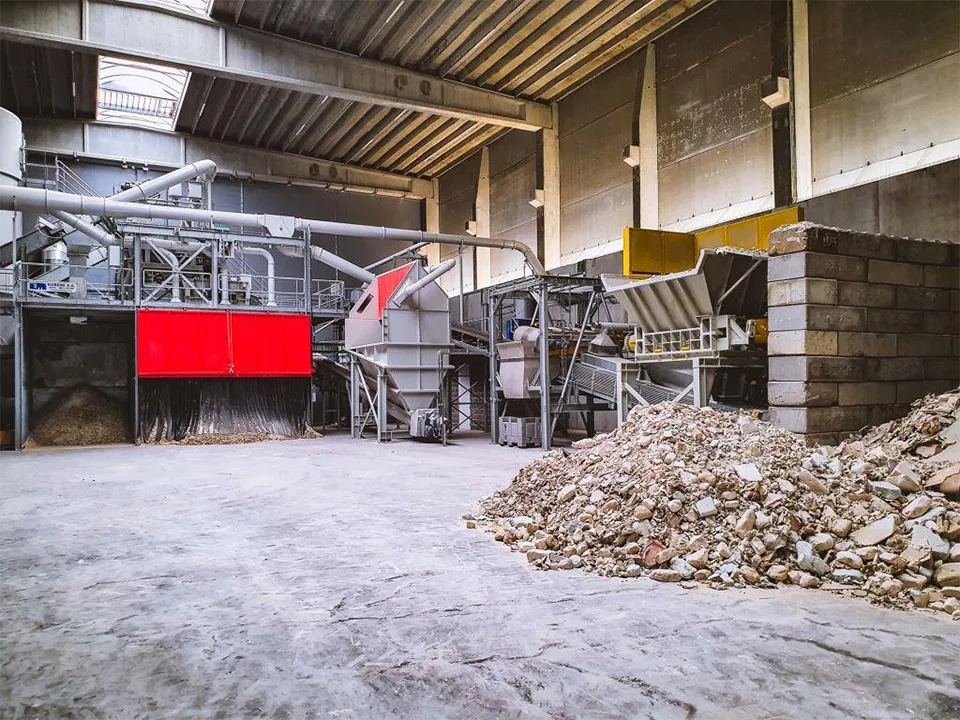
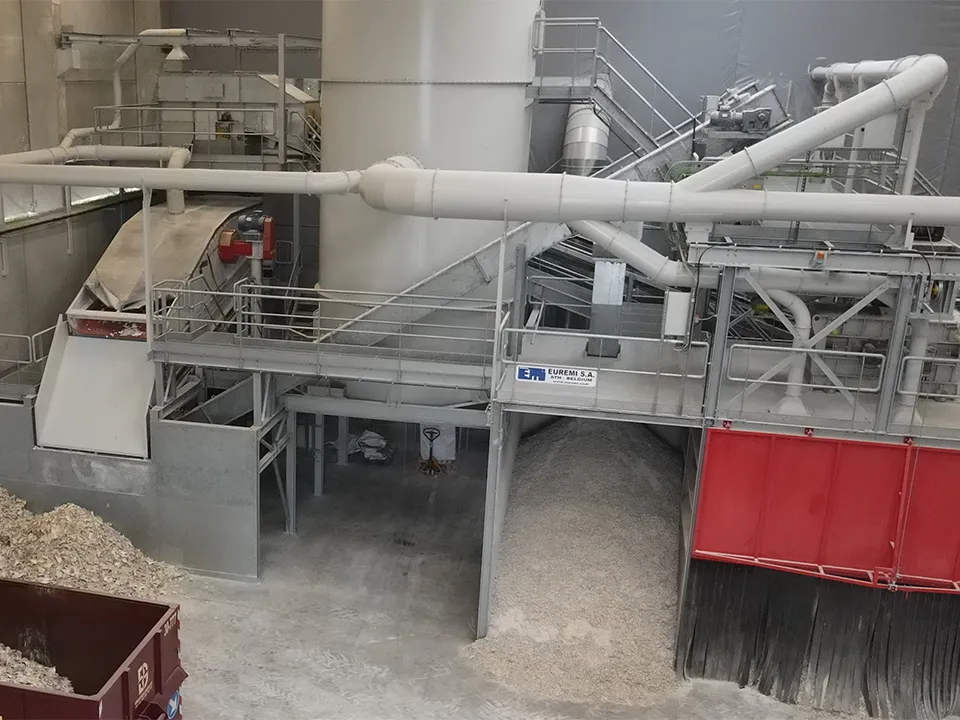
Recycling not only gives a new lease of life to a growing range of waste streams, but also helps conserve ever more natural resources. With the opening of a recycling centre at the autonomous port of Pecq, gypsum waste can now be recycled too. The pilot project is the result of a public-private partnership between Ipalle, SUEZ and Dufour/Cogetrina. Gypsum waste brought directly to the site or collected by any of the three partners will be processed here. The partners have joined forces for this project, which is unique in Europe. The innovative process effectively separates the different components of gypsum waste, allowing the gypsum to be recovered and reused.
Why recycle gypsum?
Around 15,000 tonnes of gypsum waste are generated in Wallonia each year (35,000 tonnes in Belgium), representing a significant quantity of materials that can be recovered. Outside Wallonia, northern France and Flanders also have considerable potential for recovering this type of waste. Until now, gypsum collected at recycling centres and by companies could not be recycled or recovered for energy through incineration. It was disposed of in a Class 2 landfill. Yet this material can be recycled indefinitely. Finding a sorting and recycling solution for this waste stream was therefore a priority for Ipalle and its partners. The end product is then supplied to cement plants, where it is used as a cement retarder, and to the gypsum industry. Potential partners interested in using recycled gypsum have already come forward. Finally, the use of recycled materials is a major asset in sustainable construction. Tests conducted by the Belgian Cement Industry Research Centre (OCCN) show that recycled gypsum performs comparably to artificial or natural gypsum (gypsum rock).
The pilot project
The industrial pilot project for gypsum treatment and recycling is located near the waterways at the autonomous port of Pecq (PACO), which determined the choice of site. It occupies existing sheds at the autonomous port, operated by Dufour/Cogetrina. To ensure the quality of the recycled product, the first shed is dedicated specifically to storing, pre-crushing and sorting incoming waste. Materials such as scrap metal and paper are removed for separate recycling. The second shed is used to store the finished product. Construction of the facility was partly funded by the Walloon Region, and the three partner companies invested two million euros. The facility is expected eventually to process 10,000 tonnes of gypsum a year. The site has also created three jobs. By recovering this waste fraction for local cement manufacturers, the facility contributes to the Wapi 2040 territorial project and fits perfectly with the circular economy.
Origins of the project
Replic emerged in response to the call for projects launched in 2015 by the Greenwin competitiveness cluster (a Walloon competitiveness cluster and innovation accelerator for environmental technologies). It was the result of a public-private partnership bringing together the intermunicipal organisation Ipalle and the companies Dufour and SUEZ. Other organisations also joined the initiative: Centre Terre et Pierre and the Belgian Cement Industry Research Centre (OCCN) for the research component, and Euremi for the industrial equipment.
Question about this story? Ask your question
Keep following this
Get an email when a new story is published. No account needed.
- SubjectPlastic waste







