












A central approach is the fastest route to a circular economy
Text Valérie CouplezImage Recydata
Fewer containers, greater efficiency
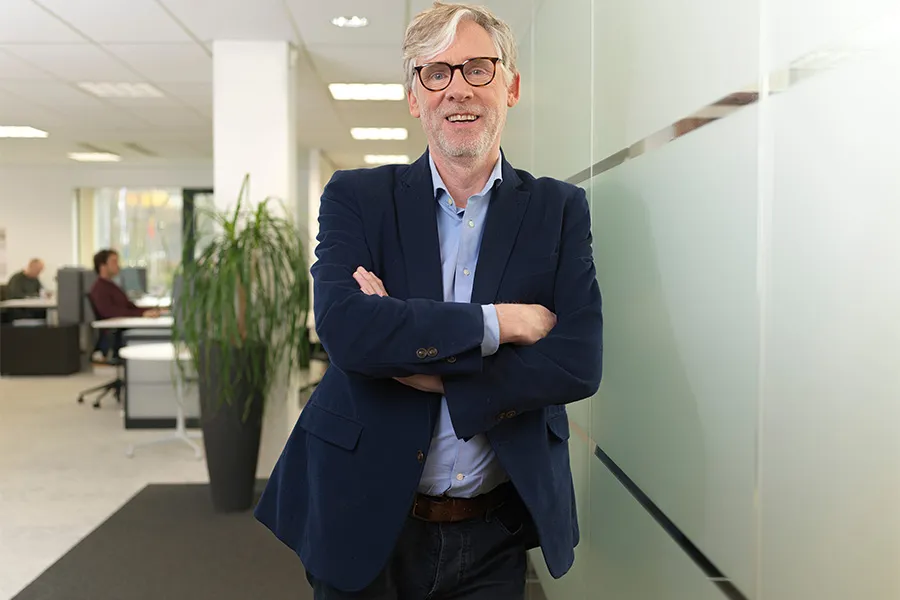
Building-material producers are also looking for ways to collect waste on construction sites more selectively. They turned to Recydata in particular, leading to various initiatives and pilot projects in the past to close the loop on plastic waste at construction sites. A good start, but there is room for improvement. At the latest edition of Plastic Matters, Recydata proposed a more centralised approach. “That is the only way to develop a workable and affordable solution,” predicts Luc Van de Vondel, CFO of Recydata.
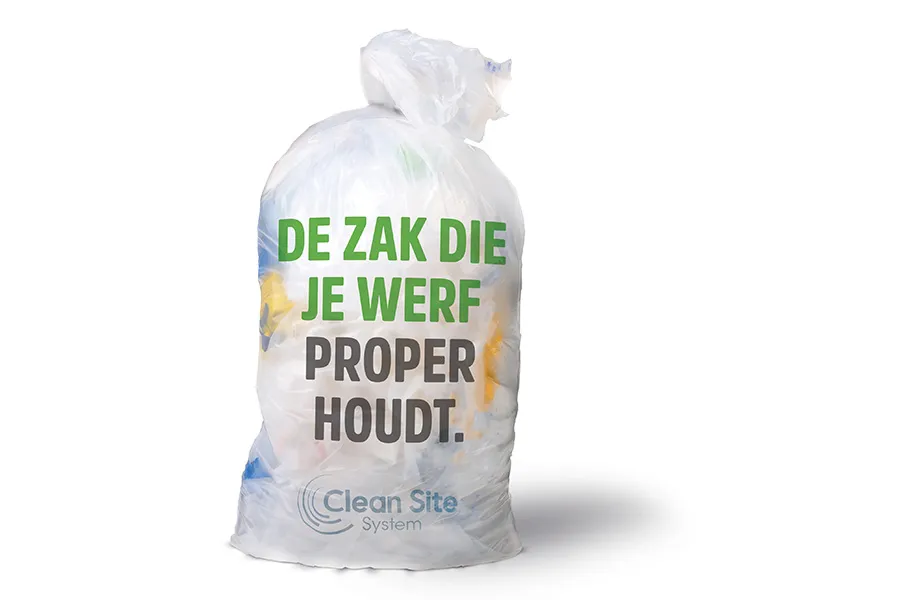
Globally, the construction sector is responsible for 40% of CO2 emissions, 33% of water consumption, 33% of waste generation and 50% of material use. It is therefore a sector that is fully committed to change, including through Green Deals aimed at building a sustainable world. “But so far, everyone has largely been focused on their own patch. Each is looking for solutions to meet its own targets.” That search has often led them to Recydata. The issues involved are, after all, highly complex. “In pilot projects, we worked together to explore what was possible in terms of collection, reuse and recycling, and what problems arose in practice.” Good examples include the Clean Site System and a project that developed shrink film and covers containing at least 50% recycled material. Research is also being carried out into paint buckets, PU spray cans, plasterboard bags, PIR boards …
Fewer containers needed
But to make construction sites truly circular, a more centralised approach is needed. Van de Vondel explains why: “Two obstacles come up in many projects. One is the limited space available on site. That alone makes it impossible to provide a separate container for every waste stream. The other is the need for better organisation and communication. Many languages are spoken on a construction site. Everyone needs to know what goes in each container and, for example, how best to organise the collection of each waste stream.” Van de Vondel and Recydata see an overarching framework linking all these projects as the way forward. “By working together, we can find much more efficient solutions. Which waste streams will we collect separately? Which can go together in a container? And how do we ensure that the costs are shared fairly?”
Towards a centrally coordinated solution
At Plastic Matters, Van de Vondel proposed setting up a steering committee to identify the fastest route to a circular construction site across the different sectors and federations. He wants to know by November whether there is enough goodwill among the parties involved. “We are hearing the same message from the construction federations: stop all these separate initiatives, because we can’t sell them to our members. So let’s get together and spend a year in working groups studying what a roadmap to a centrally coordinated solution should look like.” It is no surprise that this initiative comes from Recydata. It is responsible for developing and implementing extended producer responsibility systems. This makes it a key player in the circular economy, and one that also wants to act as a catalyst in this initiative, bringing everyone together around the table.
Getting everyone on the same page
“For us, this approach is self-evident,” Van de Vondel continues. “People could raise 101 objections to getting started. But they said the same about setting up Valipac, and we succeeded in our mission to get everyone pulling in the same direction. What’s more, we don’t have to start from scratch. We have already learned a great deal from Recydata’s projects and from other stakeholders, and we can build on that. So I would like to make a heartfelt appeal to all stakeholders in the value chain to join this project. There are undoubtedly many projects we don’t know about that could make an important contribution to this overarching initiative.”
Question about this story? Ask your question
Keep following this
Get an email when a new story is published. No account needed.
- ThemeMaking plastics and packaging circular
- SubjectPlastic waste







