Keeping vehicle recycling in Europe viable
Text and images Valérie Couplez
Manifest responds to proposal for new end-of-life vehicle legislation
A major statement. At the recent International Automotive Recycling Congress in Antwerp, sixteen countries presented a manifesto to the European Commission. It responds to the proposal on the table to amend end-of-life vehicle legislation and raises twenty concerns. The main sticking point is stopping illegal exports, so that end-of-life vehicles can be extensively recycled using the latest technologies.
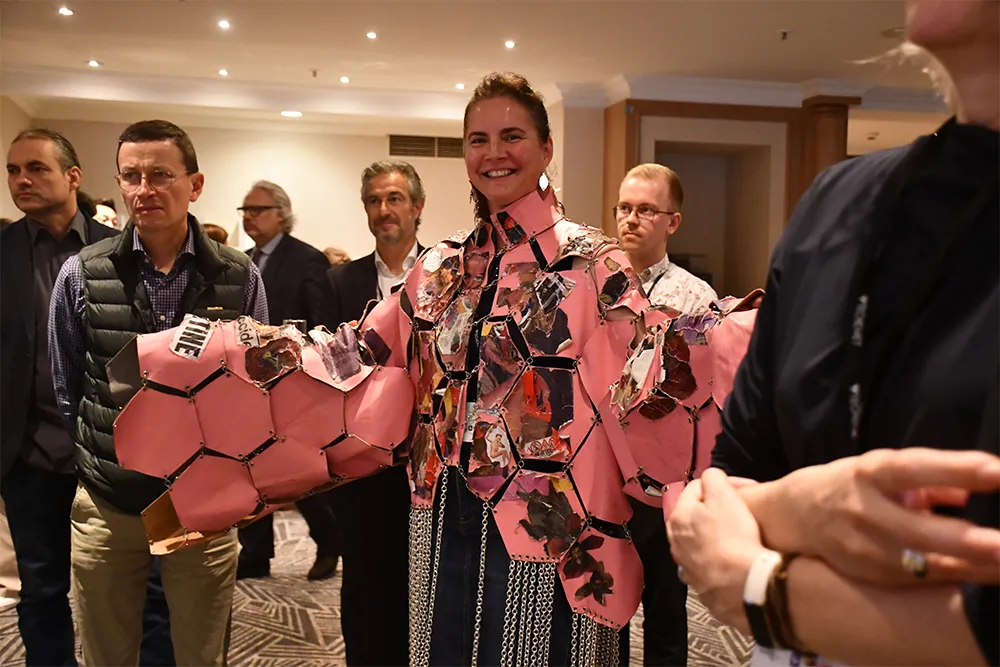
Aurel Ciobanu-Dordea, Director for Circular Economy at the European Commission, was handed a set of keys at the International Automotive Recycling Congress. They gave him access to the discarded glove compartment of an end-of-life vehicle on display in the exhibition area. Congress participants had written their views on the new ELV legislation on the bodywork, but inside he found the manifesto endorsed by sixteen countries, containing a number of nuanced suggestions and warnings. The initiative to bring together European producer organisations on a voluntary basis began in early 2022. Its aim is to monitor developments in end-of-life vehicle and battery regulations and their impact on EPR schemes.

Getting more end-of-life vehicles to authorised facilities
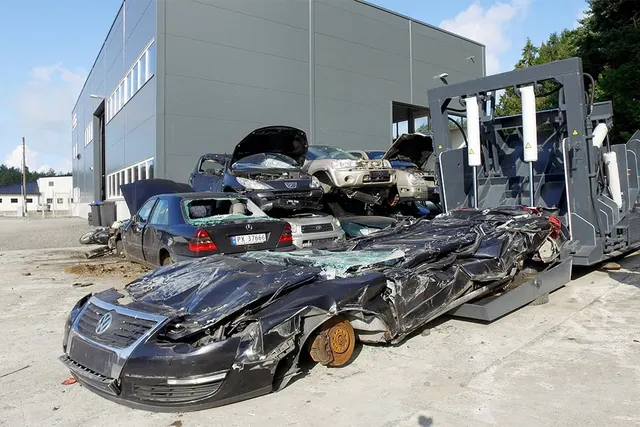
Despite their many differences, the countries joined forces in response to the negative trend of more and more vehicles slipping through the net. In recent years, there has been a marked decline in the number of end-of-life vehicles reaching authorised treatment facilities. Yet it is important that they do. These companies have the capacity and technology to recover the maximum amount of materials from end-of-life vehicles. Recycling rates in Belgium and the Netherlands were 98% and 98.2% respectively. The manifesto welcomes the new legislation, but sets out, through twenty proposals, the conditions needed to make vehicle recycling viable in Europe.
- Vehicles that are no longer repairable must not be allowed to leave member states;
- Cross-border cost allocation is an administrative burden;
- Inspections should focus on illegal treatment operators, with better cooperation and data exchange between member states,
- An ‘irreparable end-of-life vehicle’ should mean a vehicle submerged up to seat level, not dashboard level.

Tackling illegal exports
A second set of measures put forward in the manifesto is specifically aimed at tackling illegal collection and treatment operators.
- Member states must ensure that only authorised treatment facilities can treat end-of-life vehicles;
- If no authorised facility is available, they may allow other waste managers to set up a collection point for end-of-life vehicles, provided there is a contractual agreement with an authorised facility;
- An authorised facility must also be a waste treatment operator;
- Parts and components from an end-of-life vehicle may only originate from, and be removed at, an authorised facility. The authorised facility assesses whether parts are suitable for reuse, remanufacturing, refurbishment or recycling;
- Government inspections must focus on illegal treatment operators;
- Every authorised facility should be encouraged to conduct an annual quality audit and implement an environmental management system.
Further requirements proposed
On the obligation to dismantle, the manifesto supports the position of ACEA, CLEPA and EURIC. The organisations from sixteen countries also put forward proposals to improve administration and workflows while keeping costs in mind.
- An individual producer responsibility scheme must have the same obligations as a collective scheme;
- If a (visible) recycling or administrative fee is considered, it may be modulated, but must not be mandatory;
- For safety and environmental reasons, depollution of an end-of-life vehicle at an authorised facility must take place within 30 days of receiving the vehicle;
- Authorised facilities must report annually to the authorities on depollution;
- There is no need to report the exact date and time of each depollution operation;
- The authorised facility must send end-of-life vehicles to an automotive shredder;
- Criteria are needed to assess ‘equivalent quality’ for glass recycling. Manual removal of glass should not be mandatory;
- Mixing depolluted oils should be permitted, with the possible exception of certain brake fluid markets;
- The target for plastics recycling, at least 30% of the total weight of plastics in vehicles delivered to waste managers, is highly welcome.
Question about this story? Ask your question
Keep following this
Get an email when a new story is published. No account needed.
- SubjectScrap metal