Better material separation means higher profits
Text and images Lybover
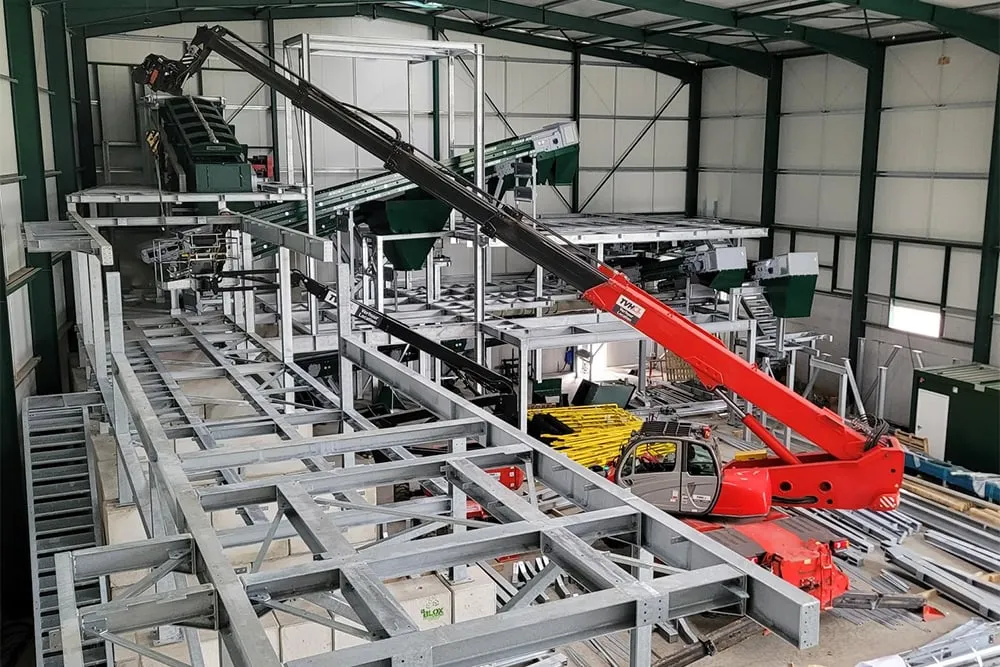
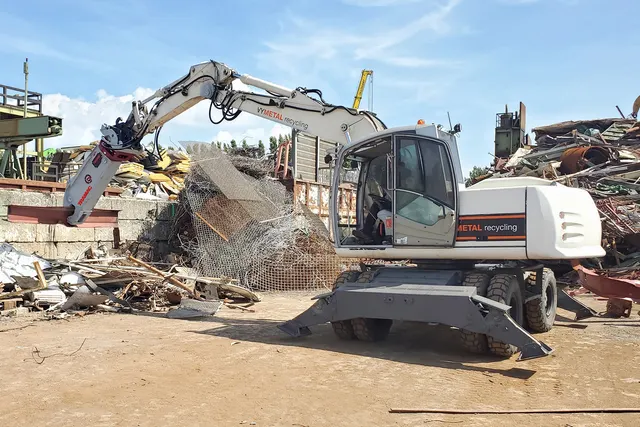
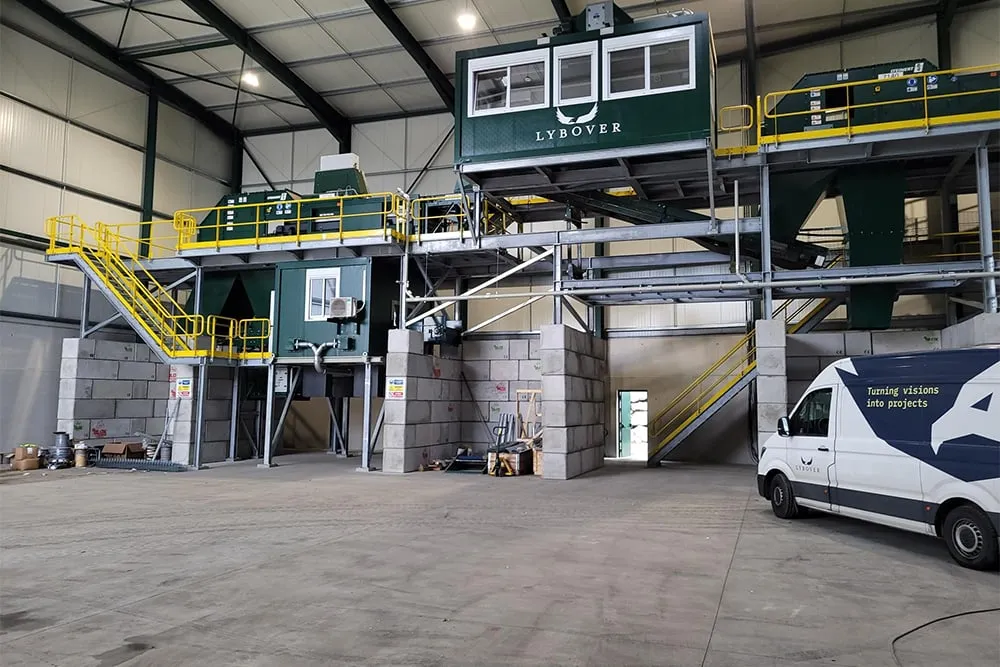
Several Lybover business units pooled their expertise to build a new sorting line for French metal recycling company Henault. The line separates waste fractions more effectively, increasing their resale value.
The purer the fractions produced by sorting lines, the more profit a recycling company makes. Henault Recyclage knows this too. This family business, with four sites in France, specialises in recycling metals from households and businesses. For its site in Oradour-sur-Glane, Henault was looking for new sorting lines to separate the different non-ferrous fractions from the shredder more effectively. Plastic, wood and textile fractions also needed to be recycled more effectively to reduce the amount of waste going to landfill. Henault also wanted to process shredder residue on site, minimising transport to more distant sites. Henault was introduced to Lybover through Steinert, a sorting system manufacturer and Lybover partner. This was the start of a challenging project, which was successfully completed thanks to flexibility and close collaboration.
Looking beyond the brief
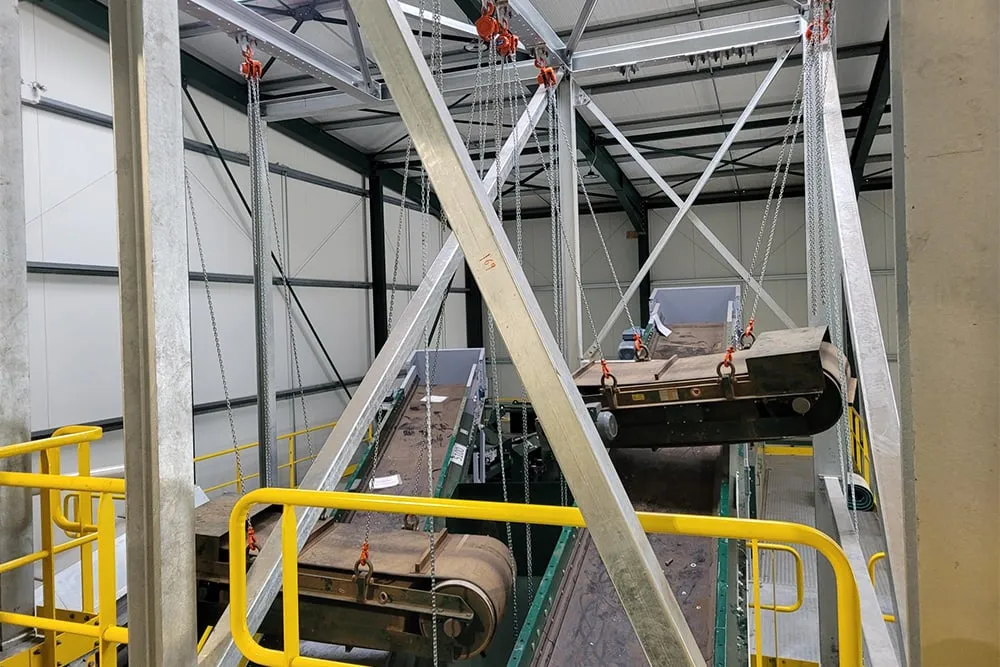
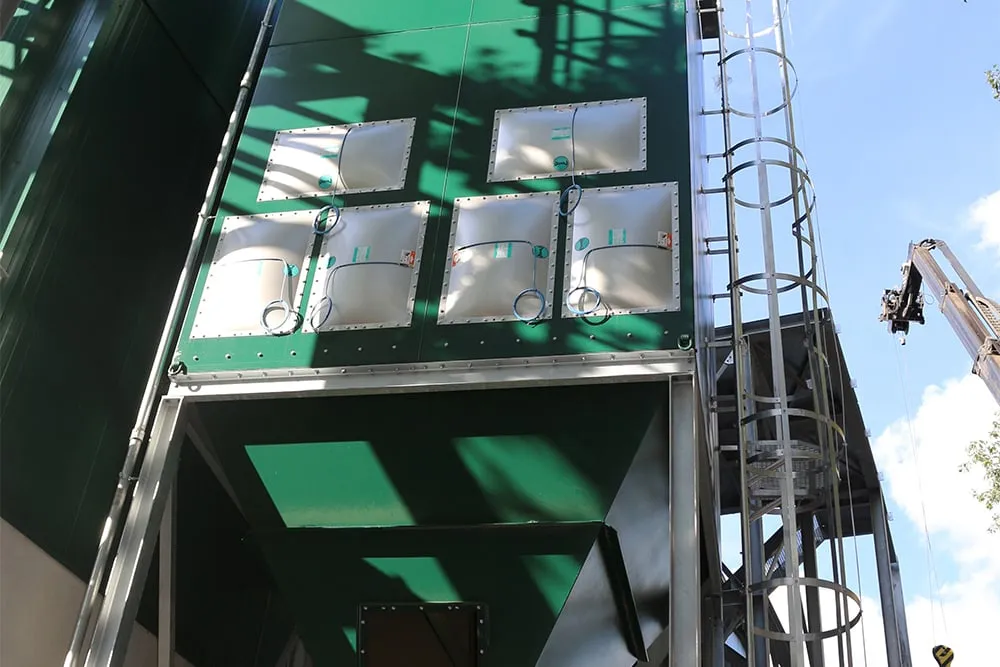
Working with the customer to propose the solution that best suits their needs and budget: that is Lybover through and through. This approach was the starting point here too. “The customer initially wanted three separate sorting lines in a new building. During discussions with our engineers, it became clear to both parties that one large line would be the more logical solution. With the original plan, bulldozers would have had to move material from one line to another. With one line, there is no need for that,” says Louis Schollier, Project Engineer at Lybover. “The customer also wanted to reuse some existing equipment in the new line or elsewhere in the plant. This included two conveyor belts, two overband magnets and an eddy current separator. We therefore had to take these into account during the engineering phase. In addition, air treatment was needed to reduce emissions and prevent dust from becoming airborne,” adds Katrien Vyvey, Project Engineer at Lybover.
Detailed scans for precise engineering
The sorting line was to be installed in a new building next to the existing plant. One conveyor belt had to start at an existing cyclone and a second at an existing vibrating table. Precise measurements were therefore needed to determine the position of the first belt. 3D scans were used to map both the existing plant and the site of the new building. This gave Lybover’s engineers the measurements they needed straight away, avoiding additional trips to France. Discussions with the customer could also take place easily online.
Thinking ahead to deliver a complete solution
“Our measurements and the architect’s plans made one thing clear: space was very limited. It was therefore a major challenge to fit all the components intelligently into the building and ensure that the plant would be accessible for maintenance work using a mobile elevating work platform. We also wanted to allow room for a future expansion of the line with an automatic sorting machine. Operator ergonomics and energy-efficient climate control in the sorting and operator cabins were also important considerations. We translated the principle diagrams for the sorting lines and dust extraction into a 3D model that we could explore in virtual reality. This enabled us to explain our design to the customer remotely,” Schollier explains.
Getting down to work
Once the production hall had been built, installation could begin. But first, a 3D scan was carried out to check the site. Louis Schollier explains: “We work to millimetre accuracy. It is therefore useful to identify and resolve any deviations from the plans before we start installation.” All the plant’s anchor points were then marked out using a total station, enabling Lybover’s installation team to work efficiently. Schollier adds: “A large site like this always brings specific challenges. There is a tight schedule for the delivery of components and installation. At the same time, good coordination is needed with the other parties involved, such as the electrical contractors appointed by the customer. Our colleagues in INSTALLATION were always flexible in their approach to installation and logistics when faced with unexpected delays, for example with the concrete work. Collaboration between the different business units was very smooth, thanks to good working relationships and open communication. This allows us to respond quickly to the customer’s requests.”
Question about this story? Ask your question
Keep following this
Get an email when a new story is published. No account needed.
- SubjectScrap metal