Belgian innovation could mean fewer aircraft graveyards
Text Valérie CouplezImage Centexbel
Earlier this year, Centexbel won the Techtextil Innovation Award in the ‘New Approaches on Sustainability & Circular Economy’ category. The Belgian research institute received the award for a development in composite materials recycling that could bring a breakthrough in the dismantling and recycling of end-of-life aircraft. A conversation with Centexbel R&D manager Myriam Vanneste and researcher Frederik Goethals.
Aircraft contain an ever-increasing amount of composite materials. They combine exceptional strength with low weight, enabling manufacturers to bring aircraft to market that use less fuel without compromising on safety. In recent years, a new development has gained momentum: thermoplastic composites. For now, their use remains limited to non-structural applications, but once they have completed the lengthy certification process, we will also find them in structural aircraft applications. Why? Thermoplastic composites can be bonded to other materials using pressure and heat, removing those few kilos of screws and bolts from an aircraft’s weight tally too.
Reversing the bond
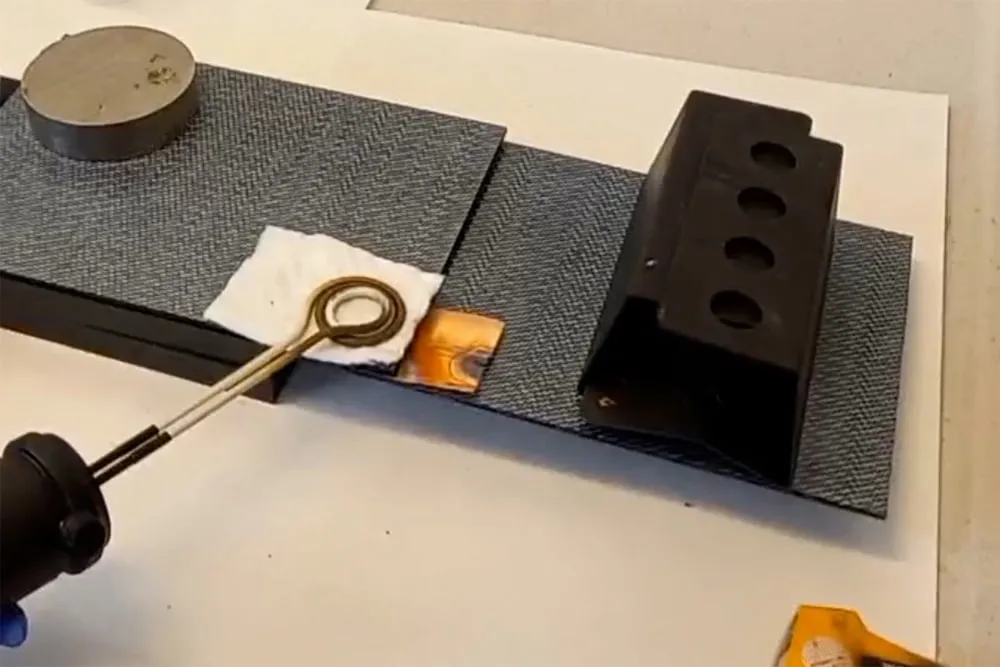
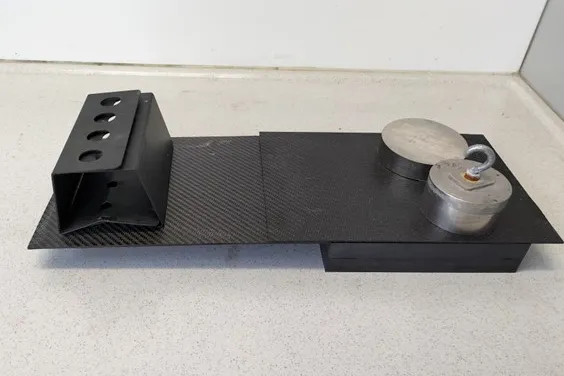
But how can these materials be easily dismantled and recycled at end of life? That was the research question Centexbel investigated in the European Helacs research project, which received funding from the Clean Sky 2 Joint Undertaking initiative under the EU’s Horizon 2020 research and innovation programme. Goethals: “Induction welding has already become an established production method for bonding thermoplastic composite materials. The idea was to reverse that process, but in a way that could be put into practice very pragmatically and locally.” This was familiar territory for Centexbel. Vanneste: “The VKC division also has considerable experience with thermoplastic polymers. Seven years ago, our work on self-reinforced composites had already won us a Techtextil Award. In recent years, many of our research projects have focused on recycling.”
Proof of concept using a standard device
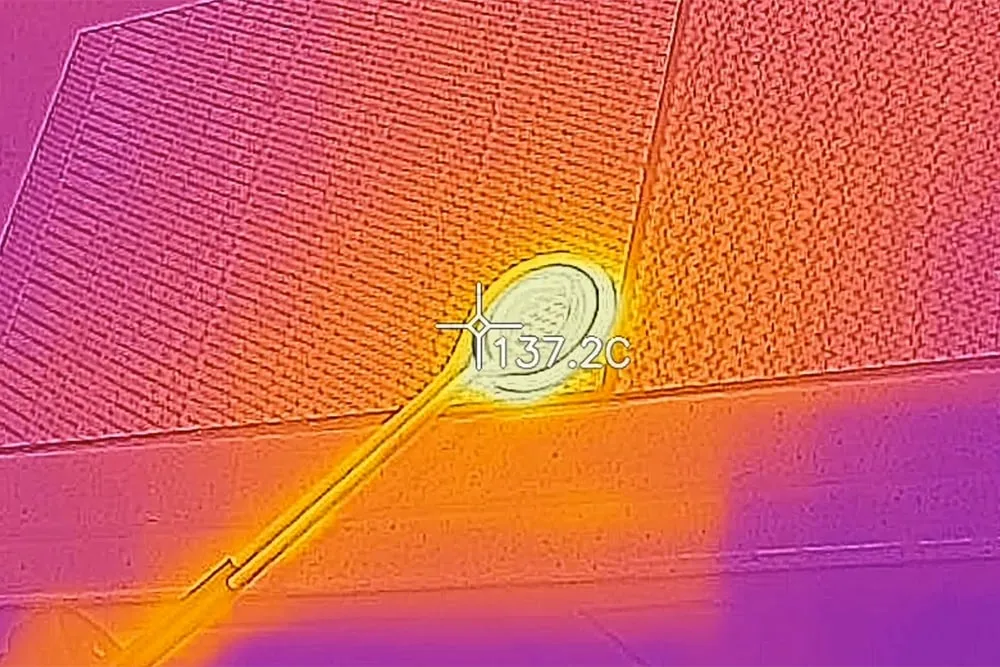
It was a perfect match, and the results proved it. “Induction technology has the advantage of reaching the required temperature very quickly and precisely. PEEK, for example, a high-performance thermoplastic composite found in aircraft, requires temperatures of around 340 to 350 °C. One condition for using induction technology is that the material must contain an electrical circuit,” Goethals explains. Centexbel succeeded in separating the thermoplastic materials using a standard induction unit costing around €600. “Two parameters proved crucial: the frequency and the power, which had to be set at exactly the right level. In the lab, too much power led to overheating and burning, whereas we want to keep the material completely intact for reuse.”
Scaling up
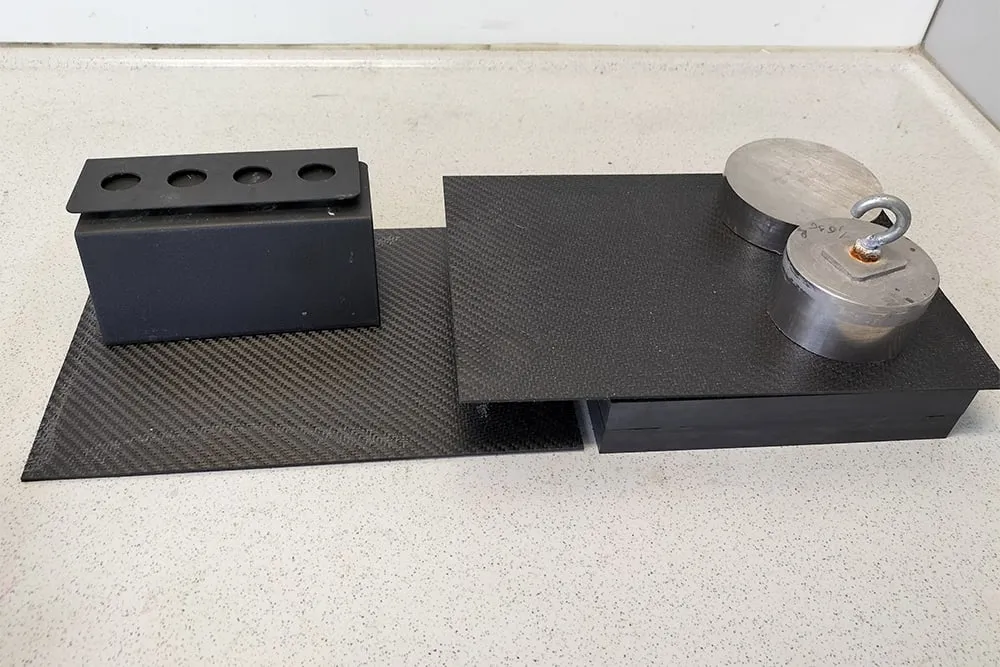
At lab scale, Centexbel’s final set-up worked exactly as intended. “We have delivered the proof of concept. The great thing about this method is that there is no need to cut into the material. That is important for ensuring operator safety, as it prevents fibres from being released,” says Vanneste. The next step is to scale up further so that larger pieces can also be removed. The focus will be on the induction coils. Goethals: “Adapting them to the size of the piece will make the process more efficient. A small amount of mechanical force is also needed to prise the piece away from the other materials.”
Towards circular aircraft?
Does this take us a step closer to circular aircraft? “Initial tests showed that the materials retained their properties after the first removal. After several dismantling cycles, the matrix does flow slightly, but local damage can be repaired under pressure and at high temperature in an additional repair step, restoring the right amount of polymers and fibres. Whether the materials can then be used again in aircraft, with their strict safety requirements, remains to be seen. But there are certainly plenty of applications, for example in automotive, where they could enjoy a second life,” Goethals concludes.
Question about this story? Ask your question
Keep following this
Get an email when a new story is published. No account needed.
- SubjectScrap metal