












Water from organic waste
Text Valérie CouplezImage Guilliams Green Power
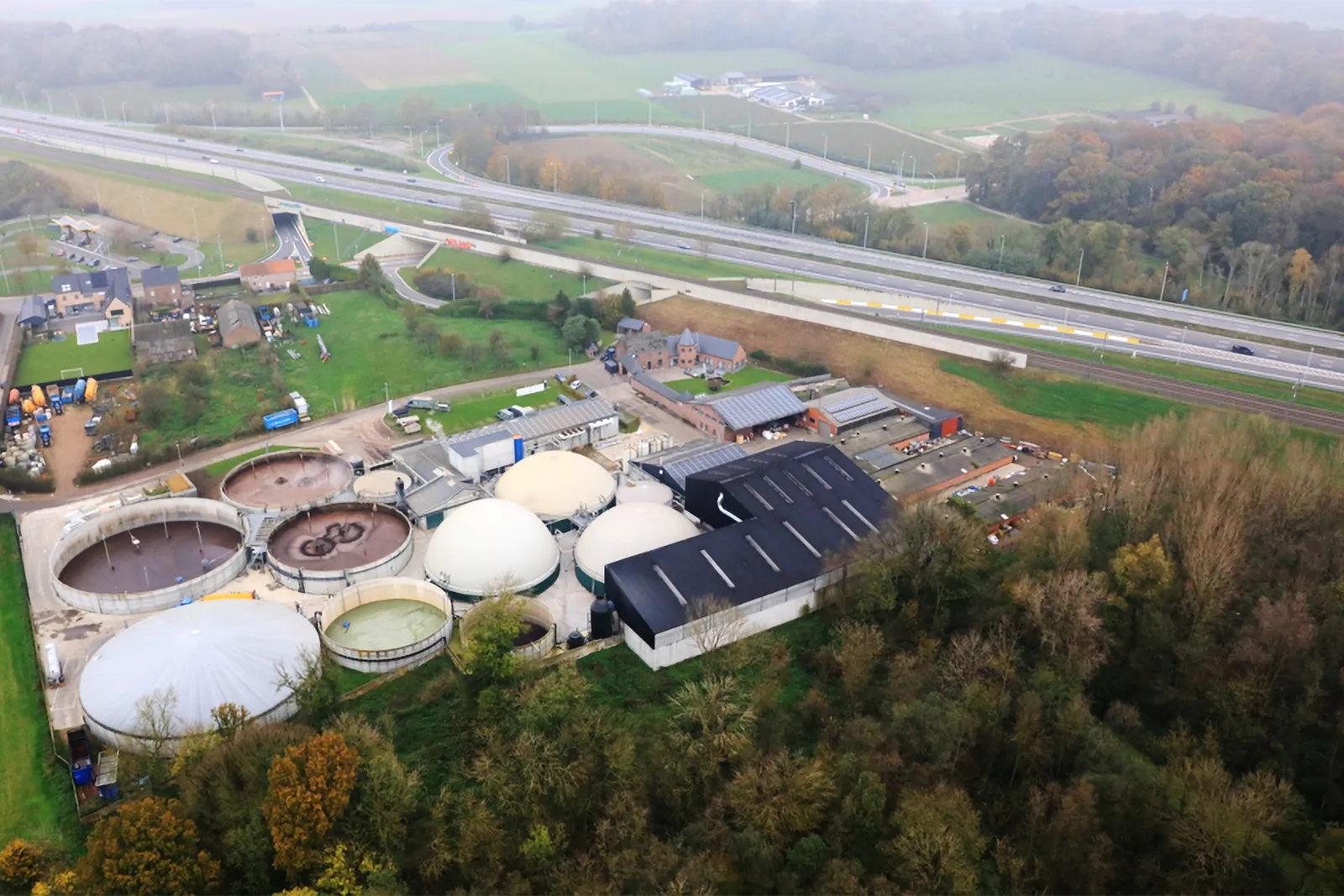
Guilliams Green Power in Boutersem previously made the news, including in this trade magazine, with the installation of a charging point. One that does not simply run on green electricity, but is powered directly by the biogas plant at Guilliams. The chain for electric driving could hardly be shorter. The project was initially intended as a way of giving back to the local community. The Waste2Water project is driven by the same ethos. Guilliams uses it to recycle digestate into dischargeable water for its own use. The surplus water helps nearby farmers and growers get through periods of drought.
Guilliams Green Power has always looked to the future while caring for its local surroundings. Even before nitrogen became a pressing issue, the company was already looking for ways to treat digestate from its anaerobic digestion plant sustainably. This led to the installation of a water treatment plant capable of removing nitrogen. Today, with a digestion capacity of 90,000 tonnes, producing 3,825 MWh of green heat and 2.8 MWh of green electricity, this is no luxury. The company then went a step further, first recycling phosphorus and later potassium too, turning them into a valuable fertiliser. “Our aim is to operate our plants entirely off-grid,” explains managing director Rohald Guilliams. “That makes sense for energy, as we are energy producers. As water producers, we can now also provide a high level of security of water supply for our own business processes and for the surrounding area.”
Sustainable on three fronts
This innovation fits perfectly with Guilliam’s ambition to move towards 100% circularity. “We have actually managed to turn a necessity into a triple benefit. We convert organic waste into energy. We then recycle nutrients into a valuable fertiliser. That fertiliser is sent to areas where there is a shortage and demand for it. The third step is to turn waste into water, closing the loop completely. Every raw material is recycled into a new building block, while we also help solve Flanders’ nitrogen problem. That is certainly a noteworthy innovation,” he says proudly.
From digestate to dischargeable water
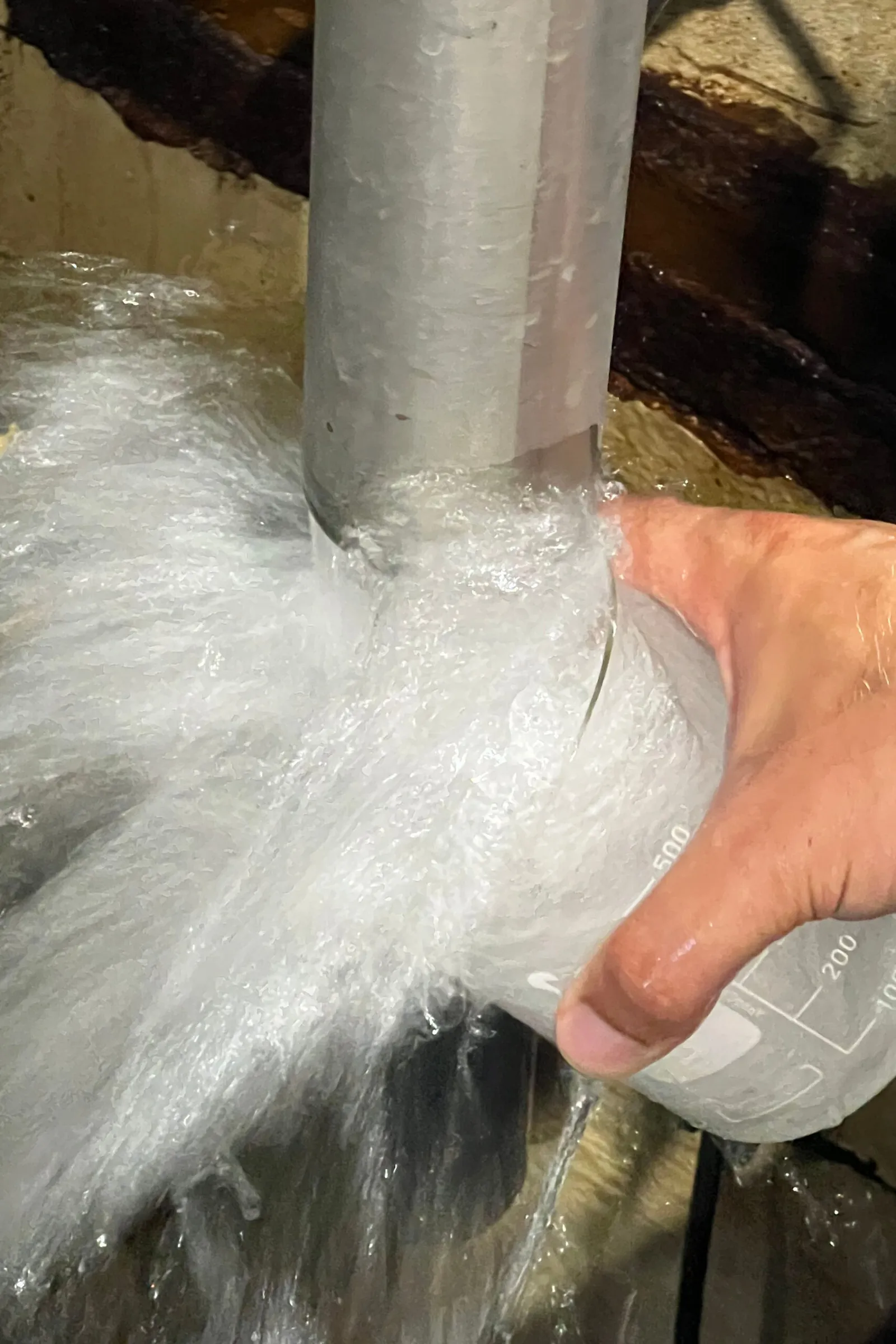
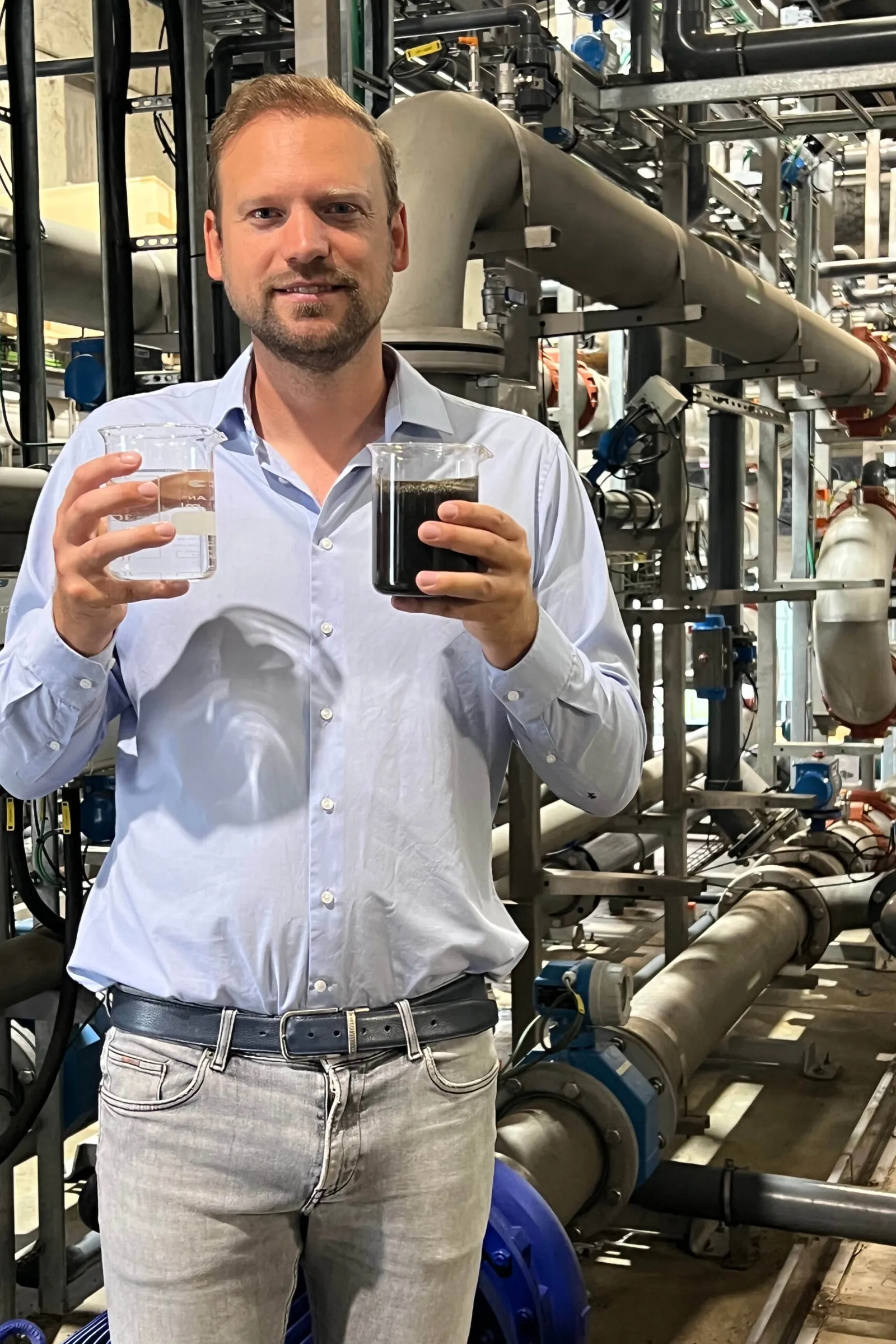
How does it all work? A centrifuge separates the digestate from the post-digester into a solid and a liquid fraction. The solid fraction is rich in phosphorus, as indicated by its high organic dry matter content, and gets a second life as a soil improver. The liquid fraction passes through two aeration tanks, where denitrification converts nitrate into nitrogen gas (N2). Nitrogen gas, the main component of the air we all breathe, is harmless and non-polluting when released into the atmosphere. “We filter the effluent further. The so-called UF concentrate is returned to the aeration tanks, while the remainder is treated by reverse osmosis to remove all the salts and colour. The result is dischargeable water.”
200,000 litres of water per day
Guilliams Green Power continually recirculates this water, as it always has a useful application in the company’s processes. “We produce 200,000 l of water a day, meeting the strictest discharge standards.” The water is used, among other things, to prepare polymer mixtures, wash ammonia, remove various odour components and/or fine particulates in biological air scrubbers, and for cleaning. Guilliams also now holds various raw material declarations, allowing the ‘surplus’ water to be supplied to local farmers and growers during periods of drought, or in winter to protect buds from frost. The water can also be used at concrete batching plants, for various dust control applications and even as part of a drought plan for local municipalities to help them bridge long dry periods.
100% supply guarantee
The installed units can process up to 410,000 l per day. This was a deliberate choice. “That excess capacity allows us to cope with any potential disruptions. This gives you a 100% guarantee of supply and operational reliability for existing business processes or end-use applications. Our site also has the green energy needed to run these units for all kinds of water treatment applications. Who knows what the future may bring?” There is certainly no shortage of green ambition. Innovation in the sector has accelerated at an unprecedented pace in recent years, but legislation often lags behind, making implementation difficult. Guilliams cites the example of a lagoon he wanted to build, using recycled water as a reserve for longer periods of drought. “There is a general ban on water abstraction within 1 km of our company. As a result, fruit growers face serious problems during the summer months. Our water could therefore be a match made in heaven for local agriculture and horticulture, and even for public authorities looking to draw up a drought plan.”
A world turned upside down
Local nature groups, however, see the underground pipeline and reservoir as industrialising the landscape. “Given that current nature and landscape management is focused on rewetting, deliberately raising groundwater levels in an area, this turns the world upside down. However much politicians and the media talk about sustainable water management, many worthwhile initiatives in Flanders are still getting stuck in permitting processes. By contrast, there is enormous interest in Waste2Water technology elsewhere in Europe and the Middle East. Hopefully there will be a change of course during this parliamentary term, and we will not throw the baby out with the bathwater in Flanders,” Guilliams concludes.
Question about this story? Ask your question
Keep following this
Get an email when a new story is published. No account needed.
- SubjectWaste streams







