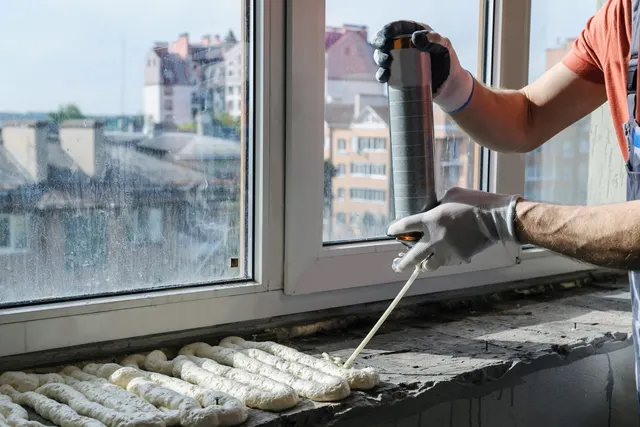
Recycling does not necessarily have to make a construction site more expensive
Text Valérie CouplezImage (CD)²
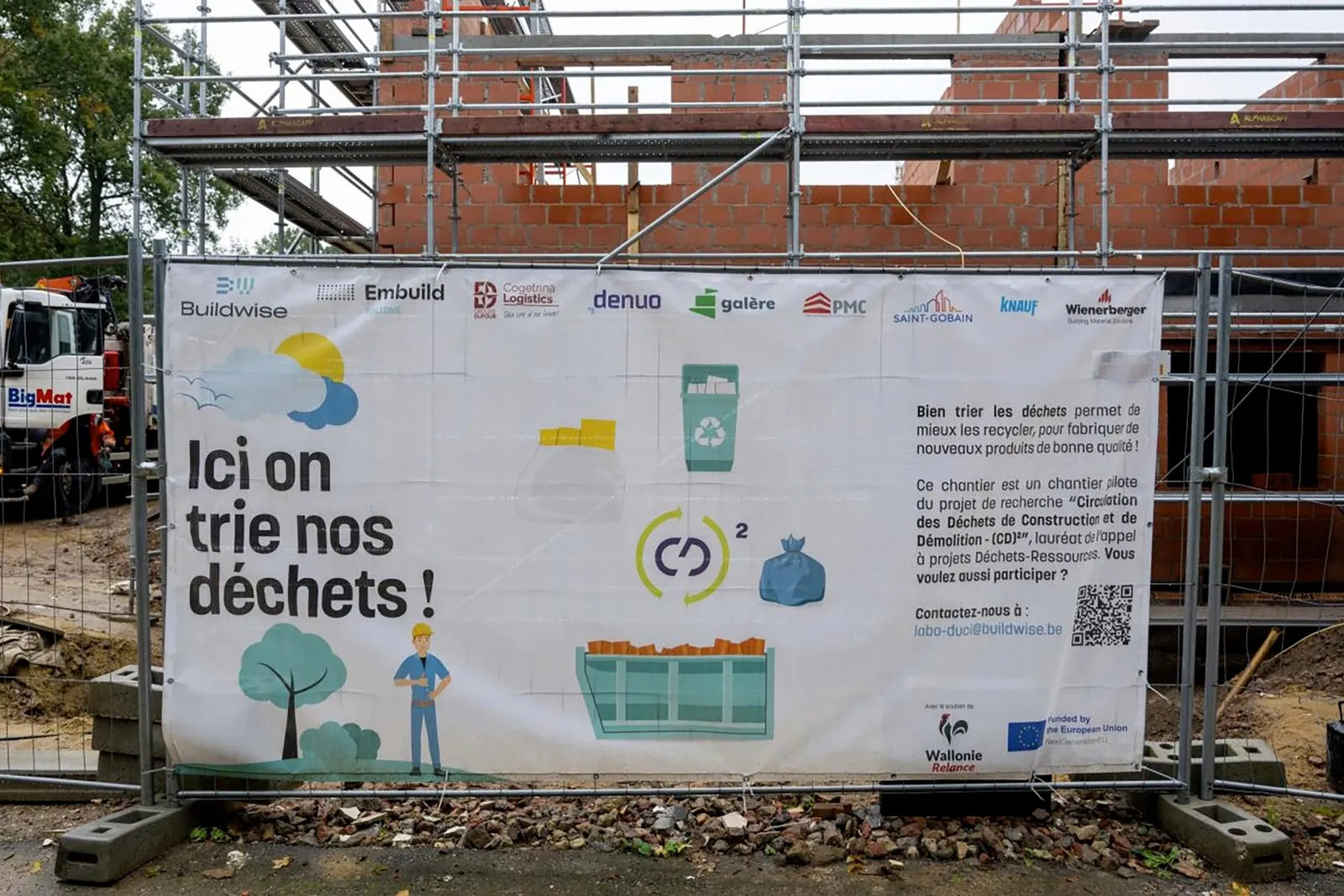
The closing event for the (CD)² project took place in June. The name stands for circulation des déchets de construction et de démolition. At twenty pilot sites in Wallonia, the partners worked together in a highly pragmatic way to develop good, innovative sorting and management practices. These practices are workable for contractors, enable high-quality recovery through existing recycling processes and help construction-material manufacturers close the loop. Eléonore de Roissart, R&D scientist at (CD)² lead partner Buildwise, talks us through the main findings in three articles, which may also prove useful on construction sites in Flanders.
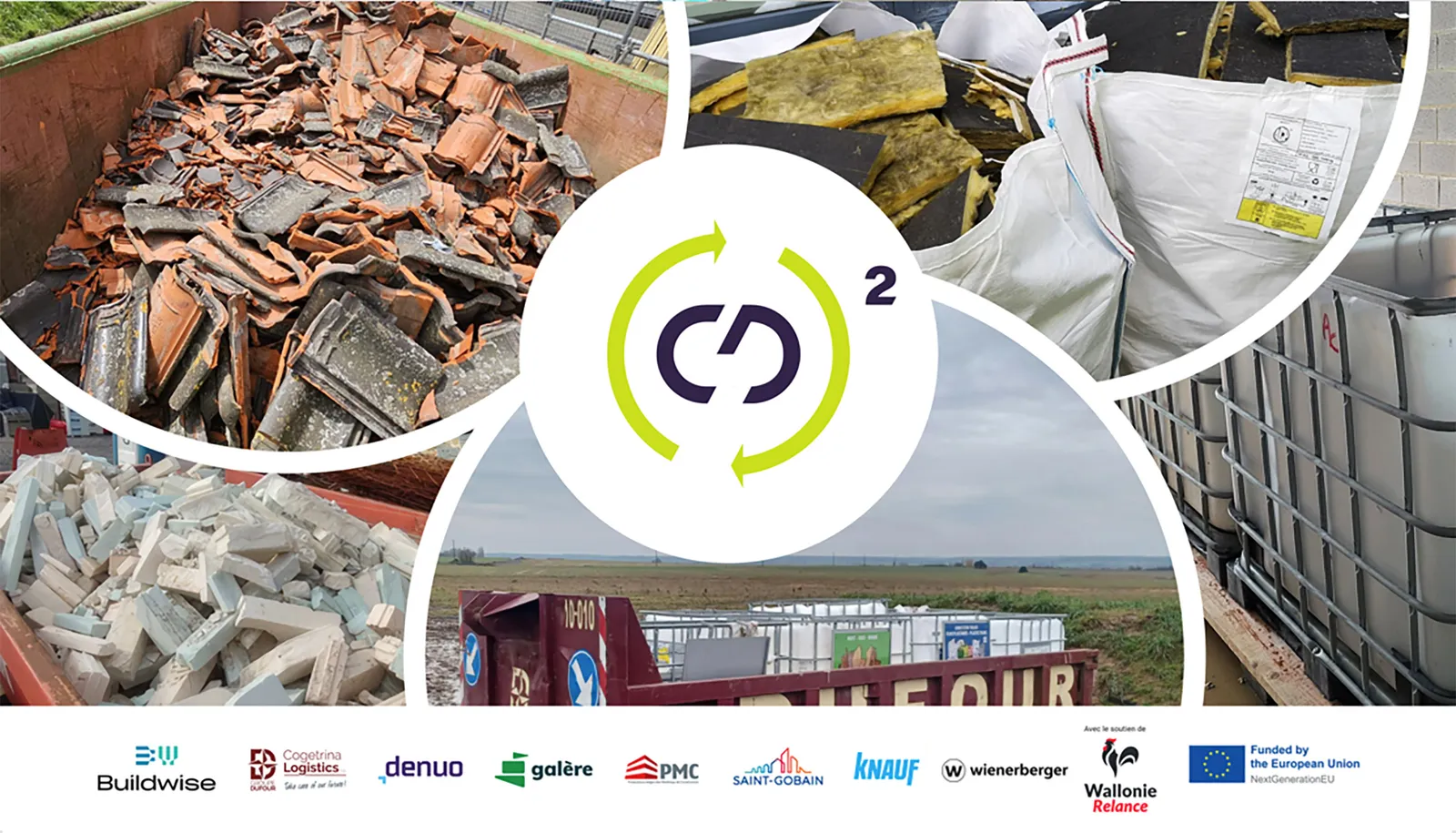
“In Flanders, businesses are legally required to sort certain waste streams at source as far as possible on professional construction sites. In Wallonia, that requirement is not yet in place. Waste on construction sites is still rarely sorted, and even less often recycled into high-quality products, meaning it is returned to the production process to make equivalent products. Belgium has numerous high-quality recycling plants for different construction materials. Yet they are often not operating at full capacity. It is time to sort waste on construction sites and send it for recycling. With the (CD)² project, we wanted to offer very practical guidance by testing as much as possible on site over the course of those three years,” de Roissart explains, outlining the motivation behind the project. Although ten other streams were also tested, the project focused on three: glass wool, plasterboard, and ceramic bricks and roof tiles. This was no coincidence, as they are linked to three manufacturers of construction materials that are pioneers in closing the loop: Knauf, Saint-Gobain and Wienerberger, respectively. The twenty selected pilot sites varied enormously in location, from urban to rural areas, and in size, from large to small.
Three pillars
“To recover and recycle construction and demolition waste to a high standard, you need to bring three pillars together. On the one hand, materials need to be sorted well enough on site. On the other, the recycling plant needs to turn them back into raw materials. But the link between the two, logistics, is also crucial. That is why it was so important to bring all the stakeholders together in the project to create new, robust recycling chains. There is no silver bullet: a lot depends on the type of site and the type of waste stream. We mapped the traditional approach and experimented extensively with alternative techniques, materials and solutions to make sorting and recycling workable and affordable. Because at present, it is still simply too cheap to dispose of waste streams as they are,” de Roissart continues.
Changing habits
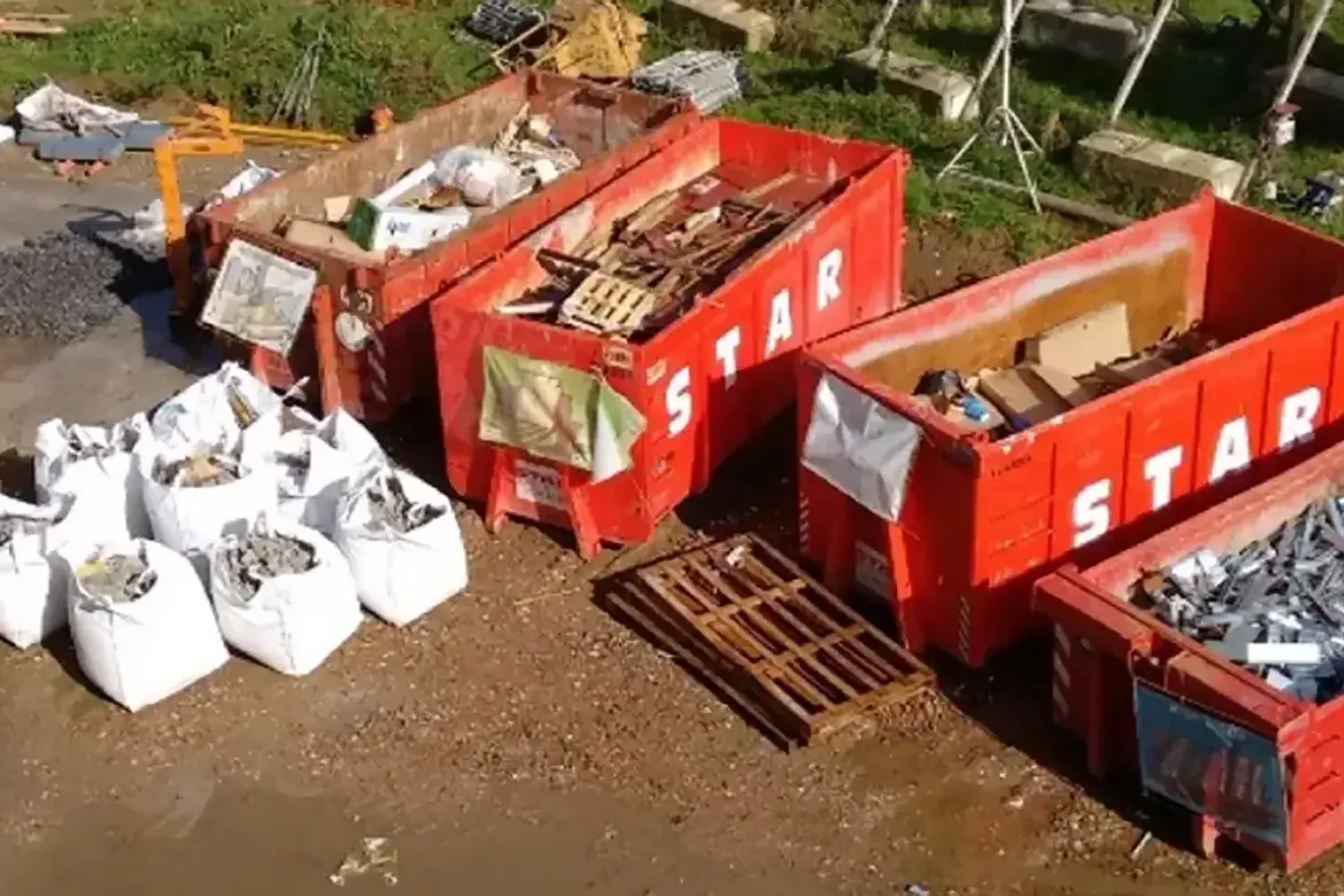
What were the main lessons for contractors? “When they managed to sort the materials selectively, they comfortably met the criteria set by the various recycling centres. Was it completely effortless? No, but the hardest part is taking the first step: changing ingrained habits. It really does not involve much extra work. It is about new organisational habits, on-site logistics, planning and space management, and possibly changing habits around the waste skip. Above all, it is important to persuade site teams to do things differently. The more they develop these habits, the less effort it takes.” That is why the (CD)² project placed a strong emphasis on raising awareness. ADEB-VBA pictograms were put up on site, and new ones were developed where needed to make it clear what could and could not be mixed.
Information from recycling centres collated
The acceptance criteria set by recycling centres are key to this. A website already existed for this purpose: bouwensloopafval.be. It was improved over the course of the project. “It is a tool for contractors to find out where the nearest recycling centre is, which waste streams it accepts and what requirements incoming materials must meet,” de Roissart explains.
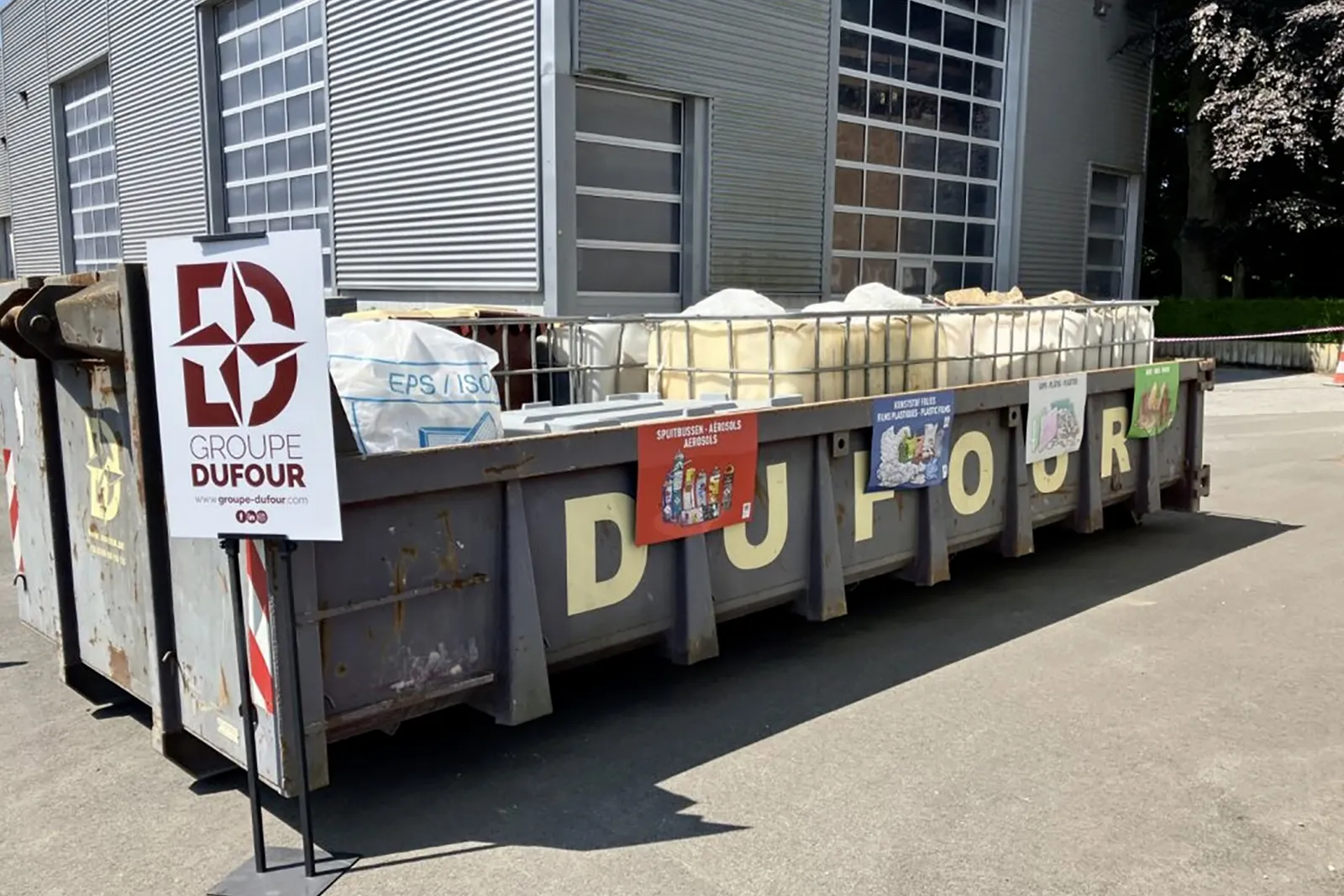
However, providing a container for every stream is not straightforward, especially on smaller sites. This was certainly taken into account during the project. Among other things, the team experimented with partitioned containers, which can hold several streams in one container while keeping them separate. “Another good solution is to collect sorted waste at locations where there is space. At one KOPO construction site, there was no room on the site itself, but there was on another site nearby. Every evening, the team took the waste to the containers there.”
Does it cost more?
And what about the money? Does sorting cost contractors more, or does it bring them a return? de Roissart could not give a clear-cut answer. “We did try to put a figure on it, but the differences are too great. Costs depend first and foremost on the type of sorted waste and its potential value in the recycling chain. But two other factors also play a part: logistics costs and the operating costs of sorting on site. These costs also vary according to the type of sorted waste, the site location, the team’s experience and other contextual factors. Although it can sometimes involve a small additional cost, sorting remains a strategic choice: waste management generally accounts for only around 0.5% of total construction costs,” de Roissart concludes.
Question about this story? Ask your question
Keep following this
Get an email when a new story is published. No account needed.
- SubjectWaste streams