Sunrise project: towards better separation of flat glass and PVB
Text and images Ferver
Survey points the way to potential improvements
Sunrise is a European project that can help improve the collection and recycling of laminated glass from the automotive and construction sectors. FERVER, the European Federation of Glass Recyclers, is a project partner alongside Denuo.
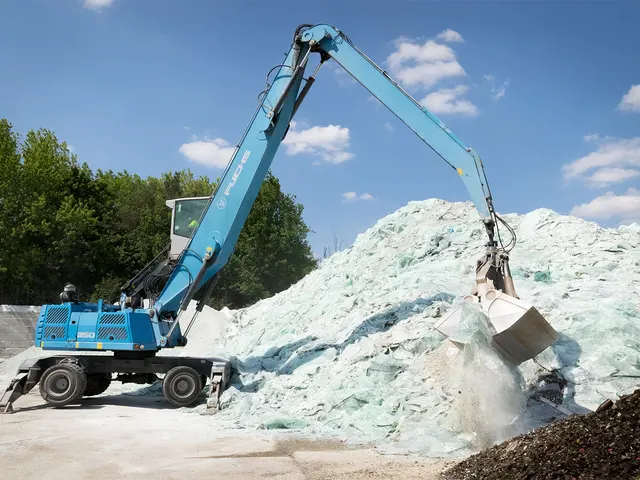
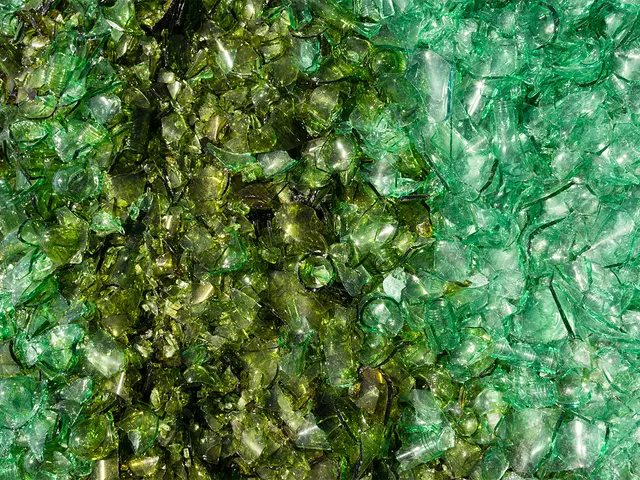
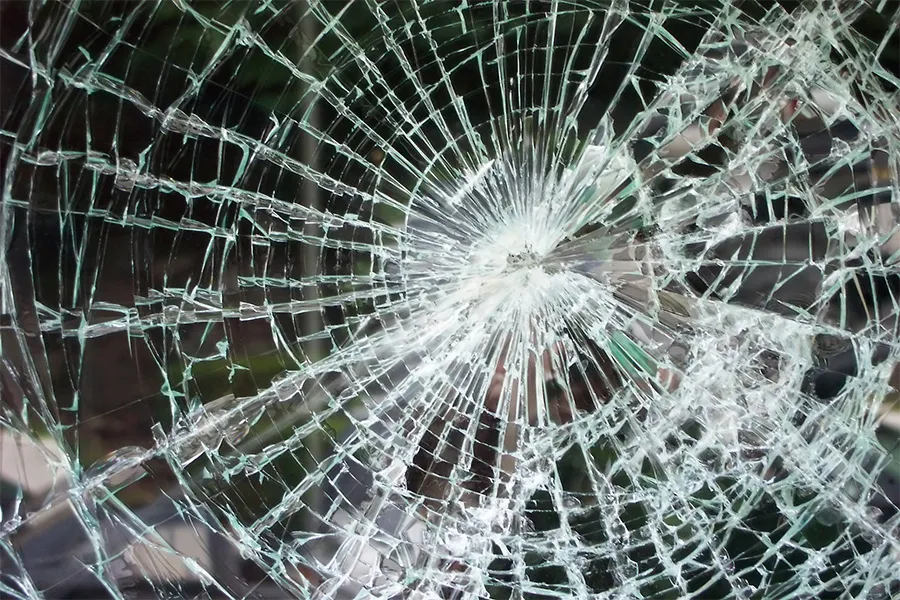
One of the major challenges in processing flat glass is the presence of PVB (polyvinyl butyral). If you are not sure what PVB is, think of the film in your car’s windscreen that causes the glass to crack in a star shape on impact, but prevents it from breaking into separate pieces. The more effectively PVB can be separated from the glass, the better the quality of the recovered PVB, which in turn should make recycling the PVB fraction easier. The focus is mainly on new technologies, including AI algorithms.
Online survey
One of FERVER’s tasks within Project Sunrise was to map the recycling market for laminated glass and PVB as thoroughly as possible. To do this, FERVER conducted an online survey, the results of which provide a picture of the current market. The findings of FERVER’s research were presented and discussed at the latest Sunrise Workshop, held on 7 June 2023 in Copenhagen. It should be noted that a number of non-European companies also took part in the research. Below is an overview of its key findings. The figures presented show that the respondents to FERVER’s research collect and process approximately 1,163.3 kilotonnes of laminated glass annually. Glass recycling yields 79.3 kilotonnes of PVB fraction.
Room for improvement
These figures are well below the existing potential, as there is still considerable scope for progress if legislation were to move towards more selective collection of flat glass, as is currently the case for packaging glass. Respondents also estimate that 10% of the glass fraction remains attached to the PVB fraction, reducing the proportion of high-quality PVB available for recycling. The Sunrise Project can certainly help bring about further improvements here too.
More material from the construction sector
Looking at the process from collection to recycling, respondents report collecting significant quantities from both the automotive and construction sectors, with twice as much coming from the construction sector: 33% and 63% of total collection, respectively. After collection, the laminated glass is stored on site. Around 1 in 5 respondents store the collected glass indoors, while the rest store it outdoors, and around 1 in 4 store it mixed with non-laminated glass.
Different processing methods
Finally, during the recycling process itself, the glass fraction, which is then recycled, is separated from the PVB fraction. According to respondents, the PVB fraction is processed in different ways depending on its quality. Around 19% of the PVB goes for recycling, 30% to a waste incineration plant with energy recovery, and 38% is still landfilled. For now, glass recycling companies are therefore focusing mainly on recycling the glass fraction, until better technologies for recycling the PVB fraction become available.
A quality boost is needed
As part of Project Sunrise, work will therefore also be carried out with FERVER on best practices for storing collected laminated glass, with the aim of improving the quality of the PVB fraction and making it easier to recycle. During storage, PVB is sometimes exposed to external conditions such as rain, wind and UV radiation. This is precisely what makes the Sunrise Project worthwhile and interesting as a research project for the glass recycling sector, which continues to follow its progress with interest.
Question about this story? Ask your question
Keep following this
Get an email when a new story is published. No account needed.
- ThemeMaking use of textiles and other waste streams
- SubjectGlass waste