New techniques for recovering platinum-group metals
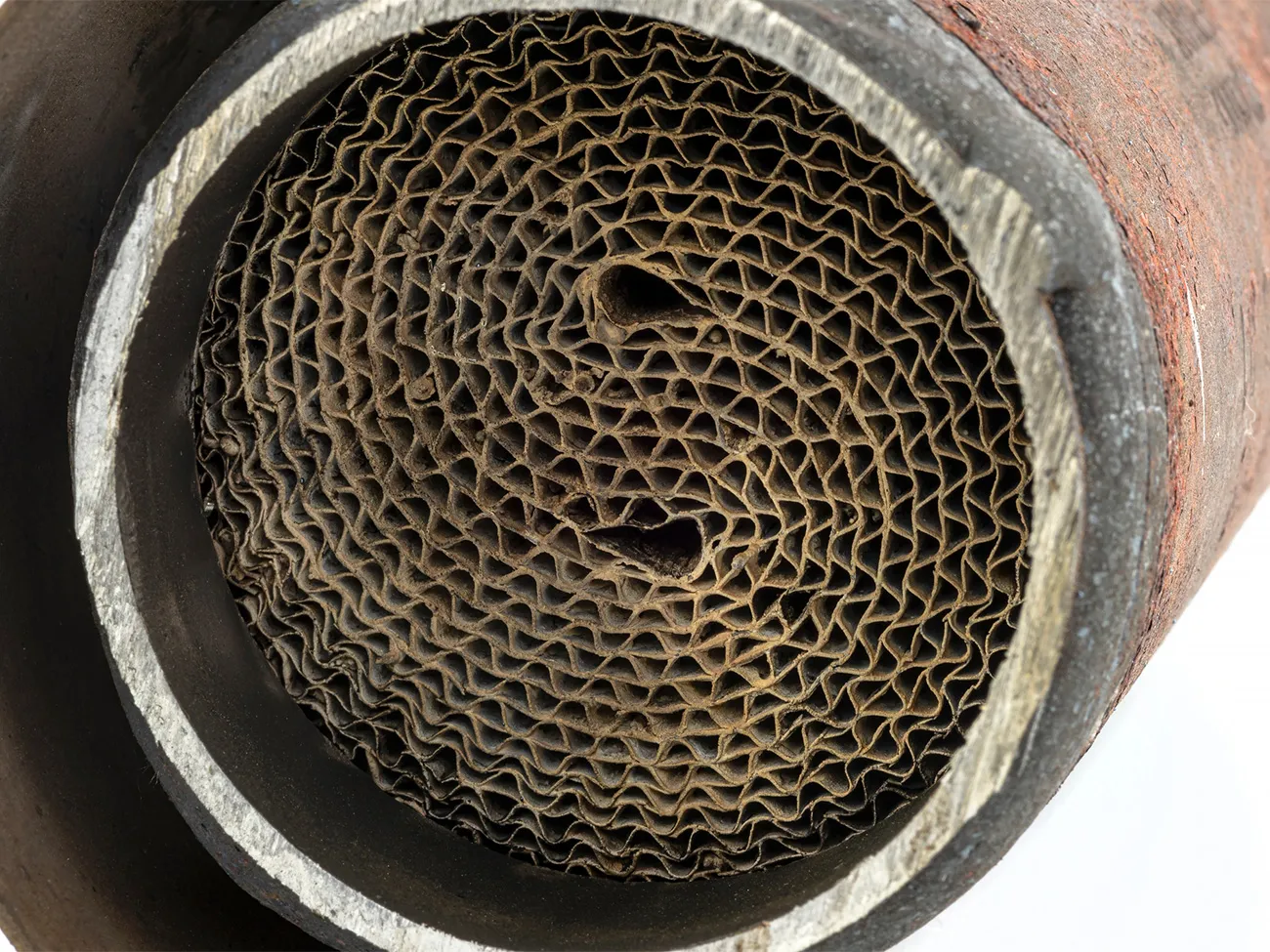
Platinum-group metals have properties that are particularly useful in applications such as catalytic converters. There, they help convert harmful exhaust gases into less harmful gases. The stricter the emissions standards, the more platinum-group metals will be needed. They are therefore important raw materials for Europe, which unfortunately has no deposits of them of its own. The Platirus research project therefore investigated how these metals could be recycled from end-of-life catalysts. The initial results are promising: catalysts made from the recovered metals perform even slightly better than those made from primary raw materials.
Osmium, iridium, platinum, palladium, ruthenium and rhodium are the metals collectively known as platinum-group metals. They are important building blocks in today’s high-tech society. They are used in catalysts, electronics, hard drives, capacitors in printed circuit boards … Europe even classifies them as critical raw materials for maintaining our prosperity. The European research project Platirus therefore set out to investigate where and with what technologies they could be recovered. VITO senior researcher Sustainable Materials Management Jeroen Spooren: “The starting point was to take as holistic an approach as possible, developing the best possible technique for every stage in recovering these metals from automotive catalysts, electronic waste and waste from the metallurgical sector, such as slag and sludge. Recycling must be able to account for 30% of the supply of platinum-group metals.”
High recovery rate, efficient and cost-effective
Platinum-group metals are already recovered using pyrolysis. Spooren: “This technique requires large input volumes, whereas the waste streams involved are relatively small. They either need to be consolidated across Europe, or we need new processes to recover platinum-group metals.” During the first two years of the project, a wide range of technologies was considered to optimise the three processes of leaching, separation and recovery. In total, eleven technology pathways were investigated, after which the three most promising were developed further, beyond laboratory scale, to TRL 5. “The options were assessed on the basis of a comprehensive sustainability analysis. Ultimately, we continued with processes that were economically viable, offered a high recovery rate, used energy and materials efficiently, and had only a very limited environmental impact. According to conservative estimates, the selected technologies would have a payback period of around six years.”
Microwave-assisted leaching
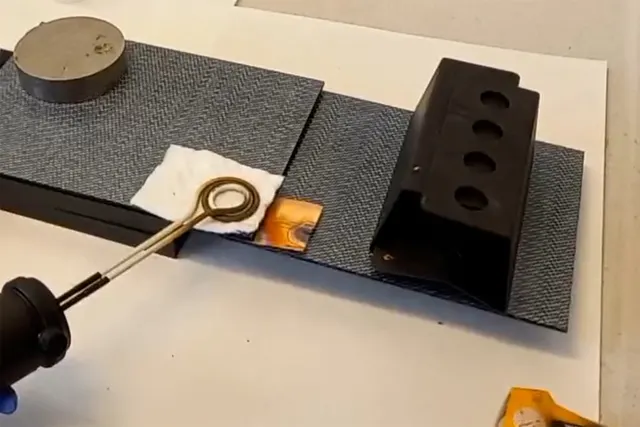
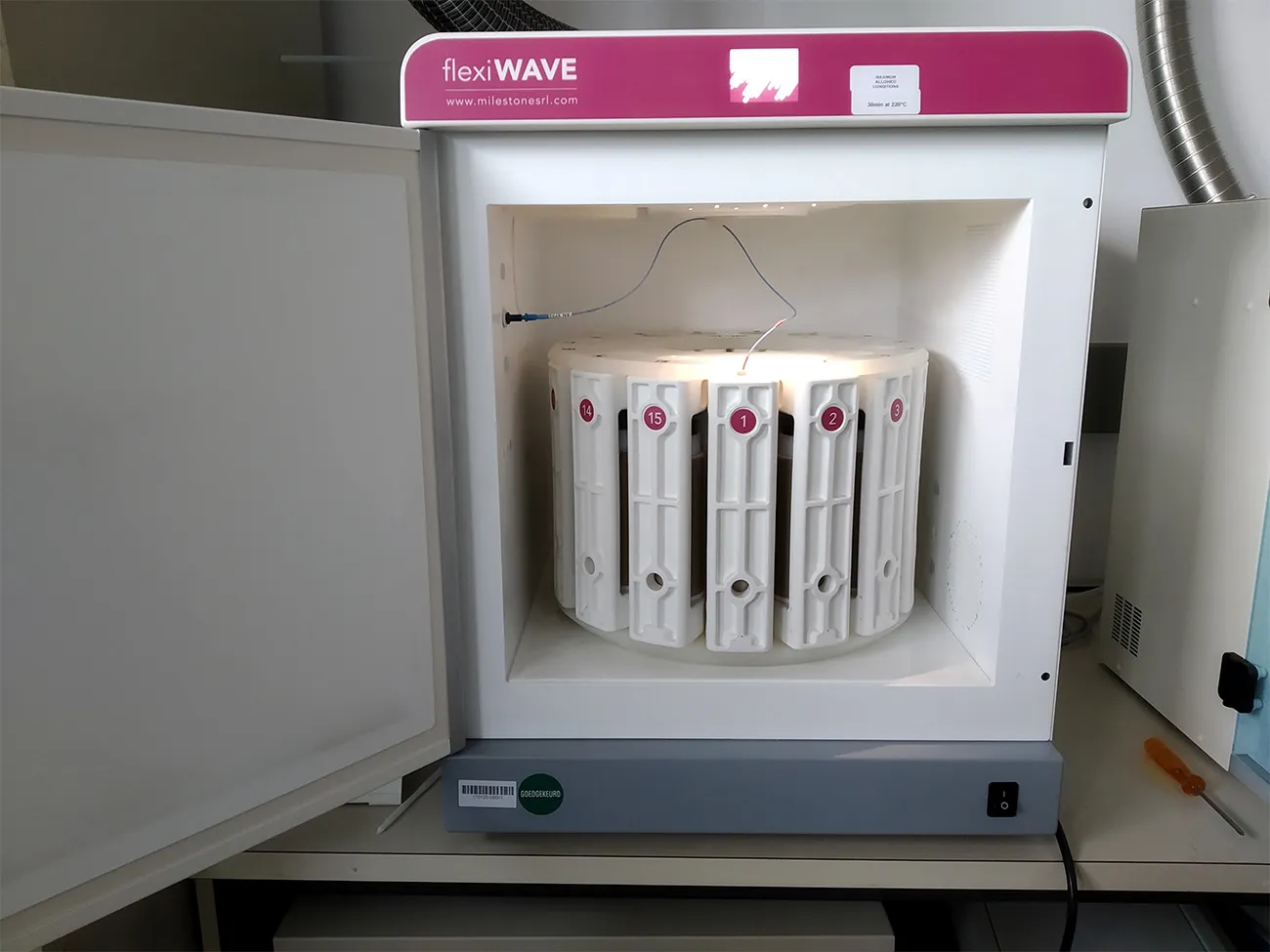
The first step in recovering platinum-group metals is leaching. “Microwaves can heat material very quickly and efficiently from the inside. The waste stream, in this case ceramic material containing platinum-group metal particles, is mixed with an acidic aqueous solution. It absorbs the microwaves and converts them into heat. The heat generated, combined with the right amount of acid, dissolves the platinum-group metals quickly and efficiently,” Spooren explains. Initially, the reaction took around ten minutes. Further research has reduced this to three minutes. Less acid is also needed than in conventional systems.
Non-conventional liquid-liquid separation
Once the platinum-group metals have dissolved, they need to be separated. The project identified solvent extraction as the best solution. Spooren explains: “Depending on the solvent chosen, some elements dissolve more readily than others. The SOLVOMET team at KU Leuven developed a dedicated solvent extraction process that extracts the platinum-group metals from the aqueous phase. Moreover, using a cyclic system in which the solvent can be recovered and reused, very little waste is produced and the environmental impact is very limited.”
Gas diffusion electrocrystallisation (GDEx)
The platinum-group metals have now been selectively concentrated, but they are still in solution alongside a range of other metals. To recover them in metallic form, Xochitl Dominguez of VITO developed gas diffusion electrocrystallisation, a new electrochemical technique patented by VITO. In this process, a gas, often oxygen or CO2, is reduced at a gas diffusion electrode. This produces chemical reagents that act on the dissolved platinum-group metals and selectively precipitate them from the solution. The process can be highly selective by choosing a gas according to what needs to be precipitated and whether it should be in oxide or metallic form,” Spooren explains.
What next?
The three technologies were tested to ensure they can be used one after another. The project is currently at TRL 5. The aim of the follow-up project PEACOC is to reach TRL 7 and prepare the techniques for industrial use. This will be sufficient to process the catalyst feedstock supplied by Monolithos in Greece. “The technique could also be of interest to SMEs in Belgium, precisely because it can be applied locally. And not only for recovering platinum-group metals. Printed circuit boards and photovoltaic cells … also contain a lot of gold or silver. The process can be used for these too,” Spooren concludes.
Platirus consortium
Platirus was a thoroughly European research project funded by the Horizon 2020 Research & Innovation programme. The consortium comprised Tecnalia (Spain), Monolithos (Greece), KU Leuven (Belgium), Vienna University of Technology (Austria), VITO (Belgium), SINTEF (Norway), CRF (Italy), Ford Otosan (Turkey), Boliden Harjavalta (Finland), Johnson Matthey (England) and PNO Innovation (Belgium).
Question about this story? Ask your question
Keep following this
Get an email when a new story is published. No account needed.
- SubjectScrap metal