












Cardboard as a model stream for effective collection and recycling
Text Saar BenteinImage Gilgemyn Recycling
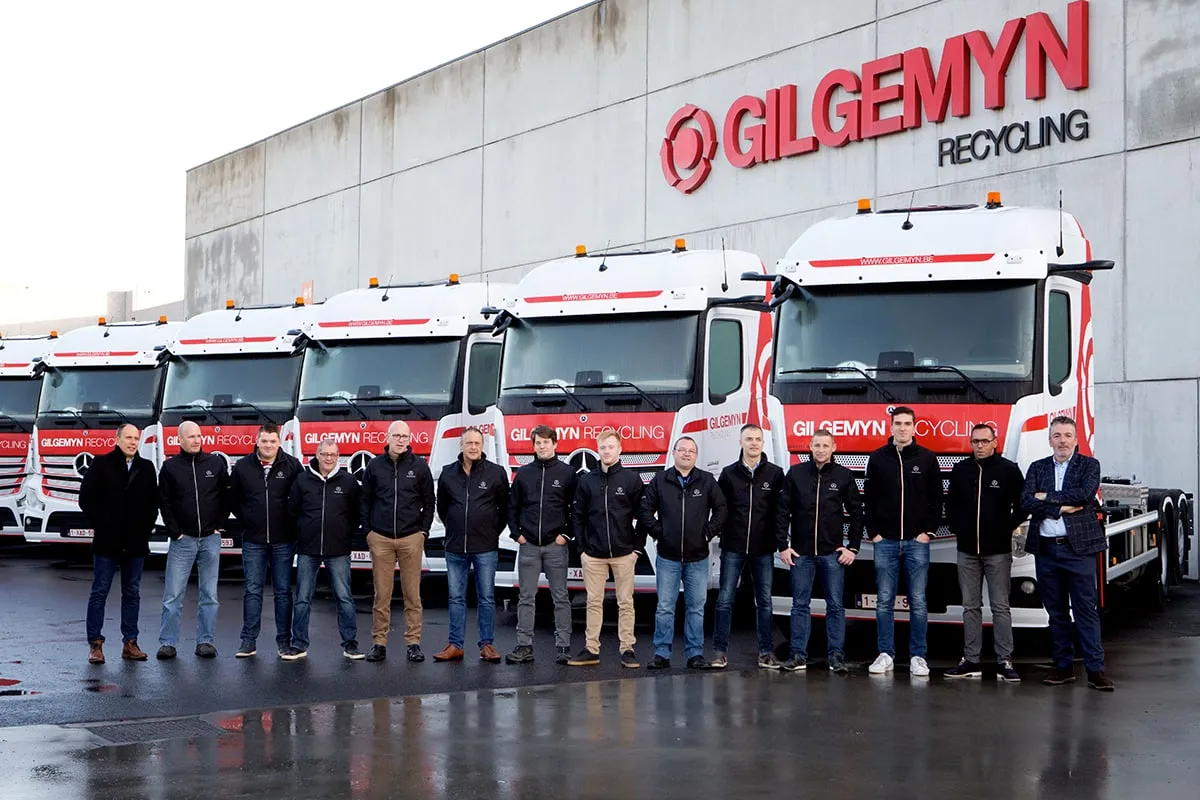
For more than 50 years, Gilgemyn Recycling in Gullegem has been giving paper, cardboard and plastic films a new lease of life. Founded in Wevelgem’s flax industry, this family business has grown significantly. It now collects around 100,000 tonnes of paper, cardboard and plastic films every year. This makes Gilgemyn a true recycling specialist and a valued partner for many industries increasingly embracing the circular economy.
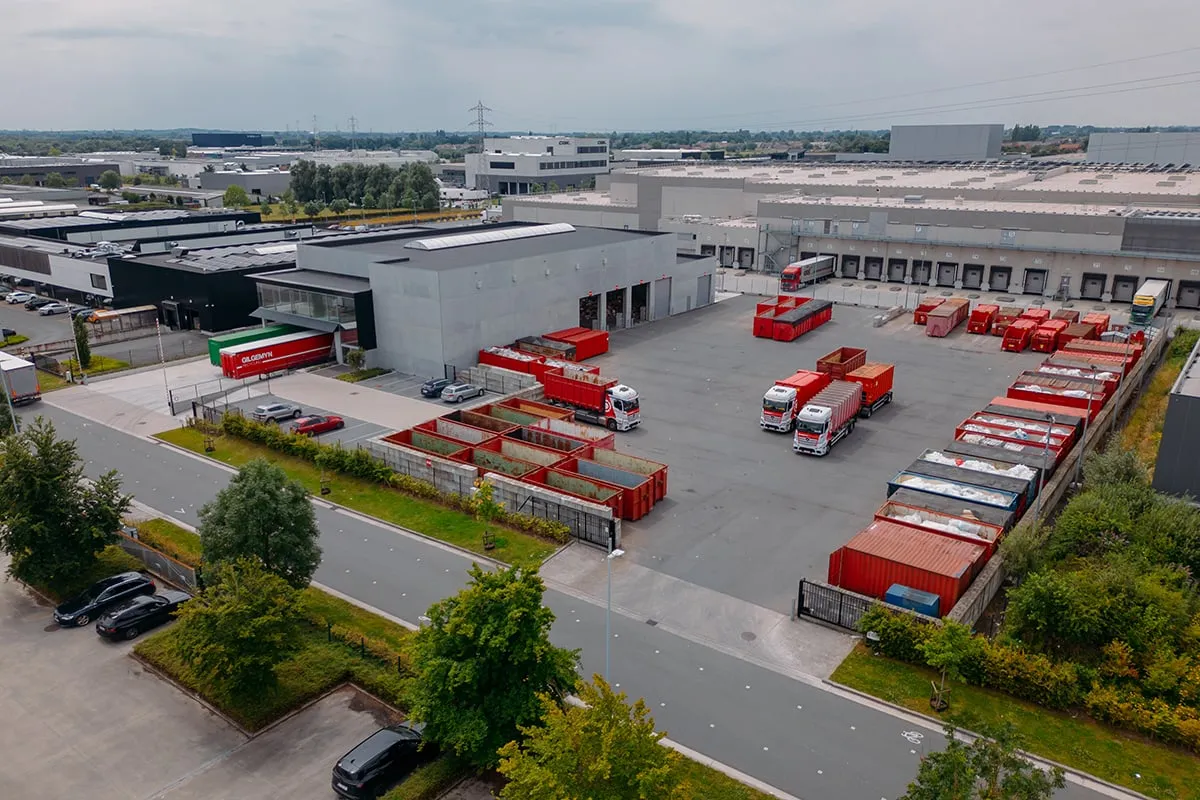
In the late 1960s, brothers Andre and Frans Gilgemyn decided to leave the flax industry behind and focus entirely on paper. Wim Gilgemyn, current managing director of Gilgemyn Recycling, says: “My father and uncle started on a small scale. They each drove around in their own lorry and had a small baler. I joined the company in 1996, taking my uncle’s place.” In 2007, the company moved to a new industrial estate, marking an important milestone. “The old site had become too small, and our company was in the middle of a residential area. That was no longer viable. Moving to Gullegem allowed us to sustain our growth and expand further. That move laid the foundations for where we are today.” Gilgemyn Recycling now has a site of around 30,000 m², including 15,000 m² of covered production and storage space. It now has 25 permanent employees. The third generation is also active in the company. Gilgemyn offers a range of container services and helps businesses with other waste streams, such as plastics, wood, metal and residual waste, which it sends to other processors. “We place great value on working with family businesses,” Gilgemyn explains. “You exchange not only volumes, but also ideas. You learn from and inspire one another. It is increasingly important for family businesses to join forces so that we can be stronger together.”
Surrounded by key links in the chain
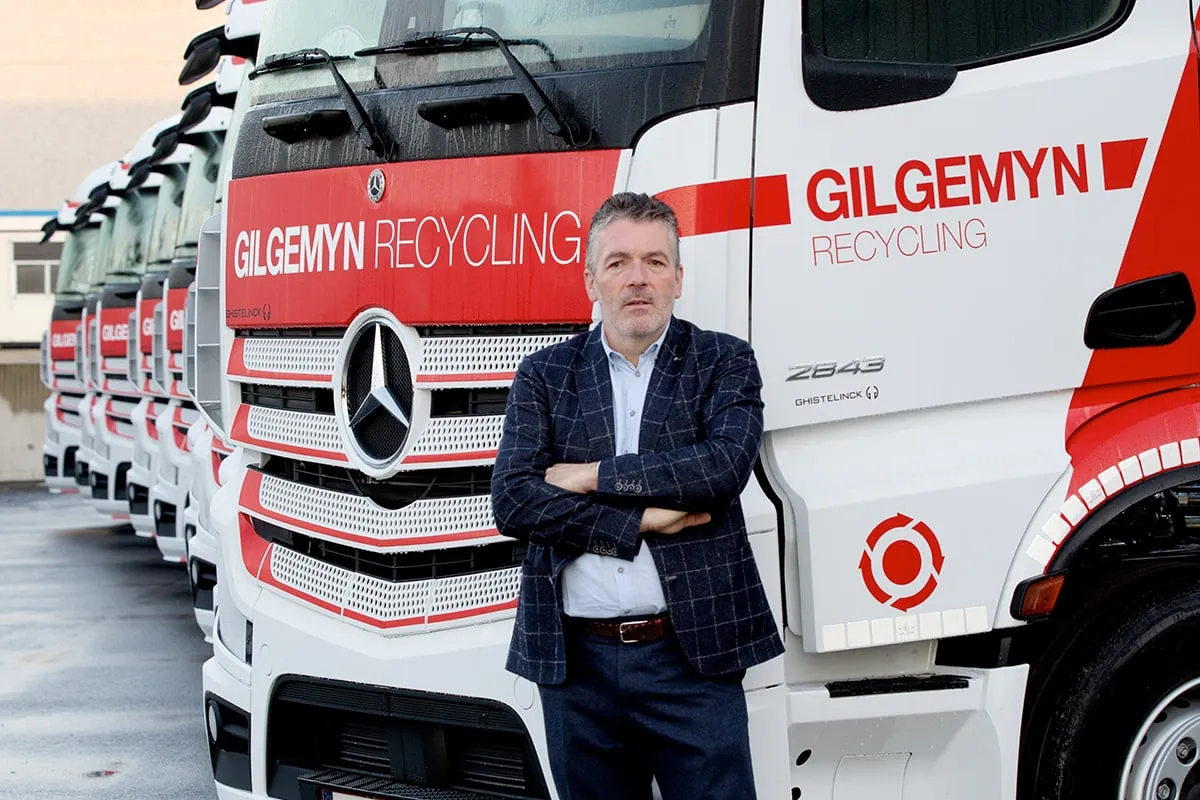
Over the years, Gilgemyn has developed into an expert in cardboard recycling. “Although we also process paper and plastic films, cardboard accounts for 90% of our volume,” says Gilgemyn. “It is a very logical evolution, because we are surrounded by both supply and demand. Food companies, supermarkets and various manufacturers in the region supply their packaging cardboard, while the paper mills around us and elsewhere in Europe need cardboard as a raw material for production.” Gilgemyn’s reach extends beyond Belgium and its neighbouring countries. When demand is sufficient, it also exports to Asia. Gilgemyn highlights cardboard’s circularity as a key to success. “Cardboard is a model stream. Selective collection of cardboard is something we grew up with, unlike the collection of other streams such as PMD, which were developed much later. What is more, a cardboard box is 100% recyclable. So by definition, you are operating in a sustainable, circular environment.”
Transparency versus administration
Gilgemyn is positive about the future, but is aware of the challenges ahead. One of these is the CSRD legislation. “As a supplier to many large companies, we need to be able to demonstrate a sustainable approach to remain competitive. Sustainability is in our DNA, but we do not want to fall behind. That is why we are actively exploring sustainable investments we can make, such as electrifying our in-house equipment and our lorries.” Gilgemyn sees greater transparency in the sector as a positive development. “But there are two sides to the coin. That transparency entails a huge amount of administration, which can become a serious burden for businesses. We are already seeing that. We hope for a consistent approach at inter-federal level, with one clear platform for all reporting.”
Question about this story? Ask your question
Companies in this story
Keep following this
Get an email when a new story is published. No account needed.
- ThemeMaking plastics and packaging circular
- SubjectWaste streams
- CompanyGilgemyn Recycling







