Workshop on innovative remediation options
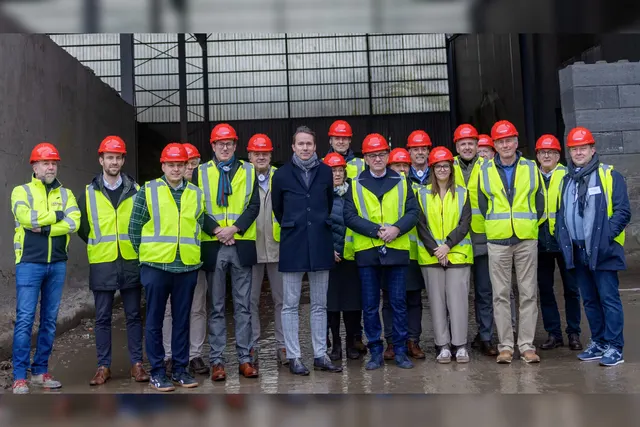
Flemish PFAS commissioner Prof. Karl Vrancken organised a workshop in late April, together with the Institute for Environment and Sustainable Development at the University of Antwerp, Ondernemers Vereniging Bodemsaneerders vzw (OVB), Zwijndrecht Gezond and OVAM, on remediation options for PFAS hotspots. This initiative is intended to help find a solution to PFAS contamination at the Oosterweel construction site and at all contaminated sites in Flanders.
The workshop brought together specialists from the remediation sector, academia, government and civil society to examine possible solutions to PFAS contamination from a multidisciplinary perspective. Following presentations on a range of existing and innovative remediation techniques, speakers discussed their applicability, challenges and barriers in different scenarios. In other words, what are the best possible techniques for different contamination situations?
Remediation techniques
Reducing the use of PFAS-containing products is, of course, the best preventive measure, but there are also options for removing PFAS from contaminated soil: screening and washing the soil (physicochemical treatment), using plants to take up the PFAS (phytoremediation), stabilising the contamination to limit the spread of PFAS, and leaching or destroying PFAS in the soil (thermal desorption). Physicochemical treatment is the most widely used remediation technique in Flanders. The most common methods for treating contaminated groundwater are adsorption using activated carbon, ion-exchange resins and flocculation techniques. New, more active adsorbents are being developed at Flemish universities. At the workshop, experts presented several innovative and some more conventional remediation techniques for treating both water and soil.
- OVB, Boskalis: physicochemical treatment
- Inopsys: mobile water treatment plant using adsorption
- Regenesis: injection of colloidal activated carbon into soil: Plumestop
- B&R/UHasselt: phytoremediation
- Greensoil: in situ or ex situ flushing with biopolymers
- WeGroSan/TRS Europe: conductive heating
- iFlux: monitoring PFAS plumes through passive sampling
The techniques were assessed for their applicability in two scenarios: one involving rural and urban residential areas, where small areas of soil and groundwater are contaminated, and the other involving industrially contaminated sites with high concentrations and genuine hotspots.
Urgent need
Existing soil-washing plants in Flanders can be scaled up to a capacity of more than 600,000 tonnes/year, with these physicochemical processes achieving a treatment efficiency of 95 to 99%. The need for remediation in Flanders extends beyond the land at the Oosterweel site and the area around 3M. The quantities involved there are, of course, particularly large. The Council of State ruling on the Oosterweel construction site (19/04/2022) will have a significant impact on the amount of soil requiring remediation. This makes the need to find innovative processes that can boost this capacity all the greater and more relevant. PFAS commissioner Karl Vrancken said: “Current remediation capacity and options are unlikely to be sufficient to meet Flanders’ growing needs. That is why we are looking at which additional remediation techniques can offer a realistic added benefit. This is what makes the workshop so important. It should be the starting point for developing a robust remediation strategy for Flanders as a whole. Rather than focusing on what cannot be done, we want to work together and look ahead at how innovative remediation techniques can form an important part of the solution.”
Less contamination is possible
The conclusion at the end of the workshop was clear: we must move beyond the idea that remediation is virtually impossible. “There are of course still some obstacles, but existing plants and innovative techniques will certainly provide the additional capacity needed,” says Vrancken. “The sector has clearly shown that remediation capacity at existing plants can be scaled up. This involves excavating soil and treating it physicochemically, the main remediation options for residential areas. In addition, a number of innovative techniques, some of which are still at the pilot stage and require further development, will be valuable, particularly for contaminated industrial sites.”
Question about this story? Ask your question
Companies in this story

Keep following this
Get an email when a new story is published. No account needed.
- ThemeSafe and clean processing
- SubjectPFAS pollution
- CompanyOVAM