Measuring PFAS levels adsorbed onto activated carbon
Text DesotecImage Desotec en iStock

DESOTEC and independent research organisation VITO have developed a more accurate and reliable way to measure PFAS ‘forever chemicals’ on spent activated carbon. Activated carbon is the most widely used technology for removing PFAS. This methodology gives companies confidence that their operations, including waste treatment, comply with the latest regulations.
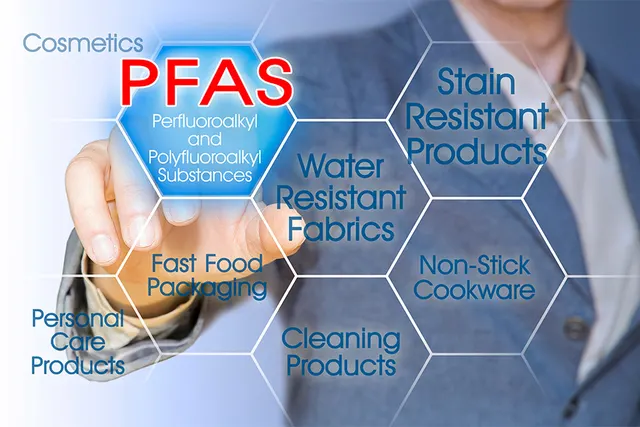
The EU POPs Regulation governs the production and use of per- and polyfluoroalkyl substances (PFAS), as well as the treatment of waste containing these chemicals. Activated carbon is one of the Best Available Techniques listed in the POPs Regulation for removing PFAS. It states that once the carbon is saturated, it may be thermally reactivated if the PFAS concentration is below the limit of 1 mg/kg PFOA; 1 mg/kg PFHxS; 50 mg/kg PFOS. If the PFAS level exceeds the POPs threshold, the carbon must be disposed of, for example by incineration. However, it is difficult for customers to assess how much PFAS is on the activated carbon. Many industrial processes have variable input streams, and companies may be uncertain about the carbon’s loading capacity.
More accurate and reliable
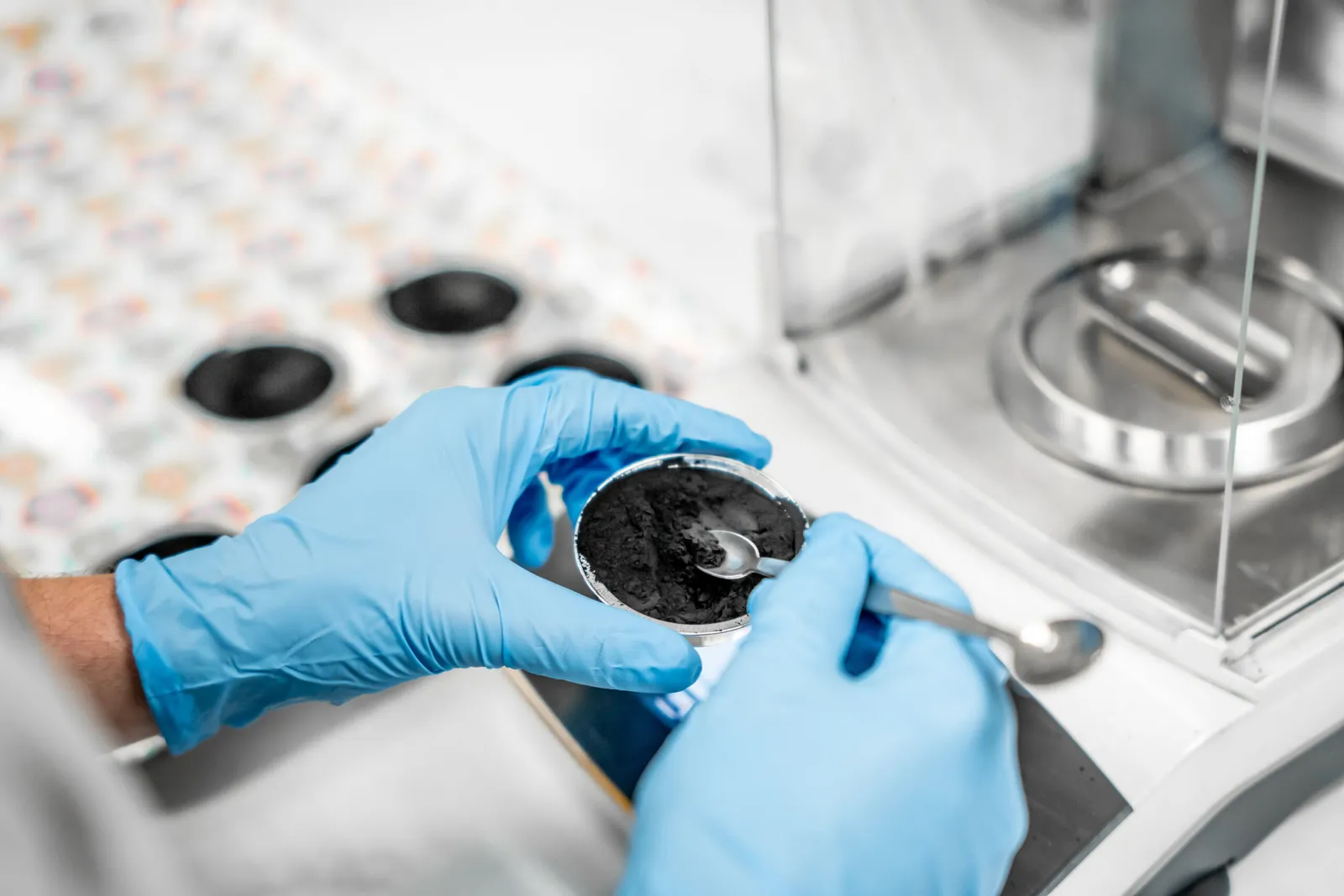
DESOTEC therefore decided to develop a more accurate and reliable way to measure PFAS levels in spent activated carbon. Its aim was to enable customers to identify the most suitable way to treat their PFAS-containing activated carbon waste, thereby protecting the environment and human health. Companies can demonstrate compliance with the law and avoid hassle, fines or other enforcement measures. Although DESOTEC has unrivalled expertise in activated carbon, it needed a partner with expertise in developing measurement methods. It chose to work with VITO, a European leader in analytical development and PFAS treatment.
Two challenges
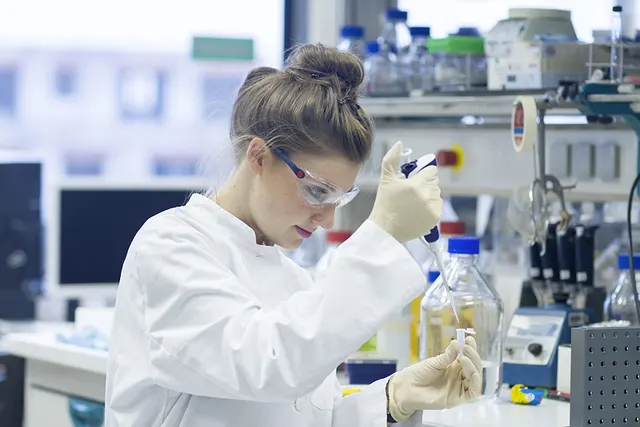
The six-month project involved two broad challenges. The first step was to optimise extraction. PFAS adsorbed onto activated carbon is a solid matrix. An extraction step is therefore necessary, and it must be as efficient as possible to remove as much PFAS as possible from the carbon. After the PFAS had been extracted and transferred to a liquid phase, it was measured using liquid chromatography-tandem mass spectrometry (LC-MS). Validation of the experiments made up the second step. VITO’s expertise was invaluable in defining a series of experiments to assess five parameters: detection, accuracy, linearity, reproducibility and uncertainty. Four rounds of experiments tested different solvents and conditions to optimise extraction. In each round, recovery was calculated for the different methods to determine which method would be used in the next rounds. Two initial validations were carried out: one at VITO and an internal validation at DESOTEC. Samples of activated carbon were also sent to commercial laboratories for further validation.
Results
The tests produced several important findings:
- Short-chain PFAS were easier to extract than long-chain PFAS;
- Extraction yields were higher for certain types of carbon, for example coconut-based carbon. (However, these are highly suitable for PFAS treatment when used in the field, since loading capacity and extraction efficiency are not the same.);
- The new method was considerably more accurate than existing methods, at around 20%. Although this may seem low, it is important to note that PFAS are found only at ultra-low concentrations, making detection very difficult.
Three extraction steps, one concentration step
The two existing methods used in Flanders are CMA/3/D for soils and sediments and CM/A3/O for soil improvers. In both cases, a single extraction step is followed by a single concentration step and then measurement using an LC/MS instrument. The new method uses three extraction steps and one concentration step, followed by the same LC/MS measurement as in the existing methods. The solvents used are the same. This ensures that as much PFAS as possible is removed from the activated carbon. The result is more reliable and accurate results, giving industrial customers greater confidence in the best way to treat their PFAS waste.
Question about this story? Ask your question
Keep following this
Get an email when a new story is published. No account needed.
- ThemeSafe and clean processing
- SubjectPFAS pollution