“We need to know what’s coming our way”
Text Valérie CouplezImage SGS
A comprehensive approach to PFAS testing
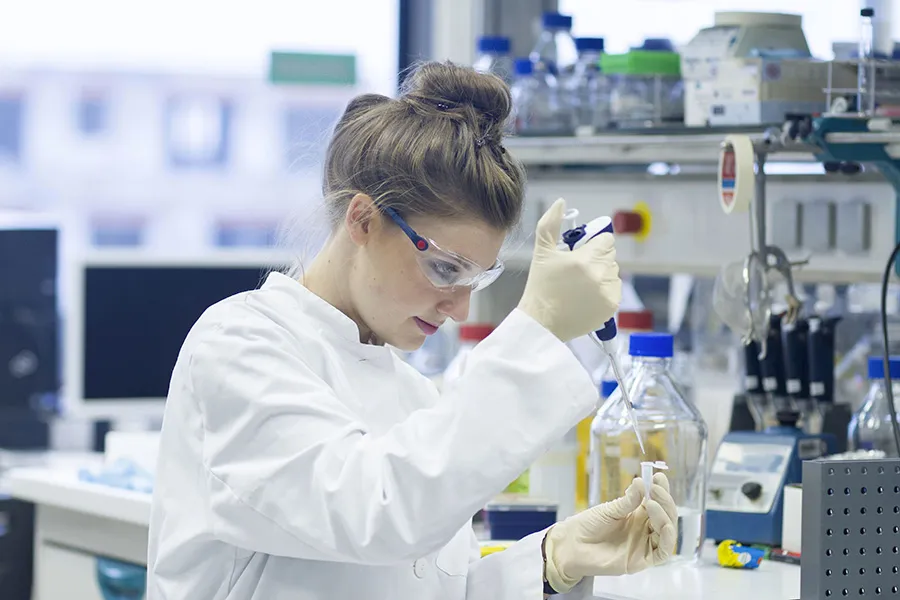
PFAS continues to cause concern. If we want to remove it from our soil, water streams and air, we first need to be able to identify it. SGS has therefore developed a new concept for PFAS testing, one that goes beyond what the legislator requires. “Legislation is constantly evolving as scientific understanding advances. That is why it is a good idea to analyse your streams now and see where improvements are needed, rather than being presented with a fait accompli tomorrow.” This is the wise advice of SGS business development & sales manager Luc De Ren.
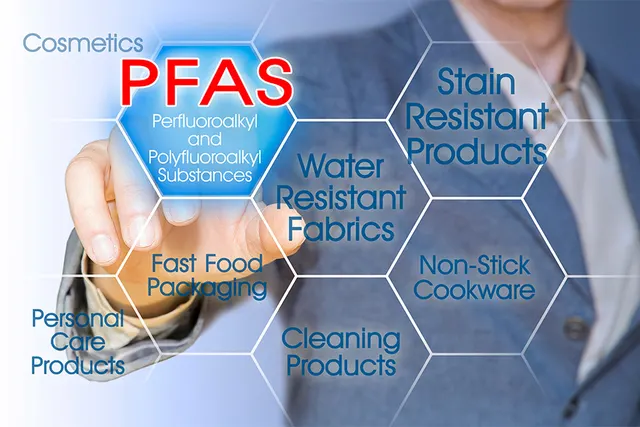
The biggest problem with PFAS? “It is not one material, but a group of per- and polyfluoroalkyl compounds that have been produced since the 1940s and 1950s. Nearly 10,000 have been identified so far, in fire-fighting foams, clothing, carpets, packaging, sun cream … The reason for their popularity is that they are extremely stable, but that also makes them very difficult to remove from the environment,” warns De Ren. So we will continue to encounter them in large quantities in the years to come. “Some products are being phased out, such as fire-fighting foams. But for many others, we do not yet have more sustainable alternatives. Industry has been caught off guard by advances in scientific understanding of PFAS. If you have to choose between a fire in the heart of the Port of Antwerp or putting it out with PFAS foam, the choice is easy.”
A complex issue
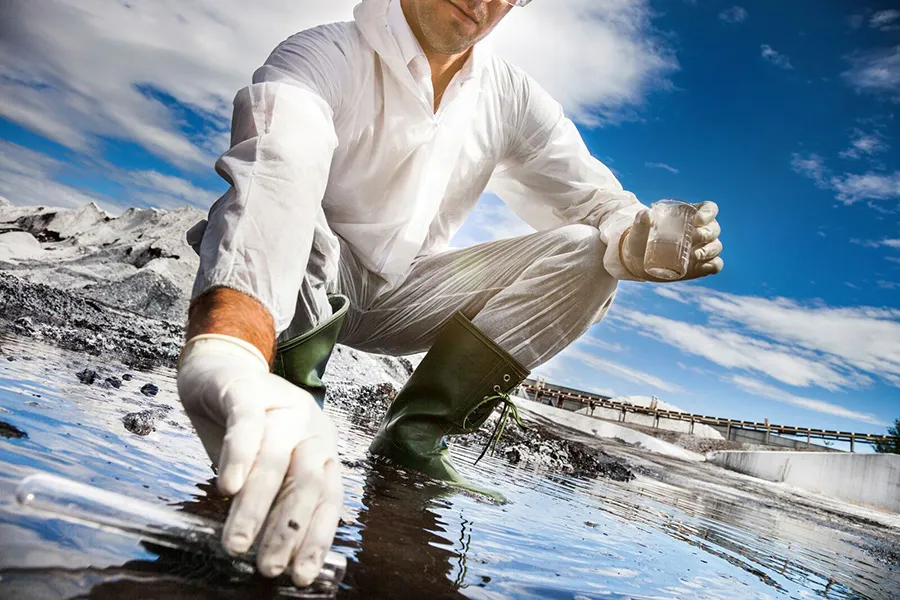
Limits on the presence of PFAS have been tightened for certain products. Even so, testing is far from straightforward. De Ren: “On the one hand, this is due to sampling and the low limits, which are measured in nanograms. If sampling is carried out outdoors in fine weather, traces of sun cream can already affect the results. Because PFAS are found in so many things, this is a very complex subject. On the other hand, test protocols exist for only around 40 of the 10,000 PFAS compounds. So we are still missing a great deal of information.” De Ren therefore believes the discussion should be broadened. “We need a clearer picture of the presence of each of those 10,000 PFAS compounds. The rapid evolution of legislation has taught us that what is acceptable today may not be tomorrow. That makes things difficult for everyone. We need a more pragmatic approach so that legal certainty is not undermined.”
Detecting more and more PFAS compounds
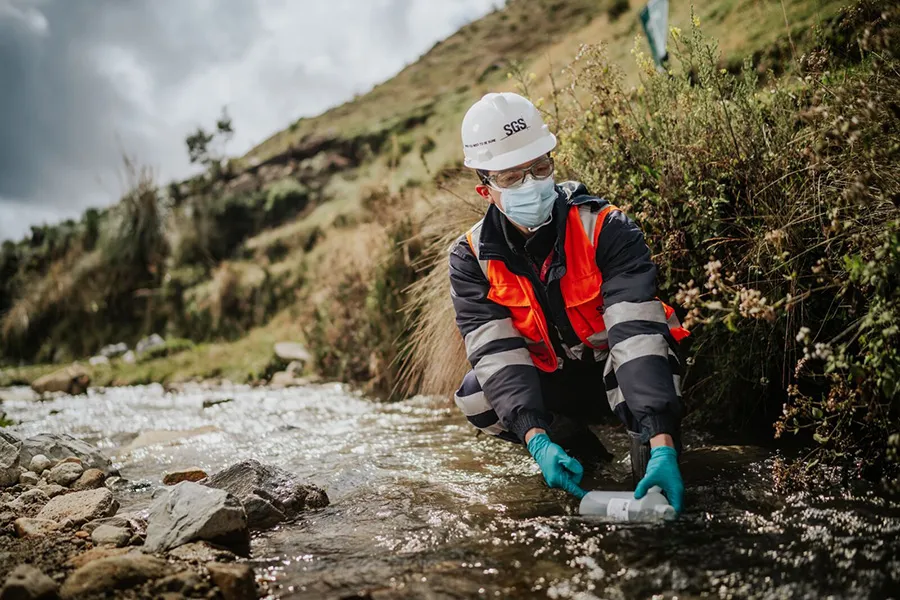
That is why SGS uses a comprehensive approach that searches for more PFAS. “We cannot detect them all yet, but we can already detect many thousands, and we are working every day to close that gap.” The testing strategy, dubbed PFASafe®, Next Level Analysis, works in three steps. The first step is the screening parameter. “If the sample contains indications of the possible presence of PFAS, we move on to step two. This involves targeted testing for the 40 to 60 best-known PFAS compounds.” Step three is the TOP Assay. Are there other PFAS components in the sample too? “We do this by simulating in the lab how those long chains are broken down into PER compounds. If there is an increase, we know that the sample contains one of those other 9,960 PFAS components. This enables us to help companies assess the risks more precisely and take the appropriate action.”
Taking a proactive inventory
De Ren therefore recommends that companies go further than the legislator currently requires. “This environmental problem is not going to disappear from the agenda any time soon. By proactively taking stock of your streams, you give yourself more time to look for solutions and anticipate what is coming. You do not have to make a big announcement about it, but you can already start working on prevention,” De Ren says. De Ren, in turn, urges the legislator to take a more pragmatic approach. “To give you an idea of the scale of 0.5 ng, a limit often used today: if we gathered the entire populations of France, the Netherlands and Belgium and asked everyone to raise their hands, it would be equivalent to one red finger, or one drop in an Olympic-sized swimming pool. We need to make sure our efforts remain relevant. Laboratories will also have to invest and take stricter precautions, for example, to deliver reliable results of this kind. Otherwise, we risk a capacity problem.”
Question about this story? Ask your question
Keep following this
Get an email when a new story is published. No account needed.
- ThemeSafe and clean processing
- SubjectPFAS pollution