Why PFAS is such a major concern for the waste sector
Text Valérie CouplezImage iStock en Denuo
The biggest threat in years
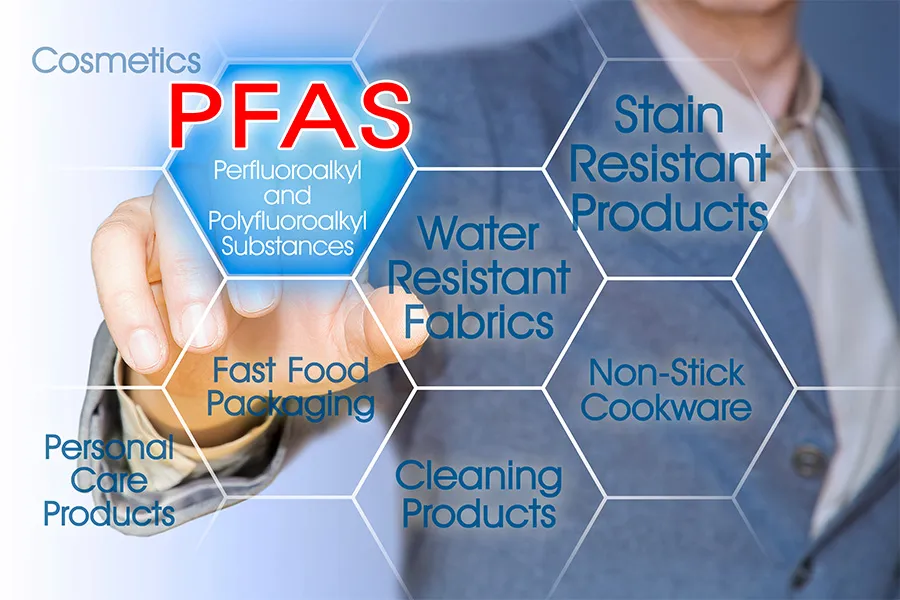
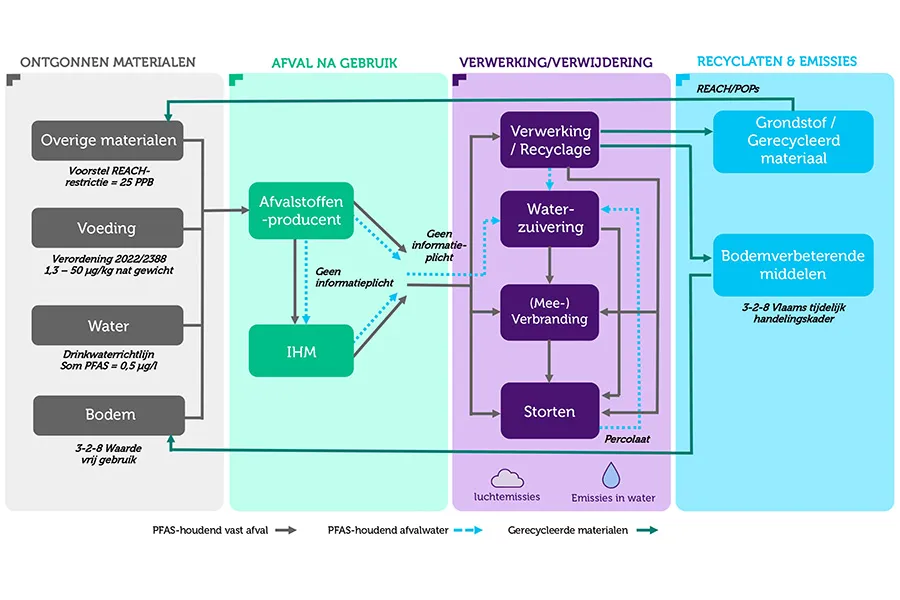
In recent years, PFAS research has been driven mainly by the government. Its aim was to establish exactly where PFAS was present and what impact it was having on our environment. But now it is time for the next phase: how can we learn to manage the PFAS present in society? This is a tough nut to crack for companies active in waste management and recycling. Although they do not produce PFAS or use it in their processes, they are inevitably confronted with it in the waste streams they handle, as PFAS often interferes with recycling. PFAS could well become the biggest threat the sector has faced in years.
PFAS is a group of almost 6,000 different molecules. The right treatment technology therefore has to be selected for each molecule. Officially, there are no limits in force for PFAS in wastewater streams. However, detection limits of 20 or 50 ng are used, depending on the measurement method. This means that if these values are detected in waste streams, the companies concerned must apply for a limit. In practice, these detection limits are often used for that purpose. If companies cannot meet them, their environmental permit conditions must be amended. As a result, waste collectors and processors are becoming increasingly reluctant to accept streams suspected of containing PFAS. The problem also shifts further down the chain, as landfill operators are becoming more cautious too, since PFAS can end up in the leachate. In time, this could bring the entire sector to a standstill, because waste still has to go somewhere.
A level playing field is needed
Should we simply send it across the border, then? In theory, that is an option, because the standards in the Flemish Region are much stricter than in the other regions and neighbouring countries. In practice, this would be bad for Flanders. It would merely shift the problem elsewhere, and we risk seeing valuable waste streams leave for foreign waste and recycling industries. PFAS is an issue that should preferably be addressed at European level, to ensure a level playing field within and between Member States, and between recycled and virgin products. There cannot be zero tolerance for PFAS in waste streams while products containing PFAS can still be manufactured. The REACH legislation is being considered for this purpose. But, as noted, it will take a long time before all concerning PFAS compounds are phased out.
A temporary framework for action to provide certainty
What needs to happen in the short term to make the situation manageable for waste and recycling companies? Introduce a temporary framework for action. Such a framework has been in place for soil and soil improvers for a year, ensuring that every company faces the same requirements. This has removed arbitrary differences, bringing certainty to the sector and providing a clear framework for investment. These temporary limits should be extended to all waste streams and all stakeholders significantly affected by PFAS, so that it is clear what needs to be done. When setting these temporary limits, lawmakers must also take a pragmatic approach. Given the complexity of the waste streams handled by waste and recycling companies, technologies need time to mature. In addition, validated measurement methods are not yet available for every molecule.
Question about this story? Ask your question
Keep following this
Get an email when a new story is published. No account needed.
- ThemeSafe and clean processing
- SubjectPFAS pollution