VIB: 'We need to accelerate circularity enormously'
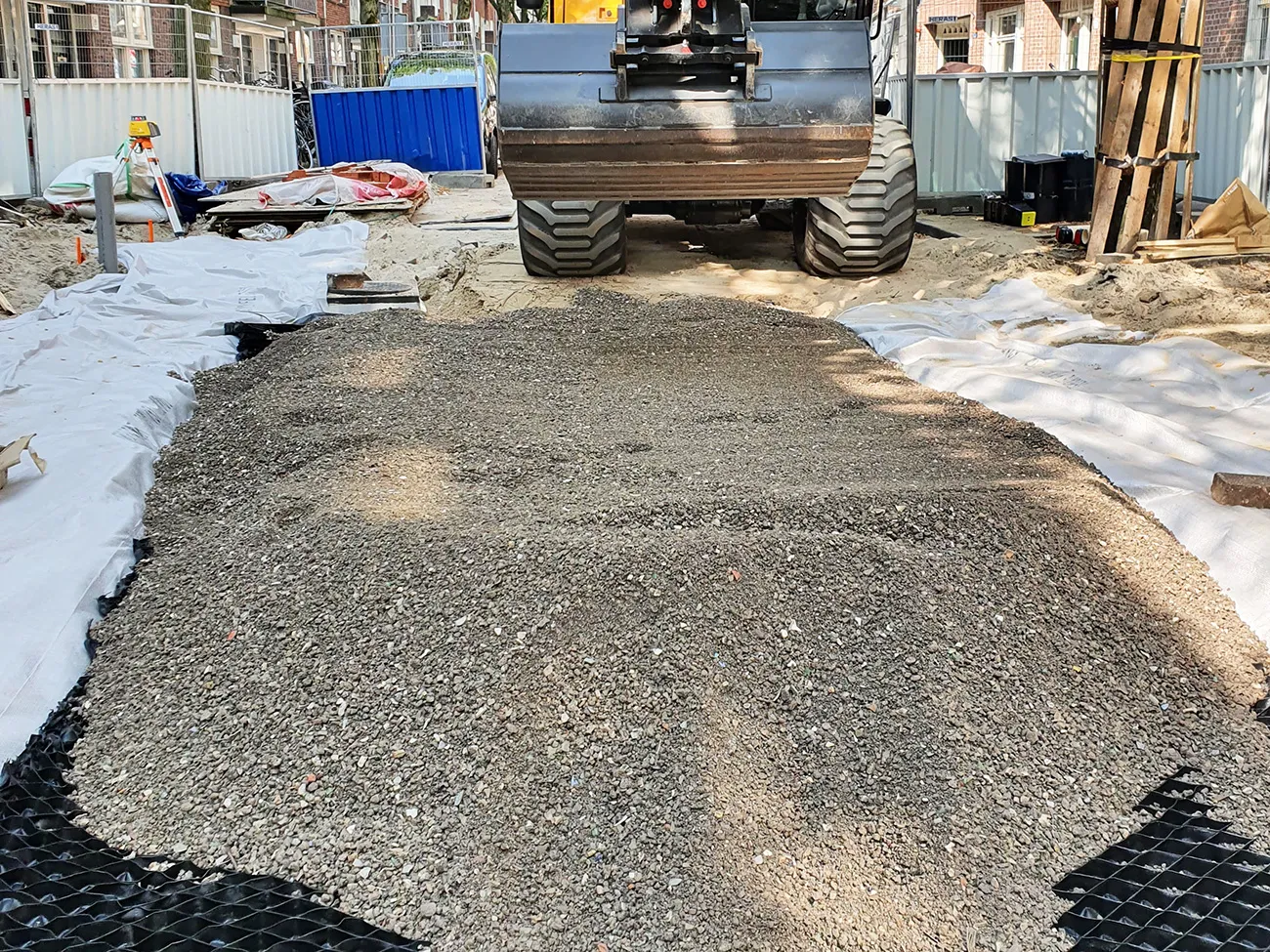
The Association of Industrial Building Materials (VIB) wants to establish itself firmly as a driver of the circular economy. The momentum is there. Ambitious policy goals, the energy transition and the construction challenge, are driving up demand for construction raw materials. With the expertise of its members, the VIB is paving the way for the reuse and application of industrial residues.
Industrial residues a booster for the circular economy
Industrial construction raw materials, which arise as residues from the production of iron and steel, electricity generation, drinking water supply and waste processing, are urgently needed right now. Not only do they contribute to the circular economy, they also play an important role in ambitions such as the energy transition and the construction challenge. Chairman Rob Wiegers of the Association of Industrial Building Materials (VIB): "If the Dutch government is serious about reducing CO2, a great many raw materials will be needed. The energy transition requires scarce metals such as cobalt and lithium for wind turbines and the batteries of electric cars."
Shortage of building sand
The same applies to accelerating housebuilding, with some 100 thousand additional homes a year. Wiegers: "Germany already has a shortage of building sand. That is the market from which we source part of our construction raw materials. Price increases on the raw materials market are expected to continue for a longer period. The Netherlands is a country poor in minerals. Part of the construction raw materials can be obtained through secondary routes. Circularity also often delivers a substantial CO2 saving."
Behind the scenes
Industrial construction raw materials are a fully fledged alternative to traditional building materials. The VIB has represented the sector since 1993, but has so far operated mainly behind the scenes. The VIB is a member of VNO-NCW and, on behalf of industry, sits on relevant CEN committees for the development of norms and standards.
In the early years, attention focused on the arrival of the Building Materials Decree (Bouwstoffenbesluit), later succeeded by the Soil Quality Decree (Besluit bodemkwaliteit), and the European chemicals regulation REACH. "For us, it is mainly about the technical input in consultations with the government," Wiegers explains. "That is also where our members' expertise lies. That explains why we have limited visibility."
Erik Onstenk (VIB): 'Everyone in Europe thinks reuse is a good idea, but laws and regulations are not really set up for it.'
Good results achieved
The VIB's input in legislative processes is extremely relevant to its members, but these are not topics that immediately make the news. Wiegers: "In recent years we have achieved good results. For example, we had to deal with the introduction of European radiation protection standards. Because of an awkward wording, secondary building materials were wrongly included as well. Had the VIB not taken action, that would have caused major problems for many companies."
Complex waste legislation
A lot of regulation is coming at the Netherlands from Brussels. But set against the boost from the European Green Deal, which aims to make Europe climate neutral by 2050 with the circular economy as one of its key elements, there is still ever-expanding and increasingly complex waste legislation. That also affects secondary building materials, says VIB board member Erik Onstenk. "Everyone in Europe thinks reuse is a good idea, but laws and regulations are not really set up for it."
Different outcomes from life cycle assessments
The VIB is constantly alert to new rules and what they mean for the sector. For example, the European Commission is currently developing a new Construction Products Regulation. To make the environmental impact of building materials visible, supplements to the standard for life cycle assessments (LCAs) are being prepared for various construction products. Onstenk: "The current standard is very open to interpretation. Depending on the choices made, the LCA gives different outcomes for the same construction product. We want to put an end to that. LCA data are used to compare construction products. We want ground rules such that whoever carries out the LCA applies the same starting points, so that the result is unambiguous for both primary and secondary building materials."
Balanced standardisation
Onstenk sits on the European working group drafting the supplement for aggregates and fillers. In the Netherlands, he has set up a comparable working group under the standardisation institute NEN, to channel input from Dutch companies and public bodies. "If we let the European working group go its own way, we believe it will not turn out well. That is why we are putting forward our own proposals for a better standard, in order to create a level playing field. We are campaigning for balanced standardisation."
Rob Wiegers (VIB): 'We see it as our task to offer sustainable alternatives, with processing carried out to a high standard.'
Knowledge partner for government
The VIB not only stands up for the interests of its members, but is also an important knowledge partner for the government in encouraging reuse. "We indicate where the opportunities lie and how things can be done more smartly," says Wiegers. "For instance, we recently pointed out to the government that there are definitely other processing options for granulite instead of discharging it into surface water. With the injection of wastewater from Schoonebeek into Twente, we are in the same situation." Wiegers sees it as the VIB's task to offer sustainable alternatives, with processing to a high standard that inspires confidence among end users and will remain accepted for a long time. "Standards can always be adjusted on the basis of innovations and new techniques."
Knowledge and expertise of the membership
The VIB stands behind the techniques its members have developed. Wiegers: "Our members have a great deal of knowledge about practical implementation and high-grade use of materials. More and more high-grade solutions have emerged, which are not only better for the environment but also financially attractive. Let all industrial sectors look at how they can extract as much as possible from their residual streams." The members also have considerable expertise in policy and regulation. "Our members know how regulation can effectively stimulate application and not, as is more often the case, work against it or even make it impossible. By acting as a discussion partner for governments and making our knowledge and experience available, we can make a concrete contribution to the circular economy. We will have to accelerate enormously."
Government policy not consistent
Government policy is not always consistent, say Wiegers and Onstenk. "The weak point of the government is that it often cannot make choices. Circularity and minimal environmental impact do not necessarily go hand in hand. In such cases, which weighs more heavily: circularity, and with it optimal use of secondary construction raw materials, or environmental impact? The system behind the policy is not transparent," says Onstenk. "That is why, in addition to our input in the technical consultation circuit, we as the VIB want to exert more influence on the policy side," Wiegers adds.
Combining circularity and the energy transition. The VIB stresses that linking the circular economy to the energy transition and climate policy is unavoidable. "If we as a society want to move towards reuse, then in our view this should take precedence over a possible limited negative environmental impact. That is a choice the government has to make, and therefore politicians. It is not up to industry. The government must then create the right conditions for companies to be able to achieve circularity," says Wiegers.
Association of Industrial Building Materials (VIB) seeks members
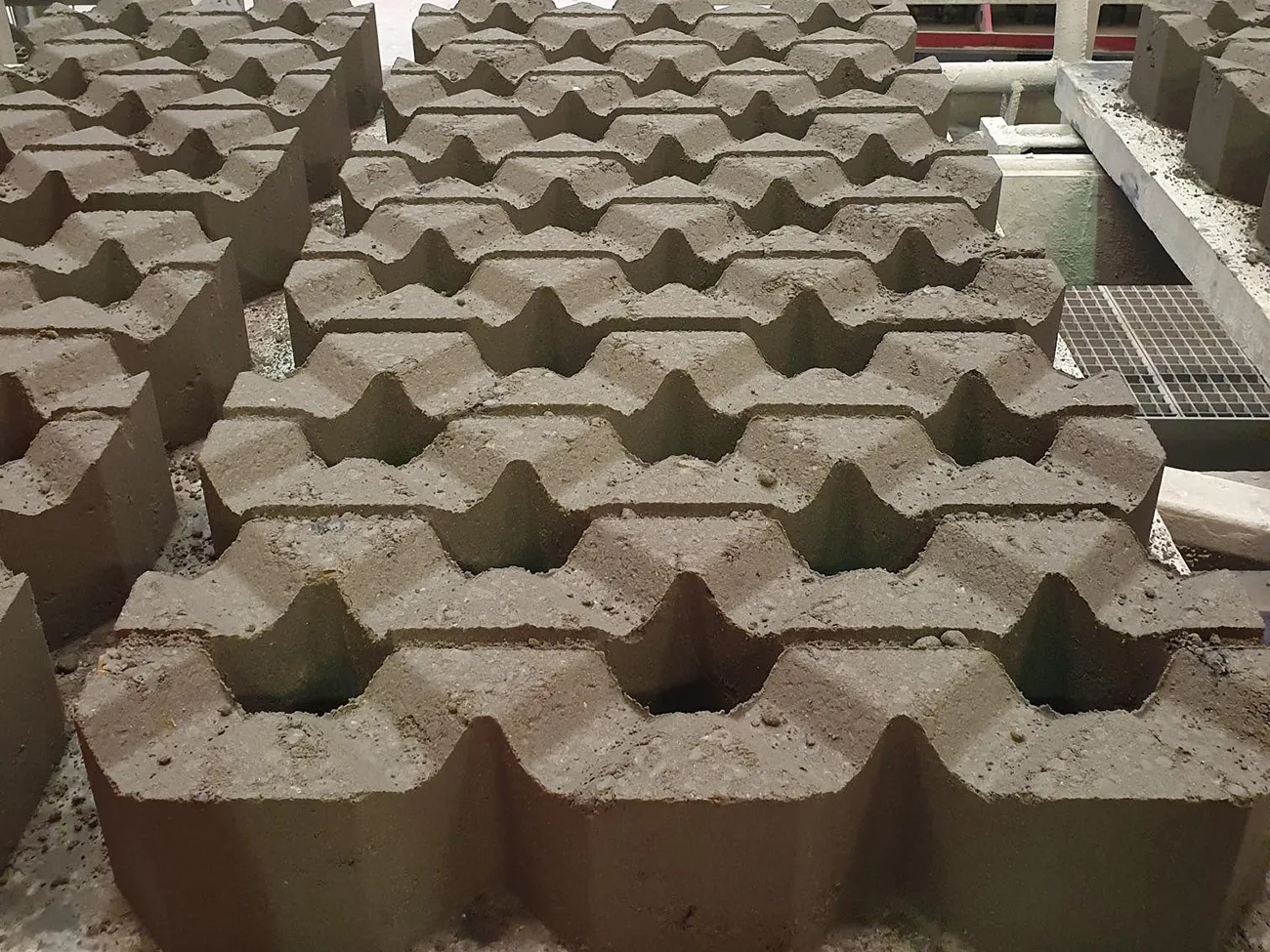
The Association of Industrial Building Materials (VIB) has around 70 members, including SMEs and multinationals. The association represents a broad range of secondary construction raw materials: from bottom ash and fly ash from (waste-to-)energy plants to lime pellets and iron-containing sludge from drinking water production. The residues and by-products that members supply or process each year are a fully fledged alternative to traditional primary building materials. That is why they have been used for years in road and hydraulic engineering, in the construction of houses and buildings, and in industry itself. You can become a member of the VIB via the Membership page on the website.
Question about this story? Ask your question
Keep following this
Get an email when a new story is published. No account needed.
- ThemeCircular business under changing regulations
- SubjectWaste streams