












Preventing as much waste as possible with minimal investment. A jack of all trades across the entire raw materials chain
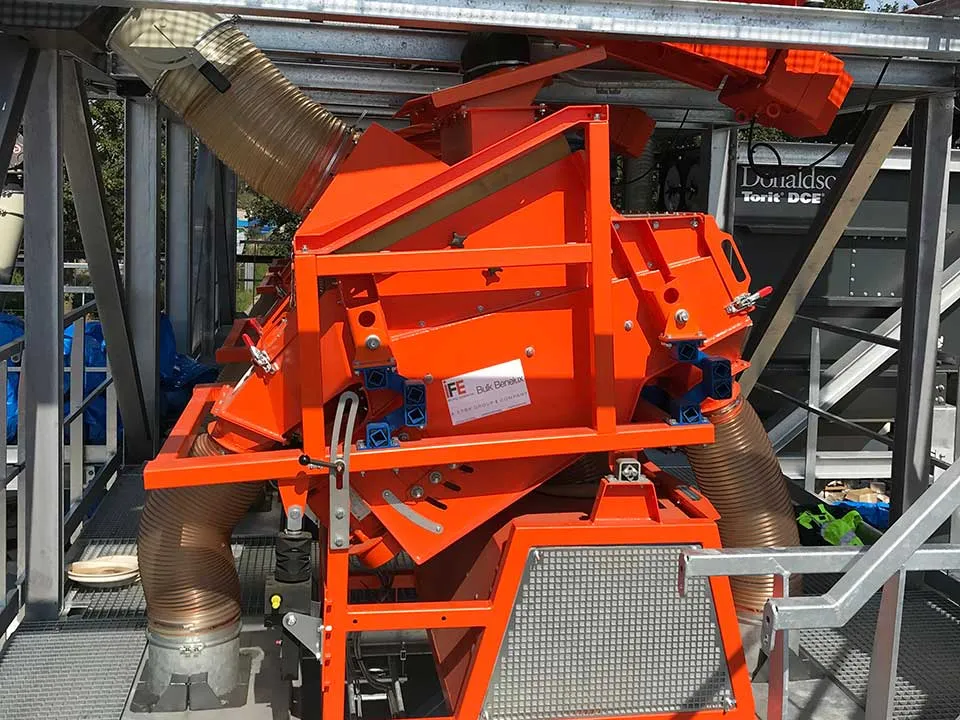
There are few sectors in which TBK Group does not operate.
From steelworks, coal handling and transshipment, sand and gravel companies and fertiliser plants to confectioners, TBK Group is at home in them all. The Group operates in three different areas: conveying, screening and separating all kinds of materials, dust control and, importantly, waste prevention. This includes the recycling sector. Managing director Wijnand van de Vendel and sales manager Alex Budding explain how TBK Group can add value to the recycling sector.
“Contamination and waste are important issues for recycling companies,” says Budding. “Even at a modest-sized waste processor, an apparently negligible percentage of waste can quickly add up to tonnes of lost revenue. That is something you want to prevent.”
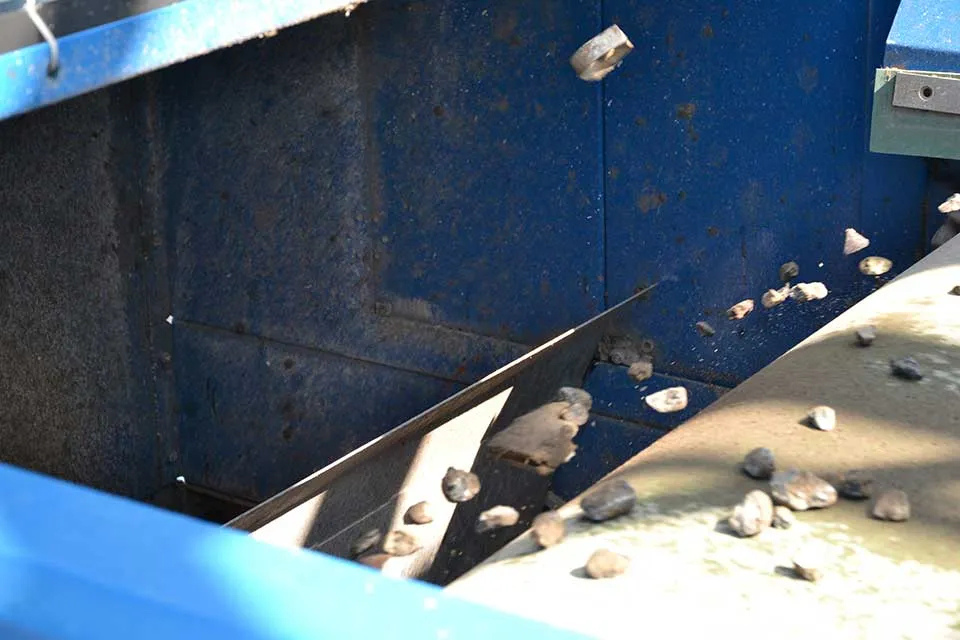
At TBK Group, this is the responsibility of the Spillage Control division. It provides solutions to minimise contamination on conveyor belts. “We do this for customers ranging from waste incineration plants to coal handling and transshipment companies,” Budding explains. “Contamination on conveyor belts causes extra wear to components in machinery and conveyor systems. This can lead to belt misalignment, not to mention product loss.”
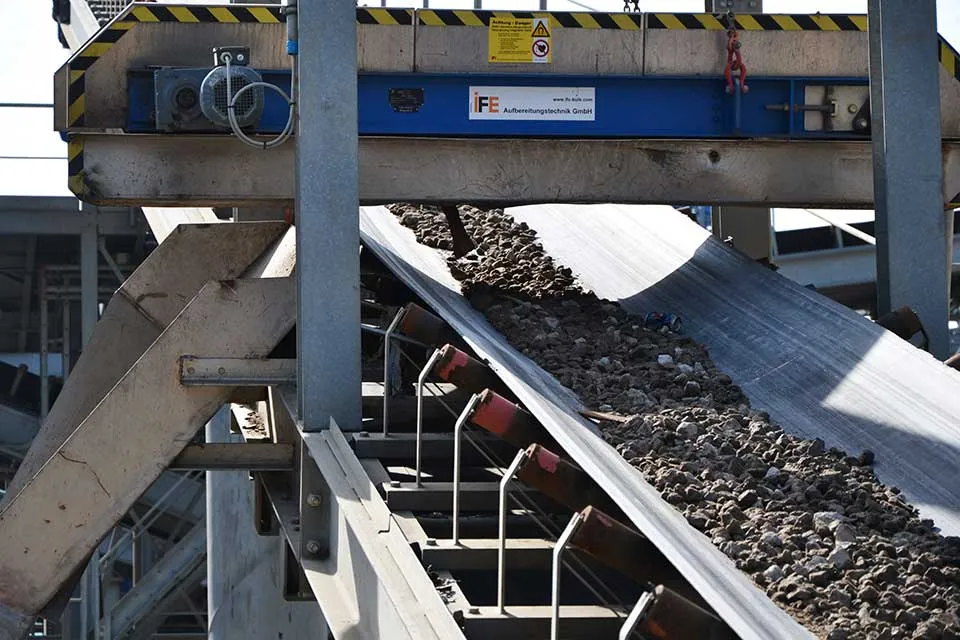
Van de Vendel adds: “In Amsterdam, for example, household waste is not collected separately, so the waste contains a large amount of wet organic material. It all sticks together and is really nasty stuff. This disrupts the recycling process at waste processor AEB. They do try to screen out this fraction, but that does not always work very well. The solution, then, is to capture the wet fraction elsewhere so that it does not remain in the product stream. In effect, our solution has become part of the separation process.”
A valuable raw material
Budding: “Another point is that the wet organic fraction is captured for digestion. So if it remains mixed in with the other waste, that amounts to a waste of a valuable raw material. You miss out on revenue.”
Another reason to keep conveyor belts at recycling plants clean is that a dirty belt can disrupt the separation process, Budding says. “If a conveyor belt is not kept clean, it can become discoloured. The belt turns grey instead of black because of the contamination. This can affect the performance of a waste separator, which uses lasers.”
TBK Spillage Control now supplies systems to two large waste processors to prevent contamination and waste, but Budding and Van de Vendel have noticed some reluctance among other companies. Van de Vendel: “What you see in the market is that a scraper for cleaning a conveyor belt is always treated as an afterthought. It is something of a poor relation, really, or a necessary evil. Companies prefer to spend as little as possible on it, and it does not get the attention it deserves. Not even when buying a new machine. We want to take spillage control to the next level and make it clear that the investment in a good scraper pays for itself very quickly. In fact, it will make you money. You have less wear, a better-running process, lower clean-up costs and fewer hazardous areas on the floor.”
“And less frustration on the shop floor,” Budding adds. “We regularly hear that maintenance staff sometimes spend as much as two hours a day sweeping the floor to keep it clean. That is not necessary.” Budding: “What sets our scraper systems apart is their simplicity. I sometimes come across other systems that are quite complicated. Our system is so simple that, so to speak, a child could maintain it. That means our customers can do a lot of the maintenance themselves. We still carry out major servicing and replace parts, but adjusting and fine-tuning our scrapers is so easy that companies can do it themselves.
Clean
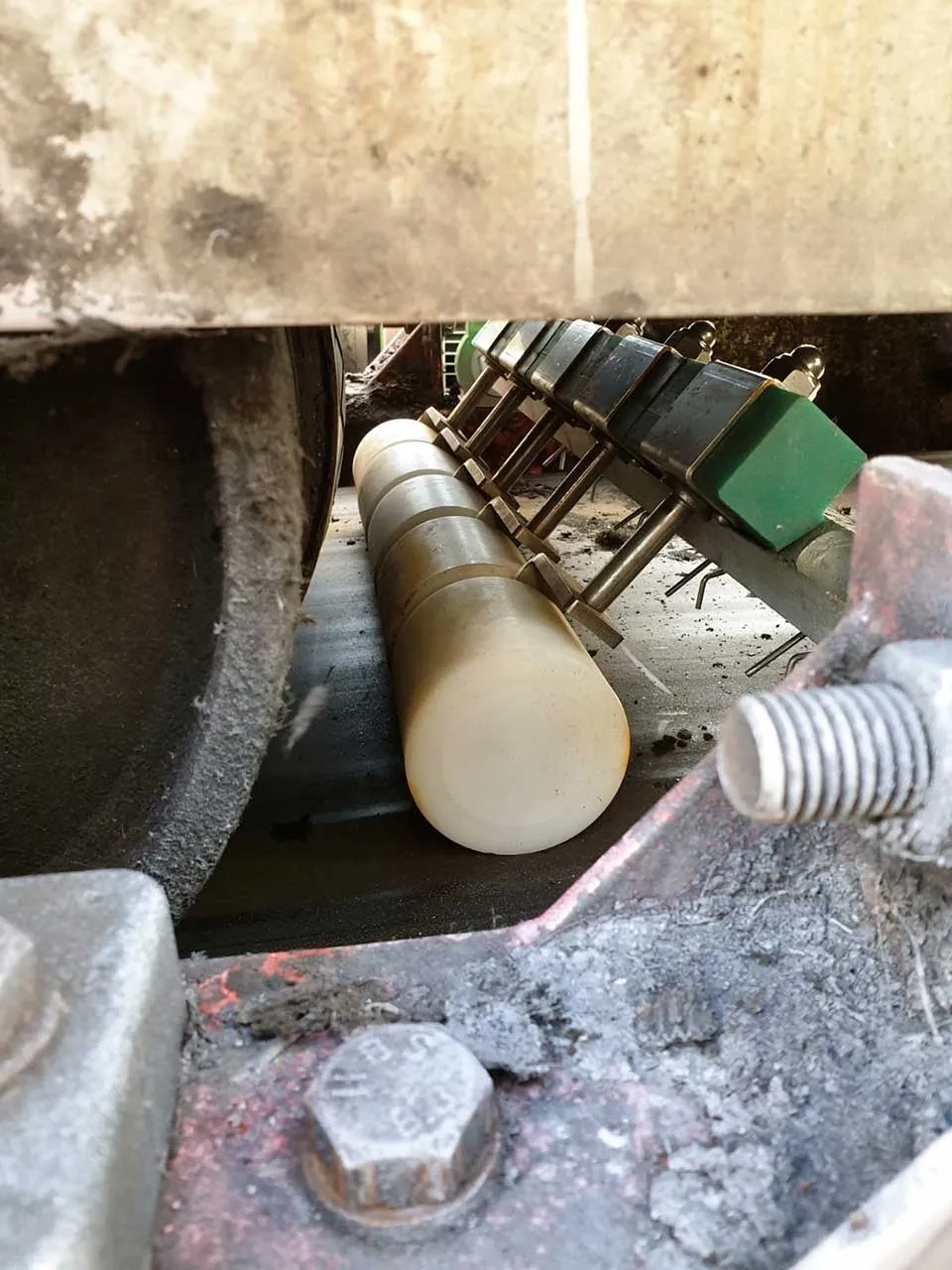
TBK Spillage Control supplies various types of scraper, selected and adapted to suit different conveyor belts, but they are all operated in the same way, Budding explains. “And,” Van de Vendel adds, “the 500 series strip scraper with back-up rollers, widely used at waste processing plants, ensures that the scraper maintains sufficient pressure on the belt.”
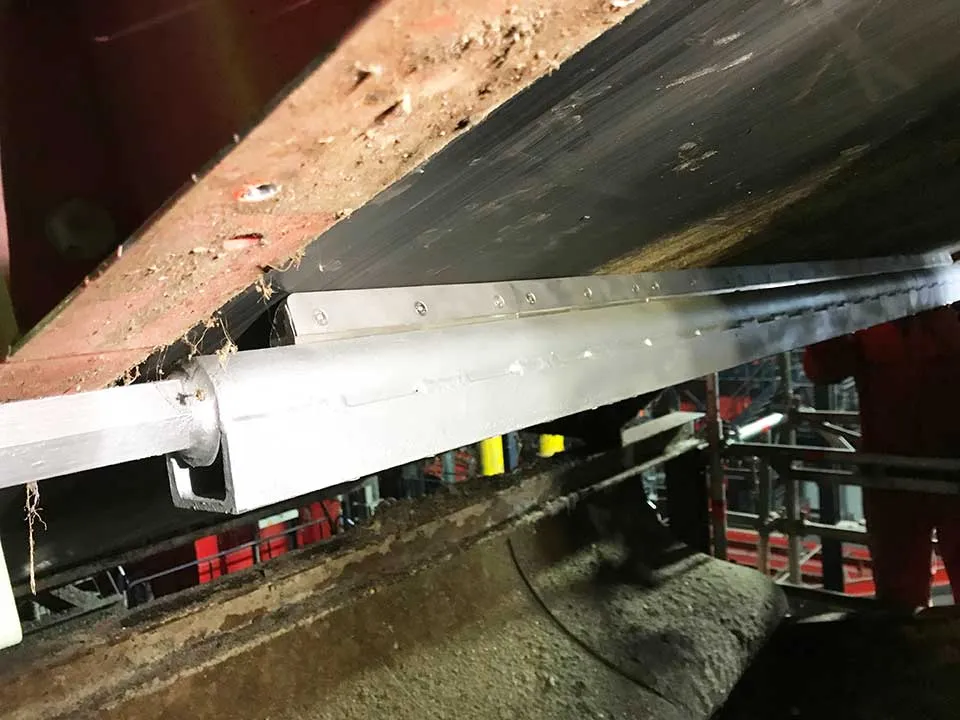
Budding: “While other systems use just one back-up roller, we use several individual rollers, each of which independently optimises the pressure against the strip scraper. This ensures optimal contact between the conveyor belt and the strip scraper, resulting in excellent belt cleaning. In other words: spillage in control.”
Everyone at TBK has a technical background. Naturally, that includes the fitters, but also the sales representatives and management. Van de Vendel: “I still like to get my hands dirty and, when needed, I’ll work on machinery at customers’ sites myself. In this way, we aim to be a well-organised, high-quality yet informal company that knows its customers and their needs.”
Van de Vendel adds: “In Amsterdam, for example, household waste is not collected separately, so the waste contains a large amount of wet organic material. It all sticks together and is really nasty stuff. This disrupts the recycling process at waste processor AEB. They do try to screen out this fraction, but that does not always work very well. The solution, then, is to capture the wet fraction elsewhere so that it does not remain in the product stream. In effect, our solution has become part of the separation process.”
“Contamination and waste are important issues for recycling companies,” says Budding. “Even at a modest-sized waste processor, an apparently negligible percentage of waste can quickly add up to tonnes of lost revenue. That is something you want to prevent.”
At TBK Group, this is the responsibility of the Spillage Control division. It provides solutions to minimise contamination on conveyor belts. “We do this for customers ranging from waste incineration plants to coal handling and transshipment companies,” Budding explains. “Contamination on conveyor belts causes extra wear to components in machinery and conveyor systems. This can lead to belt misalignment, not to mention product loss.”
A valuable raw material
Budding: “Another point is that the wet organic fraction is captured for digestion. So if it remains mixed in with the other waste, that amounts to a waste of a valuable raw material. You miss out on revenue.”
Another reason to keep conveyor belts at recycling plants clean is that a dirty belt can disrupt the separation process, Budding says. “If a conveyor belt is not kept clean, it can become discoloured. The belt turns grey instead of black because of the contamination. This can affect the performance of a waste separator, which uses lasers.”
TBK Spillage Control now supplies systems to two large waste processors to prevent contamination and waste, but Budding and Van de Vendel have noticed some reluctance among other companies. Van de Vendel: “What you see in the market is that a scraper for cleaning a conveyor belt is always treated as an afterthought. It is something of a poor relation, really, or a necessary evil. Companies prefer to spend as little as possible on it, and it does not get the attention it deserves. Not even when buying a new machine. We want to take spillage control to the next level and make it clear that the investment in a good scraper pays for itself very quickly. In fact, it will make you money. You have less wear, a better-running process, lower clean-up costs and fewer hazardous areas on the floor.”
“And less frustration on the shop floor,” Budding adds. “We regularly hear that maintenance staff sometimes spend as much as two hours a day sweeping the floor to keep it clean. That is not necessary.” Budding: “What sets our scraper systems apart is their simplicity. I sometimes come across other systems that are quite complicated. Our system is so simple that, so to speak, a child could maintain it. That means our customers can do a lot of the maintenance themselves. We still carry out major servicing and replace parts, but adjusting and fine-tuning our scrapers is so easy that companies can do it themselves.”
Clean
TBK Spillage Control supplies various types of scraper, selected and adapted to suit different conveyor belts, but they are all operated in the same way, Budding explains. “And,” Van de Vendel adds, “the 500 series strip scraper with back-up rollers, widely used at waste processing plants, ensures that the scraper maintains sufficient pressure on the belt.”
Budding: “While other systems use just one back-up roller, we use several individual rollers, each of which independently optimises the pressure against the strip scraper. This ensures optimal contact between the conveyor belt and the strip scraper, resulting in excellent belt cleaning. In other words: spillage in control.”
Everyone at TBK has a technical background. Naturally, that includes the fitters, but also the sales representatives and management. Van de Vendel: “I still like to get my hands dirty and, when needed, I’ll work on machinery at customers’ sites myself. In this way, we aim to be a well-organised, high-quality yet informal company that knows its customers and their needs.”
The entire chain
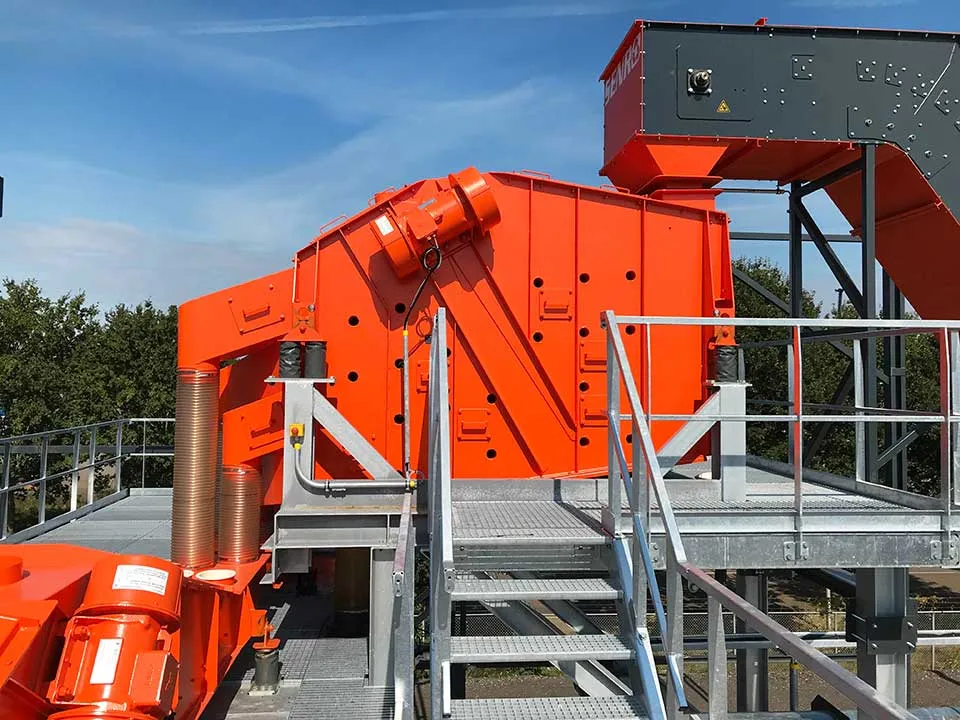
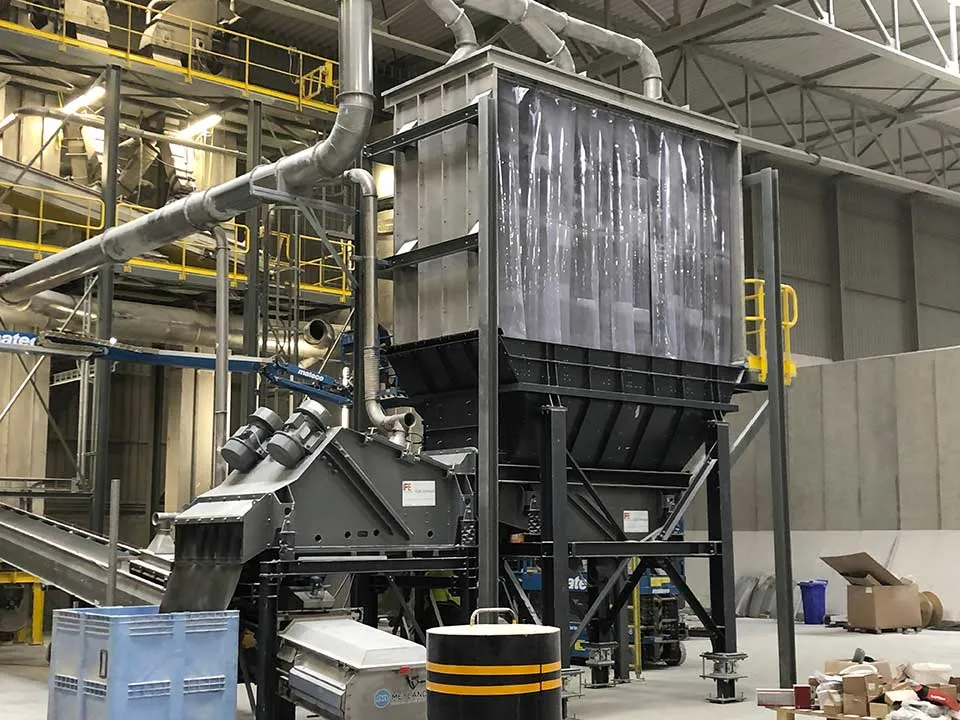
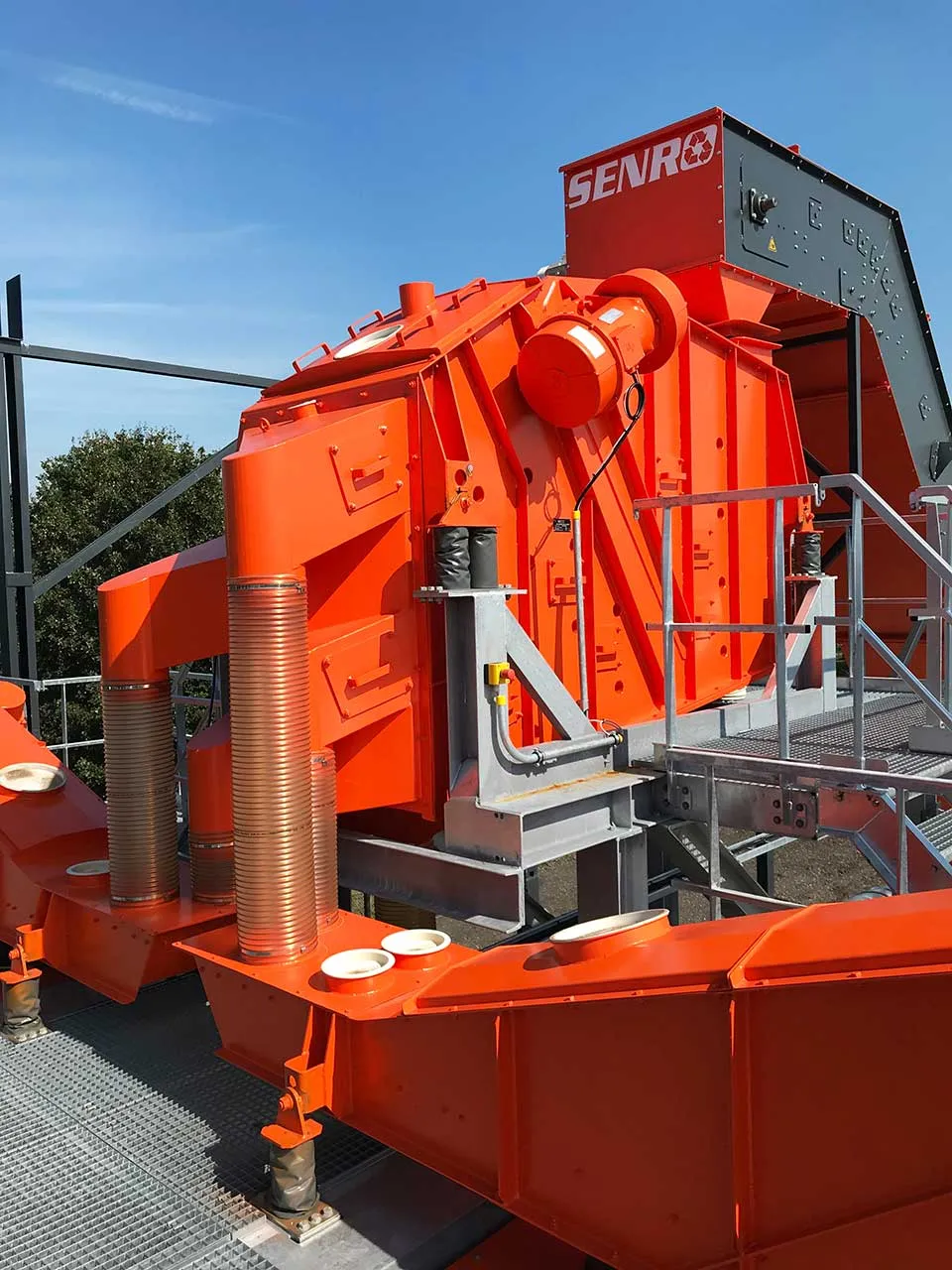
Alongside Spillage Control, TBK Group has three other business units: IFE Bulk, DCP Benelux and TBK Services. Together, the four divisions cover virtually the entire raw materials chain from the company’s base in Renswoude. Since 1996, IFE Bulk has been the exclusive Benelux dealer for IFE Aufbereitungstechnik GmbH, a leading global manufacturer of vibrating feeders, screening machines, magnetic separators and recycling machines.
IFE Bulk not only supplies the machines a customer needs based on a layout they have devised, but also advises on the most suitable layout for a processing plant. Van de Vendel: “In effect, we can design, build and supply a complete separation plant using components all from the same Austrian factory.” IFE Bulk is also happy to build fully custom-made machines. “Working closely with the factory in Austria, we can provide bespoke solutions relatively quickly and certainly not at the highest price.”
DCP Benelux is the TBK Group business unit that develops solutions to control and minimise dust emissions. “But not often for recycling,” says Van Vendel. “Our solutions are actually too expensive for that.
TBK Services provides the engineering, design, installation and maintenance of all systems.
Question about this story? Ask your question
Keep following this
Get an email when a new story is published. No account needed.
- SubjectWaste streams







