












NL | Recycled concrete deserves top marks for circularity
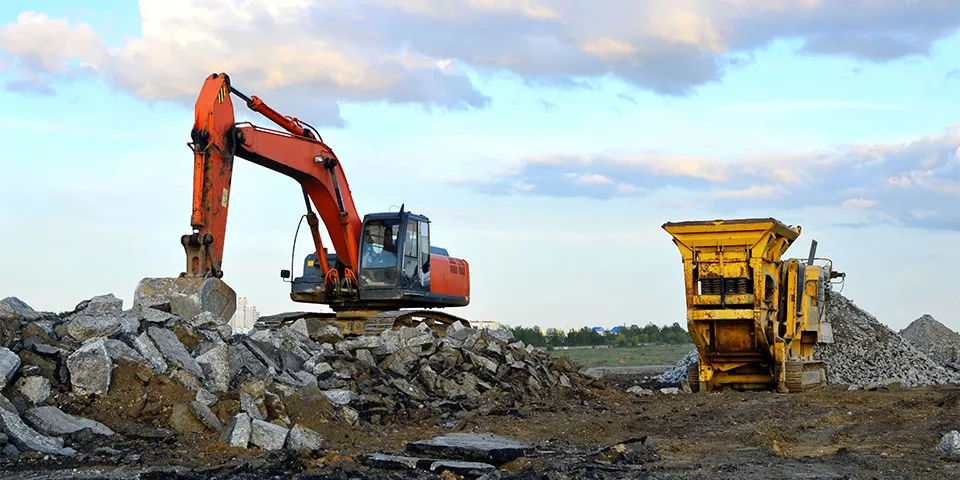
The crusher as a driving force towards greater sustainability
When it comes to the value of recycled materials, concrete scores extremely highly. Recycled concrete was already sustainable before the term ‘sustainability’ became commonplace. The concrete recycling industry was therefore already ahead of the curve, and is still leading the way in circularity. It has such a substantial lead that it is almost impossible to do better. Concrete still has a future.
Concrete is indispensable in both the construction and infrastructure sectors: its uses are virtually limitless. Concrete can also be used to create unusual shapes. One of its defining characteristics is its very long service life. Another is its versatility.
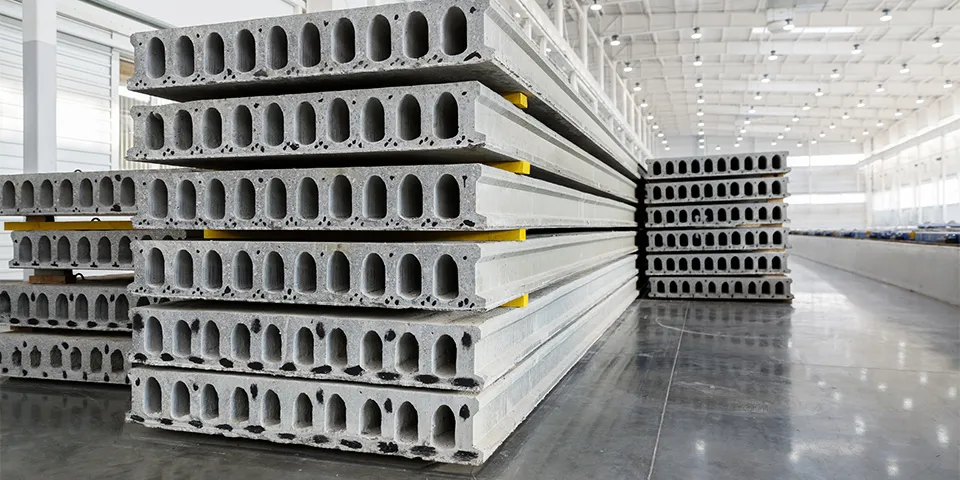
Concrete rubble is used, among other things, as aggregate in the production of new concrete.
Long service life
Concrete has a long service life and retains its value. It is therefore rarely discarded. ‘The Netherlands Circular 2050’ policy requires concrete to be recycled and used to manufacture new products when it does reach the end of its life. Concrete is therefore often given a new use. This may take the form of a building conversion, in which the concrete frame is simply reused, or the straightforward reuse of a concrete block or paving slab. If demolition does take place, 100 per cent of the concrete rubble can be put to beneficial use. The rubble may, for example, be used in road sub-bases or, to a lesser extent, as aggregate in the production of new concrete. The material therefore remains within its own supply chain and does not lose its value as a resource. LCA analyses show that there is no environmental preference for any particular form of reuse. What does matter is the local balance between supply and demand, and the associated transport distance. The less transport required, the lower the CO2 emissions and the more sustainable the process.
Combining supply chains
Other sectors also have residual material streams that have been reused for decades. Examples include slag from pig iron production and fly ash from coal-fired power stations. Using these materials can turn waste from other supply chains into by-products. A good example is the use of IBA aggregate, the stony fraction left after the incineration of mainly household waste, particularly in concrete paving products such as blocks, slabs and kerbs. Railway ballast is also recycled and reused as aggregate in concrete, as is the residue left after the thermal cleaning of tar-bound asphalt. Looking beyond one’s own supply chain and making use of what other supply chains have to offer greatly broadens the concept of circularity.

The crusher on site is a real driving force towards greater sustainability.
Smart crushing technology
Smart, new crushing technologies make it possible for the aggregate recovered from concrete rubble to match primary aggregate in quality. This is a real evolution in rubble crushing, making it easier to reuse not only coarse aggregate but also fine aggregate in concrete. The crusher on site is therefore a real driving force towards greater sustainability. Concrete rubble may be grey and dusty, but beneath the surface it is the new gold.
Question about this story? Ask your question
Keep following this
Get an email when a new story is published. No account needed.
- ThemeCircular construction and demolition
- SubjectWaste streams







