Construction & demolition waste
Sustainable standards for construction products on the way
Text Valérie CouplezImage iStock

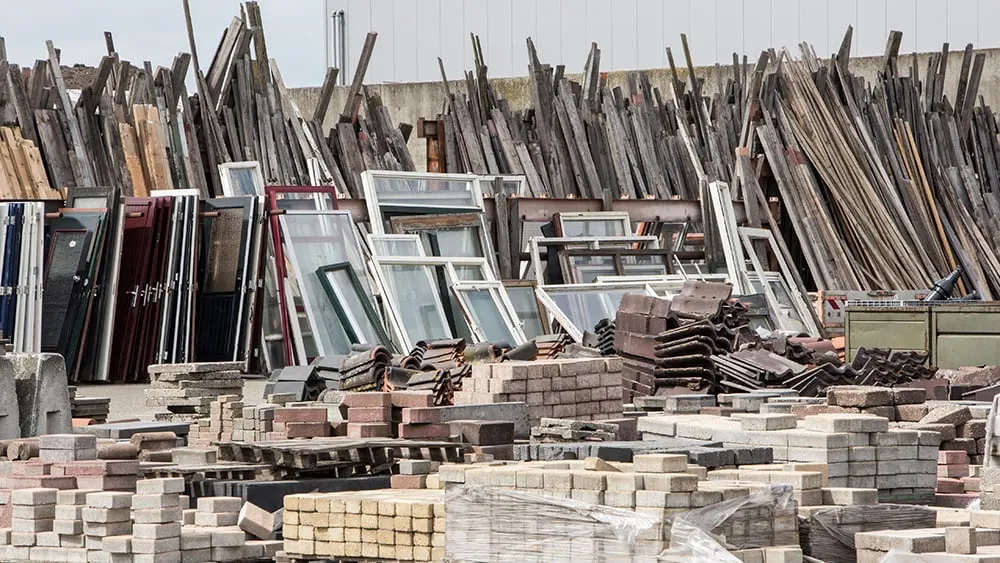
Europe has reached a provisional agreement on revising the Construction Products Regulation (CPR). From 2025, it is intended to bring greater digitalisation and harmonisation, but above all, sustainability. The construction sector has a significant footprint. It is responsible for almost 40% of total energy consumption, a third of total water consumption, 35% of all waste and 36% of total CO2 emissions in the European Union. It is time for change.
“Today, only 1% of construction materials are reused, simply because there are no product standards that facilitate deconstruction and reuse,” says Groen MEP Sara Matthieu, who is reporting on this legislation in the European Parliament. “With this law, we are raising the bar for our product standards to accelerate the use of sustainable and safe construction products. This is a good thing: it will lead to climate and environmental policies that protect both people and the planet, while giving our businesses a level playing field.”

Environmental requirements for products
To inform consumers about the impact of construction products, manufacturers will have to provide information about it. Environmental, functional and safety performance will have to be declared. A list of environmental requirements will be introduced (there are expected to be six from 2026 and nineteen from 2030), which manufacturers will have to include in the declaration of performance and conformity for each stage in the life cycle of their products. This information will be brought together in a digital product passport. This should make it much easier to compare materials and consult instructions or additional information. This could be done, for example, using a QR code. The digital product passport should also provide the basis for populating the so-called ‘building logbooks’ and ‘renovation passports’. It is therefore part of a wider shift towards greater sustainability.
Additional measures
The revised regulation includes further measures to strengthen sustainability in the construction sector. For example, manufacturers will be required to provide spare parts at an affordable price and within a reasonable delivery time. Public authorities will, in turn, be able to include sustainability as a criterion for construction works in public procurement. Reused and recycled construction materials are now also specifically covered by the new rules. They will therefore carry a CE marking and must be accompanied by a declaration of performance. This will allow a manufacturer placing these products on the market to request additional information from its supplier, such as a demolition contractor, about the product’s previous use and the removal process.
Next steps
However, this is still a provisional agreement, which was approved by the European Parliament in April. The Commission must now develop standards and minimum sustainability requirements. It will also have to develop a sustainability label for construction materials sold in DIY shops and examine whether an extended producer responsibility scheme can be introduced. “The European Parliament is also asking the Commission to develop a sustainability label for construction products sold in DIY shops, minimum rules for public procurement and standards for the reuse of construction products,” Matthieu stresses. Collection and reuse schemes can also be applied in construction, as is already the case in Belgium for packaging (Fostplus), electronics (Recupel) and batteries (Bebat).
Question about this story? Ask your question
Companies in this story

Keep following this
Get an email when a new story is published. No account needed.
- ThemeCircular construction and demolition
- SubjectConstruction & demolition waste
- CompanyRecupel
- CompanyBebat vzw