Construction & demolition waste
Lessons learned from recycling plasterboard, glass wool and ceramics
Text Valérie CouplezImage (CD)²
If Wallonia is to meet its decarbonisation targets, it will need to focus on more reuse and high-quality recycling of construction and demolition waste. The twenty pilot sites in the (CD)² project have already shown the way forward. In this final instalment, we take a closer look with Eléonore de Roissart, R&D scientist at lead partner Buildwise, at the recycling of plasterboard, glass wool and ceramic bricks.
As mentioned earlier, the (CD)² project focused on three main waste streams: plasterboard, glass wool and ceramic bricks. Eleven other streams were also examined: rock wool, autoclaved aerated concrete, rigid plastics, PIR/PUR, paper and cardboard, flexible plastic films, strapping, and the conventional streams of wood, metals, inert materials and hazardous substances. For each site, the quantities expected to arise were estimated for each type, and various collection systems were tested, from containers to big bags, IBCs, drums and tipper bins (from 200 to 1,000 l). Checks were carried out by a supervisor and with the help of digital tools. Communication teams were also on hand. “One important early lesson is that it is easier to get everyone on board when they know why they are doing it. If a recycling centre can explain why certain materials need to be kept separate, people are all the more motivated to sort them selectively,” says de Roissart. A second incentive, tested at one site, was financial. “The manufacturer covered the costs for sorted waste, while the contractor had to pay for a mixed container.”
Plasterboard
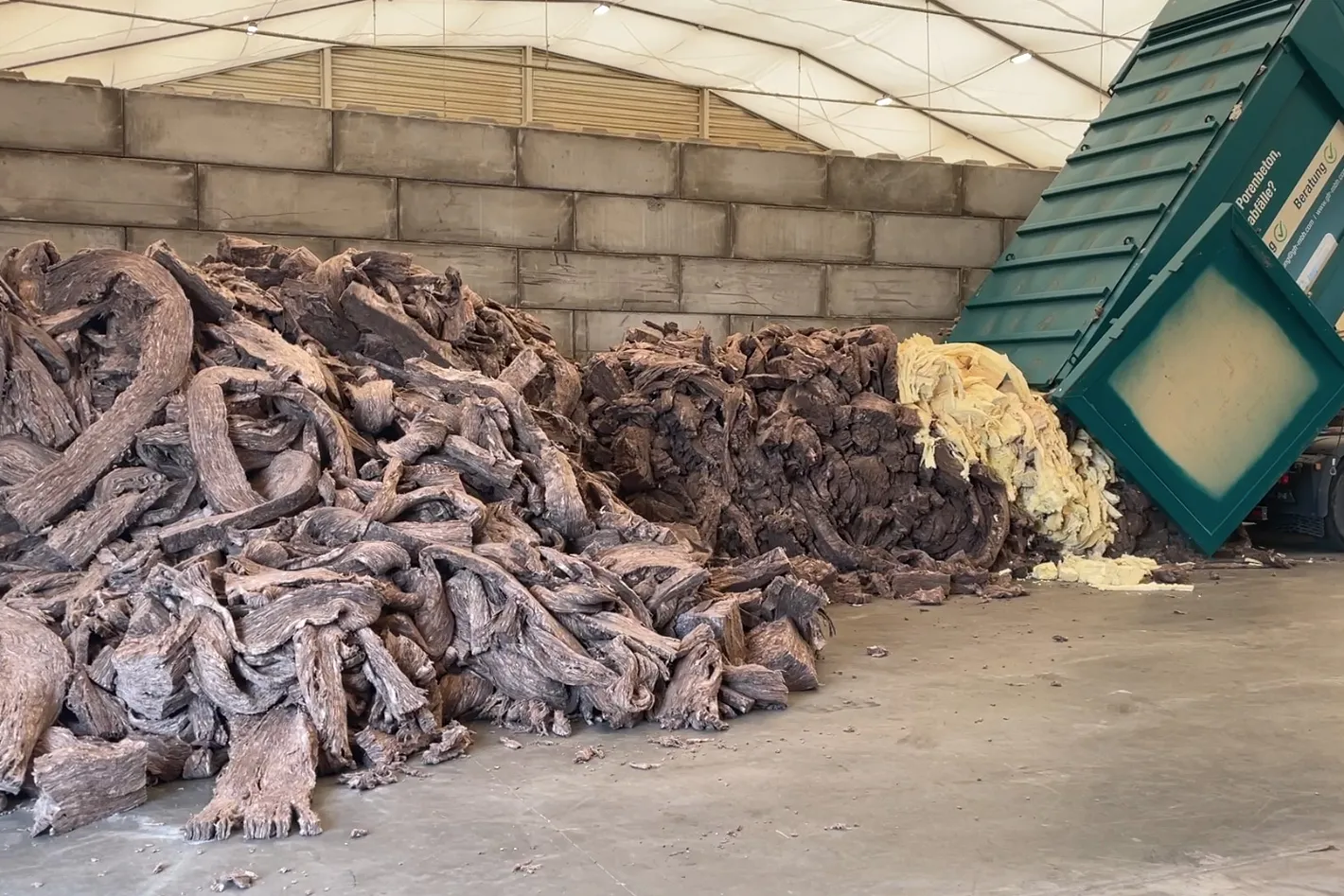
Plasterboard was collected at five sites, amounting to 92 tonnes of material. The waste included boards, blocks and offcuts, which Replic and New West Gypsum Recycling processed into raw materials for new plasterboard. Both construction and demolition waste can be recycled here without distinction. De Roissart says: “To fit into existing plasterboard recycling processes, it was important that there were no inert materials, plastics or PMD in the waste.” Notably, the waste did not come only from demolition sites. “In theory, around 3.5% is lost during installation. The project showed that the figure quickly reaches 6%.” An economic analysis shows that recycling a 12 m³ container of plasterboard waste is more cost-effective than collecting it in mixed containers, up to a certain transport distance. For example, if the nearest mixed-waste container centre is 50 km away, the sorting chain remains viable for all construction sites up to twice that distance. The two recycling facilities, in Pecq and Kallo, cover more than half of Belgium.
Ceramics
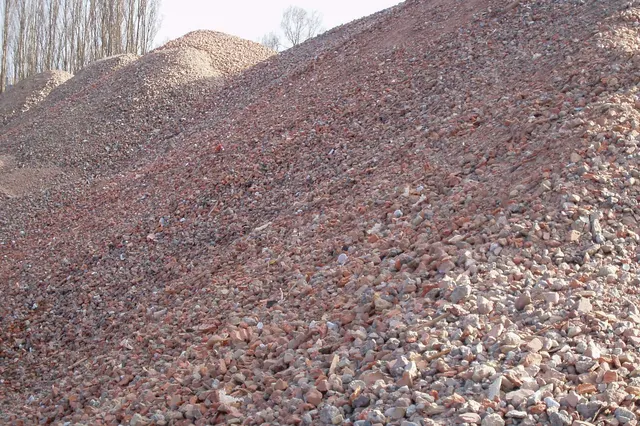
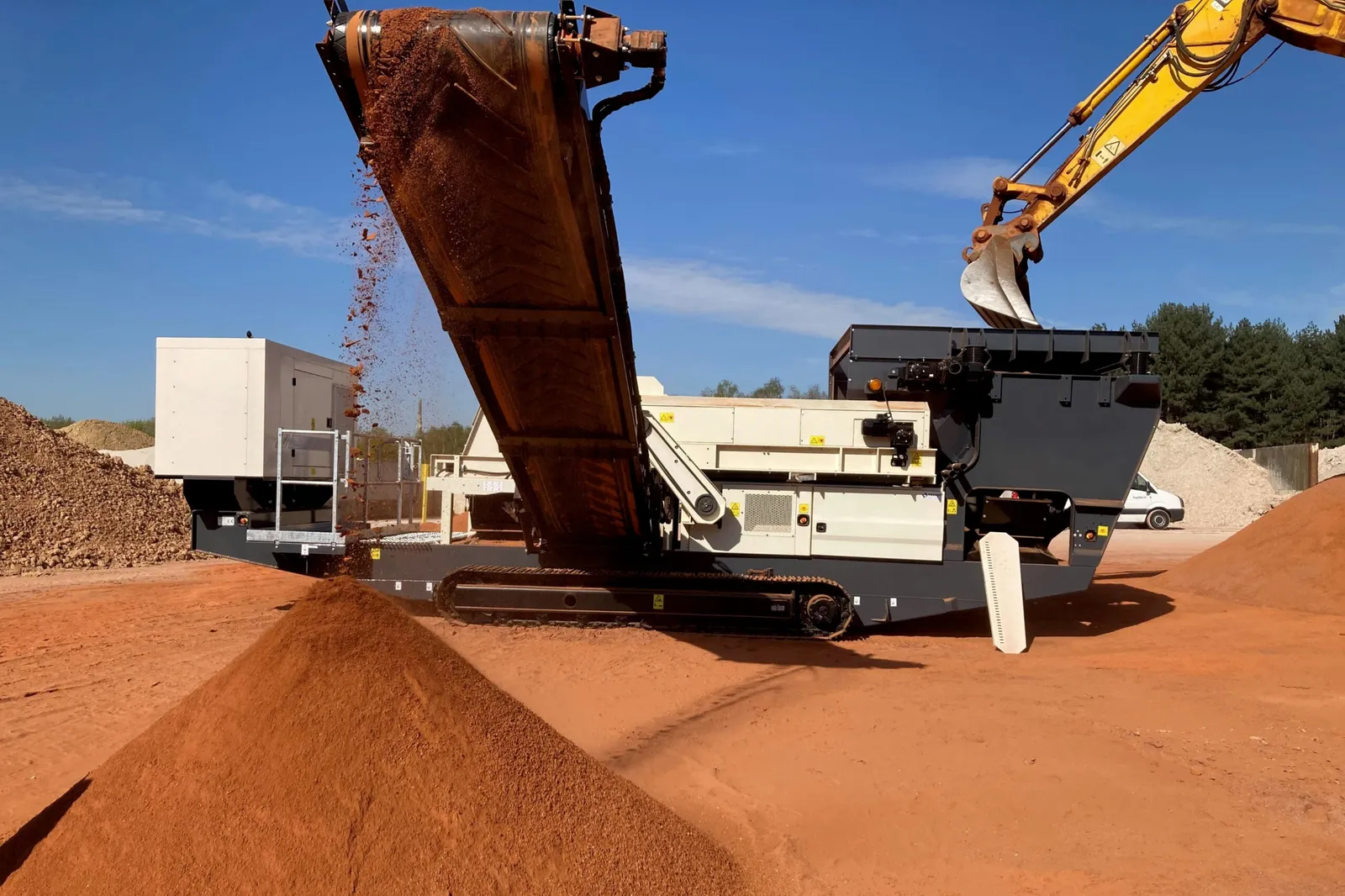
The largest volume consisted of ceramic bricks. Materials collected at seven sites enabled 577 tonnes to be recycled. These included masonry, roof tiles and gravel from tennis courts. “Common contaminants include concrete, plastics, wood and metals. It is also important to keep the mortar as separate as possible.” This therefore requires additional manual sorting. A well-sorted container is collected free of charge by Wienerberger and the material is even bought back, depending on the quality of the sorting. Sorting roof tiles is particularly easy to make financially viable, as no additional sorting work is needed on site. However, transport costs, which vary depending on the construction site’s location, still need to be compared.
Glass wool
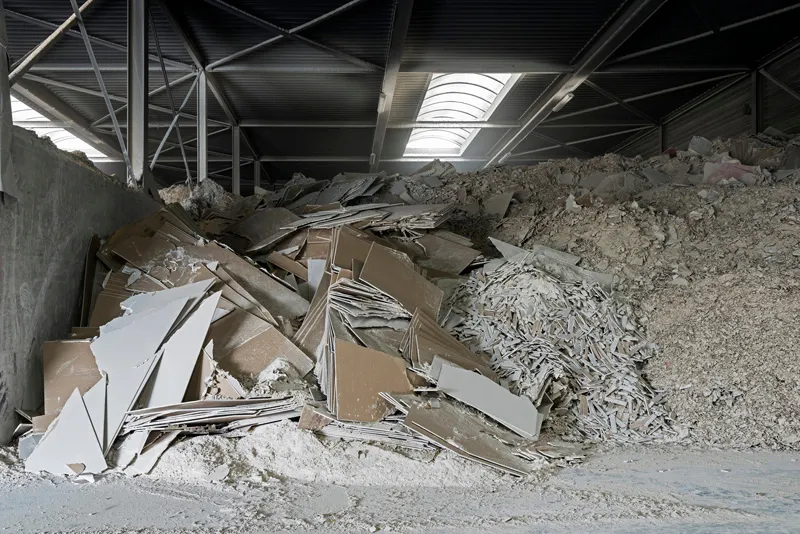
The pilot sites yielded a total of 100 kg of glass wool, which was processed by Knauf Resulation (near Liège). There is another recycling site in the Netherlands, Isover Saint-Gobain, which accepts cutting offcuts only. Unfortunately, materials from two sites were rejected. “It is important to distinguish properly between glass wool and rock wool. Knauf, for example, has developed a Toolkit that contractors can use. Moisture must also be avoided at all times. This means storing the materials indoors or covering the container securely with a tarpaulin.” The processing cost for glass wool is around 140 euros per tonne. An economic analysis of these materials has yet to be carried out.
Webinars
Would you also like to hear all the results of the (CD)² project? Buildwise is holding webinars on 16 and 23 September. It will share all the insights it has gained on how to sort and recycle on site in a highly practical way. It will also share tools for monitoring and evaluating recycling costs. Please note that the webinars will be in French. You can register via the calendar on the Buildwise website.
Question about this story? Ask your question
Keep following this
Get an email when a new story is published. No account needed.
- ThemeCircular construction and demolition
- SubjectConstruction & demolition waste