Construction & demolition waste
Separate collection of construction and demolition waste
Text Valérie CouplezImage iStock en de OVAM
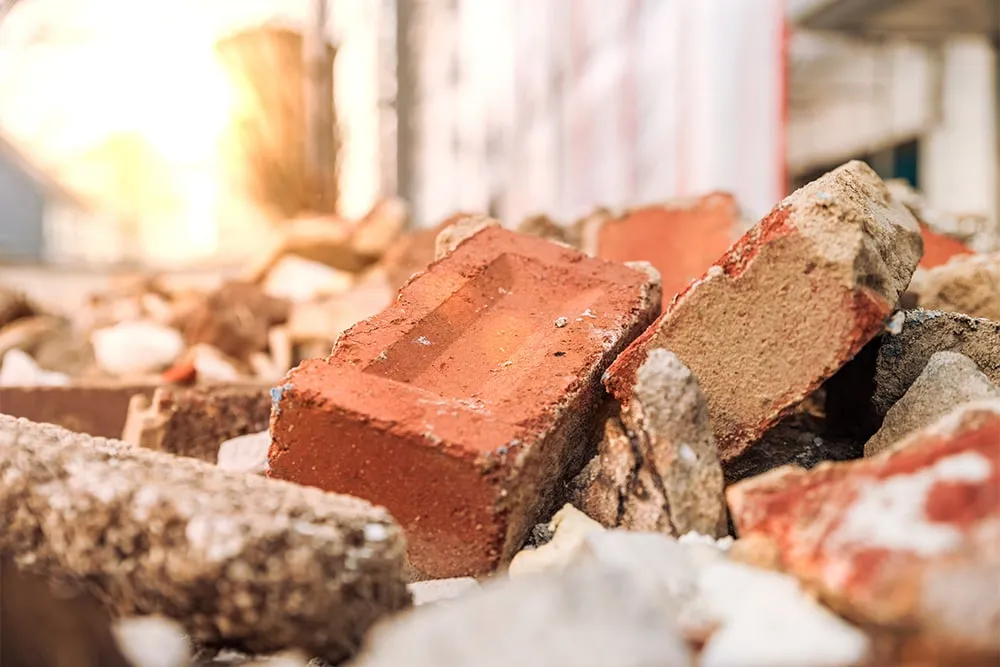
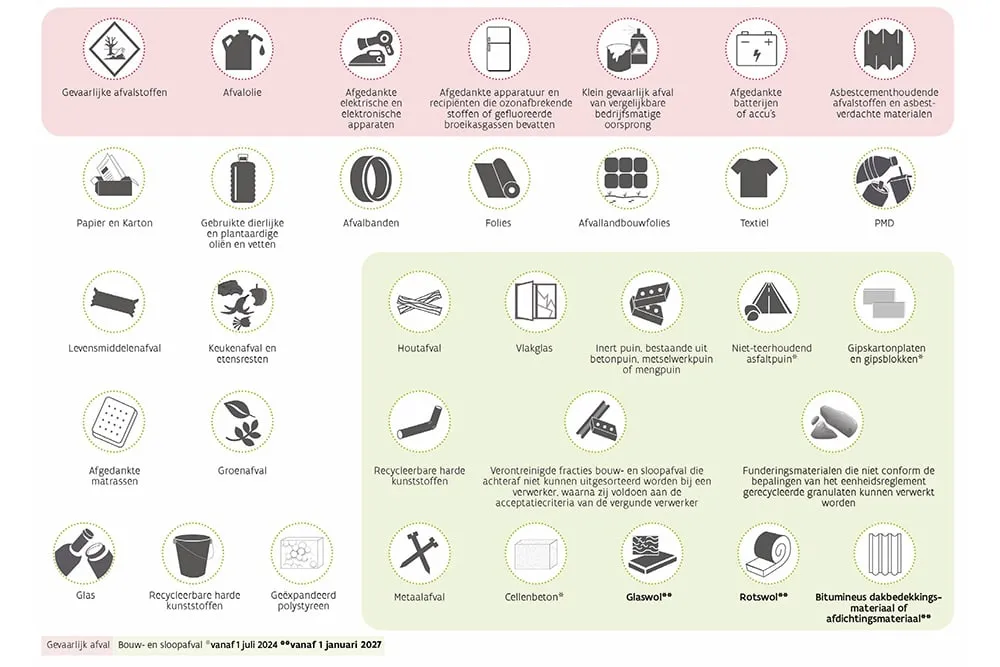
Anyone producing construction and demolition waste in Flanders has been required to present it separately since 1 July, in accordance with the provisions of Vlarema 9. Although responsibility for separate collection at source remains with the producer, you have an important role to play as an IHM (collector, trader or broker) or processor. Here is an overview of the main obligations.
It is important to note that these rules apply to every IHM handling construction and demolition waste, regardless of the volume processed. They also apply to licensed processors that store or further process (mixed) construction and demolition waste at their site.
Duty to provide information
First and foremost, you must inform customers individually and provide evidence that you have done so, for example by referring in an email or on an order form to a website explaining the rules. You must explain the requirement for separate collection and which fractions may be placed in a container or big bag for mixed construction and demolition waste. The information must be tailored to the customer. The authorities also expect you to retain the supporting documents for at least five years. In some cases, separating the waste at source into different clean fractions is not possible. In such cases, it is considered mixed construction and demolition waste. The exemption conditions can be found on the OVAM website.
Visual inspection
The authorities expect the IHM to check every container of mixed construction and demolition waste for sorting errors. Where circumstances allow this to be done safely, the first check is a visual inspection of the surface. If the waste still contains materials subject to a zero-tolerance policy, such as hazardous waste, WEEE, small hazardous waste or asbestos-containing materials, it will be rejected. For fractions such as household contents or packaging waste, a non-conformity report is drawn up, and the IHM can decide whether or not to accept the waste. A second visual inspection takes place after the waste has been tipped out at the licensed processor’s site. The processor records sorting errors in the non-conformity register and informs the customer. The waste is then sorted to meet the output requirements.
Reporting non-conformities
Sorting errors must be recorded. You can either use the central non-conformity register maintained by OVAM or keep your own register using the prescribed template. Enforcement officers may request to see it during inspections. Any refusal to collect waste must always be explicitly recorded. It is also important to report sorting errors to the waste producer. Keep the necessary evidence available. Discuss with the producer how they can prevent these materials from being incorrectly placed in mixed construction and demolition waste in future.
Separate processing of mixed construction and demolition waste
Licensed processors that sort both mixed construction and demolition waste and other commercial residual waste must always process and sort these streams in separate batches. The sorting residue from each stream must also be stored, processed and removed separately.
Transparency and cooperation across the chain
When managing mixed construction and demolition waste, it is important to be able to demonstrate that you are taking the necessary steps to comply with these new regulations. Several IHMs handling mixed construction and demolition waste, or licensed processors, can work together to meet the requirements. In that case, the contract must specify which loads of mixed construction and demolition waste are covered by the cooperation and which party is responsible for each obligation.
Een zakelijke vraag aan OVAM? Get in touch
Companies in this story

Keep following this
Get an email when a new story is published. No account needed.
- ThemeCircular construction and demolition
- SubjectConstruction & demolition waste
- CompanyOVAM