












Condition monitoring puts plastics processor on the road to zero unplanned downtime
Text Valérie CouplezImage Rubix en SKF
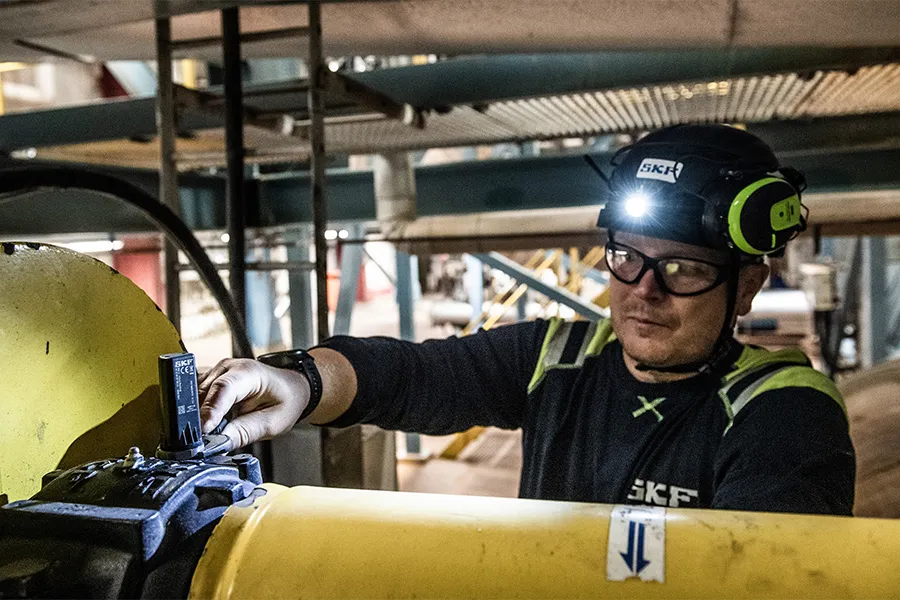
Plastics recycling does not involve the most complex processes in the world. But it comprises many different process steps, each with its own infeed and outfeed, and involves very large volumes. Even the briefest stoppage can quickly lead to a huge pile-up of waste. For a large plastics processing company in the Netherlands that converts residual waste from households and businesses into energy and raw materials, frequent drive failures were reason enough to look into vibration analysis and condition monitoring. It turned to Rubix and SKF, because taking measurements involves more than simply installing a sensor. “You need to know what you’re doing to get the right insights from the data,” says Dick van Elsen, commercial director at Rubix Competence Center Bearings & Power Transmission.
At its transfer terminal in the Rotterdam region, the company processes household residual waste delivered by ship and lorry. It recently built a new hall to sort the plastic and then bale it. The conveying system around which the hall was built is particularly impressive to see. There are numerous conveyor belts, which also means a lot of drives. If they stop, things can quickly go wrong. “Contamination that may still be present in the plastic, such as frying oil and soft drinks, combined with the dust generated by processes like these, puts your drives under considerable strain,” says Rhandy Rademaker, sales manager at SKF Group.
From measurements every two months to monthly
Rubix and SKF experts were called in to help reduce downtime. “We first used vibration analysis to map everything out as thoroughly as possible, then developed a maintenance strategy. The starting point was to take measurements every two months. An SKF vibration specialist would visit the site to collect and analyse the data. This gave us enough data to establish a trend.” These measures had already reduced the number of failures to the customer’s satisfaction. But there was still more scope for improvement. “The more you measure, the more potential problems you can spot in advance. That gives you the opportunity to plan ahead: draw up an optimal maintenance shutdown schedule, stock the necessary parts and free up the right experts to carry out the replacement work.” The measurement cycle was therefore increased to monthly.
Continuous monitoring of critical equipment
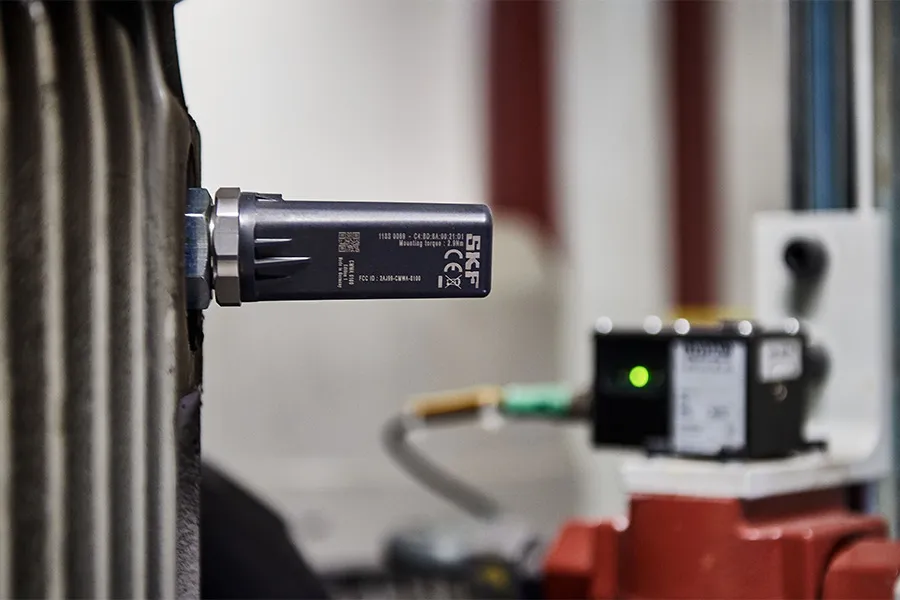
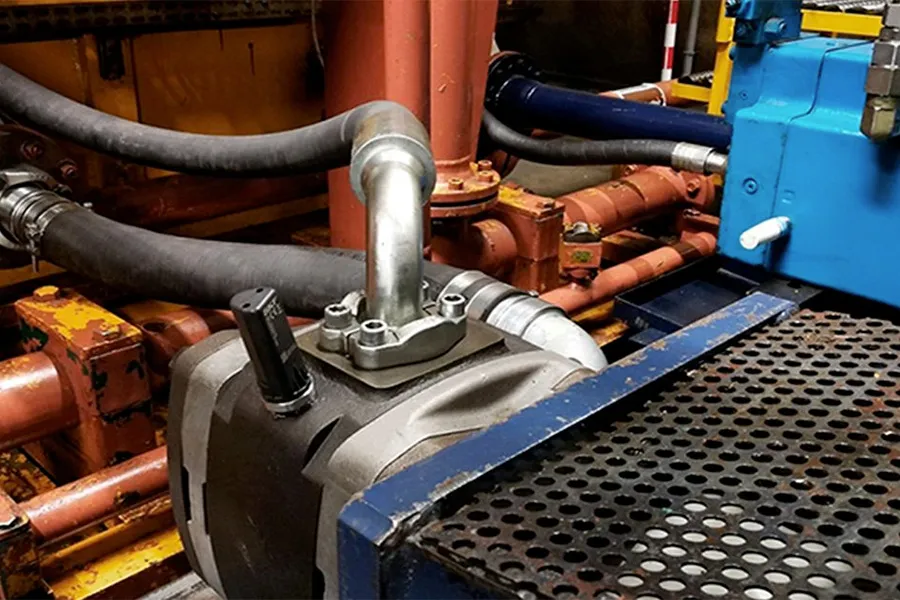
The customer wanted to go one step further. Rubix and SKF therefore launched a pilot project using the IMx-1 sensor, an automated solution for reliable condition monitoring of moving parts. “Companies are increasingly facing a shortage of technical staff. This solution allows us to reduce the need for on-site personnel while also taking daily measurements to improve data density. It is also an excellent solution for drives that are harder to access. That way, you can really keep your finger on the pulse of your equipment’s condition.” The customer started with around 50 measurement points, selected according to their importance to the processes. The data is sent to a cloud portal, where a traffic-light indicator shows the condition of each drive. “Our specialists monitor this for the customer and translate it into concrete actions to keep the equipment in top condition.”

Extending equipment service life time and again
The investment cost? The customer has already recouped it if it prevents even one stoppage. “Recycling companies only start making money once the recyclate leaves their plant. The mindset is often to keep running for as long as possible until something breaks, but there’s a much smarter way. Put a maintenance plan in place that is tailored to your equipment, and use condition monitoring. You can learn so much from it and extend your equipment’s service life time and again, perhaps by choosing a different type of seal or lubricant. Not every installation needs continuous monitoring. But by monitoring your critical equipment 24/7 with the right sensors and expertise, you can minimise production downtime. We work together to build the business case and show that this kind of investment is well worth it,” concludes van Elsen.
Question about this story? Ask your question
Keep following this
Get an email when a new story is published. No account needed.
- ThemeMaking plastics and packaging circular
- SubjectWaste streams







