Exposure to diesel engine emissions can cause cancer
Text Valérie CouplezImage Stichting Arbocatalogus Afvalbranche
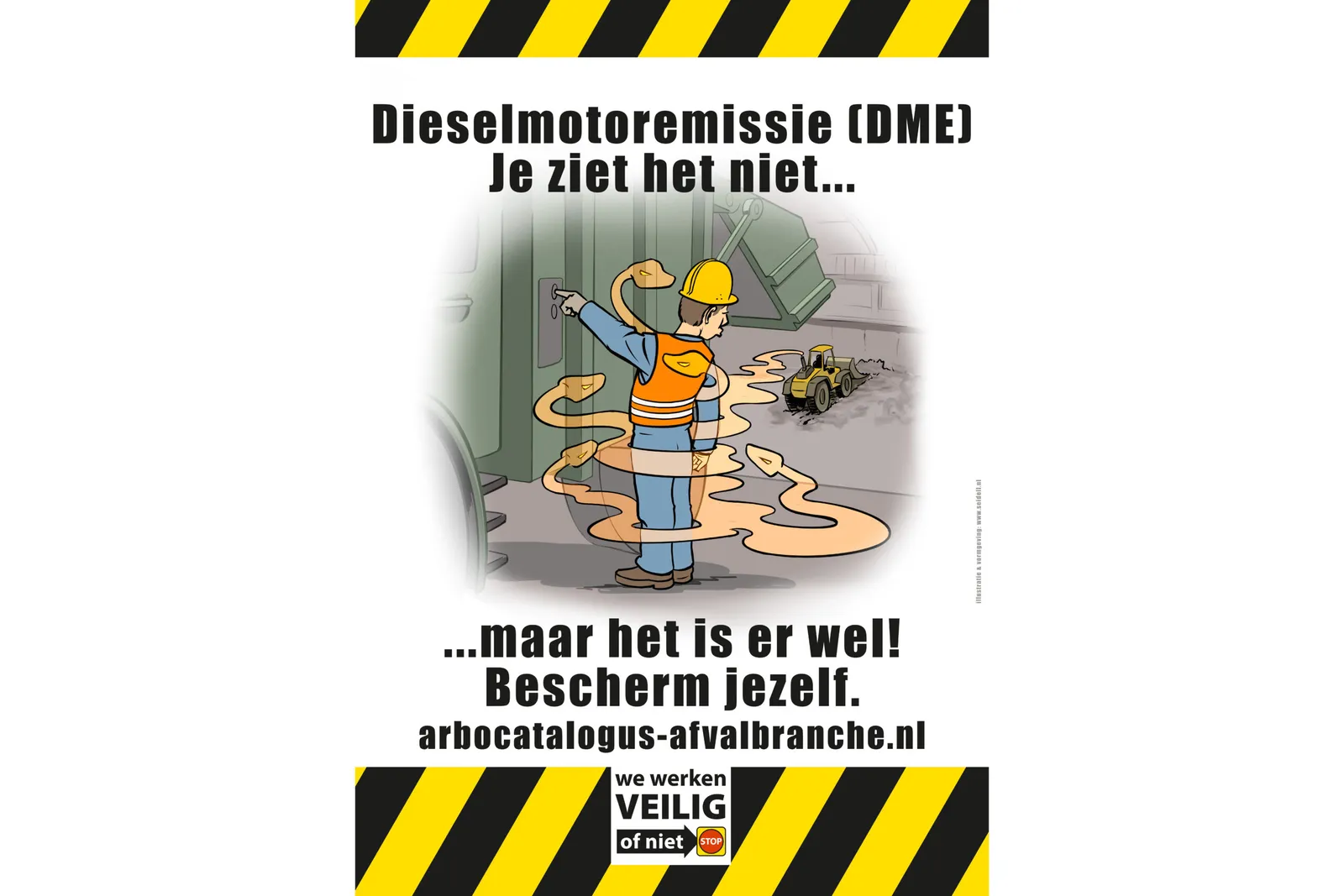
Extra attention to safety is no luxury in the waste and recycling sector. In this section, each edition will spotlight an initiative that puts safety first. Although electrification is gaining ground, many vehicles and machines in recycling are still powered by diesel engines. The emissions they produce are not always visible, but can have serious health effects. Stichting Arbocatalogus Afvalbranche has produced a factsheet on the dangers of diesel engine emissions.
Diesel engine emissions (DEE) consist largely of particulate matter. These particles penetrate deep into the lungs and then enter the bloodstream through the alveoli. They can spread to organs such as the liver, kidneys and heart. The health effects are serious: as well as lung cancer, exposure can lead to conditions such as bronchitis, shortness of breath and cardiovascular disease. DEE is on the list of carcinogenic processes because it is classified as a ‘genotoxic carcinogen’. For genotoxic carcinogens, it is assumed that there is a risk of cancer at every level of exposure. In other words, there is no safe level of exposure to these carcinogens.
Legal obligations
Preventing or minimising exposure to DEE as far as possible requires particular attention during activities such as driving diesel-powered vehicles and work equipment, working in halls, loading and unloading, and vehicle maintenance. Employers are legally required to prevent exposure to DEE completely, insofar as this is technically possible. Meeting the statutory limit value is the maximum permissible threshold, but this is not sufficient when dealing with exposure to carcinogenic substances. Even below the limit value, employers are legally required to reduce exposure to the lowest level technically achievable. In addition to applying the state of the art, employers must minimise exposure as far as practicable by taking technical and organisational control measures that are feasible and applicable in the circumstances.
Factsheet and cartoon
For all activities, including using a forklift, loading and unloading, and vehicle maintenance, the factsheet sets out technical and organisational measures to help limit the risks. It is available on the Stichting Arbocatalogus Afvalbranche website, together with a cartoon that helps reinforce the message.
Question about this story? Ask your question
Keep following this
Get an email when a new story is published. No account needed.
- SubjectSafety first