Dutch people underestimate the consequences of small batteries in residual waste
Text Valérie CouplezImage Stichting OPEN
Every battery is one too many
Extra attention to safety is no luxury in the waste and recycling sector. In this section, each edition will highlight an initiative that puts safety first. Safety first, then. Waste fires are not isolated incidents: they happen every day. Hundreds of fires occur each year in refuse collection vehicles, sorting centres and at waste processors. This not only creates dangerous situations for staff and local residents, but also damages equipment and harms the environment through the release of substances. The cause? In many cases, batteries and battery-powered devices in residual waste. When damaged as a result of being disposed of incorrectly, they become unstable and can catch fire. Batteries are found in an increasing number of devices, such as electric toothbrushes and bicycles, as well as children’s toys, vapes and clothing.
Waste fires are not isolated incidents: they happen every day. Hundreds of fires occur each year in refuse collection vehicles, sorting centres and at waste processors. This not only creates dangerous situations for staff and local residents, but also damages equipment and harms the environment through the release of substances. The cause? In many cases, batteries and battery-powered devices in residual waste. When damaged as a result of being disposed of incorrectly, they become unstable and can catch fire. Batteries are found in an increasing number of devices, such as electric toothbrushes and bicycles, as well as children’s toys, vapes and clothing.
A broad-based reminder
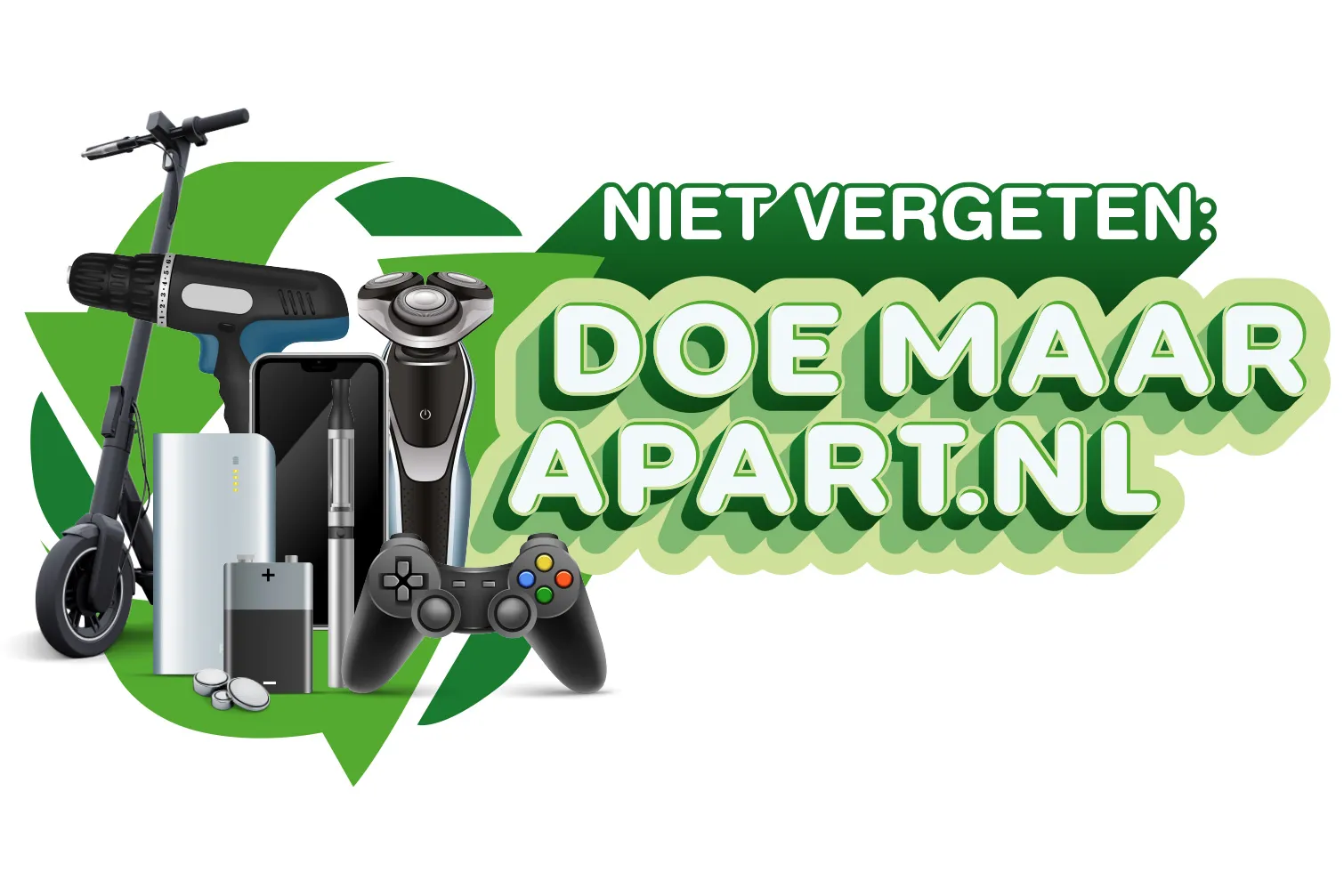
The ‘Doe maar apart’ campaign is intended as a broad-based reminder: many people intend to hand in used batteries and devices separately, but forget to do so in practice. In addition, recent research by Markteffect shows that people underestimate the danger posed by a small battery in household waste. Radio, supported by an online and social media campaign, was used throughout the summer to reach large groups of people, at home and at work. Alongside radio, advertising was also placed around a selection of podcasts to reach specific target groups.
‘What you dispose of incorrectly today could cause a fire tomorrow, unless you take your batteries and battery-powered devices to a Wecycle collection point’
Every battery is one too many
Steven van Eijck, chair of Stichting OPEN, stresses the importance of the campaign: “Every battery in residual waste is one too many. The figures are clear: fires caused by batteries and battery-powered devices being disposed of incorrectly happen every day. That is why we are urging everyone to keep them separate. What you dispose of incorrectly today could cause a fire tomorrow, unless you take your batteries and battery-powered devices to a Wecycle collection point.”
Question about this story? Ask your question
Keep following this
Get an email when a new story is published. No account needed.
- ThemeCircular processing of electronics and batteries
- SubjectSafety first