Recycling company in the spotlight
Recycling lithium-ion batteries
Text Valérie CouplezImage YouPower
Closing the loop in Belgium
With the arrival of solar panels, more and more individuals and businesses are considering going off-grid. Battery technology is at the heart of these systems, enabling supply and demand to be perfectly matched. This has made YouPower, which has been developing and building off-grid solutions for its customers for six years, a battery specialist. It now wants to use the expertise it has gained to close the loop for lithium-ion batteries in Belgium with YouPower Recycling.
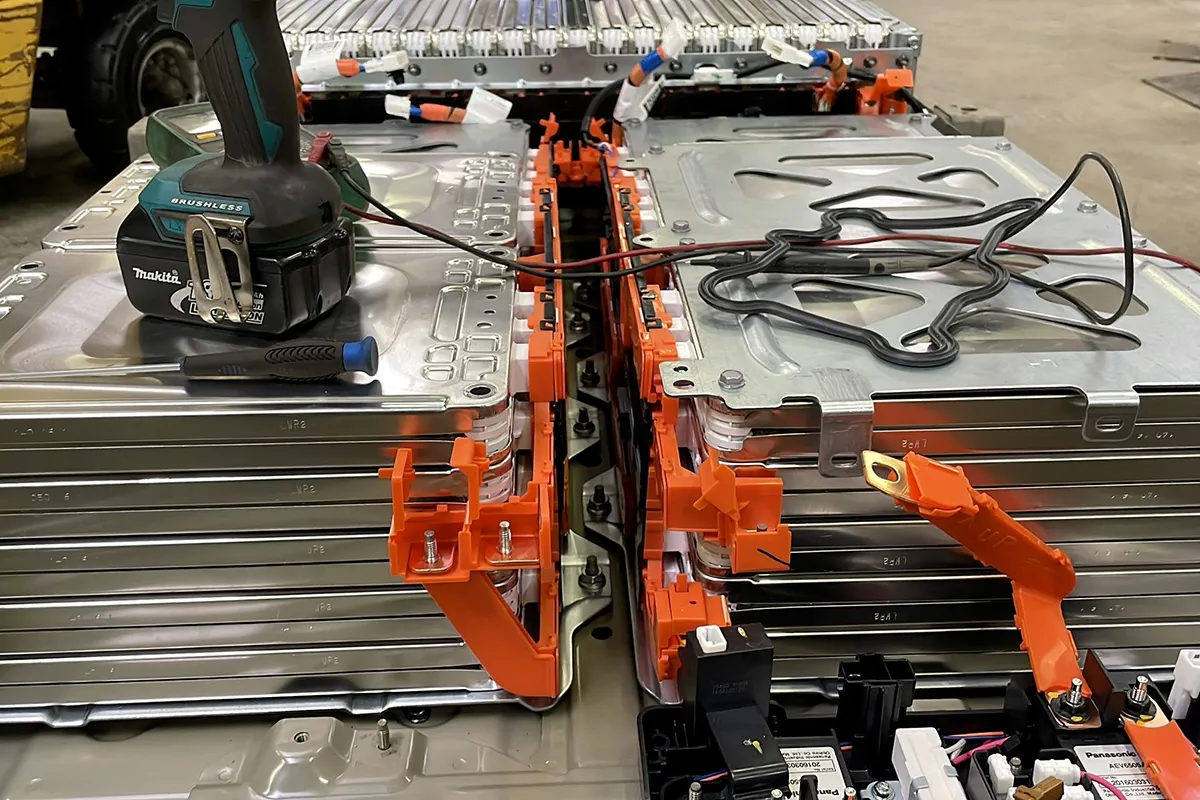
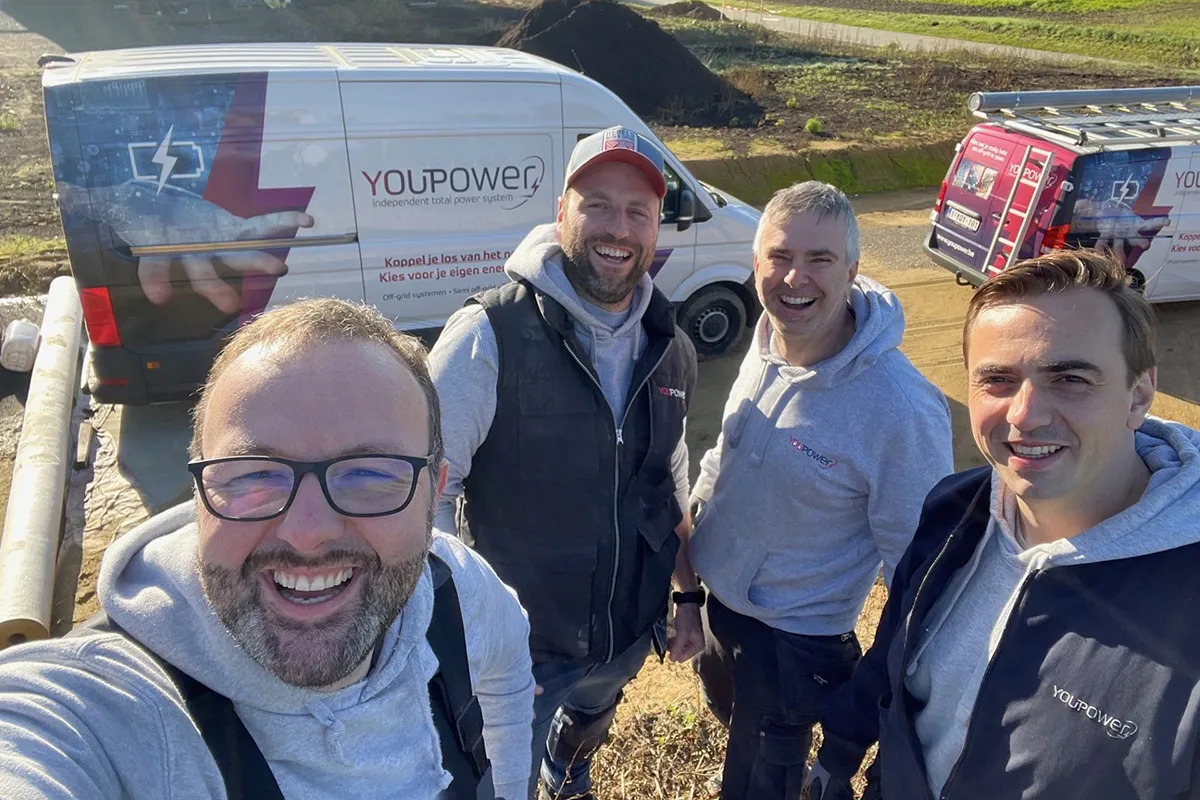
It all started with a small button cell in a GPS tracker. “It was for tracking construction materials. There were five of us, and instead of going to the pub, we wanted to start our own business,” recalls Tim De Schryver with a broad smile. He did so with Bart Blindeman, Bart De Schaepmeester, Steven Michiels and Kurt Wante. The tracker did not work out, however: its accuracy left a lot to be desired, and the signal stopped at the border. But the battery technology had made an impression. “When an entrepreneur we knew wanted to take his new warehouse in Zele off-grid, we were happy to take up the challenge. We learned from how energy is managed on ships, among other things, and found the right materials. After six months of preliminary studies, implementation, testing and commissioning, we succeeded.”
Unique off-grid solutions
It was 2018. At the time, this was the largest off-grid installation to have been built in Belgium. YouPower was born. De Schryver: “Since then, we have been helping individuals and businesses that want to go off-grid or semi off-grid. We highlight three USPs. First, we ensure that our customers always have power, even if the grid goes down. A battery will take over, for example, in the event of a power cut. Second, we work with live data, so we can respond to peaks in power generation and fluctuations in energy prices. If the solar panels are generating a lot of energy but the selling price is low, we put that energy into the boiler to heat the domestic hot water to 90 °C. Third, our system can predict consumption. This also helps us store and sell surplus energy at the right time.”
Closing the loop for lithium-ion batteries
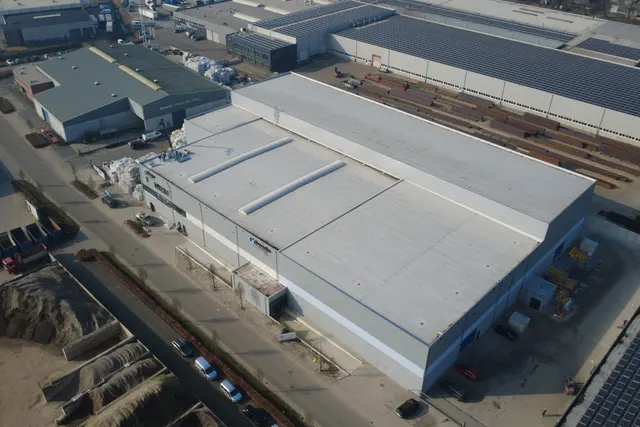
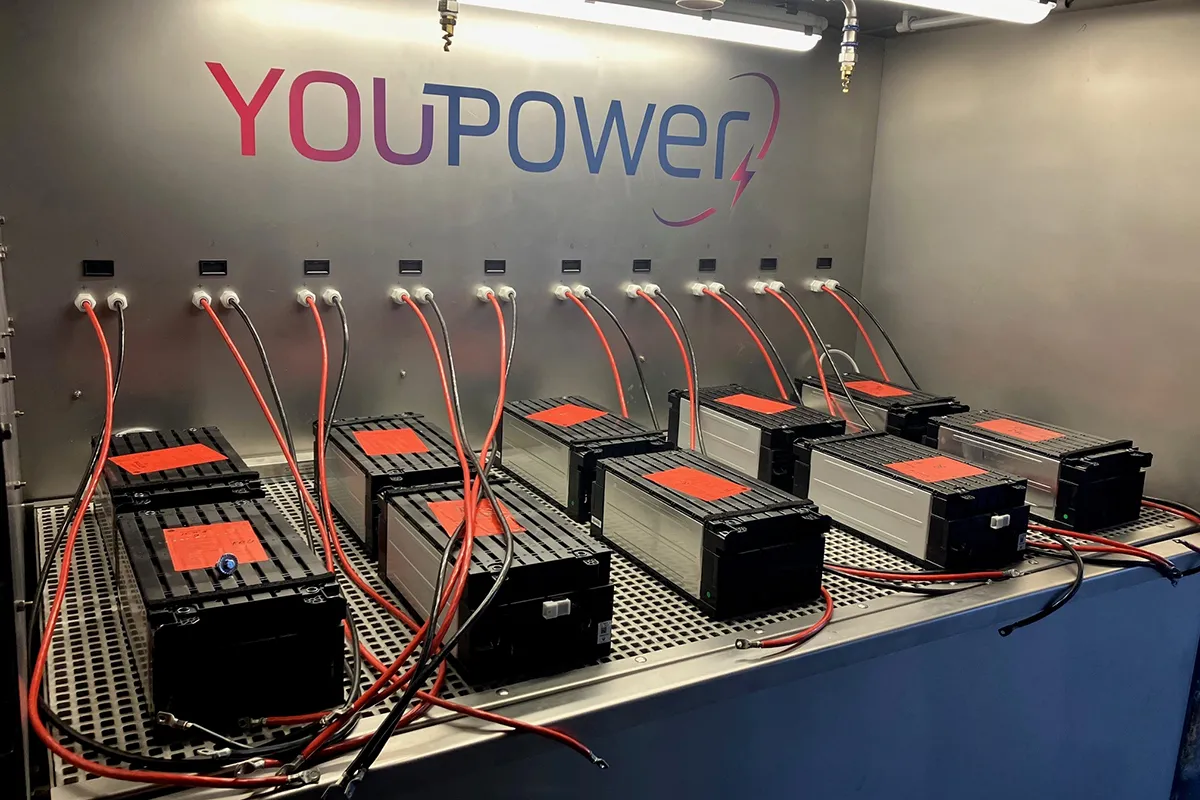
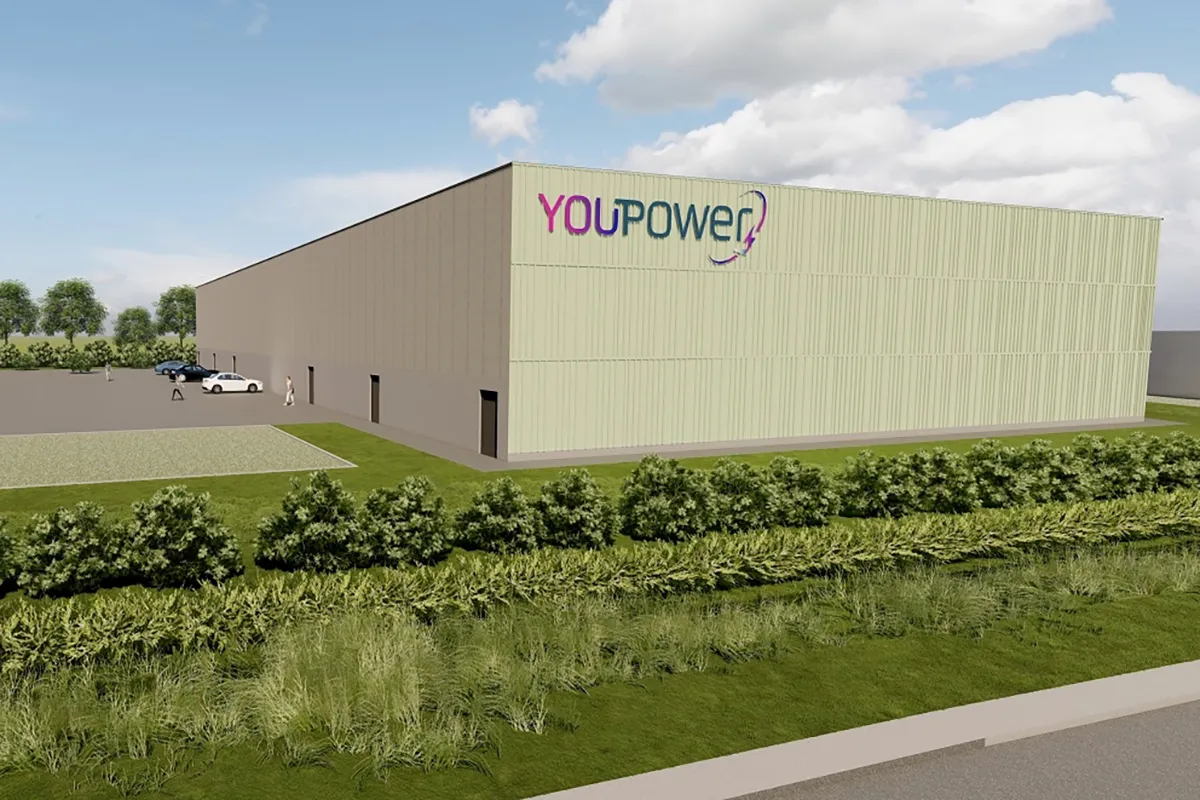
Batteries are a crucial component of the solutions YouPower delivers. In its six years of operation, the company has built up considerable knowledge and experience with lithium-ion batteries. It now wants to put that expertise to work to close the loop. “There are no companies in Belgium that process lithium-ion batteries, precisely because it requires highly specialised expertise. We want to change that,” explains De Schryver. YouPower is currently building its Battery Disassembly Center in a 3,500 m² warehouse in Hamme (off-grid, naturally). “We are already doing two things there. We can discharge and store any type of lithium-ion battery. We have installed a great many safety measures for this. For example, the batteries are kept above a water bath. If our thermal cameras detect the slightest sign of trouble, they automatically drop into the water. Once discharged, we can dismantle the batteries: we open them and remove the cells. We then send these to specialist processors.”
98% black mass purity
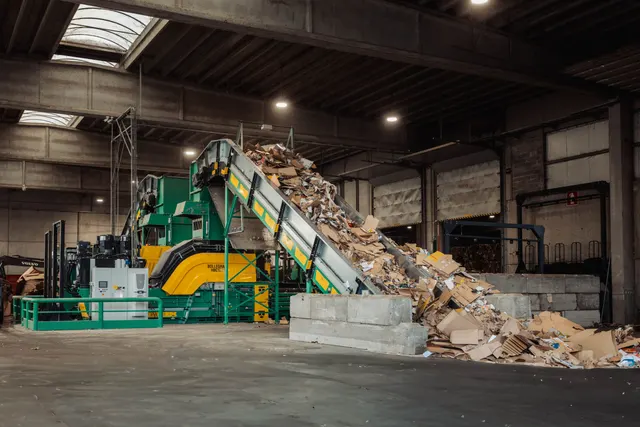
The final part of the installation is due to become operational in April. YouPower will then have a battery shredding plant. “We will reduce the dismantled cells to 3 mm fractions to extract the so-called black mass. This contains the raw materials used to make new batteries. We are aiming for a purity of 98%. By further separating out the aluminium, copper and plastic, we will have a saleable product from which chemical processors can then extract the nickel and cobalt. Our focus is on robust mechanical processing. That is where our strength and expertise lie. Otherwise, we would have to become chemical experts here.” For De Schryver, all the pieces of the puzzle fell into place with this project. “By focusing on end-of-life batteries, we are truly pioneering with this installation. But that gives you the opportunity to define your own best practices. Initially, our shredding capacity will be 5,000 tonnes. We can handle higher volumes for discharging and dismantling. Some customers also request only these steps.”
Question about this story? Ask your question
Keep following this
Get an email when a new story is published. No account needed.
- ThemeCircular processing of electronics and batteries
- SubjectRecycling company in the spotlight