Sustainability from fibre to board
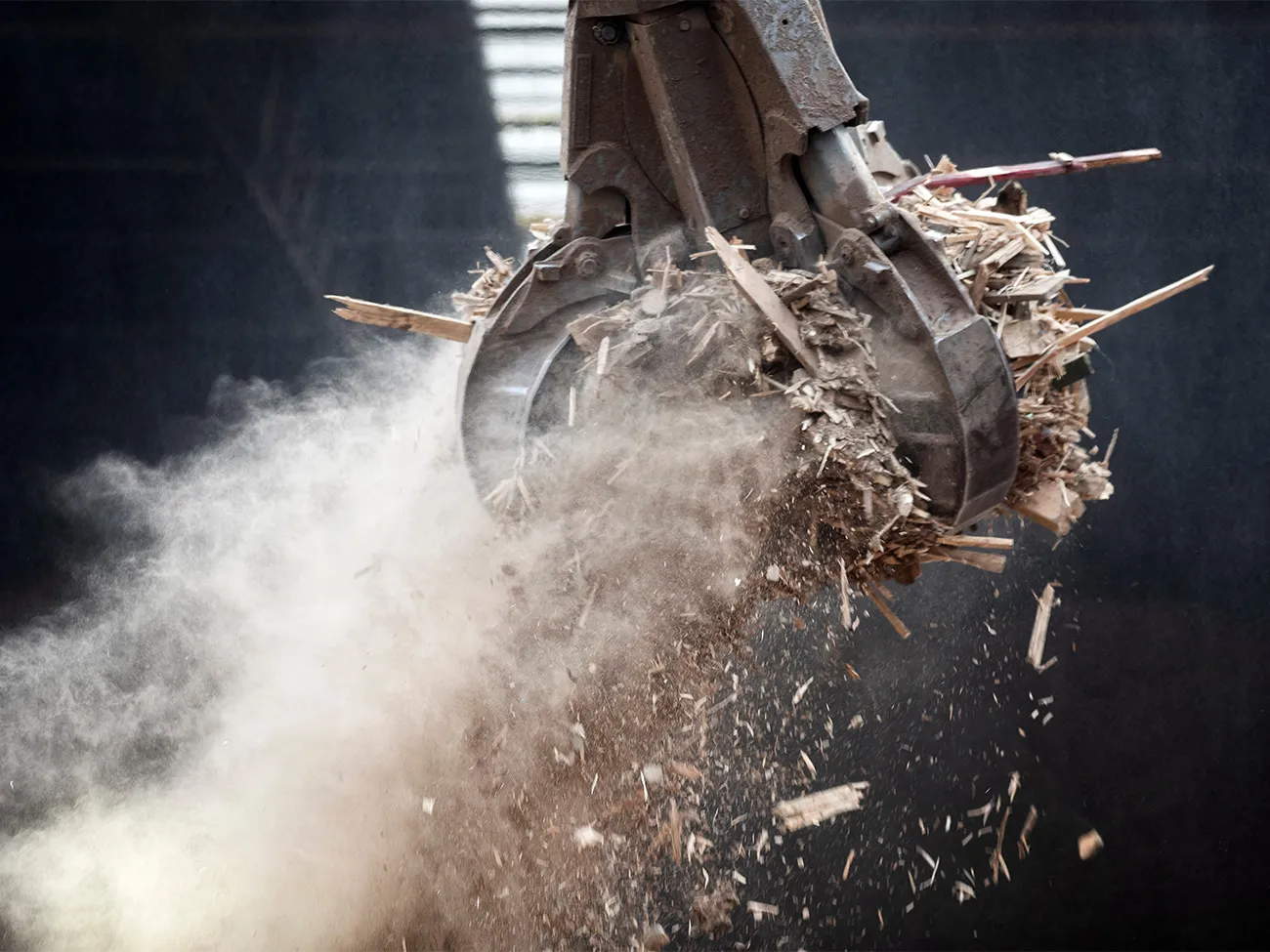
The arrival of more biomass-fired power plants is creating tension in the waste wood market. Yet Flanders aims to make as much use as possible of this waste wood for reuse and recycling. If any company is committed to closing these loops, it is Unilin. More than 90% of its particleboard is made from recycled material.
Circularity is in Unilin’s DNA. The company emerged from the flax industry in the 1960s. Flax shives, a by-product of flax processing, were put to good use by pressing them into boards. Today, 900,000 tonnes of waste wood are given a new lease of life by the particleboard producer. Purchase manager Ruben Debouvere: “Over the years, the process has been refined to enable us to recover as much waste wood as possible. With the right product knowledge and cleaning technology, B-grade wood can be recycled to a considerable extent. In this way, we are trying to support the market in its pursuit of the highest possible level of material recycling. We use our own specifications, which are perfectly measurable. Quality assessment covers a whole range of parameters. A quality level is established based on a scorecard. Wood streams that fail to meet the minimum score are considered non-recyclable. They are put to good use in our biomass plants to produce green electricity or heat,” says Debouvere.
Quality is crucial
There is no official definition in the regulations of which waste wood is suitable for reuse and which can only be used for energy recovery through incineration. The quality matrix used by Unilin has therefore become an important practical benchmark for assessing waste wood quality. “Whereas we used to add a little surplus pallet wood to make new boards, it is now the other way round and we need only a little fresh wood. This means we are not looking for just any volume, but for tonnes of the right quality,” stresses Inno Deboosere, purchase manager Wood. Unilin sources these volumes not only in Belgium, but throughout neighbouring countries.
As sustainably as possible, of course. Each year, 150,000 tonnes of waste wood are transported by waterway to the right site. Deboosere: “We will take all the waste wood the Belgian market can offer that meets our quality requirements. This is the commitment we made to the collection sector following the crisis a few years ago, when there was a large surplus of lower-quality wood.”
Respect the cascade
Yet Unilin sees some of that share going elsewhere as more biomass plants for wood combustion enter the market. “The government is strongly focused on circularity. Its ambition is entirely in line with ours: to recover as much waste wood as possible for reuse. Thanks to our recycling technologies, we can now extend the service life by 32 years, resulting in a huge reduction in CO2 emissions. We help deliver on policy objectives, but at the same time we need policy support to recover as much material as possible,” says Deboosere. Only when reuse is not an option should energy recovery through incineration be considered.
Supporting customers in their sustainability ambitions
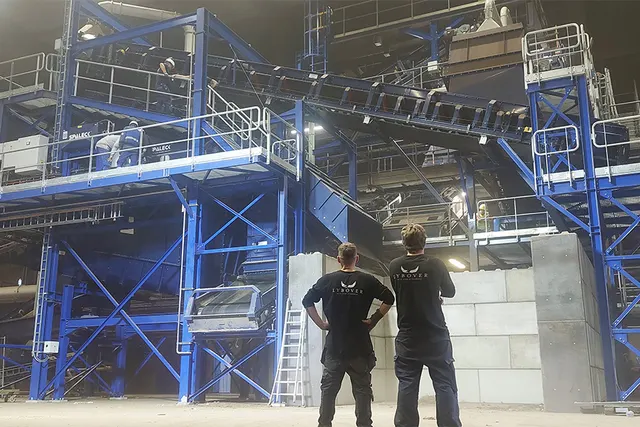
This does not stop Unilin from continuing to build a circular future. One example is the development of a new technology to make MDF recyclable (see box). The company also supports customers in their sustainability ambitions, including through its own take-back schemes for wood waste (Join the Circle). Group project manager Circular Economy Kristof Van Hoye: “We are seeing wood grow in popularity in construction applications because it is a sustainable choice. All the more reason to handle it with care. That starts with responsible forest management, but we need to carry this through the entire life cycle. It is wonderful to see how, at this industrial processing site, we can turn unprepared wood waste into a new board. That is why we invite customers, partners and suppliers to visit us and show them the impact their choices can have on building a better world.”
World first: a second life for MDF and HDF boards
MDF (medium density fibreboard) and HFD (high density fibreboard) are wood fibreboards. At Unilin, they are made exclusively from fresh wood sourced from sawmill residues and sustainably managed forests. But to close the loop, the aim must be to recycle these boards too. Until recently, this was the sticking point, because the adhesive used as a binder could not be ‘filtered’ in a way that was viable at industrial scale. Unilin’s R&D team has succeeded in developing a new process that allows the fibres to be used again as a raw material. The process is now being rolled out at the production site in Bazeilles (France). Once it has been perfected, it will also be replicated at the site in Vielsalm to close the loop. The innovative, patented technology works much like a pressure cooker. The boards are moistened with steam, heated and subjected to very high pressure. The pressure is then reduced, releasing the fibres. This already yields 8,000 tonnes of MDF fibres a year that can be reused in full. By 2030, the aim is to replace at least 25% of the group’s raw material mix with recycled fibres. This would save 380,000 tonnes of CO2 each year.
Question about this story? Ask your question
Keep following this
Get an email when a new story is published. No account needed.
- ThemeCircular business under changing regulations
- SubjectWood waste