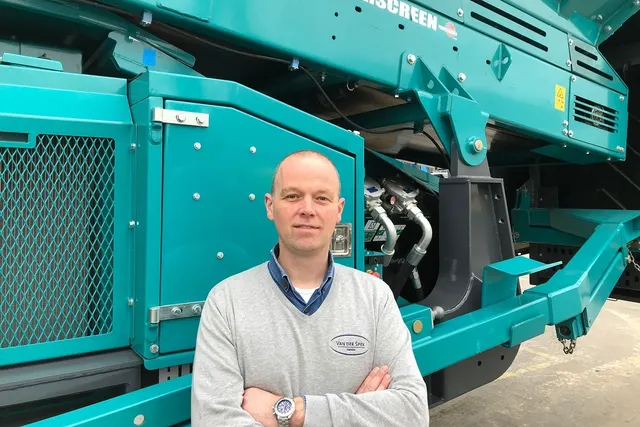
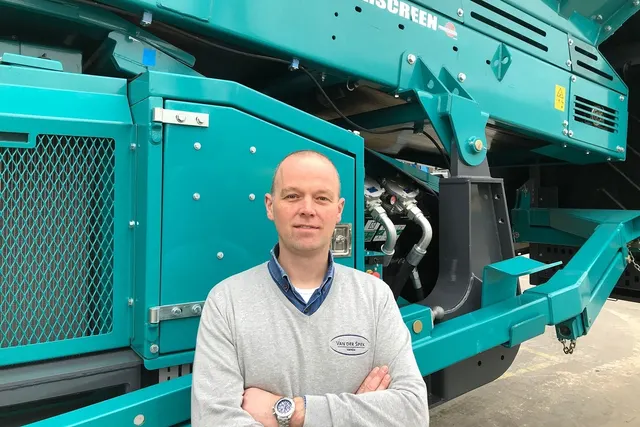
Dust-free recycling, a wide-ranging challenge!

Today, ‘urban mining’ is an essential part of the search for reusable materials. What was once permissible and a practical or economic consideration is now a must. Material reuse is developing rapidly, and new applications are being devised every day to help us use our resources more sustainably and find reusable solutions for all the new waste streams and building blocks coming our way.
But almost nothing can be reused without processing and numerous intermediate steps such as grinding, screening, scrubbing, washing and drying. For our sector, that means generating a great deal of dust. Dust control is therefore now an essential part of recycling operations. A dust-free environment is clearly good for the environment and health, as dust can cause irritation and health problems for local residents, staff and bystanders. Dust, whether inert dust, plastic particles or wood dust, can also cause problems for your installations. Excessive dust can lead to overheating or damage, resulting in wear, imbalance or blockages.
Dust suppression
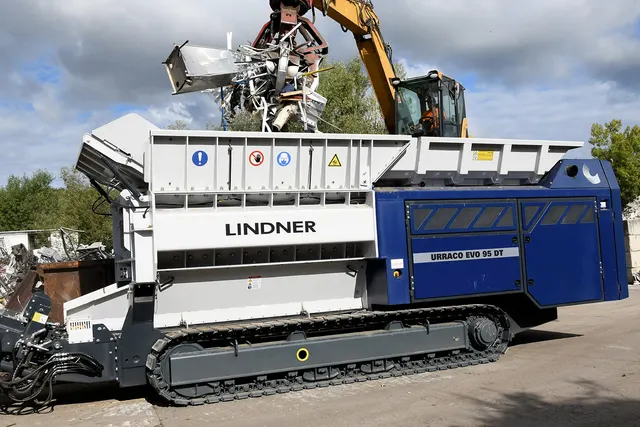
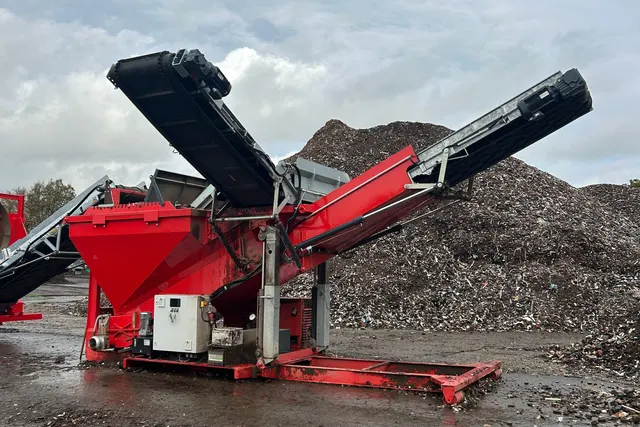
In practice, we use a cloud of countless droplets to capture dust particles. By increasing their weight with water, the particles settle on the ground. The cloud, made up of larger droplets, or mist, made up of smaller microdroplets, is tailored to the size of the dust particles and the objective, whether dust suppression or cooling. The number of active spray nozzles is also adjusted to the amount of dust being tackled, ensuring water is used as efficiently as possible. These high-tech solutions can reduce the spread of dust particles to a minimum. To achieve this, we need to work on several fronts. At source, in other words, when processing waste streams such as rubble, scrap and wood, by equipping shredders and screening machines with these systems. Mobile installations are increasingly fitted with a water pump and a misting system to suppress dust particles at source. Spray nozzles can be installed in the crusher housing, at the chamber outlet and/or along the conveyor belt. There are also add-on systems available separately, allowing dust to be controlled locally on mobile units after installation. The word ‘locally’ is important here, because water is a precious resource, so using too much is bad for both the environment and the budget.
Dust control can cover a lot of ground
Dust is also released during storage as material falls. One or more mobile misting cannons are often used to make the dust particles settle, with a range of 30 to 150 m. They can be moved by forklift, mounted on a wheeled chassis or installed on a trailer with their own power unit and water supply for complete autonomy. Fixed systems can also be installed in enclosed or semi-open buildings and controlled from a central point. Loading and unloading are another source of dust. Solutions are available to minimise it here too. Where these operations take place outdoors, a misting system can be linked to a remote control or an automated weather station, which takes account of current conditions such as rain and wind direction and speed. As well as controlling dust, misting is highly effective for cooling and odour control. In short, if you have a question about dust control, ask us, your supplier.
Een zakelijke vraag aan Van der Spek NV? Get in touch
Companies in this story

Keep following this
Get an email when a new story is published. No account needed.
- SubjectVOORUIT column
- CompanyVan der Spek NV