Avoiding risks
Avoiding risks is something we all want to do. There are many to consider in the recycling industry, and one we unfortunately see all too often is fire. Major fires make the news almost every week, sometimes accompanied by NL-Alerts to warn people in the surrounding area.
Fire requires three elements, also known as the fire triangle: combustible material as fuel, oxygen for the chemical reaction, and an ignition temperature or heat to ignite the fuel. So avoiding fires should be easy, surely. Just make sure these elements are not present. But that is a utopian idea. Oxygen is everywhere, and fuel is precisely what our sector has to work with. We process it every day at recycling plants using machinery.
More and more batteries
Unfortunately, the material streams destined for recycling contain increasing numbers of batteries and accumulators. These frequently cause fires at recycling sites. Fortunately, many recycling companies are equipped to extinguish fires quickly and effectively and prevent them from getting worse. Alongside the familiar fire extinguisher, I am also seeing increasingly professional solutions, including, on occasion, an in-house fire brigade on standby to prevent fires from spreading.
Poorly cleaned
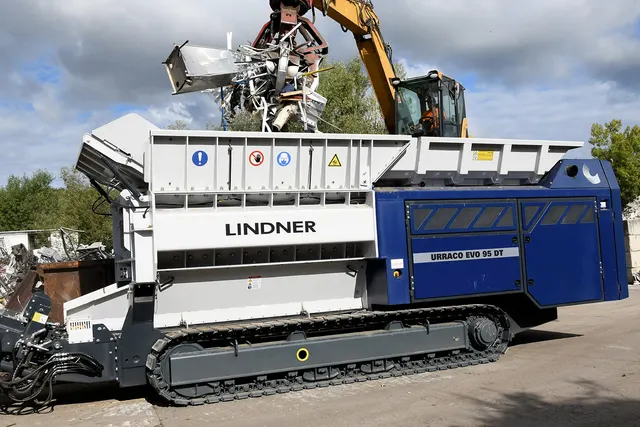
Besides the material streams destined for recycling (fuel), which can ignite, recycling machinery also poses a fire risk. Other factors come into play here. Combustion engines generate temperatures that can reach hundreds of degrees Celsius around the exhaust systems. In addition, poorly maintained cooling systems and hydraulic systems can reach very high temperatures. We regularly come across machines that have not been cleaned properly. Dirt and dust then build up (fuel!), and can ignite at high temperatures, resulting in significant costs and downtime. It is therefore important to keep machinery clean and give your colleagues enough time to do this regularly. Depending on how the machine is used, this may even need to be done several times a day. Removing the fuel reduces the risk of ignition and eliminates one fire risk at the recycling site.
Practising
It is also vital to practise with your team what to do if a fire breaks out. Make sure everyone knows which procedures to follow, and call in professional help from the fire brigade and emergency services in good time. They are trained to deal with fires and can prevent the situation from getting worse.
Een zakelijke vraag aan Van der Spek Vianen B.V.? Get in touch
Companies in this story
Keep following this
Get an email when a new story is published. No account needed.
- SubjectVOORUIT column
- CompanyVan der Spek Vianen B.V.