Tips for maintaining screening media effectively

It makes no difference how many tonnes are processed each day if the material is not sized correctly. Although screening media account for a relatively small share of costs compared with crushers, they are a crucial factor in the profitability of any plant. A single unexpected breakage can cost thousands of euros due to poor screen curves, not to mention the unexpected downtime and repairs needed to put things right. That is why it is advisable to pay sufficient attention to the proper maintenance of screening media. The selection, installation, preventive maintenance and storage of screen panels are also important for reliable operation. Following the right procedures means fewer replacements, less unplanned downtime, higher product quality and more efficient operation, resulting in increased production.
Whereas the choice of screen panels was once limited, manufacturers now offer a wide range of styles and grades of screening media. It may be tempting to think that a cheap, standard option will suffice, but it is important to consider the consequences of making the wrong choice. An unsuitable screen has a direct impact on quality and capacity.
- Work with a dealer or manufacturer to determine which type is best suited to each section of the screen deck. A heavier-duty option may be needed at the feed end, followed by a more durable type with a larger open area. Screen settings such as angle, frequency and amplitude also have a significant impact on screening media performance.
- In many applications, high-vibration wire screens are highly suitable for the entire deck. At the feed end, thicker or double wires can be used for high tonnages, with the open area increased further down the deck to improve stratification and passage. These so-called self-cleaning screening media, or flex mats, are particularly useful in applications with a high proportion of fines, sticky soils or problems caused by contamination with organic material. The high vibration frequency helps prevent pegging and blinding.
- Do not neglect the installation of screening media. Experience and precision are essential when fitting them. Even the best screening media will perform poorly if installed incorrectly, for example, with the wrong tension or the wrong way round. This can lead to premature wear, broken panels and inefficient screening.
Best practices
Although the details vary depending on the type of screening media, there are some general best practices:
- First clean and inspect all parts that come into contact with the screen, such as the screen frame and the sides of the screen box;
- Check that the correct panel has been supplied;
- Install it according to the manufacturer’s instructions (ask your supplier for them);
- Make sure each support beam makes proper contact with the screen using the correct rubber, and that the tension is set correctly (always retighten the tension bars after an hour of operation under load).
Safety and training
Pay attention to safety too: work in teams of at least two and use the lockout procedure to prevent the machine from being switched on accidentally. Some modern screening media are safer to install thanks to covers (a thin, curved plate over the tensioning hooks) that shield sharp hooks, rounded edges (to make sliding the panels into place easier) and lower weight (high-strength steel wire with improved tensile strength can be installed at a smaller wire diameter). Also consider training sessions on installation and maintenance. A well-trained team can prevent a great deal of unexpected downtime. Ask your supplier about this.
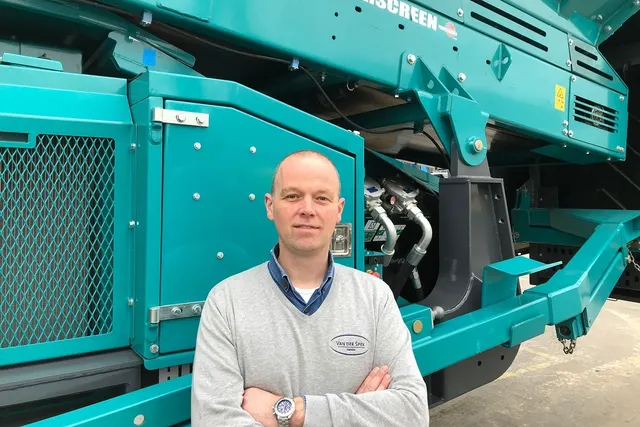
Kurt Longueville
VanderSpek Vianen
Een zakelijke vraag aan Van der Spek Vianen B.V.? Get in touch
Companies in this story

Keep following this
Get an email when a new story is published. No account needed.
- SubjectVOORUIT column
- CompanyVan der Spek Vianen B.V.