Solar panel recycling can be more sustainable
Text RIVMImage iStock
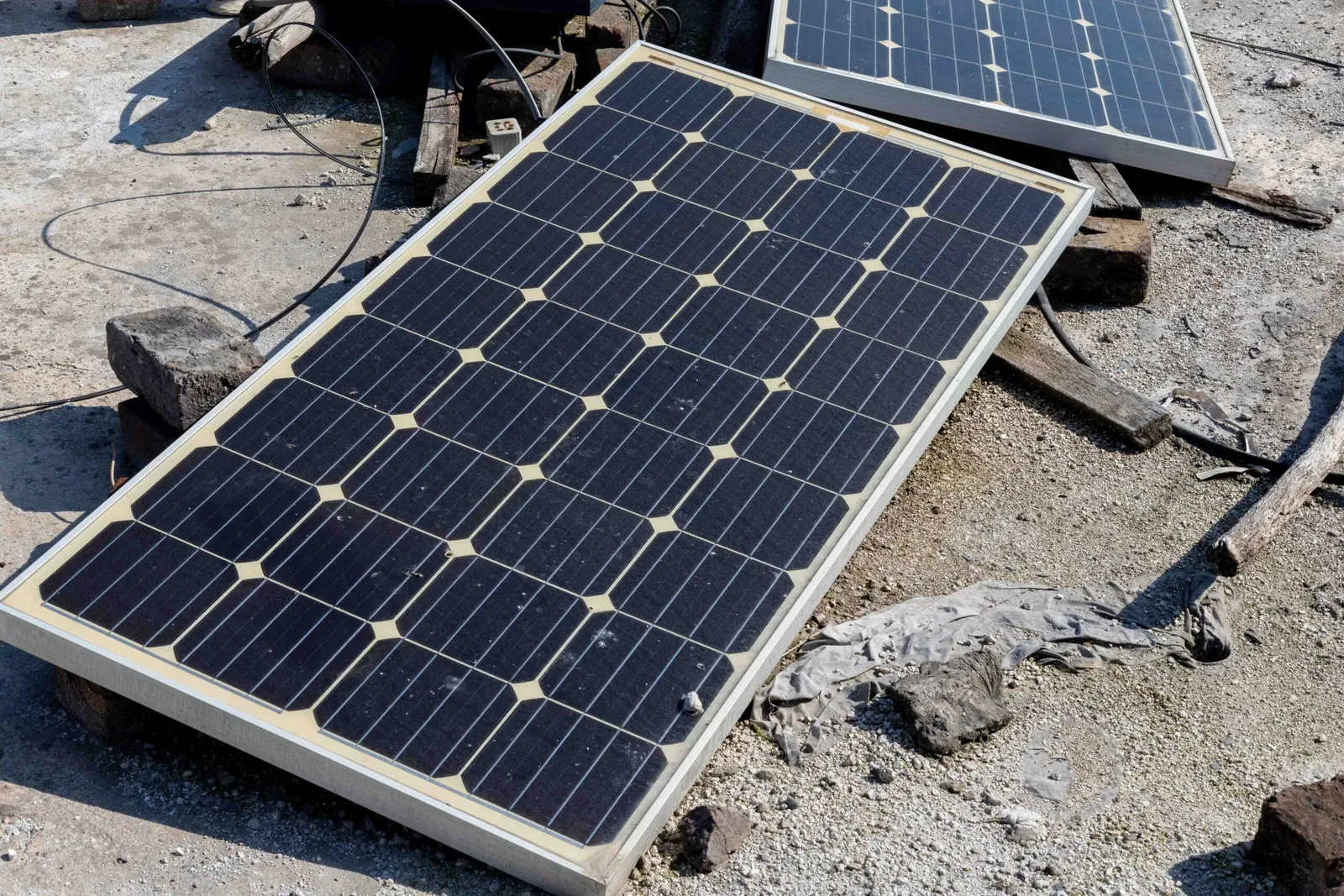
RIVM (the National Institute for Public Health and the Environment in the Netherlands) examined the methods being developed to reuse raw materials from solar panels. The four methods described in its report are more sustainable than current solar panel processing. They involve the glass, silicon from the solar cells and the plastic backsheet. Attention is also needed for hazardous substances such as lead, antimony and PFAS (per- and polyfluoroalkyl substances). From 2030, increasing numbers of solar panels will be replaced. RIVM therefore recommends encouraging progress towards sustainable design and recycling now.
By 2035, the Dutch material flow of discarded panels is expected to reach around 10,000 tonnes a year, rising sharply from then on to an estimated 230,000 tonnes in 2045. To achieve closed material loops by 2050, the industry will need to redesign and manufacture products in a way that allows materials to be dismantled and recycled while retaining their material value. The aim of the RIVM study was to explore and compare current and future recycling options for solar panels using the Safe and Sustainable Loops Framework (SSML). RIVM developed SSML to assess material recycling options in terms of circularity, environmental impacts and the potential risks chemicals pose to people and the environment. The results of such an analysis give policymakers and industry insight into the advantages and disadvantages of the (innovative) processing methods considered. The main research question for solar panels was: what are the environmental benefits and drawbacks of different recycling methods, and what conclusions can be drawn about innovative recycling processes for discarded solar panels in the Netherlands?
Baseline scenario today
RIVM has outlined four new options for recycling the glass, solar cells and backsheet. At present, raw materials are not recovered from solar panels after use. The basic recycling that does take place involves shredding, crushing and sorting materials. The shredded glass, along with pieces of the solar cell and backsheet, is used as an abrasive in the metal industry and processed with steel scrap. The metal slag is used as a road sub-base. Silicon and silver are not recycled. So there is room for improvement.

Alternatives examined
The first method examined uses mechanical recycling with delamination. In this scenario, glass wool and metallurgical-grade silicon are recovered. Silver, copper and aluminium are also recovered. Scenario two uses mechanical recycling with delamination by waterjet technology. This recovers new solar glass and metallurgical-grade silicon, as well as silver, copper and aluminium. The third option is thermal recycling by incinerating the entire panel. This scenario recovers glass wool and metallurgical-grade silicon from the bottom ash. Silver, copper and aluminium are also recovered. Finally, pyrolysis can be used to recover the solar cells intact or in larger fragments. This scenario produces solar-grade glass and silicon as new raw materials for solar cells, and recovers silver, copper and aluminium.
Always more sustainable
All the processing methods are more sustainable and better for the environment than current practice. Energy consumption is lower in every case than with current solar panel processing. This is partly because producing new raw materials for solar panels requires more energy than using recycled materials. The most circular proposal is the method that turns glass into new glass for solar panels. This option can also recover silicon for new solar cells. This is technologically complex, but feasible.
Hazardous substances require attention during recycling
Solar panels contain the hazardous substances lead, antimony and PFAS. It is important to take these into account during recycling. Lead is present in the solder, while antimony gives the glass its clarity. PFAS are present in the backsheet of solar panels. Incinerating it can release PFAS. The recycling method determines whether and how the substances are released, and whether people and the environment may be exposed to them.
Recommendations: consider recycling at the design stage
RIVM recommends that the Ministry of Infrastructure and Water Management encourage technological developments in solar panel recycling. This would make sustainable solar panel recycling achievable within five years. RIVM also recommends taking recycling into account at the design stage. This applies, for example, to the way the solar cells are bonded to the glass and backsheet. It is also important to minimise the use of hazardous substances. Solar panels without lead and PFAS are already on sale.
Question about this story? Ask your question
Keep following this
Get an email when a new story is published. No account needed.
- ThemeCircular processing of electronics and batteries
- SubjectThe future of recycling