First of its kind: the first line for recycling hemp concrete
Text Luc OphalsImage Timoté Meessen
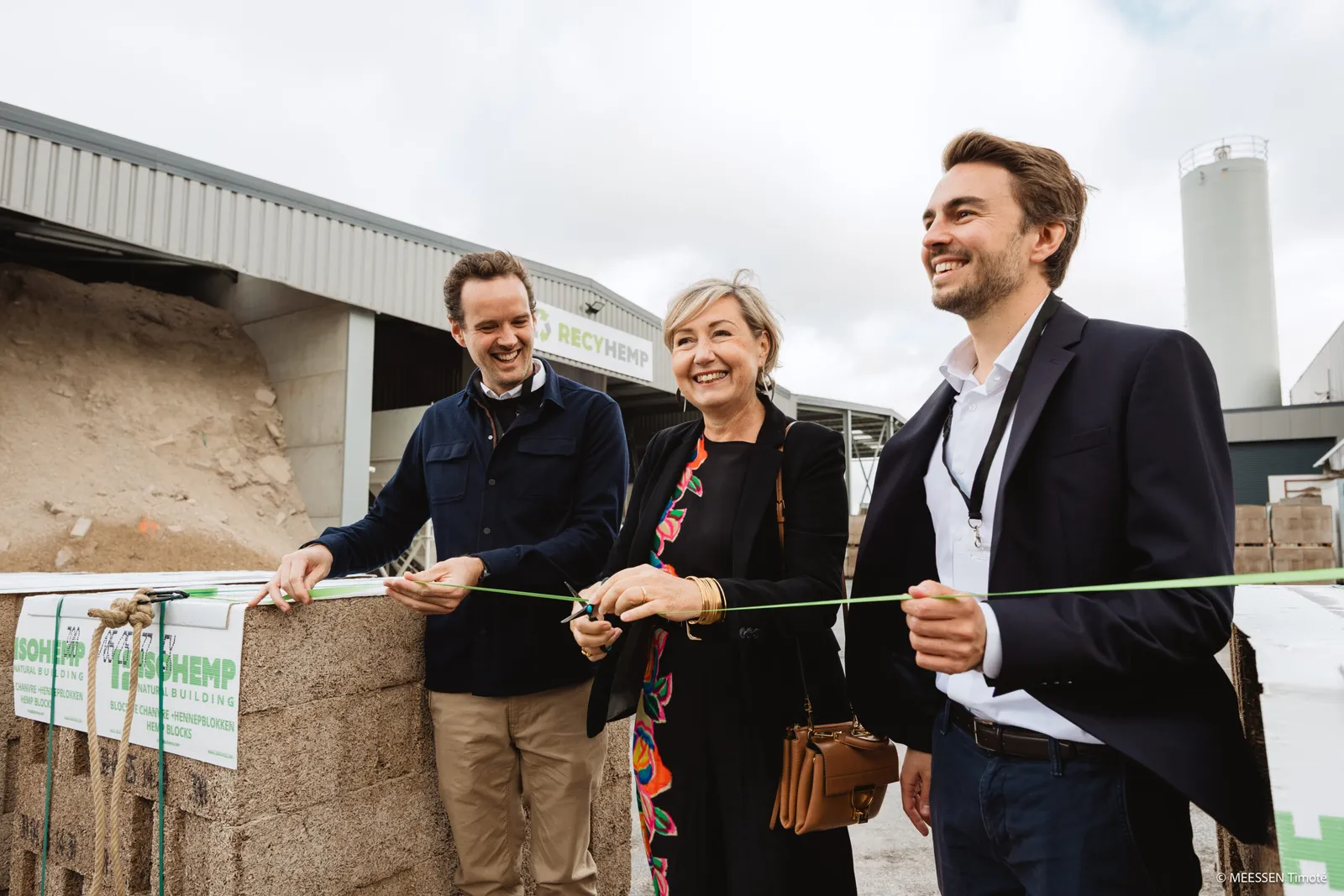
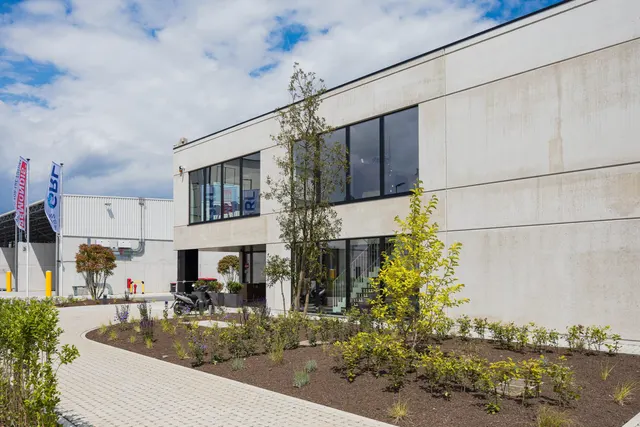
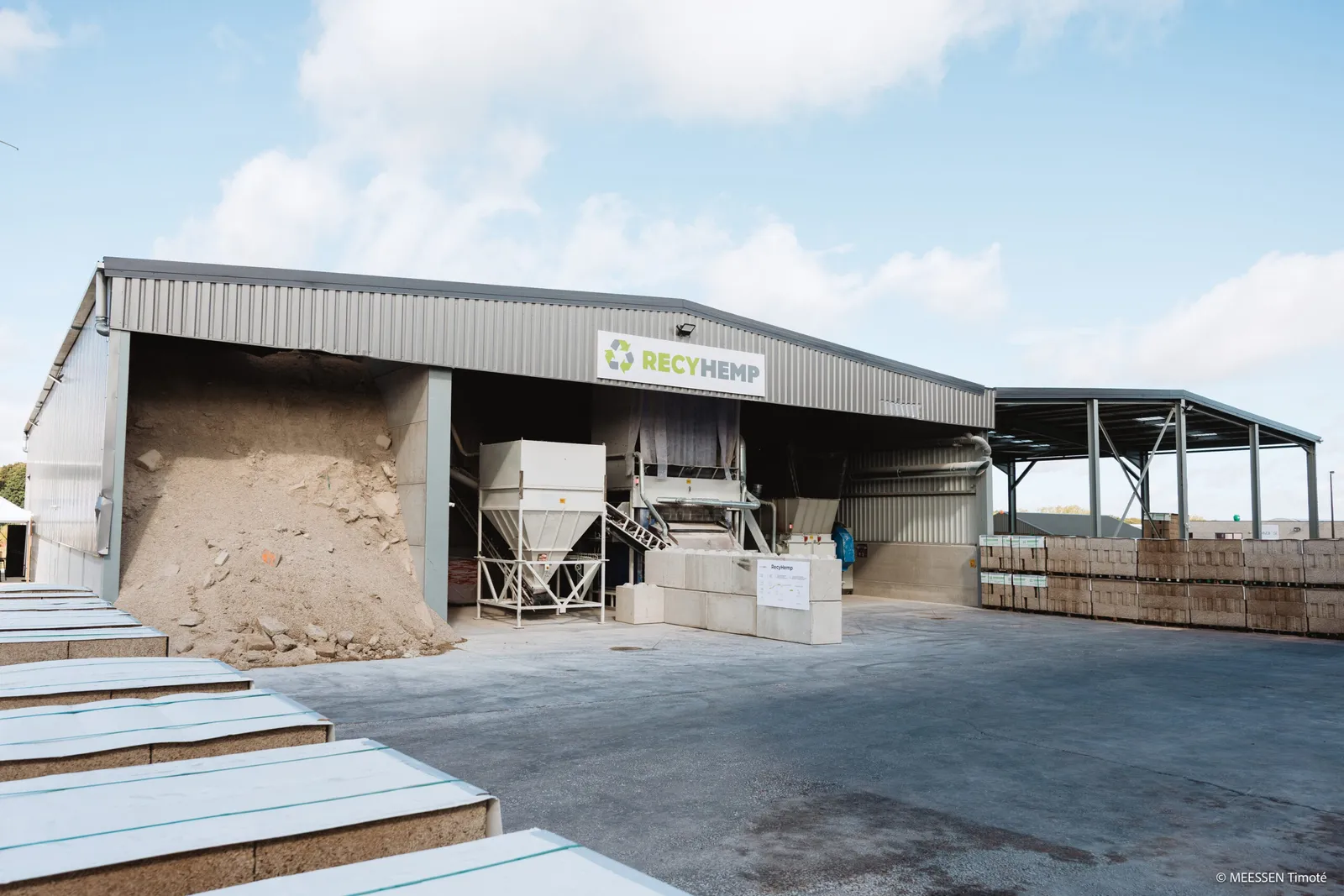
IsoHemp, a pioneer in hemp concrete blocks in Europe, has recently commissioned RecyHemp, the world’s first industrial line for recycling hemp concrete. This unprecedented advance in a sector where waste poses a major challenge will enable the company, based in Fermelmont, to close the loop, in other words, to operate on a fully circular, zero-waste basis, both in production and on construction sites.
A third of all waste in Europe currently comes from the construction sector. In Belgium alone, this amounts to more than 20 million tonnes a year. To tackle this challenge, IsoHemp has opened a new production line at its factory, where offcuts of hemp concrete blocks from both manufacturing and construction sites are given a second life. With RecyHemp, IsoHemp has become the first company in the world to take this step. The project represents an investment of 1.25 million euros, of which 460,000 euros is subsidised by the Walloon Region.
Hemp as a sustainable alternative
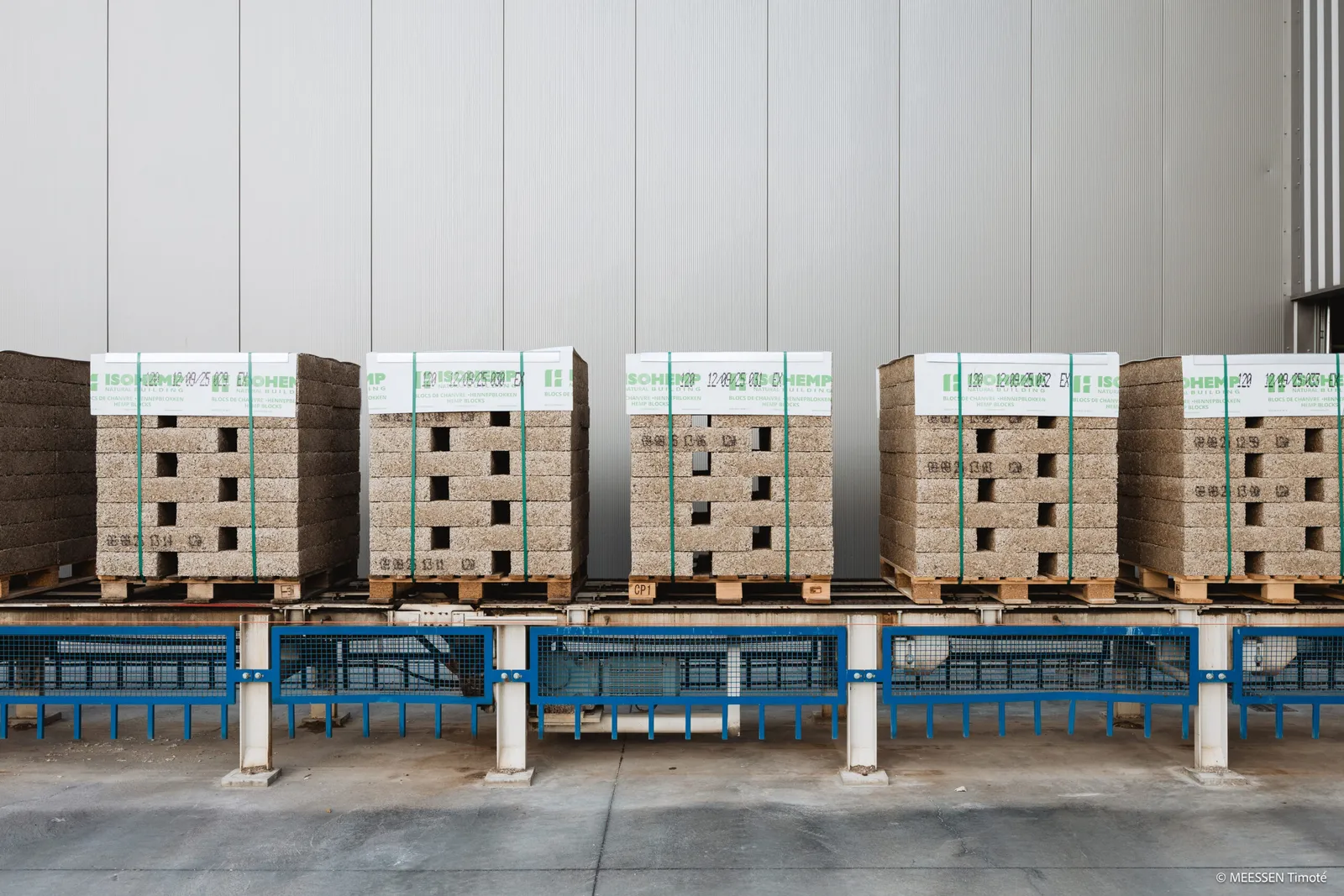
IsoHemp was founded in 2012 by Olivier Beghin, Jean-Baptiste de Mahieu and Anthony De Mot. Their aim was to reinvent construction and renovation using natural, sustainable, high-performance materials. They wanted to offer an alternative to conventional materials. Hemp concrete blocks quickly proved to be the ideal solution. They provide effective insulation in both summer and winter, regulate humidity and ensure genuine durability. Beghin, CEO of IsoHemp, explains: “Every m² of hemp concrete blocks (36 cm thick) stores the equivalent of 51.87 kg of CO2. One hectare of hemp absorbs up to four times more CO2 than one hectare of forest. Hemp is also an exceptional insulating material that can cut energy bills by up to 70%.”
A circular process
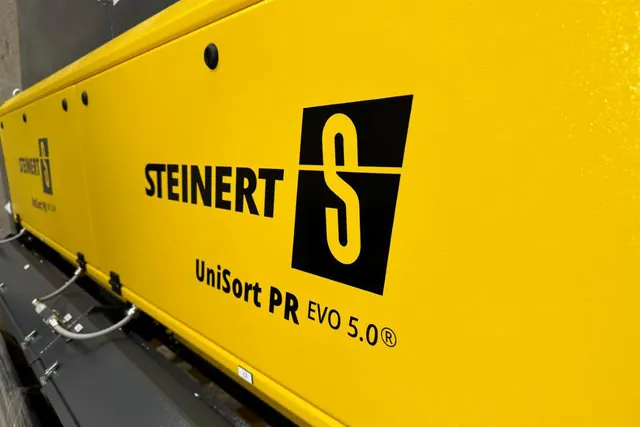
Thanks to the new recycling line, hemp concrete offcuts from production and waste from construction sites are now reused to make new blocks. These IsoHemp blocks contain up to 5% recycled material and have a service life of more than a century, with no loss of quality. De Mot, Chief Operating Officer of IsoHemp, says: “Our aim has always been to operate in a closed loop. We have kept all production waste so that it could be reused at the right time. The challenge was to adapt industrial equipment capable of processing hemp and separating out the granulate. That is now possible. It is another step towards sustainable construction, in which innovative materials can fully compete with conventional solutions.”
The next challenge: building a strong circular supply chain
IsoHemp’s ambition is certainly not limited to the technical aspect. To make its approach viable, the company is actively working to establish an efficient waste collection network across Belgium through its distributors. As De Mot explains: “The new recycling line is certainly an important step, but a truly circular ecosystem also requires appropriate logistics. We currently have two collection points, the first here in Fermelmont and the second in Flanders, at our partner Eurabo. We want to extend this network across Belgium. Ultimately, however, our aim is to encourage contractors to sort waste upstream, on the construction site itself. Around 2 to 8% of the hemp concrete blocks delivered to a construction site go unused. That is a considerable quantity that can be collected and reused in production.”
Question about this story? Ask your question
Keep following this
Get an email when a new story is published. No account needed.
- SubjectThe future of recycling